Lockers Birmingham: Commercial, School and Workplace Lockers from Total Locker Service
May 13, 2026
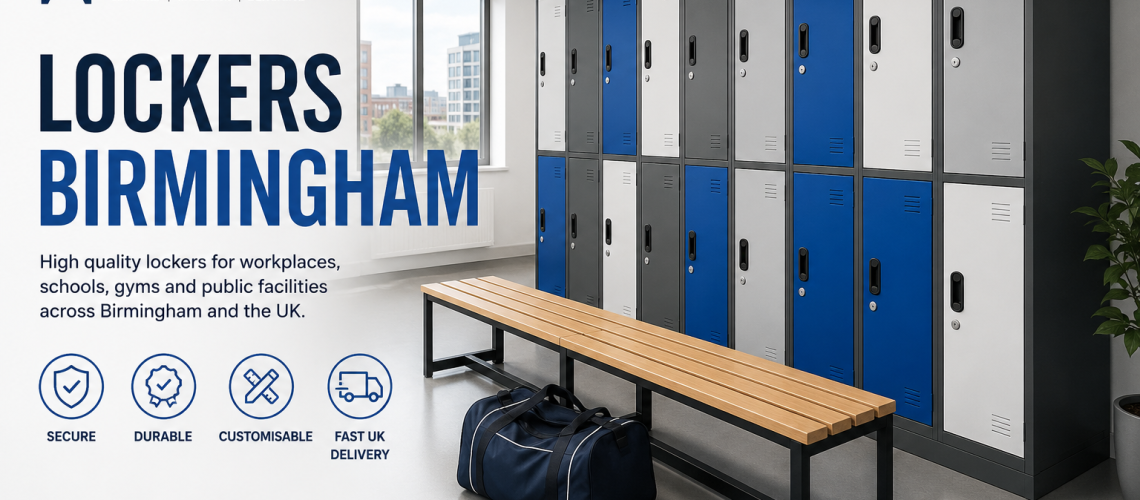
Total Locker Service supplies lockers, locker parts, locker locks, key systems, maintenance support and secure storage solutions for schools, workplaces, leisure sites, healthcare environments, industrial facilities and public buildings across the UK. For organisations in Birmingham and the wider West Midlands, the right locker system is not just a row of compartments. It is a planned storage system that supports security, staff flow, student movement, changing rooms, access control, maintenance and long-term operational control.
This guide explains the Total Locker Service locker offering in detail. It covers metal lockers, laminate lockers, plastic lockers, wet-area lockers, workplace lockers, school lockers, leisure lockers, charging lockers, laptop lockers, PPE lockers, mini lockers, heavy-duty lockers, locker locks, replacement keys, service work, parts, installation support and locker planning. It also connects this article to the main Total Locker Service blog canisters, including Locker Planning UK, Locker Locks UK, Locker Key Management Systems UK, Storage Management Systems UK, Locker Access Governance UK and Locker Lock Management Systems UK.
If you are planning lockers for Birmingham offices, schools, factories, gyms, universities, changing rooms, healthcare buildings, warehouses or public facilities, start with the full requirement. The best locker system depends on the users, what they store, how often they need access, whether lockers are assigned or shared, how the locks are managed, whether keys need to be replaced, and whether the site needs future expansion.
Quick answer: what does Total Locker Service offer?
Total Locker Service offers commercial lockers and secure storage products for UK organisations. The locker range includes standard metal lockers, school lockers, workplace lockers, wet specification lockers, plastic lockers, laminate door lockers, heavy-duty lockers, laptop lockers, charging lockers, PPE lockers, mini lockers, electronic lockers and bespoke made-to-order lockers. The wider service also includes locker locks, locker keys, lock conversions, replacement parts, maintenance, refurbishment and locker installation support.
This is important because many sites do not simply need lockers. They need a working locker system. A locker system includes the locker body, the compartment size, the material, the lock type, the numbering, the access rules, the maintenance route, the key replacement process, the layout and the day-to-day management procedure. A school corridor, staff changing room, leisure centre, hospital department and industrial warehouse may all need lockers, but each environment needs a different balance of durability, capacity, hygiene, supervision, access control and serviceability.
Why Birmingham organisations need planned locker systems
Birmingham has a wide mix of workplaces, education sites, healthcare buildings, leisure facilities, commercial offices, logistics operations, manufacturing areas and public buildings. Each type of site creates different storage pressures. A city centre office may need lockers for hybrid staff who do not have permanent desks. A school may need pupil lockers that reduce bag congestion in corridors. A factory may need robust lockers for uniforms, tools and PPE. A gym may need wet-area lockers that cope with changing room use. A healthcare site may need staff lockers that support shift work, uniforms and controlled access.
In all these settings, lockers do more than hold personal items. They affect how people move through a building. They influence how quickly staff can start shifts. Lockers reduce clutter in classrooms, offices, workshops and changing areas. They support welfare expectations by giving users a defined place for belongings. They also reduce pressure on reception desks, facilities teams and site managers because belongings, keys, bags, uniforms and equipment are easier to control.
For that reason, a locker project should not begin with the question, “Which locker is cheapest?” It should begin with the question, “What problem must the locker system solve?” The answer may be storage capacity, corridor congestion, staff welfare, secure changing, device charging, key control, visitor storage, uniform management, PPE control, shared-use access or maintenance simplification. Once the real problem is clear, the correct locker range becomes easier to choose.
Total Locker Service as a locker supplier and service provider
Total Locker Service is not only a locker product supplier. The wider offer includes locker systems, storage products, installation support, locker maintenance, refurbishment, lock replacement, spare parts and replacement keys. That makes the business useful for both new projects and existing locker estates.
For new projects, Total Locker Service can support the selection of locker type, locker size, lock option and configuration. For existing sites, support may involve replacing damaged locks, supplying new keys, converting old locks to new locks, supplying locker parts, refreshing a locker estate, repairing worn components or advising on better access control. This matters for Birmingham organisations because many buildings already have lockers in place. A full replacement is not always the first or only option. In some cases, maintenance, refurbishment, replacement locks or key management improvements can extend the useful life of the locker system.
Use the main commercial lockers page when you need a broad overview of locker product options. Use the locker repair and maintenance page when the issue is service, parts, repairs, lock replacement or ongoing locker support. Select the about Total Locker Service page when you want to understand the wider business, including lockers, shelving, bench seating, storage products, installation, maintenance, refurbishment, spare parts and lock conversion support.
The main locker types available from Total Locker Service
Total Locker Service provides a wide range of lockers for different environments. Choosing the correct locker type is the first major step because the wrong material, depth, lock type or compartment layout can cause problems later. A locker that works in a dry office may not be suitable for a wet leisure changing room. A small compartment locker that works for phones and wallets may not work for coats, boots and PPE. A simple keyed locker may suit an assigned staff area but may create too much administration in a high-turnover gym or school.
Metal lockers
Metal lockers are one of the most common choices for workplaces, schools, staff areas, factories, offices and general commercial use. They are strong, familiar and available in many configurations. Single-tier metal lockers can hold coats, uniforms and larger belongings. Two-tier lockers are useful where users need a reasonable amount of vertical space but capacity must be increased. Four-tier and six-tier lockers can increase the number of compartments in the same footprint, which helps where users only need to store smaller bags, shoes, personal items or valuables.
Metal lockers are often chosen for staff changing rooms, warehouses, workshops, offices, education buildings and back-of-house areas. They can be fitted with different lock types depending on how the site wants to manage access. Key locks suit assigned users. Hasp locks allow users to bring their own padlocks. Combination locks reduce key loss. Coin return locks suit shared changing rooms. Electronic locks may support modern access control and shared use.
Laminate door lockers
Laminate door lockers are often used where appearance and durability are both important. They can improve the look of schools, leisure centres, offices and changing rooms because the doors can provide a more refined finish than standard metal. They are useful in customer-facing areas, staff welfare spaces, education buildings and locations where the locker wall forms part of the visible interior design.
Laminate door lockers may also help create colour-coded zones. For example, a school could use different door colours for year groups. A leisure site could separate male, female, accessible, staff and visitor areas. A workplace could use colour to distinguish departments or access levels. This makes the locker system easier to understand and easier to manage.
Plastic lockers and wet-area lockers
Plastic lockers and wet specification lockers are important where moisture, cleaning, humidity or corrosion risk must be considered. Leisure centres, swimming pools, spas, gyms, sports clubs and wet changing areas need lockers that can cope with demanding conditions. Standard dry-area lockers may not be the best choice near showers, poolside zones or high-humidity changing rooms.
Wet-area locker projects should also consider floor drainage, cleaning access, bench positions, ventilation, door swing, user flow and lock suitability. Lock choice is especially important. A lock that performs well in an office may not be suitable for a humid changing room. For lock choice in moisture-prone areas, link the project to the Locker Locks UK canister and any wet-area lock guidance within the wider blog structure.
Workplace lockers
Workplace lockers support staff storage, welfare, shift changes, equipment control and personal belonging security. Total Locker Service supplies workplace lockers for offices, factories, warehouses, industrial settings and staff areas. These lockers may be used for coats, bags, uniforms, workwear, PPE, tools, laptops, mobile phones and personal items.
Modern workplace locker planning is no longer limited to fixed staff lockers. Many Birmingham workplaces now operate with hybrid attendance, rotating shifts, contractors, desk sharing or flexible work patterns. That changes the locker requirement. A site may need assigned lockers for permanent staff, hot lockers for flexible users, temporary lockers for visitors, larger lockers for workwear, or shared lockers for teams. To plan this correctly, connect the project to Locker Planning UK, Locker Occupancy Management Systems UK and Locker Management Systems UK.
School lockers
School lockers need to be robust, simple to manage and suitable for high daily use. They help pupils store bags, books, PE kit, coats and personal items. They can also reduce corridor clutter and support safer movement around busy buildings. The correct school locker system depends on pupil age, corridor width, supervision, break-time flow, year-group allocation, lock choice and maintenance workload.
For Birmingham schools, locker planning should consider where pupils naturally move during the day. Lockers placed in the wrong corridor can create bottlenecks. Storage lockers placed too far from classrooms may be ignored. Lockers placed too close to doors, stairwells or narrow corridors can cause congestion. This is why the school locker conversation should connect to the wider Locker Planning UK canister, as well as school-specific guides such as School Locker Key Management UK and school lock selection content.
Laptop lockers and charging lockers
Laptop lockers and charging lockers are useful where devices must be stored, protected or charged between uses. They are common in schools, colleges, universities, offices, training rooms, healthcare buildings and shared workspaces. A charging locker can help manage laptops, tablets, handheld devices, radios, scanners and other rechargeable equipment.
Device storage requires a different planning approach from standard personal storage. The site must consider socket positions, cable management, ventilation, charging schedules, fire awareness, access rights, user responsibility and whether devices are individually assigned or shared. For a broader operational view, link device storage to Storage Management Systems UK. This helps place charging lockers inside a complete management framework rather than treating them as isolated products.
PPE lockers and industrial lockers
PPE lockers and industrial lockers support workplaces where users need to store protective clothing, boots, helmets, gloves, tools or specialist equipment. These lockers may need more internal space than standard office lockers. They may also need ventilation, strong construction, easy cleaning and clear numbering.
Industrial sites should plan lockers around the working day. Staff may arrive in groups before shifts, collect PPE, change clothing and move quickly towards production, warehouse or site areas. Poor locker placement can delay shift starts and create crowding. Good locker placement supports flow, accountability and welfare. For this reason, industrial locker projects should link to Locker Planning UK, Storage Management Systems UK and Locker Access Governance UK.
Mini lockers and personal item lockers
Mini lockers are designed for smaller personal items such as wallets, phones, keys, small bags, radios, visitor belongings and personal effects. They can be useful in offices, schools, reception areas, warehouses, gyms, laboratories and controlled workspaces where users cannot take personal items into the main working area.
Small-compartment lockers can provide high capacity in a compact footprint. However, they should not be used where users need to store coats, bulky bags or equipment. Before choosing mini lockers, confirm what users actually need to store. A locker capacity plan should start with real contents, not just user numbers. For this step, use Locker Capacity Planning UK if available in the blog structure, and link back to the main Locker Planning UK hub.
Bespoke and made-to-order lockers
Some projects need bespoke made-to-order lockers. A standard locker range may not always fit the building, the user requirement or the design brief. Total Locker Service offers custom locker options, including different sizes, configurations and locking choices. Bespoke lockers can help where a project has unusual dimensions, specific colours, special lock requirements, high visual expectations or a need to match an existing locker estate.
Bespoke lockers should be planned carefully because custom work benefits from accurate measurements, clear drawings, confirmed lock requirements, known user numbers and a good understanding of the building. If a Birmingham site is refurbishing a changing room, fitting lockers into a narrow corridor or replacing old lockers in stages, bespoke options may help create a better final result.
Locker locks: choosing the right access method
Locker locks are central to the success of any locker project. A strong locker body with the wrong lock can still create daily problems. The best lock depends on the environment, the user group, the management style and the risk level. Total Locker Service supports a wide range of lock options, including keyed locks, hasp locks, padlock fittings, coin locks, combination locks, digital locks, RFID locks and electronic locker locks.
The Locker Locks UK canister should be treated as the main internal link hub for lock choice. It helps users compare keyed, coin, combination, digital and padlock-based systems. This article should link to that hub wherever the reader moves from locker selection into access selection.
Keyed locker locks
Keyed locker locks are simple and familiar. They work well for assigned lockers, staff lockers, school lockers and sites where each user keeps the same locker over time. The main management issue is key control. If users lose keys, facilities teams need a clear process for replacement keys, master key access and lock changes where required.
For this reason, any keyed locker system should link to the Locker Key Management Systems UK canister. Keyed systems work best when the site records locker numbers, key numbers, issue dates, return dates and lost key events. Without this process, a simple lock can become an admin burden.
Hasp locks and padlock systems
Hasp locks allow users to secure lockers with their own padlocks. This can reduce key issuing work because the site does not need to manage every individual locker key. It can also suit schools, gyms, workplaces and temporary-use environments where users are expected to provide or manage their own padlock.
However, padlock systems still need rules. The site should decide what happens if a user leaves a padlock on an abandoned locker, loses the padlock key or uses an unsuitable lock. The management policy should cover emergency access, abandoned locker checks and end-of-term or end-of-membership clearance. For this wider policy layer, link to Locker Access Governance UK.
Combination locker locks
Combination locker locks reduce physical key issues. They can be useful where lost keys cause too much admin or where users change frequently. Combination locks may suit schools, offices, gyms, leisure sites and shared-use locker areas.
The management question is reset control. Someone must know how codes are set, reset and recovered. A site should decide whether lockers are assigned or shared, whether users set their own codes, whether staff can override forgotten codes and how frequently locks are checked. Combination locks remove one problem, but they create a different management requirement. This should be handled through the Locker Lock Management Systems UK canister.
Coin return and coin retain locks
Coin locks are common in leisure centres, gyms, pools and public changing rooms. £1 return locks encourage users to remove their belongings and take the coin back. Token retain locks may be used where the site charges for locker use. The correct choice depends on the operating model.
Coin locks work best where lockers are shared by many short-term users. They are less suitable where users need long-term assigned storage. Birmingham leisure facilities should also consider wet-area suitability, cleaning access, wrist straps, key strength, door durability and the ability to service locks quickly when they become worn.
Digital, RFID and electronic locker locks
Digital, RFID and electronic locker locks can support modern locker management. They may be useful in offices, gyms, universities, healthcare sites and high-turnover environments where keys are difficult to manage. These systems may support PIN access, card access, wristband access or other digital credentials.
Electronic locks should be planned as an access system, not just a hardware upgrade. The site must consider users, credentials, battery maintenance, override access, failed access procedures, audit requirements and support arrangements. If digital access is part of a wider estate strategy, link the content to Locker Access Governance UK, Locker Management Systems UK and Smart Locker Systems in the UK.
Locker key management for Birmingham sites
Many locker problems are not caused by the locker body. They are caused by unmanaged keys. Keys are issued without records. Spare keys are stored in drawers. Master keys are used without sign-out. Pupils leave without returning keys. Staff change roles and keep old keys. Replacement keys are ordered but records are not updated. Over time, the site loses confidence in the locker system.
The Locker Key Management Systems UK canister should be used as the authority hub for this issue. A good locker key system records locker number, key number, user, issue date, return date, replacement events, master key access and audit checks. This gives schools, workplaces and facilities teams a practical route to control.
For Birmingham schools, key management can support pupil responsibility, lost key procedures, end-of-term collection and safeguarding visibility. With workplaces, it can support onboarding, offboarding, contractor control and department-level responsibility. For healthcare settings, it can support shift changes, uniform storage and emergency access. For leisure sites, it can reduce delays when users lose keys or leave belongings in lockers.
Where keys are missing now, the project should not start with panic. Start with the locker number, lock number or key code. Then check whether a replacement key can be cut to code. If replacement is possible, the site may avoid unnecessary lock changes. If security risk is higher, a lock change may still be sensible. The key point is that the decision should be recorded and managed.
Locker planning: layout before product choice
The strongest locker projects start with planning. The Locker Planning UK canister should be the primary planning hub for any Birmingham locker project. Planning should include user numbers, peak occupancy, item sizes, floor space, door swing, aisle width, bench positions, cleaning access, maintenance access, lock choice, future expansion and installation constraints.
This stage prevents common errors. A site may order enough locker compartments but fail to allow enough standing space in front of the doors. Another site may choose lockers that are too deep for a narrow corridor. A school may install lockers in a location that becomes crowded during break times. A gym may place lockers too close to benches or showers. A workplace may underestimate future staff growth. These problems are easier to avoid before ordering than to fix afterwards.
Start with users
First, identify who will use the lockers. Users may include pupils, teachers, office staff, warehouse staff, shift workers, contractors, visitors, gym members, patients, healthcare staff, cleaning teams or maintenance teams. Each user group has a different behaviour pattern.
Pupils may access lockers at the same break times. Shift workers may arrive in waves. Office workers may need occasional use because of hybrid working. Gym users may need short-term storage. Healthcare staff may require reliable access before and after shifts. Contractors may need temporary lockers. Once the user group is understood, the project can define whether lockers should be assigned, shared, temporary, hot-use or controlled by staff.
Define what will be stored
The stored items decide the locker size and type. Coats, bags, boots, PPE, laptops, phones, tools, uniforms, helmets, sports kit and personal valuables all require different compartments. A six-tier locker may be efficient for phones and wallets but unsuitable for workwear. A single-tier locker may be ideal for coats but inefficient if users only need to store small items.
Device storage also needs power, ventilation and cable planning. PPE storage may need larger compartments and better ventilation. Wet clothing may need wet-area materials. Visitor storage may need easy short-term access. These decisions should be recorded before locker selection begins.
Measure the space properly
Locker measurement should include more than wall length. Measure the full room. Include doors, windows, pipework, radiators, sockets, columns, steps, escape routes and existing furniture. Then allow for door opening, user standing space and passing space. A locker that technically fits along a wall may still fail if people cannot open doors safely or move past each other comfortably.
For detailed planning, internally link to supporting pages in the Locker Planning UK canister such as locker room spacing, locker aisle width, locker depth and projection, door clearance, bench spacing, capacity planning and locker room design. These supporting pages create a strong semantic cluster around practical locker specification.
Locker capacity planning
Capacity planning answers a simple question: how many lockers does the site need? The answer is not always equal to the number of people. Some sites need one locker per person. Others need fewer lockers because staff work flexibly or users only need temporary storage. Some sites need more lockers than the current user count because they must allow for visitors, contractors, spare capacity or future expansion.
A Birmingham office with hybrid working may not need one permanent locker for every employee, but it may need a managed hot-locker system for peak attendance days. A school may need lockers by year group, corridor and timetable pattern. A warehouse may need lockers for each shift plus spare capacity for agency staff. A gym may need enough lockers for peak evening and weekend use. A healthcare site may need lockers for overlapping shifts and department-specific changing areas.
Good capacity planning should include total user count, peak user count, shift overlap, visitor demand, shared-use turnover, absent users, growth expectations and the size of items being stored. It should also define the allocation method. Assigned lockers are simple for users but require more total compartments. Shared lockers can be more efficient but need stronger rules. Hot lockers can support flexible workplaces but need clear availability and clearance procedures.
Locker management systems
A locker management system is the operational layer that keeps lockers working after installation. It includes allocation, access, key control, audits, maintenance, cleaning, reporting, replacement parts, user rules and lifecycle planning. This is where Total Locker Service can connect product supply with practical locker operation.
The Locker Management Systems UK canister should sit above access control, occupancy, keys, governance and smart systems. It helps explain lockers as infrastructure, not just furniture. This is a useful link for facilities managers, school business managers, estates teams and operations managers who need to manage lockers over time.
A good locker management system should answer several questions. Who can use each locker? How are lockers allocated? What happens when a user leaves? How are keys or codes issued? Who can override access? How are damaged locks reported? How are lockers cleaned? What frequency should you do a locker audit? How are spare parts ordered? When are locks replaced? How is future capacity reviewed?
Without these answers, the site may have a strong installation on day one but a weak system after a year. Lockers become abandoned. Keys go missing. Codes are forgotten. Compartments are damaged. Spare parts are ordered late. Users lose trust. Management systems prevent this decline by making locker care routine rather than reactive.
Locker occupancy management
Occupancy management focuses on how lockers are actually used. This is especially important in workplaces, universities, leisure centres and schools where locker demand changes throughout the day or year. A site may have enough lockers overall but still experience shortages in one zone and empty lockers in another. It may have unused assigned lockers while temporary users struggle to find space. It may have abandoned lockers that appear occupied but are no longer needed.
The Locker Occupancy Management Systems UK canister should be used for topics such as usage tracking, vacant locker visibility, turnover, peak demand, abandoned lockers, hybrid workplace lockers and underused zones. This supports a more advanced conversation with facilities managers and estate planners.
For Birmingham offices, occupancy management can support hybrid working. For schools, it can support year-group allocation and seasonal demand. Gyms, it can support peak-time locker availability. For healthcare sites, it can support shift overlap. For factories and warehouses, it can support changing room efficiency and contractor storage.
Storage management systems: lockers as part of a wider estate
Lockers often sit inside a wider storage estate. A site may also use key cabinets, safes, COSHH cabinets, medical cabinets, PPE storage, charging lockers, tool storage, shelving, cupboards and secure cabinets. The Storage Management Systems UK canister helps connect these products into one framework.
This matters because storage failures often cross product boundaries. A workplace may have lockers for staff, key cabinets for vehicle keys, safes for documents and charging lockers for devices. A school may have pupil lockers, staff lockers, first aid storage, key cabinets and secure laptop storage. A healthcare site may have staff lockers, medicine cabinets, controlled access storage and changing room storage. Treating each product separately can create gaps. Treating them as a storage management system improves control.
For Birmingham organisations, this joined-up view can be valuable during refurbishment, relocation, expansion or compliance review. Instead of buying lockers alone, the site can review storage by purpose: personal belongings, devices, keys, PPE, uniforms, cleaning supplies, documents, valuables and controlled items. Each item type can then be matched to the correct storage product and access method.
Access governance: who can open what?
Access governance is the policy layer above locks and keys. It defines who can open lockers, who manages credentials, who can override access, how access is audited and what happens when users leave. The Locker Access Governance UK canister should be used whenever the article discusses permissions, accountability, master keys, digital credentials, temporary access or audit trails.
This is especially important for larger Birmingham sites. A small office may only need a simple key register. A school may need stronger rules because many pupils use lockers and staff need emergency access. A leisure centre may need procedures for abandoned lockers. A healthcare site may need reliable access during shift changes. A warehouse may need department-level control. A university may need digital access or term-based allocation.
Good access governance reduces arguments and delays. Users know what they are allowed to do. Staff know when they can open lockers. Facilities teams know how to respond to lost keys, forgotten codes, damaged locks and abandoned compartments. Managers have a clearer record of access decisions. This turns locker control into a managed process rather than a series of ad hoc decisions.
Locker maintenance, repairs and refurbishment
Locker maintenance is often overlooked until something fails. Doors become misaligned. Locks wear out. Keys snap. Number plates go missing. Hinges loosen. Compartments are damaged. Old locks become difficult to manage. A planned maintenance approach can keep the locker estate useful for longer and reduce disruption.
Total Locker Service provides locker repair and maintenance support, including lock repairs, part replacements and system overhaul work. This is important for sites that already have lockers but need to improve reliability. A Birmingham school, gym, factory or office may not need to replace every locker. It may need new locks, replacement keys, new number discs, spare parts, lock cylinders, refurbished locks, wrist straps or other service items.
Maintenance should also feed back into planning. If the same lock type fails repeatedly, the site may need a different lock system. If doors are damaged in one area, the layout may be causing collisions or crowding. When keys are constantly lost, the key management process may be weak. If lockers are frequently abandoned, occupancy management may need improvement. Service data is therefore useful evidence, not just a repair record.
Lock replacement and lock conversion
Lock replacement can solve many locker problems without replacing the full locker body. A site may move from old keyed locks to new keyed locks, from keyed locks to hasp locks, from keyed locks to combination locks or from mechanical locks to electronic locks. The right path depends on the locker door, lock hole, cam size, door thickness, fixing pattern, user group and management requirement.
Before changing locks, check compatibility. A replacement lock must fit the locker door properly. It must turn correctly, secure the door and suit the way users access the locker. This is where the Locker Lock Compatibility Guide UK should be used as an internal link. It supports users who are replacing old locks, retrofitting systems or checking dimensions before ordering.
Lock conversion is also a strategic decision. A school with frequent lost keys may consider combination locks or padlock fittings. A workplace moving to hot lockers may consider digital locks. A leisure centre may need coin locks or RFID options. A factory may keep keyed lockers but improve master key control and replacement key procedures. The best conversion is the one that reduces the specific operational problem.
Replacement locker keys
Replacement locker keys are a high-value service because one missing key can stop a user accessing belongings, delay a shift, create admin work or force unnecessary lock replacement. Where the correct key number or lock code is available, replacement keys may be cut to code. This can be faster and more efficient than replacing the lock.
Every locker estate should make replacement easier by recording key numbers and locker numbers from the start. If keys are issued without records, replacement becomes slower. If locker numbers and key numbers are linked, replacement becomes a controlled process. Link this section to Replacement Locker Keys Cut to Code UK and Locker Key Management Systems UK.
For Birmingham schools and workplaces, this is a practical admin improvement. It reduces disruption when pupils, staff, contractors or members lose keys. It also helps facilities teams avoid unnecessary lock changes. However, replacement should still be risk assessed. If a key is stolen, labelled, lost with an access card or linked to sensitive storage, changing the lock may be safer.
School locker projects in Birmingham
School locker projects need a balance of capacity, supervision, durability and simple management. Pupils need a reliable place to store bags, coats, books, PE kit and personal items. Staff need a system that can be issued, audited and maintained without becoming a daily burden. Site teams need lockers that can withstand high use and be repaired when needed.
A strong school locker plan should consider year groups, corridor width, timetable flow, break-time pressure, safeguarding visibility, lock choice, lost key procedure, end-of-term collection and future pupil numbers. Lockers can reduce clutter, but poor placement can create congestion. For this reason, school projects should link heavily into Locker Planning UK, School Locker Key Management UK, Best Locker Locks for Schools UK and any school locker corridor planning content.
Lock choice is especially important in schools. Keyed locks are familiar but need replacement key procedures. Combination locks reduce lost keys but need reset control. Padlock systems shift responsibility to pupils but require abandoned locker rules. Electronic systems may suit colleges and universities but need more structured management. There is no single best lock for every school. The right choice depends on pupil age, staff capacity, budget, maintenance expectations and daily use pattern.
Workplace locker projects in Birmingham
Workplace lockers support staff welfare, security and organisation. In Birmingham offices, warehouses, factories, healthcare buildings and commercial sites, lockers may be used for coats, bags, uniforms, tools, PPE, devices and personal items. The right system helps staff start work efficiently and keeps personal belongings away from work areas.
Workplace locker planning should start with the operating model. Are staff assigned to fixed lockers? Do teams work in shifts? Are contractors on site? Does the office use hot desking? Are lockers needed for personal items, workwear or equipment? Do you need users storing laptops or tools? Are lockers in a changing room, office area, corridor or staff welfare space?
For fixed staff lockers, keyed locks may be suitable. For flexible workplaces, combination or digital systems may reduce key management. In industrial staff areas, robust lockers with clear numbering and good ventilation may be more important. For offices, visual finish and compact use of space may matter more. Link workplace projects to workplace lockers, Best Locker Locks for Workplaces UK, Locker Management Systems UK and Locker Occupancy Management Systems UK.
Leisure, gym and changing room lockers
Leisure and gym lockers need to handle heavy daily turnover. Users may access lockers for short periods, often around peak times. Changing rooms may involve moisture, cleaning chemicals, towels, shoes, sports bags and wet clothing. These conditions affect material choice, lock choice and layout.
Coin locks, wrist straps, RFID systems, digital locks, plastic lockers and wet specification lockers may all be relevant depending on the site. The main planning issues are capacity at peak times, clear user routes, bench spacing, shower access, cleaning access, corrosion resistance and quick maintenance. A locker that fails in a leisure centre can create immediate customer frustration, so serviceability matters.
Internal links should point to Locker Planning UK, Locker Locks UK, Locker Lock Management Systems UK and wet-area or changing-room planning pages within the blog. This connects product choice to real changing room performance.
Healthcare and staff changing lockers
Healthcare sites need reliable staff storage. Lockers may support uniforms, personal belongings, changing areas, shift work, department allocation, temporary staff and controlled access. The locker system must be easy to manage because healthcare users often work rotating shifts and may need quick access before and after work.
Good healthcare locker planning should consider department zones, staff flow, hygiene, cleaning access, uniform storage, PPE, lock control and master access. It should also connect with wider storage planning where medical cabinets, key cabinets, secure cupboards and staff lockers all sit within one operational estate.
Relevant internal links include Storage Management Systems UK, Locker Key Management Systems UK, Locker Access Governance UK and medical storage canister pages where the site needs a wider secure storage framework.
Bespoke locker planning for refurbishments
Refurbishment projects often have more constraints than new-build projects. Existing walls, doors, services, flooring, lighting, benches, drainage and escape routes may limit locker placement. Existing users may also need continued access while work is completed. A phased locker replacement or refurbishment can reduce disruption.
Total Locker Service can support projects where lockers need to be replaced, upgraded, repaired or fitted into an existing space. In some cases, existing locker bodies may be usable with new locks or replacement parts. In other cases, a full replacement with a more suitable layout may be better. The decision should be based on condition, safety, capacity, lock management, user experience and long-term maintenance cost.
For refurbishment planning, link to Locker Planning UK, locker repair and maintenance, Locker Lock Compatibility Guide UK and Locker Management Systems UK.
How to choose the right lockers for a Birmingham project
Choosing lockers should be a structured decision. The following process can help Birmingham schools, workplaces, leisure centres and facilities teams avoid poor product matches.
- Define the user group. Identify whether lockers are for pupils, staff, visitors, contractors, members, patients or mixed users.
- List the stored items. Record whether users store coats, bags, phones, laptops, uniforms, PPE, tools, sports kit or valuables.
- Confirm the use pattern. Decide whether lockers are assigned, shared, temporary, hot-use, shift-based or visitor-only.
- Measure the space. Include wall length, depth, door swing, obstructions, aisle width, benches, cleaning routes and escape routes.
- Choose the material. Match metal, laminate, plastic, wet specification or bespoke lockers to the environment.
- Select the compartment size. Choose single-tier, two-tier, three-tier, four-tier, six-tier or specialist configurations based on contents.
- Choose the lock system. Compare keyed, hasp, padlock, coin, combination, digital, RFID and electronic options.
- Plan numbering and access rules. Decide how lockers, keys, users and departments will be recorded.
- Plan maintenance. Confirm how locks, keys, hinges, doors, number plates and parts will be replaced.
- Allow for future change. Consider growth, flexible working, timetable changes, refurbishment and future lock upgrades.
This process turns locker selection into a controlled specification. It also creates natural internal linking opportunities across the blog canisters. Product selection links to commercial lockers. Layout links to Locker Planning UK. Lock choice links to Locker Locks UK. Key control links to Locker Key Management Systems UK. Operations link to Locker Management Systems UK. Wider storage strategy links to Storage Management Systems UK.
Recommended internal link map for this blog
This page should act as a local commercial gateway for “lockers Birmingham” while routing readers into the stronger national canisters. The following internal links should be included naturally throughout the article.
| Link destination | Suggested anchor text | Best placement |
|---|---|---|
| /Lockers.php | commercial lockers | Early product overview and final call to action |
| /workplace-lockers.php | workplace lockers | Workplace locker section |
| /blog/blog-locker-planning-uk/ | Locker Planning UK | Planning, layout and specification sections |
| /blog/blog-locker-locks-uk/ | Locker Locks UK | Lock selection section |
| /blog/locker-key-management-systems-uk/ | Locker Key Management Systems UK | Keyed locks and replacement key sections |
| /blog/blog-locker-access-governance-uk/ | Locker Access Governance UK | Permissions, master access and audit sections |
| /blog/blog-storage-management-systems-uk/ | Storage Management Systems UK | Wider storage estate section |
| /ServiceSolutions.php | locker repair and maintenance | Maintenance, repairs and refurbishment section |
Common mistakes when buying lockers
Many locker issues are predictable. They happen because the project focuses on the product before the use case. The following mistakes are common in schools, workplaces, gyms and facilities projects.
- Choosing lockers before measuring door clearance and aisle width.
- Buying too few compartments because peak use was not calculated.
- Using dry-area lockers in wet changing rooms.
- Choosing keyed locks without a key management process.
- Using combination locks without reset rules.
- Installing lockers where they create corridor congestion.
- Ignoring bench spacing in changing rooms.
- Failing to plan cleaning and maintenance access.
- Not recording key numbers, lock codes or locker numbers.
- Replacing lockers when lock conversion or refurbishment would solve the problem.
- Choosing one locker type for every department even when storage needs differ.
- Ignoring future growth, shift changes or hybrid working patterns.
The best way to avoid these mistakes is to treat lockers as a system. Start with users, contents, space, access and management. Then choose the product. That approach aligns with the Total Locker Service canister structure and strengthens the page as both a local Birmingham landing page and a gateway into national locker planning content.
Why use Total Locker Service for Birmingham lockers?
Total Locker Service is a strong fit for Birmingham locker projects because the offering covers both supply and support. Many suppliers can sell lockers. Fewer can support the full lifecycle of lockers, locks, keys, parts, maintenance, refurbishment and replacement. That lifecycle matters because lockers are used every day. A good installation needs to remain serviceable years later.
The Total Locker Service offer is especially useful where a site needs practical advice rather than a simple product list. A school may need help balancing capacity, corridor flow and lost key management. A workplace may need help choosing lockers for hybrid staff. A leisure centre may need wet-area materials and reliable locks. A factory may need PPE lockers and robust staff storage. A healthcare site may need staff changing lockers that support shift work. In each case, the product is only one part of the solution.
Total Locker Service also supports existing locker estates. This is valuable for Birmingham organisations with older lockers already installed. Replacement parts, lock repairs, new keys, lock cylinders, refurbished locks, wrist straps, number discs and lock conversions can help extend service life. Where a full replacement is required, the condition of the existing system still provides useful evidence for the new specification.
Call to action
If you need lockers in Birmingham, start with the requirement rather than the product. Confirm who will use the lockers, what they need to store, where the lockers will be installed, how access will be controlled and how the system will be maintained. Then choose the locker type, material, size, compartment configuration and lock system.
To explore product options, visit commercial lockers from Total Locker Service. Staff storage, view workplace lockers. For layout and specification support, use the Locker Planning UK guide. For lock selection, read the Locker Locks UK guide. Key control, use Locker Key Management Systems UK. For repairs and parts, visit locker repair and maintenance services.
FAQ: lockers Birmingham
What types of lockers does Total Locker Service offer?
Total Locker Service offers a wide range of lockers, including metal lockers, workplace lockers, school lockers, plastic lockers, wet specification lockers, laminate door lockers, laptop lockers, charging lockers, PPE lockers, mini lockers, heavy-duty lockers, electronic lockers and bespoke made-to-order lockers.
Can Total Locker Service help with locker projects in Birmingham?
Yes. Total Locker Service supplies lockers and secure storage solutions across the UK. Birmingham organisations can use the product range, planning content, locker lock guidance, key management support and maintenance services to plan new locker projects or improve existing locker estates.
What is the best locker type for a workplace?
The best workplace locker depends on what staff store and how the lockers are used. Offices may need compact personal storage or hot lockers. Factories may need larger lockers for uniforms and PPE. Warehouses may need robust staff lockers for shift workers. Start with user numbers, stored items, lock choice and available space.
What locker locks are available?
Common locker lock options include keyed locks, hasp locks, padlock fittings, coin locks, combination locks, digital locks, RFID locks and electronic locks. The right choice depends on whether lockers are assigned, shared, temporary, wet-area, school-based, workplace-based or leisure-based.
Can replacement locker keys be ordered?
Many replacement locker keys can be supplied when the correct key number, lock number or code is available. Good key records make replacement faster and reduce unnecessary lock changes. Sites should record locker numbers, key numbers, issue dates and return status.
Should I replace old lockers or repair them?
That depends on the condition of the locker bodies, doors, locks, hinges and internal fittings. If the locker body is sound, replacement locks, new keys, spare parts or refurbishment may be enough. If the layout, capacity, material or condition is poor, full replacement may be better.
How many lockers does a site need?
The number of lockers depends on user count, peak occupancy, shift patterns, visitor demand, shared-use policy and future growth. A school may plan by year group. A workplace may plan by staff attendance and hybrid working. A leisure centre may plan by peak usage times.
What should be planned before ordering lockers?
Before ordering lockers, confirm user groups, stored items, locker location, available width and depth, aisle space, door clearance, bench positions, lock type, numbering, access rules, cleaning access, maintenance access and future expansion needs.
Discover more from Blog Total Locker Service
Subscribe to get the latest posts sent to your email.