Storage Management Systems UK: Secure Storage, Access Control and Operational Planning
May 12, 2026
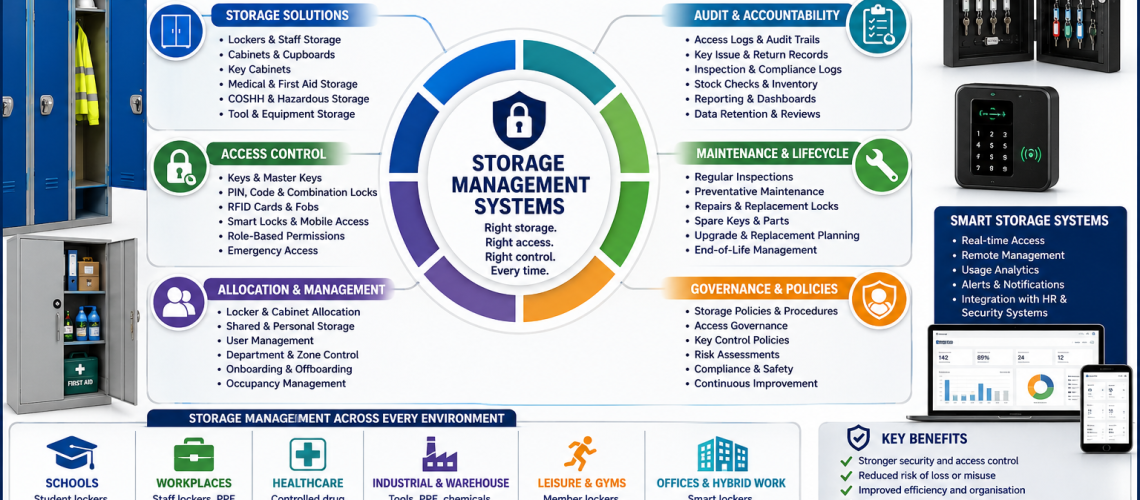
A storage management system is the complete structure used to organise, control, secure and maintain workplace storage. It includes storage units, access control, user permissions, audits, allocation, labelling, key control, maintenance and operational procedures.
This guide explains how UK organisations can manage lockers, cabinets, key cabinets, medical storage, COSHH cabinets, PPE storage, smart lockers and secure storage systems as one joined-up operational framework.
Quick answer: what is a storage management system?
A storage management system is not just a cupboard, cabinet or locker. It is the combination of storage hardware, access control, allocation rules, audit records, staff responsibilities and maintenance processes that keep stored items secure, available and properly managed.
What a complete storage management system includes
| System layer | What it includes | Why it matters |
|---|---|---|
| Storage units | Lockers, cabinets, cupboards, safes, trolleys and key cabinets | Provides the physical storage structure |
| Access control | Keys, locks, PINs, RFID, digital credentials and master keys | Controls who can open storage |
| Allocation | Assigned users, shared storage, departments and zones | Prevents confusion and misuse |
| Audit records | Issue logs, inspections, access logs and stock checks | Supports accountability |
| Maintenance | Repairs, replacement locks, key cutting and lifecycle checks | Keeps systems working safely |
| Governance | Policies, permissions, emergency access and review cycles | Keeps control consistent over time |
Why storage management matters
Poor storage management creates problems across workplaces. Items become difficult to find, access becomes unclear, keys are lost, audits fail, maintenance is delayed and staff waste time dealing with avoidable storage issues.
- Improves security and access control.
- Reduces lost keys and unauthorised access.
- Supports safer storage for PPE, tools, medicines and hazardous materials.
- Helps facilities teams manage storage across departments.
- Makes audits, inspections and stock checks easier.
- Supports smarter planning for growing sites.
Storage management by storage type
Locker management systems
Locker management covers allocation, access control, occupancy, key issue, replacement locks, user permissions, shared-use rules and ongoing maintenance. It is essential for schools, workplaces, gyms, leisure centres, factories and staff changing areas.
Useful related guides include locker management systems UK, locker access governance UK and locker occupancy management systems UK.
Cabinet and cupboard management systems
Cabinets and cupboards are used for documents, PPE, tools, equipment, chemicals, cleaning materials, medicines and workplace supplies. A good cabinet management system defines what is stored, who can access it, how items are labelled and how stock is checked.
- Department storage cabinets.
- PPE cabinets.
- Cleaning cupboards.
- Tool cabinets.
- Medical cabinets.
- COSHH and hazardous substance cabinets.
Key management systems
Keys are often the control point for wider storage security. Key cabinets, key issue logs, master key procedures and restricted access policies help prevent uncontrolled access across lockers, cabinets, rooms, vehicles and secure areas.
For locker-specific access, see locker key management systems UK and locker keys UK.
Medical storage management systems
Medical storage management is used in care homes, schools, clinics, workplaces and healthcare environments. It may include lockable medicine cabinets, first aid cabinets, medicine trolleys, controlled access, temperature awareness, stock checks and audit records.
Medical storage needs clear responsibility. Staff should know what can be stored, who can access it, how items are checked and when storage should be reviewed.
COSHH and hazardous storage management
COSHH storage needs stronger control because substances may create health, safety or environmental risks. A storage management system should separate incompatible items, restrict access, support clear labelling and make inspections easier.
- COSHH cabinets.
- Acid and alkali cabinets.
- Toxic storage cabinets.
- Flammable storage cabinets.
- Cleaning chemical cupboards.
- Spill control and inspection records.
Smart storage management systems
Smart storage systems use electronic access, software, RFID, PIN codes, mobile credentials, dashboards and reporting tools. They are useful where organisations need better visibility, shared-use control, audit trails or remote administration.
For locker-specific digital systems, see smart locker systems UK.
Storage management by environment
| Environment | Main storage needs | Best management focus |
|---|---|---|
| Schools | Student lockers, staff storage, first aid, keys and equipment | Allocation, safeguarding, lost key control and termly reviews |
| Workplaces | Staff lockers, PPE, documents, keys and shared equipment | Access control, onboarding, offboarding and department storage |
| Warehouses | PPE, tools, shift lockers, equipment and chemicals | Durable storage, supervisor control and inspection routines |
| Healthcare | Medical cabinets, staff lockers, controlled storage and records | Restricted access, accountability and audit readiness |
| Leisure centres | Member lockers, staff storage, keys and wet-area storage | High-turnover access, maintenance and shared-use control |
| Offices | Hybrid lockers, personal storage, IT assets and documents | Flexible allocation, smart access and occupancy monitoring |
| Industrial sites | Tools, PPE, staff lockers, hazardous materials and keys | Robust access control, zoning and maintenance planning |
Access control in storage management
Access control defines who can open storage and under what conditions. The right access method depends on the environment, risk level, user turnover and management workload.
- Keys: simple, familiar and cost-effective.
- Master keys: useful for controlled override access.
- Combination locks: reduce physical key handling.
- PIN access: useful for shared or digital storage.
- RFID access: supports card or fob-based control.
- Smart credentials: useful for audit trails and remote administration.
For locker access planning, use the locker access control systems UK guide.
Allocation and ownership
Storage works best when ownership is clear. Every locker, cabinet, cupboard or secure unit should have a defined purpose, responsible person or responsible department.
- Assign personal lockers to named users.
- Assign shared storage to a department.
- Label storage by use, risk or zone.
- Record who manages keys or credentials.
- Review unused or abandoned storage.
- Remove access when staff leave or roles change.
Audits, inspections and records
Audit records make storage easier to manage. They help facilities teams check what exists, who uses it, what condition it is in and whether action is needed.
- Storage inventory records.
- Locker assignment records.
- Key issue records.
- Access permission records.
- Stock check records.
- Inspection sheets.
- Maintenance logs.
- Replacement lock and key records.
Storage maintenance and lifecycle planning
Storage management should include maintenance from the start. Locks wear, keys are lost, doors become misaligned, labels fade, shelves get overloaded and storage needs change as the site changes.
- Inspect locks, hinges, doors and fixings.
- Replace damaged or obsolete locks.
- Review key control after repeated losses.
- Check cabinets remain suitable for stored items.
- Update labels and storage maps.
- Remove unused or unsafe storage.
- Plan upgrades before failure becomes disruptive.
For locker lock upgrades, see the locker lock compatibility guide UK and replacement locker locks UK.
Storage management checklist
- Do all storage units have a clear purpose?
- Is access controlled by keys, locks, codes or credentials?
- Are issued keys and credentials recorded?
- Are master keys stored securely?
- Are storage areas labelled clearly?
- Are inspections carried out regularly?
- Are unused lockers or cabinets reviewed?
- Are hazardous or medical items stored separately?
- Are leavers removed from access systems?
- Are replacement locks and keys managed through a clear process?
Best storage management system by need
| Need | Recommended system | Why |
|---|---|---|
| Staff personal storage | Assigned lockers with key or digital access | Clear ownership and simple control |
| High staff turnover | Smart lockers or managed key issue process | Fast onboarding and offboarding |
| Shared workplace equipment | Department cabinets with controlled access | Improves accountability |
| Hazardous substances | COSHH cabinets with restricted access | Supports safer storage |
| Medical items | Lockable medical cabinets with audit records | Controls access and responsibility |
| Keys and room access | Key cabinets with sign-out records | Prevents uncontrolled key circulation |
| Hybrid offices | Smart lockers with occupancy reporting | Supports flexible working |
Related storage system guides
Use these guides to build a complete storage management structure:
- Locker Management Systems UK
- Locker Access Governance UK
- Locker Access Control Systems UK
- Locker Key Management Systems UK
- Smart Locker Systems UK
- Locker Occupancy Management Systems UK
- Locker Lock Compatibility Guide UK
- Lockers
- Locker Locks
Final advice
A strong storage management system combines the right storage units with clear access control, allocation, auditing and maintenance. It should not rely on hardware alone. The best systems make it obvious what is stored, who can access it, who is responsible and what happens when something changes.
For smaller sites, this may mean lockers, cabinets, clear labels and a simple key register. For larger organisations, it may involve smart lockers, digital credentials, audit trails, department-level permissions and planned lifecycle reviews. In both cases, the goal is the same: secure storage that works every day.
Discover more from Blog Total Locker Service
Subscribe to get the latest posts sent to your email.