May 14, 2026
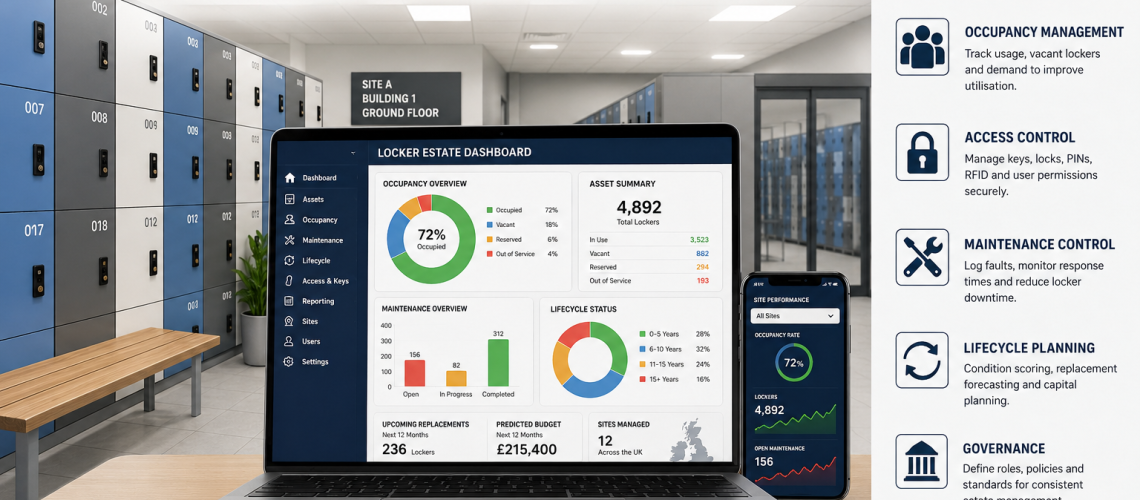
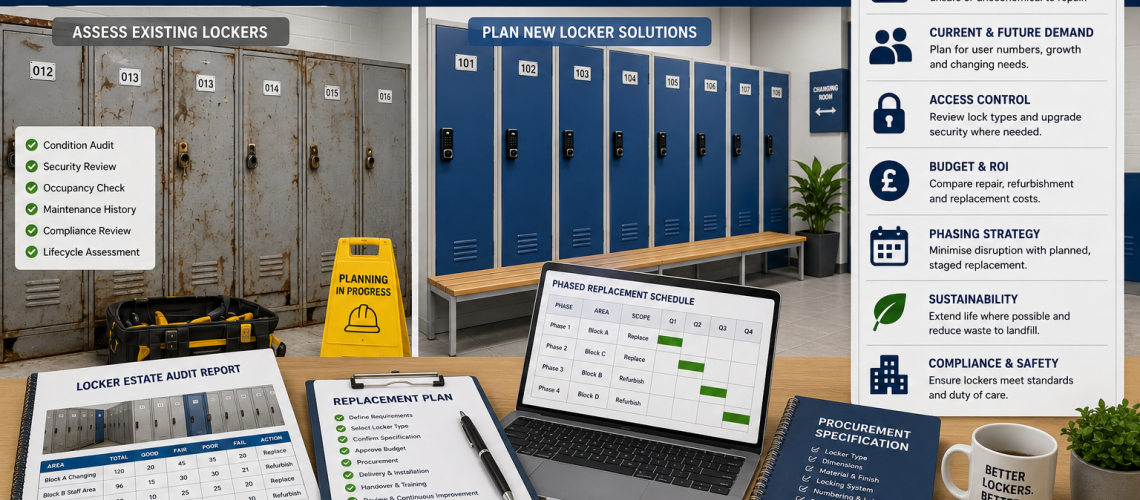
Locker estate management is the structured control of every locker across a workplace, school, healthcare site, leisure facility, warehouse or multi-site organisation. It covers the full system, not just the lockers themselves.
Blog storage solutions
May 14, 2026
Locker estate management is the structured control of every locker across a workplace, school, healthcare site, leisure facility, warehouse or multi-site organisation. It covers the full system, not just the lockers themselves.
Lockers are often treated as a simple workplace purchase. In larger organisations, they are more than that. They are physical assets with cost, condition, risk, lifecycle value and replacement pressure. When a locker estate grows across schools, workplaces, hospitals, leisure centres, warehouses or public-sector buildings, it needs capital planning.
Multi-site locker estate management helps organisations control lockers across several buildings, regions, campuses, depots or national sites. It brings locker assets, users, access systems, maintenance, reporting and replacement planning into one structured operating model.
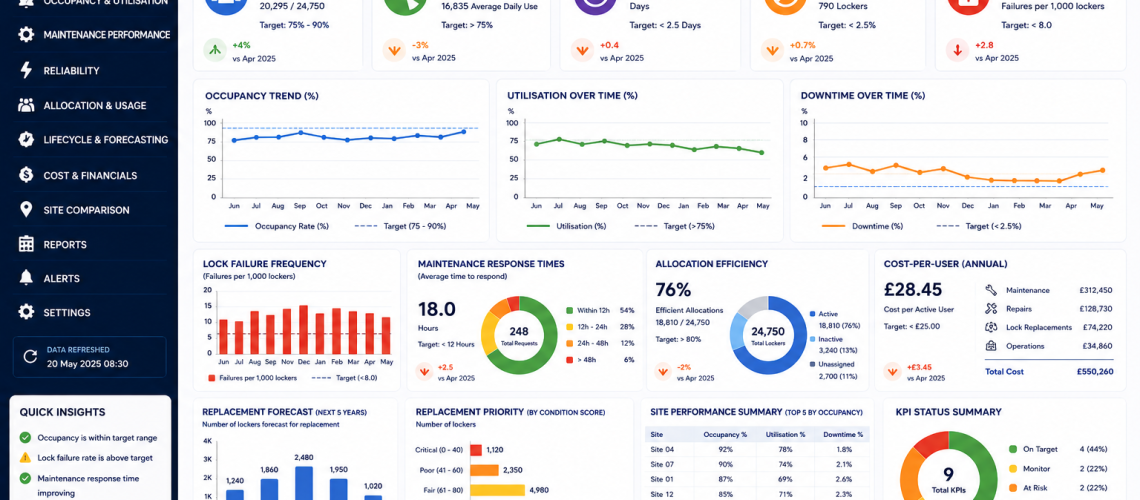
Locker KPI and performance metrics help organisations measure how effectively their locker estate is operating. They turn lockers from passive storage into measurable operational assets.
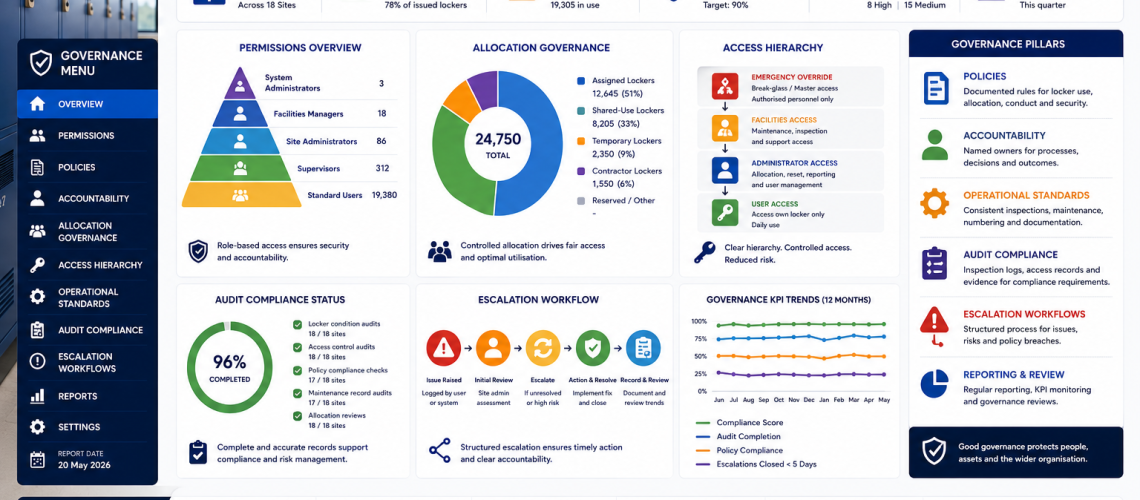
Locker estate governance is the structured control of locker permissions, policies, accountability, access rights, allocation rules, audit records and escalation workflows across an organisation.
A locker estate decision framework helps organisations make structured, evidence-based decisions about locker repair, refurbishment, replacement, expansion, rationalisation and long-term estate planning.
May 13, 2026
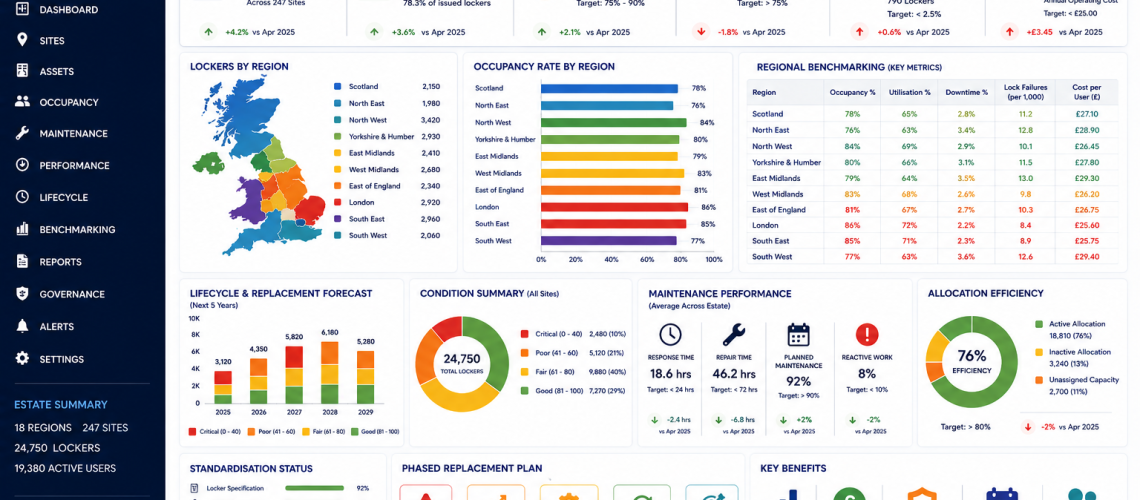
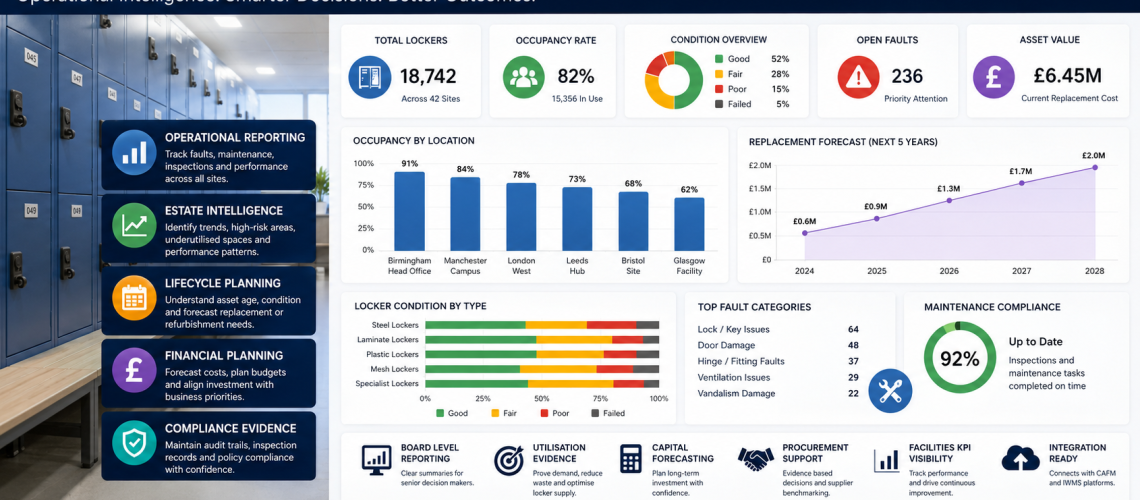
Locker estate reporting is no longer just a record of how many lockers a site owns. For larger workplaces, schools, NHS estates, industrial facilities and multi-site organisations, locker reporting is now part of operational intelligence.
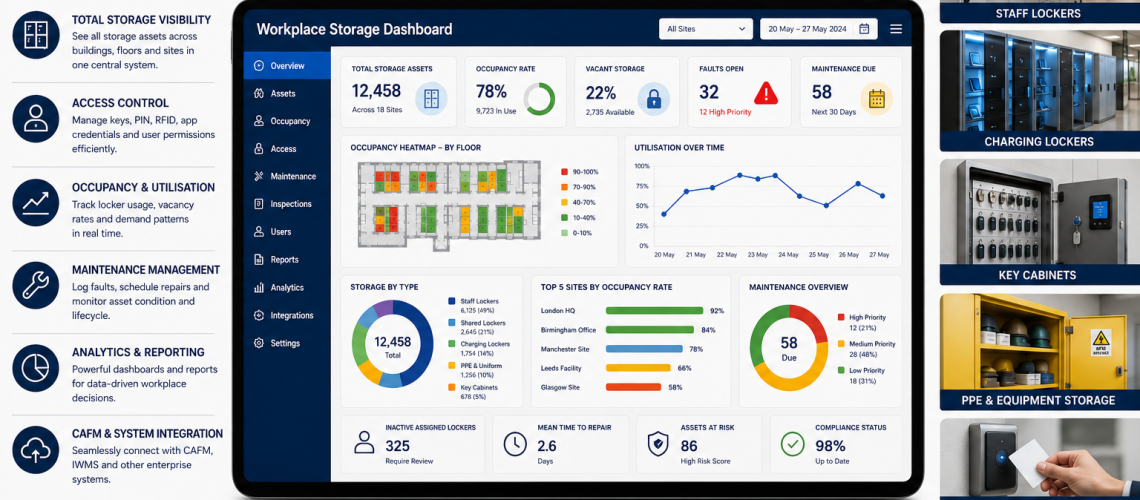
Enterprise workplace storage systems help organisations manage storage across buildings, departments, staff groups and sites. They bring lockers, charging lockers, key cabinets, PPE storage, equipment storage, access control, maintenance and analytics into one structured operational framework.
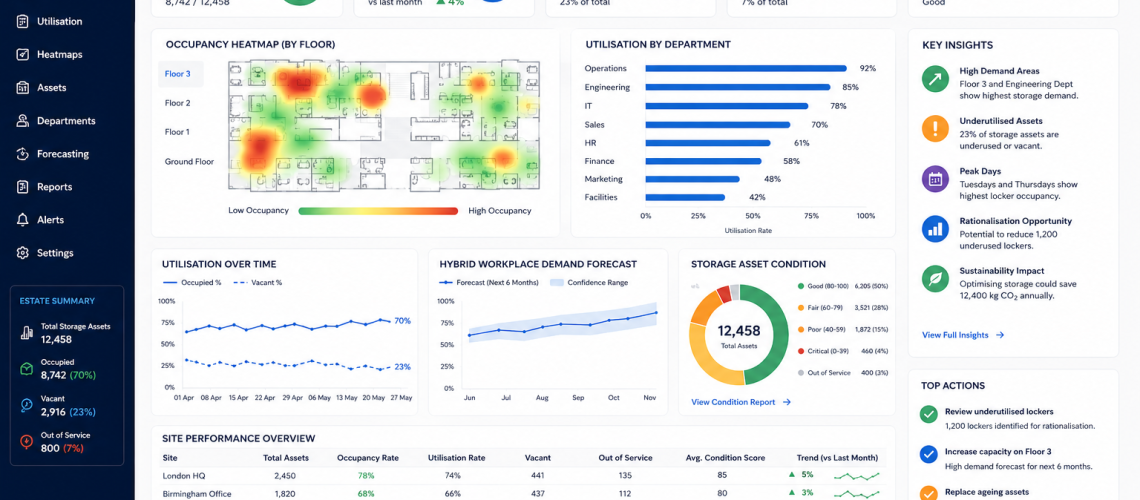
Workplace storage is no longer just a fixed set of lockers, cupboards, cabinets and charging points. In modern workplaces, storage is part of the operational infrastructure.
Locker predictive maintenance helps organisations move from reactive repairs to planned locker estate control. Instead of waiting for locks, hinges, doors or smart access systems to fail, facilities teams can use data to predict where maintenance is likely to be needed next.