School Locker Access Systems UK: Safeguarding, Student Access and Corridor Management
May 12, 2026
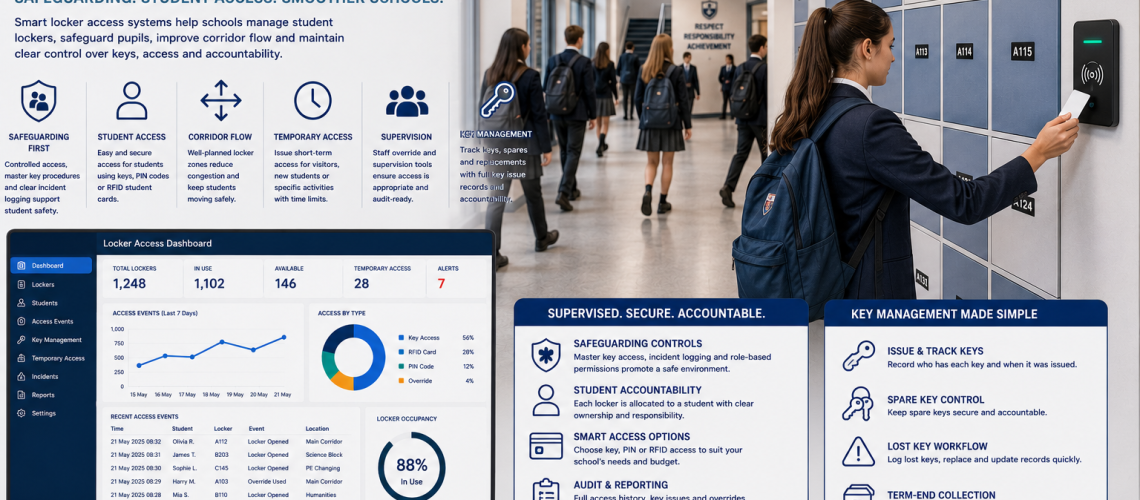
School locker access systems help schools manage student lockers, safeguarding, corridor flow, temporary access, supervision, lost keys and key management. A good school locker system is not only about giving pupils somewhere to store bags and books. It is about controlled access, clear accountability and smoother movement through busy school spaces.
Schools often need to manage hundreds or thousands of lockers across corridors, changing rooms, year-group areas and shared facilities. Without a clear access system, locker use can create congestion, lost key problems, supervision issues and weak accountability.
This guide explains how school locker access systems work, including student allocation, safeguarding controls, corridor planning, supervision, temporary access and key management.
What Are School Locker Access Systems?
School locker access systems control how pupils, staff and authorised users access lockers across a school site.
- Student locker allocation
- Year-group locker systems
- Keyed locker systems
- Master key control
- Combination locks
- RFID student cards
- Temporary locker access
- Lost key procedures
- Staff override access
- Term-end collection
- Safeguarding procedures
- Audit records
The aim is to give students practical storage while keeping access organised, supervised and accountable.
Why Locker Access Matters in Schools
School lockers affect far more than storage. They influence movement, supervision, punctuality, safeguarding and daily behaviour around corridors and changing areas.
- Reduces bag carrying during the school day
- Supports organised corridor movement
- Improves student accountability
- Helps manage lost key issues
- Supports safeguarding procedures
- Improves supervision in busy areas
- Creates clearer term-end workflows
- Reduces unmanaged locker use
A strong access system helps schools control who uses each locker, when access is allowed and how problems are recorded.
Student Locker Allocation
Student locker allocation decides which pupil uses which locker and for how long.
Allocation may be organised by:
- Year group
- Form group
- House group
- Corridor zone
- Subject area
- Changing room area
- Temporary need
- Accessibility requirement
Good allocation reduces crowding and makes it easier for staff to supervise locker areas.
For wider allocation planning, see locker allocation systems UK.
Safeguarding and Locker Access
Safeguarding is a key consideration in school locker access planning. Schools should define who can access lockers, when override access is allowed and how incidents are recorded.
- Controlled staff override access
- Clear master key procedures
- Recorded locker checks where required
- Restricted access to spare keys
- Student allocation records
- Incident escalation procedures
- Supervision responsibilities
- Access accountability
Safeguarding procedures should be clear, consistent and aligned with the school’s wider behaviour and pastoral policies.
For wider policy planning, see locker access compliance UK.
Corridor Flow and Locker Access
Locker access has a direct effect on corridor movement. Poorly placed or poorly managed lockers can create congestion at the busiest points of the school day.
Corridor flow planning should consider:
- Break-time demand
- Lunch-time movement
- Lesson changeover
- Door swing clearance
- Bench or bag-drop areas
- Supervision sightlines
- One-way movement routes
- Year-group zoning
Schools should avoid placing high-demand locker banks in narrow corridors, blind corners or areas where students already queue.
School Locker Key Management
Key management is one of the most common school locker access challenges.
A school key system should include:
- Key issue records
- Student key allocation
- Spare key control
- Lost key procedures
- Replacement key records
- Master key control
- Term-end key collection
- Parent or student deposit procedures where used
Without clear key management, schools can lose control of duplicate keys, spare keys and replacement workflows.
For detailed key planning, see school locker key management UK and locker key management systems UK.
Master Key Access in Schools
Master keys allow authorised staff to open lockers for operational, safeguarding or emergency reasons. They must be controlled carefully.
- Store master keys securely
- Restrict access to authorised staff
- Record sign-out where practical
- Log emergency access where required
- Review access after incidents
- Do not leave master keys available to general users
Master key access should support school safety and accountability, not informal convenience.
Temporary Locker Access for Schools
Schools often need temporary locker access for pupils, visitors, short-term placements and changing room use.
- New pupils waiting for permanent allocation
- Temporary medical or accessibility needs
- Exam periods
- Sports events
- Visitor or contractor storage
- Lost key replacement periods
- Short-term classroom projects
Temporary access should have a clear end date and a record of who approved it.
For wider temporary access planning, see temporary locker access systems UK.
RFID and Student Card Locker Systems
Some schools and colleges use RFID cards or student cards for locker access. This can reduce lost key problems and support central control.
- Student card access
- Year-group permissions
- Temporary access control
- Faster revocation
- Reduced key handling
- Improved audit visibility where supported
RFID systems should be checked for compatibility with the school’s existing cards, access systems and administration process.
For digital access planning, see RFID locker systems UK.
Combination and PIN Locker Systems in Schools
Combination and PIN locks can reduce physical key problems, but they need clear management procedures.
- Code reset procedures
- Forgotten code support
- Staff override access
- End-of-term reset checks
- Student guidance
- Access record where practical
These systems can work well where schools want fewer physical keys, but they still need governance and support.
Changing Room Locker Access
School changing rooms need careful locker access planning because they combine high movement, supervision needs, privacy and short access periods.
- PE lesson changeover
- Wet and dry area separation
- Sports team use
- Temporary access for events
- Supervision routes
- Bench spacing
- Bag storage
- End-of-session checks
Locker access should support smooth movement before and after PE lessons rather than creating bottlenecks.
Supervision and Staff Override Procedures
Staff override procedures should be defined before incidents occur. Schools should know who can access lockers, who authorises checks and how access is recorded.
- Pastoral staff access rules
- Site team access rules
- Emergency access procedures
- Safeguarding escalation
- Lost key support
- Maintenance access
- Incident logging
Clear procedures reduce confusion and support consistent decision-making.
School Locker Audit Trails
Audit trails help schools understand who has access to lockers and how locker issues are handled.
Audit records may include:
- Student allocation records
- Key issue history
- Lost key reports
- Master key access records
- Temporary access records
- Locker reassignment history
- Damage reports
- Term-end collection records
For wider audit planning, see locker access audit systems UK.
School Locker Access and Asset Management
Schools should also manage lockers as facilities assets. This helps with maintenance, replacement planning and long-term budgeting.
- Locker numbering
- Location records
- Lock type records
- Maintenance history
- Damage reporting
- Replacement planning
- Key records
- Occupancy reviews
For facilities asset planning, see locker asset management UK.
Common School Locker Access Problems
- Lost student keys
- No clear allocation record
- Too many pupils accessing lockers at once
- Lockers placed in congested corridors
- Weak master key control
- No term-end collection process
- Temporary access not recorded
- Inconsistent staff override rules
- Damaged lockers not tracked
- No replacement planning
The strongest school locker systems combine access control, allocation, safeguarding, supervision, key management and corridor planning.
School Locker Access Checklist
- Are lockers allocated by year group, form group or zone?
- Is each locker linked to a student or user record?
- Are lost key procedures clear?
- Are master keys controlled and recorded?
- Can temporary access be issued safely?
- Do locker banks create corridor congestion?
- Are changing room lockers supervised properly?
- Are term-end returns planned?
- Are damaged lockers recorded?
- Is access reviewed after safeguarding incidents?
- Are lockers included in facilities asset records?
Related School Locker and Access Guides
- Locker Allocation Systems UK
- School Locker Key Management UK
- Locker Access Compliance UK
- Locker Access Audit Systems UK
- Temporary Locker Access Systems UK
- RFID Locker Systems UK
- Locker Access Permissions and Governance UK
- Locker Asset Management UK
- School Locker Corridor Planning UK
- Lockers UK
Frequently Asked Questions
What are school locker access systems?
School locker access systems control how pupils and authorised staff access lockers using keys, master keys, combination locks, RFID cards or managed allocation procedures.
Why is safeguarding important for school lockers?
Safeguarding is important because schools need clear rules for student access, staff override access, locker checks and incident escalation.
How should schools manage lost locker keys?
Schools should keep key issue records, control spare keys, log replacements and define clear lost key procedures for pupils and staff.
Can schools use RFID student cards for lockers?
Yes. Some schools, colleges and universities can use RFID student cards for locker access, depending on system compatibility and administration requirements.
How do lockers affect corridor flow?
Lockers can create congestion if too many pupils access the same area at once or if locker banks are placed in narrow corridors, busy doorways or poor supervision zones.
Should schools audit locker access?
Yes. Schools should keep suitable records for allocation, lost keys, temporary access, staff override access, damage and term-end collection.
Discover more from Blog Total Locker Service
Subscribe to get the latest posts sent to your email.