Industrial Locker Access Systems UK: PPE Management, Contractor Control and Workforce Access
May 12, 2026
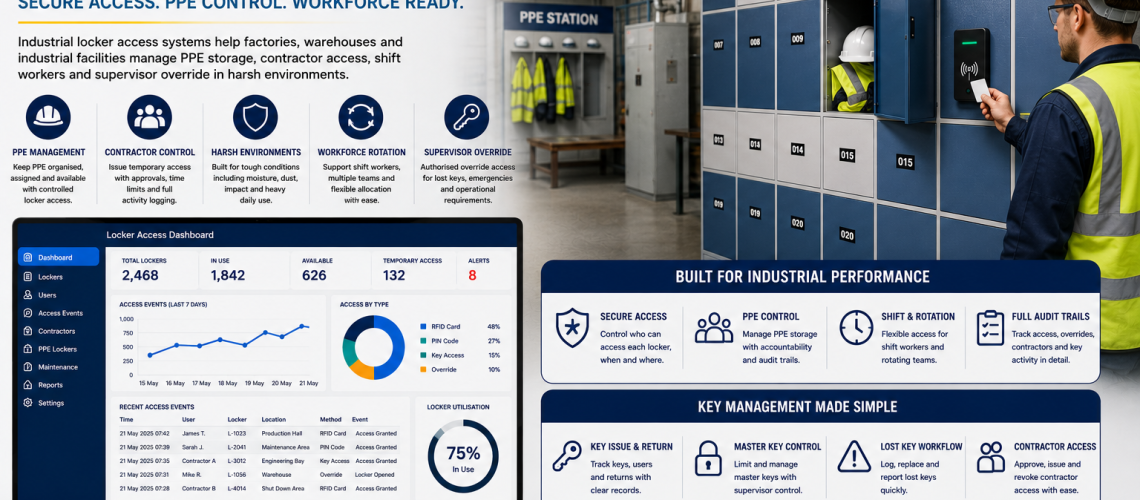
Industrial locker access systems help factories, warehouses, workshops, utilities sites and manufacturing environments manage PPE storage, contractor access, workforce rotation, supervisor override and controlled staff storage. In industrial settings, lockers are part of daily operations, site safety and workforce management.
Industrial sites often need stronger locker access control because lockers may be used by shift workers, contractors, maintenance teams, production staff and visitors. The environment may also involve dirt, moisture, impact risk, heavy use and strict operational routines.
This guide explains how industrial locker access systems work, including PPE locker management, contractor control, harsh environment planning, rotating workforce access and supervisor override procedures.
What Are Industrial Locker Access Systems?
Industrial locker access systems control how workers, supervisors, contractors and authorised users access lockers across industrial facilities.
- Staff changing lockers
- PPE lockers
- Tool lockers
- Contractor lockers
- Shift worker lockers
- Department locker banks
- Supervisor override access
- Keyed locker systems
- PIN locker systems
- RFID access systems
- Smart locker software
- Maintenance and audit records
The aim is to provide reliable storage access while supporting safety, accountability and operational continuity.
Why Locker Access Matters in Industrial Sites
Industrial sites often have complex access needs because staff movement, shift patterns, contractor activity and PPE requirements can change throughout the day.
- Rotating shift teams
- Temporary workers
- Contractor access
- PPE storage
- Tool storage
- High-wear environments
- Lost key management
- Restricted area access
- Supervisor override requirements
- Maintenance access
A structured locker access system helps industrial sites reduce downtime, improve accountability and support smoother workforce movement.
PPE Locker Management
PPE lockers help keep protective equipment organised, available and linked to the right user, role or work area.
PPE locker management may include:
- Assigned PPE lockers
- Shift-based PPE storage
- Department-based PPE allocation
- High-visibility clothing storage
- Helmet and boot storage
- Respiratory protection storage
- Cleaning and inspection schedules
- Replacement and damage reporting
PPE lockers should be planned around work zones, changing areas, shift patterns and site safety procedures.
Contractor Locker Access Control
Contractors often need short-term locker access during maintenance, installation, repairs, shutdowns or project work.
A contractor access system should define:
- Who approved access
- Which locker or area is assigned
- How long access remains active
- Which key, PIN, card or credential was issued
- Whether access is restricted by zone
- How access is revoked
- How activity is recorded
For short-term user planning, see temporary locker access systems UK.
Locker Access in Harsh Environments
Industrial environments can place heavy demands on locker systems. Locks and access methods should be chosen around site conditions, not only convenience.
Harsh environment factors may include:
- Dust
- Moisture
- Oil and grease
- Temperature variation
- High usage
- Impact risk
- Corrosion risk
- Heavy PPE storage
- Dirty changing areas
Industrial locker access systems should be durable, easy to maintain and suitable for the conditions where they will be used.
Workforce Rotation and Shift Access
Many industrial sites operate with rotating workforces. This can make permanent locker assignment inefficient in some areas.
Shift-based access can support:
- Day shifts
- Night shifts
- Weekend teams
- Agency workers
- Temporary staff
- Production teams
- Maintenance teams
- Warehouse operatives
Access may be managed using keys, PINs, RFID credentials or smart locker software depending on the level of control required.
For allocation planning, see locker allocation systems UK.
Supervisor Override Access
Supervisor override access allows authorised staff to open or manage lockers when operational issues occur.
Override access may be required for:
- Lost keys
- Forgotten PINs
- Emergency access
- Shift handover issues
- Maintenance inspections
- Contractor clearance
- Abandoned locker checks
- Incident investigations
Supervisor override should be controlled, limited and recorded where practical.
For governance planning, see locker access permissions and governance UK.
Industrial Key Management
Keyed locker systems are still common in industrial sites because they are simple, durable and familiar. However, they need proper key control.
- Key issue records
- Spare key control
- Master key sign-out
- Replacement key records
- Lost key procedures
- Restricted key storage
- Supervisor access logs
Without structured key management, industrial locker systems can quickly become difficult to control.
For wider key planning, see locker key management systems UK.
RFID Locker Access for Industrial Sites
RFID locker systems can help industrial sites reduce key handling and improve credential control.
RFID may support:
- Staff cards
- Contractor passes
- Shift worker credentials
- Department permissions
- Access revocation
- Audit-ready records
- Restricted area locker access
RFID systems should be checked against site conditions, credential compatibility and maintenance requirements.
For digital access planning, see RFID locker systems UK.
PIN and Digital Locker Access
PIN and digital locker systems can be useful where lockers are shared or assigned temporarily.
- Temporary PINs
- Shared-use lockers
- Shift-based access
- Contractor lockers
- Reduced key handling
- Controlled reset procedures
PIN systems should be supported by clear reset rules and supervisor override procedures.
Smart Locker Systems for Industrial Facilities
Smart locker systems can give industrial facilities better visibility over locker use, access activity and maintenance status.
- Occupancy reporting
- Shift allocation
- Temporary access control
- Contractor credential management
- Remote revocation
- Audit reporting
- Maintenance alerts
- Multi-site reporting
For software planning, see smart locker management software UK.
Audit Trails for Industrial Locker Access
Audit trails help industrial sites investigate incidents, manage contractor access and review access activity.
Audit records may include:
- User allocation
- Access timestamps
- Key issue history
- Credential changes
- Temporary access periods
- Supervisor override events
- Contractor access records
- Maintenance activity
For deeper reporting structure, see locker access audit systems UK.
Maintenance and Lifecycle Planning
Industrial locker systems often experience heavy wear. Maintenance planning should be built into the access system from the start.
- Lock servicing
- Hinge repairs
- Door alignment
- Battery replacement
- Corrosion checks
- Cleaning schedules
- Damage reporting
- Replacement planning
For facilities lifecycle planning, see locker asset management UK.
Industrial Locker Access Compliance
Industrial locker access should align with site policies for safety, contractor control, access permissions and incident reporting.
- Access approval rules
- Contractor access logging
- Supervisor override control
- Credential revocation
- Audit retention
- Facilities policies
- Incident escalation
For wider compliance planning, see locker access compliance UK.
Common Industrial Locker Access Problems
- Lost keys
- Uncontrolled master keys
- Contractor access not revoked
- No shift allocation process
- Damaged locks not recorded
- PPE lockers not assigned clearly
- Poor access visibility
- Weak supervisor override procedures
- Harsh conditions damaging locks
- No planned replacement cycle
The strongest industrial locker systems combine durable hardware, controlled access, PPE workflows, contractor logging and planned maintenance.
Industrial Locker Access Checklist
- Are lockers used for PPE, personal items or tools?
- Are lockers assigned permanently or by shift?
- Do contractors need temporary access?
- Is supervisor override controlled?
- Are harsh environmental conditions considered?
- Are keys, PINs or RFID credentials recorded?
- Can access be revoked quickly?
- Are maintenance issues logged?
- Are lockers included in facilities asset records?
- Is there a replacement plan for damaged or ageing lockers?
Related Industrial Locker and Access Guides
- Locker Allocation Systems UK
- Temporary Locker Access Systems UK
- Locker Access Permissions and Governance UK
- Locker Access Audit Systems UK
- Locker Access Compliance UK
- RFID Locker Systems UK
- Smart Locker Management Software UK
- Locker Asset Management UK
- Lockers UK
- Workplace Lockers
Frequently Asked Questions
What are industrial locker access systems?
Industrial locker access systems control how workers, contractors and supervisors access lockers in factories, warehouses, workshops and industrial facilities.
Why are PPE lockers important?
PPE lockers help keep protective equipment organised, available and linked to the right worker, shift or department.
How should contractor locker access be managed?
Contractor access should be approved, time-limited, recorded and revoked when work is complete.
Are RFID lockers suitable for industrial sites?
RFID lockers can be suitable if the hardware, credentials and maintenance process are appropriate for the industrial environment.
What is supervisor override access?
Supervisor override access allows authorised staff to open or manage lockers during lost key issues, emergencies, inspections or operational incidents.
Why do industrial lockers need lifecycle planning?
Industrial lockers often face heavy use, dirt, moisture and impact risk, so planned maintenance and replacement help reduce downtime and failures.
Discover more from Blog Total Locker Service
Subscribe to get the latest posts sent to your email.