NHS Locker Access Systems UK: Staff Lockers, Auditability and Healthcare Access Control
May 12, 2026
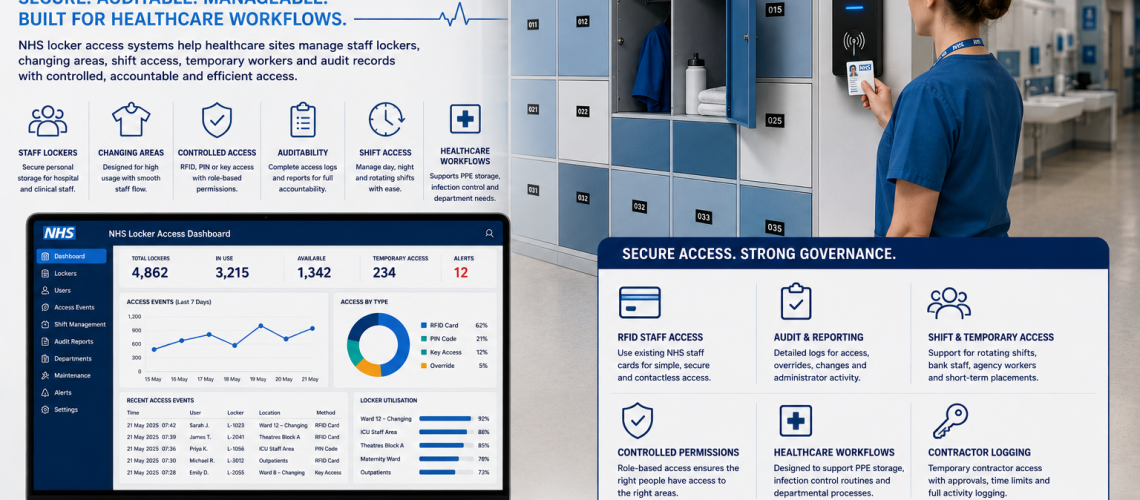
NHS locker access systems help healthcare sites manage staff lockers, changing areas, shift access, temporary workers, audit records and controlled access workflows. In hospitals, clinics and healthcare estates, lockers are not only storage units. They support staff welfare, operational security, infection-control routines and accountable facilities management.
Healthcare locker access systems often need to support large staff numbers, rotating shifts, department-based permissions, contractor access, PPE storage and clear auditability. This makes locker access part of wider healthcare estates management and operational governance.
This guide explains how NHS locker access systems work, what access methods are used, and how healthcare facilities can manage lockers across changing rooms, staff areas and controlled environments.
What Are NHS Locker Access Systems?
NHS locker access systems control how staff, temporary workers, contractors and authorised users access lockers in healthcare environments.
They may include:
- Staff lockers
- Changing room lockers
- PPE lockers
- Department locker banks
- Temporary worker lockers
- Shift-based allocation
- Keyed locker systems
- RFID staff card access
- PIN locker systems
- Smart locker software
- Audit trails
- Controlled override access
The aim is to provide secure, practical and manageable access for healthcare staff while maintaining accountability across the estate.
Why Locker Access Matters in Healthcare
Healthcare sites have complex locker access requirements because staff movement, shift patterns and department access can change throughout the day.
Common challenges include:
- High staff numbers
- Rotating shift teams
- Temporary and agency workers
- Shared changing areas
- PPE storage requirements
- Lost key management
- Department-based access control
- Contractor access logging
- Audit and accountability needs
- Operational continuity during maintenance
A structured locker access system helps healthcare sites reduce confusion, improve accountability and support daily operational flow.
Staff Locker Systems for NHS Sites
Staff lockers are used across hospitals, clinics, treatment centres and healthcare support buildings. They provide secure storage for personal belongings, uniforms, bags and work-related items.
Staff locker systems may need to support:
- Permanent staff allocation
- Shift-based allocation
- Temporary staff access
- Department-based locker groups
- Staff card access
- Lost credential procedures
- Offboarding and access removal
- Cleaning and maintenance schedules
For wider allocation planning, see locker allocation systems UK.
Changing Area Locker Access
Changing areas are one of the most important locker zones in healthcare buildings. These spaces often serve large numbers of users across different shifts and departments.
Access planning should consider:
- Staff entry and exit flow
- Shift change congestion
- Clean and dirty workflow separation
- Uniform storage
- PPE storage
- Wet and dry area separation
- Bench and aisle clearance
- End-of-shift locker turnover
Locker access should support the wider changing room layout rather than create bottlenecks around doors, benches or circulation routes.
Shift-Based Locker Access
NHS and healthcare environments often operate with rotating shifts. This makes permanent locker assignment difficult in some areas.
Shift-based locker access can support:
- Day shifts
- Night shifts
- Agency staff
- Bank staff
- Department rotations
- Temporary placements
- Shared changing facilities
Access may be controlled by keys, PINs, RFID staff cards or smart locker software depending on the site and the level of control required.
Controlled Access for Healthcare Lockers
Controlled access helps healthcare sites manage who can use specific locker areas and under which conditions.
Controlled access may include:
- Department-only locker banks
- Staff-only changing rooms
- Temporary worker access
- Contractor restrictions
- Supervisor override permissions
- Emergency access procedures
- Role-based administrator rights
- Credential expiry rules
For access policy planning, see locker access permissions and governance UK.
RFID Staff Card Locker Access
RFID staff card locker access allows healthcare staff to use contactless cards or credentials to open lockers.
This can help reduce:
- Physical key handling
- Lost key problems
- Manual key issue records
- Slow onboarding
- Delayed access revocation
RFID systems can also support department-level permissions, temporary worker access and audit-ready credential records.
For deeper digital planning, see RFID locker systems UK.
PIN and Digital Locker Access
PIN and digital access systems are useful where healthcare sites need flexible or temporary locker use.
They may support:
- Temporary PINs
- Shared-use lockers
- Shift-based assignment
- Visitor or contractor lockers
- Automated expiry
- Reduced key administration
PIN systems should be supported by clear reset procedures and access governance rules.
Smart Locker Systems for NHS Estates
Smart locker systems give healthcare estates teams better visibility over locker use, access activity and occupancy.
Smart systems may include:
- Cloud dashboards
- Occupancy reporting
- RFID access
- Mobile administration
- Audit reporting
- Remote credential revocation
- Temporary access management
- Maintenance alerts
For the software layer, see smart locker management software UK.
Auditability and Accountability
Auditability is important in healthcare locker systems because access may need to be reviewed during incidents, maintenance checks or operational investigations.
Audit records may include:
- User allocation
- Access timestamps
- Credential changes
- Temporary access periods
- Supervisor overrides
- Failed access attempts
- Maintenance activity
- Locker reassignment records
For audit structure planning, see locker access audit systems UK.
Temporary Worker and Agency Staff Access
Temporary workers and agency staff often require short-term locker access. This access should be controlled, time-limited and easy to remove when the placement ends.
A temporary worker access process may include:
- Named user record
- Department assignment
- Access start date
- Access expiry date
- Temporary PIN or credential
- Supervisor approval
- Revocation confirmation
- Audit record update
For short-term access planning, see temporary locker access systems UK.
Contractor Locker Access in Healthcare Sites
Contractors may need temporary locker access during maintenance, installation or facilities work.
Contractor access should define:
- Who approved access
- Which area can be accessed
- How long access remains active
- Which credential was issued
- Whether access was returned or revoked
- How activity is logged
This supports facilities accountability and reduces unmanaged access risk.
Locker Access Compliance in NHS Settings
Healthcare locker systems should align with internal policies for access control, audit visibility, data handling, staff welfare and operational accountability.
Compliance planning may include:
- Access permissions
- Audit retention rules
- Credential revocation
- Contractor access logging
- Staff offboarding procedures
- Facilities policies
- Safeguarding where relevant
- GDPR considerations for digital access logs
For wider policy planning, see locker access compliance UK.
PPE Locker Access Management
Healthcare lockers may support PPE storage, uniform storage or staff changing routines.
PPE locker access management may include:
- Department-based allocation
- Shift-based access
- Cleaning schedules
- Replacement planning
- Damage reporting
- Access accountability
- Maintenance records
Locker access should support healthcare workflows and practical day-to-day use.
Medical Storage System Bridge
NHS locker access systems also connect with wider healthcare storage planning. Staff lockers, PPE lockers, medicine storage areas, controlled access cabinets and key systems may all form part of a wider healthcare storage system.
This is why locker access should be considered alongside medical storage, access governance and facilities asset management.
For healthcare storage planning, see medicine storage systems UK and medical cabinets UK.
Facilities Asset Management for NHS Lockers
NHS locker estates should be managed as facilities assets, not disconnected storage units.
Asset management may include:
- Locker asset registers
- Location mapping
- Lock type records
- Maintenance history
- Replacement planning
- Cleaning schedules
- Occupancy data
- Lifecycle tracking
For lifecycle planning, see locker asset management UK.
Common NHS Locker Access Problems
- Lost locker keys
- Unclear staff allocation
- No shift-based allocation process
- Temporary worker access not revoked
- Weak audit visibility
- No contractor logging
- Poor changing room flow
- Unrecorded master key access
- Inconsistent locker maintenance
- No lifecycle replacement plan
The strongest healthcare locker systems combine access control, allocation, audit trails, facilities workflows and lifecycle planning.
NHS Locker Access System Checklist
- Are staff lockers assigned or shared?
- Do shift workers need temporary allocation?
- Can temporary worker access be revoked quickly?
- Are contractor access records kept?
- Are audit trails available where required?
- Are RFID staff cards compatible?
- Are changing areas planned around staff flow?
- Are lockers included in facilities asset records?
- Is maintenance tracked?
- Is there an emergency override process?
- Are access records managed under internal data policies?
Related Healthcare Locker and Storage Guides
- Locker Access Compliance UK
- Locker Access Control Systems UK
- Locker Access Audit Systems UK
- Locker Allocation Systems UK
- Temporary Locker Access Systems UK
- RFID Locker Systems UK
- Smart Locker Management Software UK
- Locker Asset Management UK
- Medicine Storage Systems UK
- Medical Cabinets UK
- Lockers UK
- Medical Cabinets
Frequently Asked Questions
What are NHS locker access systems?
NHS locker access systems control how healthcare staff, temporary workers and authorised users access lockers in changing areas, staff rooms and controlled environments.
Can NHS lockers use RFID staff cards?
Yes. Some healthcare locker systems can use RFID staff cards, depending on credential compatibility, lock hardware and system configuration.
Why is auditability important for healthcare lockers?
Auditability helps healthcare sites review access activity, investigate incidents, manage temporary workers and maintain operational accountability.
How should shift worker locker access be managed?
Shift worker access can be managed through assigned lockers, temporary allocation, RFID credentials, PIN systems or smart locker software depending on site needs.
Do NHS locker systems need compliance planning?
Yes. Digital locker systems may require policies for access permissions, audit records, data handling, temporary access and credential revocation.
How do locker systems connect with medical storage?
Locker systems, medical cabinets, PPE storage and controlled access areas all form part of wider healthcare storage planning and facilities governance.
Discover more from Blog Total Locker Service
Subscribe to get the latest posts sent to your email.