Medicine Storage Systems UK: Planning, Control and Secure Storage Setup (2026 Guide)
May 6, 2026
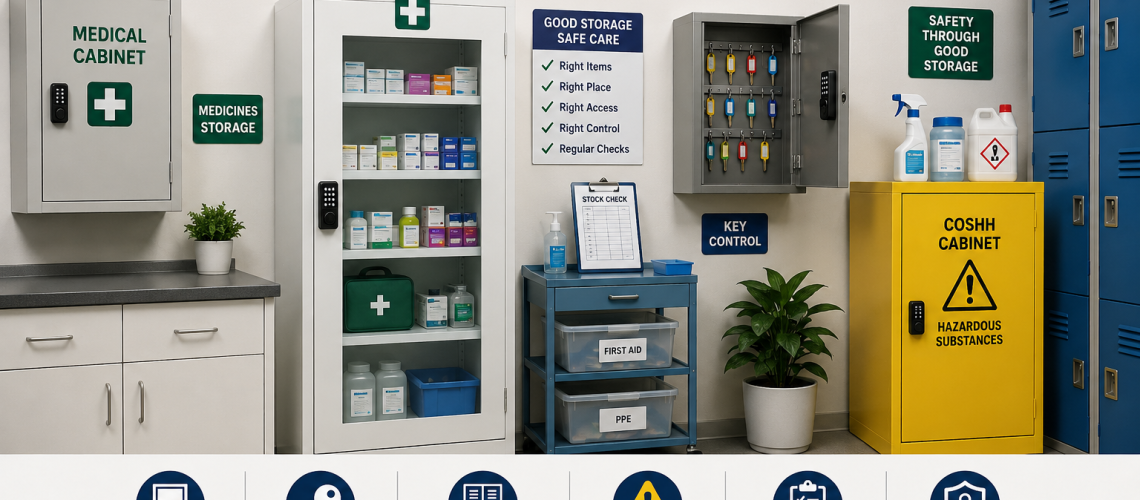
A medicine storage system is more than a cabinet. It is the planned combination of storage units, access control, segregation, labelling, stock control, records and working procedures used to keep medicines and related healthcare items organised and controlled.
This guide explains how the different parts of medicine storage work together as one system. Use it when the question is not simply which cabinet to buy, but how storage units, authorised access, segregation, labelling, stock control and working procedures should fit together.
For cabinet selection, including wall-mounted and floor-standing units, first aid storage, personal medication and clinical consumables, start with the Medical Cabinets UK buying guide. For controlled-drug storage, use the dedicated Controlled-Drug Cabinet UK guide.
Quick Answer: What Makes a Complete Medicine Storage System?
| System element | What it needs to answer |
|---|---|
| Storage unit | What type of cabinet, cupboard, fridge or specialist storage is needed? |
| Access control | Who is authorised and how is access issued or restricted? |
| Segregation | Which items should be kept apart? |
| Location and layout | Where should each storage unit sit in the workflow? |
| Labelling | How will staff identify stock groups and storage roles? |
| Stock control | How will stock, expiry dates and replenishment be managed? |
| Records and procedures | How will the organisation document and maintain the system? |
What Is a Medicine Storage System?
A medicine storage system is the planned setup used to receive, store, organise, access, check and replenish medicines and related healthcare stock.
The cabinet is only one component. A complete system should answer:
- What is being stored?
- Which storage category does it belong to?
- Who needs access?
- How should different stock groups be separated?
- Where should each storage unit be positioned?
- How will stock be checked and replenished?
- Which records or procedures support the system?
Start With the Stock, Not the Cabinet
Before deciding how many cabinets are required, list the different categories that need to be stored.
- general medicines;
- personal medication;
- controlled drugs;
- items requiring refrigeration;
- first aid supplies;
- dressings and clinical consumables;
- reserve stock.
Different categories may require different storage units, access arrangements or procedures. A single cabinet should not automatically be expected to solve every storage requirement.
1. Choose the Correct Storage Units
The first system decision is which physical storage units are required.
| Requirement | Storage route |
|---|---|
| General medicines | Lockable medical or medicine cabinet |
| Higher-volume general medicine stock | Larger floor-standing medical cabinet |
| Controlled drugs | Specialist controlled-drug storage where required |
| Temperature-controlled medicines | Suitable medicine refrigeration |
| First aid supplies | First aid or suitable medical cabinet |
| Clinical consumables | Medical supply storage |
Use the Medical Cabinets UK guide for the cabinet-selection decision. This page continues from there and explains how the different storage units should work together.
If the decision is specifically between medicine storage and first aid storage, use Medical Cabinets vs First Aid Cabinets UK.
2. Plan Access Control Across the System
Access control should be planned at system level rather than cabinet by cabinet in isolation.
- Which roles require access to each storage unit?
- Which stock categories need tighter restriction?
- How are keys, codes or credentials controlled?
- What happens when staff roles change?
- How is emergency or temporary access handled?
For detailed lock and authorised-access decisions, use Medical Cabinet Locks & Access Control UK. For controlled-drug storage, use the Controlled-Drug Cabinet UK guide.
3. Separate Different Storage Functions
A clear system prevents unrelated stock from gradually becoming mixed together.
- Separate general medicines from unrelated consumables where practical.
- Keep personal medicines distinguishable by individual where required.
- Treat controlled-drug storage as a separate specialist requirement where applicable.
- Keep temperature-controlled stock within the appropriate refrigerated system.
- Avoid using medical storage as general-purpose room storage.
4. Plan Location and Workflow
Medicine storage should fit the way the room or service operates.
For clinic and treatment-room applications, see Medical Cabinets for Clinics UK. If the main question is cabinet format, use Wall-Mounted vs Floor-Standing Medical Cabinets.
- Place routinely used storage where authorised staff can reach it efficiently.
- Avoid locations that create unnecessary public or unauthorised access.
- Consider the relationship between working stock and reserve stock.
- Keep different storage roles physically understandable.
- Make restocking and routine checks practical.
Detailed shelf-level organisation belongs in the medical cabinet layout and organisation guide. This page focuses on how the storage units work together across the room or service.
5. Use Labelling to Support the System
Labelling should make the storage structure easier to understand rather than compensate for poor layout.
- Identify the purpose of each cabinet or storage area.
- Use consistent shelf or stock-group identification where useful.
- Keep individual medication clearly attributable where required.
- Avoid labels that are so detailed that staff stop using the system consistently.
6. Build Stock Control Into the Storage Design
The storage system should make it easier to see what is present, what is running low and what needs review.
- Keep stock visible rather than packed several rows deep.
- Separate high-use stock from reserve quantities where helpful.
- Allow enough space for normal replenishment.
- Make expiry checking practical.
- Review storage capacity when overcrowding becomes routine.
For the detailed recurring audit routine, use the Medicine Cabinet Audit Checklist UK.
7. Connect Storage to Records and Procedures
A storage system remains reliable only when the physical setup and working procedures agree.
- Define who is responsible for each storage area.
- Document access arrangements where required.
- Set a process for replenishment and stock review.
- Include damaged locks, missing keys or cabinet faults in normal reporting.
- Review the system when workflows, staffing or stock profiles change.
Detailed regulatory and inspection questions belong in Medical Storage Compliance UK.
When One Cabinet Is Not Enough
A well-planned system may use several storage units rather than one oversized cabinet.
| Situation | Possible system approach |
|---|---|
| General medicines plus controlled drugs | General medicine cabinet plus separate specialist controlled-drug storage |
| Medicines plus refrigerated stock | Cabinet storage plus medicine refrigeration |
| Working stock plus substantial reserve stock | Separate day-to-day and reserve storage roles |
| Medicines plus large quantities of dressings and consumables | Separate medicine storage from broader clinical supply storage |
| Several people have personal medication | Storage arrangement that clearly separates individual medicines |
Medicine Storage System Planning Framework
- List the stock. Identify every medicine and healthcare storage category.
- Separate specialist requirements. Identify controlled-drug and refrigerated storage needs.
- Choose storage units. Match each category to the correct cabinet, cupboard, fridge or specialist unit.
- Map authorised users. Define who needs access to each part of the system.
- Plan the room. Position storage around practical workflow and controlled access.
- Define segregation and labelling. Make storage roles clear.
- Build in stock control. Make checks, replenishment and expiry review practical.
- Document the process. Connect the physical system to site procedures and responsibilities.
How the System Changes by Setting
| Setting | Typical system emphasis |
|---|---|
| Care home | Personal medication, routine medicines, controlled drugs where applicable, stock control and access procedures |
| Clinic or treatment room | Working stock, treatment supplies, authorised staff access and efficient room workflow |
| School | Pupil medication, emergency medication, first aid stock and controlled staff access |
| Workplace | First aid and staff-managed medical items with clear separation from general storage |
Common Medicine Storage System Mistakes
- Buying the cabinet first: the stock and storage roles should define the equipment.
- Using one cabinet for every function: specialist and routine stock can need different arrangements.
- Planning access one cabinet at a time: access should be coherent across the whole system.
- Ignoring workflow: secure storage can still be badly designed if it is awkward to use.
- Overcrowding storage: poor visibility makes stock control harder.
- Relying on labels to fix poor organisation: physical separation should come first.
- Failing to review the system: staffing, stock and service requirements change.
Related Medical Storage Guides
- Medical Cabinets UK – cabinet selection and buying guide.
- Controlled-Drug Cabinet UK – specialist higher-security storage.
- Medical Storage Compliance UK – governance and inspection readiness.
- Medical Cabinet Locks & Access Control UK – authorised access and lock governance.
- Medicine Cabinet Audit Checklist UK – stock, expiry and restocking routines.
- Medical Cabinets for Clinics UK – clinic and treatment-room use.
- Medical Cabinets vs First Aid Cabinets UK – purpose and storage-role comparison.
- Wall-Mounted vs Floor-Standing Medical Cabinets – cabinet-format comparison.
Medical Cabinets from Total Locker Service
Total Locker Service supplies lockable medical cabinets for UK healthcare, care, education and workplace environments.
When planning a wider system, define the storage categories first and then choose the cabinet sizes, formats and access methods required for each part of the system.
Medicine Storage System FAQs
What is a medicine storage system?
A medicine storage system is the planned combination of storage units, access control, segregation, labelling, stock control, records and working procedures used to manage medicines and related healthcare stock.
Is one medicine cabinet enough?
Sometimes, but not always. Separate storage may be needed for controlled drugs, refrigerated medicines, personal medication, reserve stock or large quantities of clinical consumables.
What should be planned before buying medical cabinets?
List the stock categories, identify specialist requirements, map authorised users, plan segregation and room workflow, and decide how stock checks and replenishment will be managed.
How should controlled drugs fit into a medicine storage system?
Controlled-drug storage should be treated as a separate specialist requirement where applicable, with its own cabinet specification, access control and procedures.
How does stock control affect medicine storage design?
The storage layout should make stock visible, support expiry checks and replenishment, avoid routine overcrowding and keep working stock clearly organised.
Conclusion: Plan the System Before the Products
The strongest medicine-storage setup starts by defining stock categories, specialist requirements, authorised users and workflow. Only then should the individual cabinets, fridges and access methods be selected.
Use this guide for the whole-system planning question, then move to the relevant specialist guide for cabinet selection, controlled drugs, compliance, access governance, clinic use or routine audits.
Discover more from Blog Total Locker Service
Subscribe to get the latest posts sent to your email.