
Ojmar OTS RFID Locker Locks: Basic and Advance
Ojmar OTS RFID Locker Lock
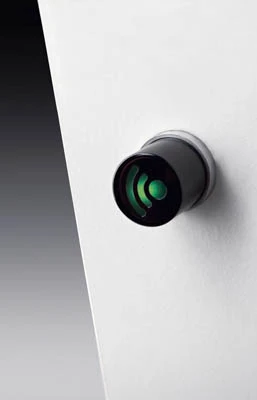 Click to enlarge

Features
Ojmar OTS RFID Electronic Locker Locks
Ojmar OTS RFID locker locks provide an electronic alternative to traditional mechanical locker locking systems. Designed for commercial and institutional environments, they help organisations provide convenient locker access while reducing reliance on individually issued mechanical keys.
The range is particularly relevant to facilities managing lockers for visitors, employees, members or other regular users. Ojmar OTS Basic and Advance offer different arrangements for locker operation, allowing buyers to consider the requirements of their particular installation.
Why Choose Electronic RFID Locker Access?
Conventional locker systems often require physical keys to be issued, collected, replaced or accounted for. Introducing electronic access can reduce some of this administration and make locker use more convenient.
This is especially useful where users change frequently, lockers are used throughout the day or large numbers of people need access to changing and storage facilities. The practical benefits depend on the operating procedures adopted by the organisation.
Applications for Ojmar OTS Locker Locks
Ojmar OTS systems can be considered for a range of commercial locker environments, including:
- Leisure centres and swimming pools: electronic locker access for members and visitors using communal changing facilities.
- Gyms and sports clubs: convenient locker operation for facilities with regular and occasional users.
- Workplaces and staff changing areas: electronic locking for employee storage within offices, factories and other working environments.
- Schools and education facilities: an electronic locking option for suitable student, staff and sports-area locker installations.
- Healthcare and institutional facilities: a potential solution for staff lockers where controlled access and practical administration are important.
The appropriate system will depend on how the lockers are used, the level of administration required and the operating arrangements of the facility.
Managing Lockers Across a Busy Facility
Locker access is one part of operating a changing room or staff storage area. Facilities also need procedures for assisting users, administering locker access and maintaining equipment throughout its working life.
For larger installations, considering these processes at the planning stage can help avoid unnecessary administration and ensure that the selected locking system meets the needs of both users and site staff.
New Locker Installations and Existing Facilities
Ojmar OTS locks may be considered when planning new electronic locker installations or upgrading an existing facility. For new projects, the locking arrangement can be incorporated into the wider locker specification from the outset.
For existing locker banks, replacing mechanical locks with electronic alternatives may offer operational advantages. However, the scope and suitability of any conversion should be established before committing to a replacement programme.
Planning an Ojmar OTS Locker Project
Before selecting an electronic locker system, consider how people will use the facility, who will administer locker access and what level of support will be available to users.
A successful installation should be practical for visitors or employees as well as the people responsible for operating and maintaining the lockers.
For detailed product differences, technical performance and installation requirements, see the Ojmar OTS Specification section.
Choosing Locker Locks for Your Facility
Total Locker Service supplies electronic and conventional locking solutions for commercial locker installations. We can help identify appropriate options for new projects or existing locker facilities.
For advice about an Ojmar OTS installation, contact Total Locker Service with an outline of your project and the number of lockers involved.
You can also explore our Ojmar locker lock range , compare RFID locker locks or browse our complete locker lock range .
Specification
Please see our technical documentation for this product below Ojmar OTS RFID Electronic Locker Lock Specification
Please see our technical documentation for this product below Ojmar OTS Advance RFID Lock Specification
Ojmar OTS Basic and Advance Technical Specifications
The specifications below relate to the original battery-powered Ojmar OTS Basic and Ojmar OTS Advance models. Refer to the separate manufacturer datasheets linked above when confirming a particular lock reference. Later products carrying similar OTS names may have different capabilities.
OTS Basic and OTS Advance Comparison
| Specification | OTS Basic | OTS Advance |
|---|---|---|
| Locker operating mode | Free mode (shared use) | Free or dedicated mode (shared or assigned use) |
| RFID credentials | MIFARE Classic 1K and 4K | MIFARE Classic; additional technologies described in the Advance datasheet, subject to the exact model and configuration |
| Programming communication | No NFC interface specified in the supplied Basic datasheet | NFC wireless programming described in the Advance datasheet |
| Management functions | Shared-use administration | Additional assignment, programming and maintenance functions, depending on the installed system |
| Power supply | 4 × 1.5 V AA batteries | 4 × 1.5 V AA batteries |
| Manufacturer-stated battery endurance | Approximately 30,000 operating cycles | Approximately 30,000 operating cycles |
| Battery condition | Low-battery detection specified; checking procedure not detailed in the supplied Basic datasheet | Battery-status checking described using compatible programming or management equipment |
| Status indicators | Not specified in the supplied Basic datasheet | Red, green and orange LEDs |
| Operating temperature | −20 to +70 °C | −20 to +70 °C |
| Ingress protection | IP55 | IP55 |
| External impact resistance | IK7 | IK7 |
| Internal impact resistance | IK9 | IK9 |
The operating-cycle figure is a manufacturer specification, not a guaranteed maintenance interval. Battery performance varies with usage, batteries and installation conditions. Likewise, IP55 does not indicate protection against immersion or unrestricted high-pressure cleaning.
Credentials, Programming and Installation Checks
| Component or requirement | Details to verify |
|---|---|
| RFID card, wristband or fob | Credential technology, encoding and suitability for the selected lock generation; test an example credential where an existing system is involved |
| Locker allocation | Free operation or, on the appropriate Advance configuration, dedicated allocation |
| Programming equipment | Compatible programmer, authorised management credentials and any required software or initialisation process |
| System compatibility | Exact card format, software version and integration method; the ability to read MIFARE alone does not establish compatibility |
| Door and fixing compatibility | Door material and thickness, mounting-hole positions, latch clearance, frame engagement and handing against the correct fitting drawing |
| Items supplied | Confirm whether batteries, fixing components, credentials, management keys and programming equipment are included in the quoted package |
The original OTS Basic documentation refers to Technogym Wellness System, Preva and Milon. Those references should not be taken as confirmation of compatibility with every version or installation of those systems.
Product naming: OTS Basic and OTS Advance are battery-powered locks. The names OTS 10 (Basic) and OTS 20 (Advance) also appear in later manufacturer material. They should not be confused with the separate Ojmar OTS20 Batteryless lock.
Ojmar OTS Technical FAQs
Can OTS Basic be programmed for permanently assigned lockers?
The original OTS Basic model is specified for free or shared-use operation. Dedicated locker assignment is a function of the suitable OTS Advance configuration, with the required management equipment.
Will an existing MIFARE access card operate an Ojmar OTS lock?
Not necessarily. The original locks support compatible MIFARE credentials, including Classic 1K and 4K, but card encoding and site programming must also match. Check the precise card specification and test a representative credential before ordering in quantity.
Do Ojmar OTS locks require continuous network wiring?
No permanent network connection to each locker is required for standalone operation. Initial configuration, administration or integration may still require compatible programming equipment, credentials or software.
Does OTS Basic have the same NFC programming interface as Advance?
The supplied Basic datasheet does not specify the NFC programming interface described for Advance. It also does not list the same three-colour status display. Do not select programming accessories on the assumption that the two versions are identical.
What batteries do the original Ojmar OTS locks use?
Both original versions are specified for four 1.5 V AA batteries. The manufacturer quotes approximately 30,000 operating cycles, but actual endurance varies with use and conditions.
Are the original Ojmar OTS locks waterproof?
No. The stated protection rating is IP55, which does not mean that the lock can be immersed. Check exposure to water, cleaning methods and the complete door installation against the manufacturer's instructions.
Will an OTS lock fit the holes used by an existing coin lock?
Some conversions may be possible, but fixing-hole positions, door thickness, latch dimensions and handing must be checked against the correct OTS installation drawing. Do not assume a direct replacement without measuring the existing door.
Are RFID credentials and a programmer included with each lock?
Package contents depend on the product supplied. Confirm separately whether credentials, management keys, batteries, fixings and programming equipment are included and whether the locks will arrive configured for use.
Is OTS Advance the same product as Ojmar OTS20 Batteryless?
No. The original OTS Advance is a battery-powered RFID lock and may be referred to as OTS 20 (Advance) in some manufacturer material. OTS20 Batteryless is a separate self-powered product. Confirm the complete model reference before ordering.
Delivery
Delivery Information
The approximate lead time is 15 Working Days.
Standard delivery is available to mainland UK addresses, Monday to Friday between 8:00 am and 5:00 pm.
Deliveries are kerbside only. Products may be delivered by a third-party pallet or specialist carrier using a suitable commercial vehicle.
The customer is responsible for providing suitable personnel and equipment to unload the delivery safely.
Please tell us before ordering about restricted access, specific delivery dates or times, FORS requirements or other special delivery arrangements. These may be available at an additional cost.