HeatLock
Heated Lockers
HeatLock
Heated Lockers
Locker
Workplace
Staff
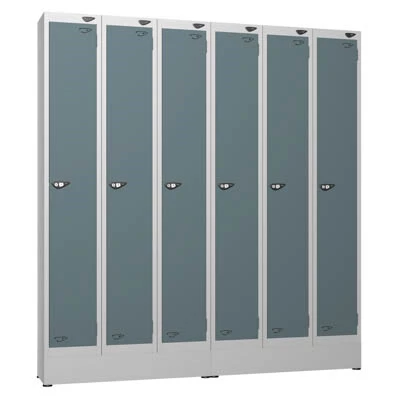
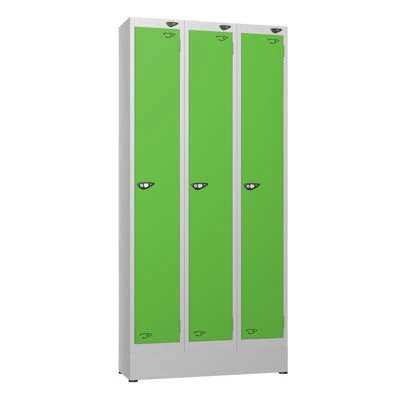
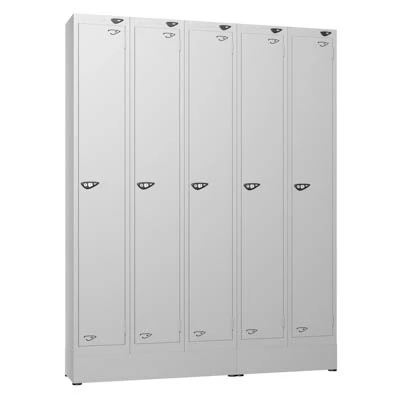
Heated lockers are ideal for cyclists staff working outside or where staff benefit from there clothes being dried while stored in a locker. Available in rows of 1 to 6 they are constructed with a perforated base and come with a skirted locker stand and heating element. The lockers sit on top of a 175 mm Steel Clad Plinth which has the rear legs inset to allow the locker to be pushed and secured to a wall avoiding any skirting boards. Standing at 1950mm High (Including plinth) x 300mm Wide x 450mm Deep; other sizes and locker types are available. Heated lockers have a Full length door as standard lockers with 2 doors are also available. Full-length lockers have a shelf hanging rail and coat hooks. 2 door lockers have a hanging rail and coat hooks. Single door with the option of a Cam Lock (two keys) or Hasp Lock to take a padlock; Other locks available including Coin locking and 4 digit combination locks including Electronic locks that allow multiply users to use the locker. An Eco Friendly Tube Heater provides the Heat for the locker rated at 60W per 300mm. Tube heater allows warm air to rise through the perforated base allowing warm air to circulate within the locker. The Tube Heater can be plugged into a 3 pin power socket or wired into a fused switch. Twin Tube heaters are available for faster drying times and can run off a single power supply. Doors are available in your choice of six powder colours: Ice Grey Royale Blue Skye Blue Forest Green Cherry Red and Yellow. Locker carcase stand and stand skirt are powder coated Light Grey. We can add extras such as Sloping tops.
https://total-locker-solutions.co.uk
Doc/Heated-locker-Systems.pdf
1800mm
450mm
New
Srekcol
1
20 Working Days
Total Locker Service
Steel
2 heated lockers on skirted stand
3 heated lockers on skirted stand
4 heated lockers on skirted stand
5 heated lockers on skirted stand
6 heated lockers on skirted stand
310
330
450
480
517
557
589
639
759
817
350
370
495
525
567
607
645
695
822
880
1800mm x 600mm x 450mm
1800mm x 900mm x 450mm
1800mm x 1200mm x 450mm
1800mm x 1500mm x 450mm
1800mm x 1800mm x 450mm
https://total-locker-service.com/Images/FullImg/Heated2A.webp
https://total-locker-service.com/Images/FullImg/Heated3A.webp
https://total-locker-service.com/Images/FullImg/Heated4A.webp
https://total-locker-service.com/Images/FullImg/Heated5A.webp
https://total-locker-service.com/Images/FullImg/Heated6A.webp
600mm
900mm
1200mm
1500mm
1800mm
12 Months
13 Months
1
2
Cam Lock
Hasp Lock
2
3
4
5
6
Single
Double
HL1C2
Heated-locker.php?v=HL1C2
Heated Lockers
Heated lockers are ideal for cyclists staff working outside or where staff benefit from there clothes being dried while stored in a locker. Available in rows of 1 to 6 they are constructed with a perforated base and come with a skirted locker stand and heating element. The lockers sit on top of a 175 mm Steel Clad Plinth which has the rear legs inset to allow the locker to be pushed and secured to a wall avoiding any skirting boards. Standing at 1950mm High (Including plinth) x 300mm Wide x 450mm Deep; other sizes and locker types are available. Heated lockers have a Full length door as standard lockers with 2 doors are also available. Full-length lockers have a shelf hanging rail and coat hooks. 2 door lockers have a hanging rail and coat hooks. Single door with the option of a Cam Lock (two keys) or Hasp Lock to take a padlock; Other locks available including Coin locking and 4 digit combination locks including Electronic locks that allow multiply users to use the locker. An Eco Friendly Tube Heater provides the Heat for the locker rated at 60W per 300mm. Tube heater allows warm air to rise through the perforated base allowing warm air to circulate within the locker. The Tube Heater can be plugged into a 3 pin power socket or wired into a fused switch. Twin Tube heaters are available for faster drying times and can run off a single power supply. Doors are available in your choice of six powder colours: Ice Grey Royale Blue Skye Blue Forest Green Cherry Red and Yellow. Locker carcase stand and stand skirt are powder coated Light Grey. We can add extras such as Sloping tops.
https://total-locker-service.com/Heated-locker.php?v=HL1C2
310
372
GBP
https://schema.org/InStock
2028-12-20
HL1H2
Heated-locker.php?v=HL1H2
Heated Lockers
Heated lockers are ideal for cyclists staff working outside or where staff benefit from there clothes being dried while stored in a locker. Available in rows of 1 to 6 they are constructed with a perforated base and come with a skirted locker stand and heating element. The lockers sit on top of a 175 mm Steel Clad Plinth which has the rear legs inset to allow the locker to be pushed and secured to a wall avoiding any skirting boards. Standing at 1950mm High (Including plinth) x 300mm Wide x 450mm Deep; other sizes and locker types are available. Heated lockers have a Full length door as standard lockers with 2 doors are also available. Full-length lockers have a shelf hanging rail and coat hooks. 2 door lockers have a hanging rail and coat hooks. Single door with the option of a Cam Lock (two keys) or Hasp Lock to take a padlock; Other locks available including Coin locking and 4 digit combination locks including Electronic locks that allow multiply users to use the locker. An Eco Friendly Tube Heater provides the Heat for the locker rated at 60W per 300mm. Tube heater allows warm air to rise through the perforated base allowing warm air to circulate within the locker. The Tube Heater can be plugged into a 3 pin power socket or wired into a fused switch. Twin Tube heaters are available for faster drying times and can run off a single power supply. Doors are available in your choice of six powder colours: Ice Grey Royale Blue Skye Blue Forest Green Cherry Red and Yellow. Locker carcase stand and stand skirt are powder coated Light Grey. We can add extras such as Sloping tops.
https://total-locker-service.com/Heated-locker.php?v=HL1H2
310
372
GBP
https://schema.org/InStock
2028-12-20
HL2C2
Heated-locker.php?v=HL2C2
Heated Lockers
Heated lockers are ideal for cyclists staff working outside or where staff benefit from there clothes being dried while stored in a locker. Available in rows of 1 to 6 they are constructed with a perforated base and come with a skirted locker stand and heating element. The lockers sit on top of a 175 mm Steel Clad Plinth which has the rear legs inset to allow the locker to be pushed and secured to a wall avoiding any skirting boards. Standing at 1950mm High (Including plinth) x 300mm Wide x 450mm Deep; other sizes and locker types are available. Heated lockers have a Full length door as standard lockers with 2 doors are also available. Full-length lockers have a shelf hanging rail and coat hooks. 2 door lockers have a hanging rail and coat hooks. Single door with the option of a Cam Lock (two keys) or Hasp Lock to take a padlock; Other locks available including Coin locking and 4 digit combination locks including Electronic locks that allow multiply users to use the locker. An Eco Friendly Tube Heater provides the Heat for the locker rated at 60W per 300mm. Tube heater allows warm air to rise through the perforated base allowing warm air to circulate within the locker. The Tube Heater can be plugged into a 3 pin power socket or wired into a fused switch. Twin Tube heaters are available for faster drying times and can run off a single power supply. Doors are available in your choice of six powder colours: Ice Grey Royale Blue Skye Blue Forest Green Cherry Red and Yellow. Locker carcase stand and stand skirt are powder coated Light Grey. We can add extras such as Sloping tops.
https://total-locker-service.com/Heated-locker.php?v=HL2C2
330
396
GBP
https://schema.org/InStock
2028-12-20
HL2H2
Heated-locker.php?v=HL2H2
Heated Lockers
Heated lockers are ideal for cyclists staff working outside or where staff benefit from there clothes being dried while stored in a locker. Available in rows of 1 to 6 they are constructed with a perforated base and come with a skirted locker stand and heating element. The lockers sit on top of a 175 mm Steel Clad Plinth which has the rear legs inset to allow the locker to be pushed and secured to a wall avoiding any skirting boards. Standing at 1950mm High (Including plinth) x 300mm Wide x 450mm Deep; other sizes and locker types are available. Heated lockers have a Full length door as standard lockers with 2 doors are also available. Full-length lockers have a shelf hanging rail and coat hooks. 2 door lockers have a hanging rail and coat hooks. Single door with the option of a Cam Lock (two keys) or Hasp Lock to take a padlock; Other locks available including Coin locking and 4 digit combination locks including Electronic locks that allow multiply users to use the locker. An Eco Friendly Tube Heater provides the Heat for the locker rated at 60W per 300mm. Tube heater allows warm air to rise through the perforated base allowing warm air to circulate within the locker. The Tube Heater can be plugged into a 3 pin power socket or wired into a fused switch. Twin Tube heaters are available for faster drying times and can run off a single power supply. Doors are available in your choice of six powder colours: Ice Grey Royale Blue Skye Blue Forest Green Cherry Red and Yellow. Locker carcase stand and stand skirt are powder coated Light Grey. We can add extras such as Sloping tops.
https://total-locker-service.com/Heated-locker.php?v=HL2H2
330
396
GBP
https://schema.org/InStock
2028-12-20
HL1C3
Heated-locker.php?v=HL1C3
Heated Lockers
Heated lockers are ideal for cyclists staff working outside or where staff benefit from there clothes being dried while stored in a locker. Available in rows of 1 to 6 they are constructed with a perforated base and come with a skirted locker stand and heating element. The lockers sit on top of a 175 mm Steel Clad Plinth which has the rear legs inset to allow the locker to be pushed and secured to a wall avoiding any skirting boards. Standing at 1950mm High (Including plinth) x 300mm Wide x 450mm Deep; other sizes and locker types are available. Heated lockers have a Full length door as standard lockers with 2 doors are also available. Full-length lockers have a shelf hanging rail and coat hooks. 2 door lockers have a hanging rail and coat hooks. Single door with the option of a Cam Lock (two keys) or Hasp Lock to take a padlock; Other locks available including Coin locking and 4 digit combination locks including Electronic locks that allow multiply users to use the locker. An Eco Friendly Tube Heater provides the Heat for the locker rated at 60W per 300mm. Tube heater allows warm air to rise through the perforated base allowing warm air to circulate within the locker. The Tube Heater can be plugged into a 3 pin power socket or wired into a fused switch. Twin Tube heaters are available for faster drying times and can run off a single power supply. Doors are available in your choice of six powder colours: Ice Grey Royale Blue Skye Blue Forest Green Cherry Red and Yellow. Locker carcase stand and stand skirt are powder coated Light Grey. We can add extras such as Sloping tops.
https://total-locker-service.com/Heated-locker.php?v=HL1C3
450
540
GBP
https://schema.org/InStock
2028-12-20
HL1H3
Heated-locker.php?v=HL1H3
Heated Lockers
Heated lockers are ideal for cyclists staff working outside or where staff benefit from there clothes being dried while stored in a locker. Available in rows of 1 to 6 they are constructed with a perforated base and come with a skirted locker stand and heating element. The lockers sit on top of a 175 mm Steel Clad Plinth which has the rear legs inset to allow the locker to be pushed and secured to a wall avoiding any skirting boards. Standing at 1950mm High (Including plinth) x 300mm Wide x 450mm Deep; other sizes and locker types are available. Heated lockers have a Full length door as standard lockers with 2 doors are also available. Full-length lockers have a shelf hanging rail and coat hooks. 2 door lockers have a hanging rail and coat hooks. Single door with the option of a Cam Lock (two keys) or Hasp Lock to take a padlock; Other locks available including Coin locking and 4 digit combination locks including Electronic locks that allow multiply users to use the locker. An Eco Friendly Tube Heater provides the Heat for the locker rated at 60W per 300mm. Tube heater allows warm air to rise through the perforated base allowing warm air to circulate within the locker. The Tube Heater can be plugged into a 3 pin power socket or wired into a fused switch. Twin Tube heaters are available for faster drying times and can run off a single power supply. Doors are available in your choice of six powder colours: Ice Grey Royale Blue Skye Blue Forest Green Cherry Red and Yellow. Locker carcase stand and stand skirt are powder coated Light Grey. We can add extras such as Sloping tops.
https://total-locker-service.com/Heated-locker.php?v=HL1H3
450
540
GBP
https://schema.org/InStock
2028-12-20
HL2C3
Heated-locker.php?v=HL2C3
Heated Lockers
Heated lockers are ideal for cyclists staff working outside or where staff benefit from there clothes being dried while stored in a locker. Available in rows of 1 to 6 they are constructed with a perforated base and come with a skirted locker stand and heating element. The lockers sit on top of a 175 mm Steel Clad Plinth which has the rear legs inset to allow the locker to be pushed and secured to a wall avoiding any skirting boards. Standing at 1950mm High (Including plinth) x 300mm Wide x 450mm Deep; other sizes and locker types are available. Heated lockers have a Full length door as standard lockers with 2 doors are also available. Full-length lockers have a shelf hanging rail and coat hooks. 2 door lockers have a hanging rail and coat hooks. Single door with the option of a Cam Lock (two keys) or Hasp Lock to take a padlock; Other locks available including Coin locking and 4 digit combination locks including Electronic locks that allow multiply users to use the locker. An Eco Friendly Tube Heater provides the Heat for the locker rated at 60W per 300mm. Tube heater allows warm air to rise through the perforated base allowing warm air to circulate within the locker. The Tube Heater can be plugged into a 3 pin power socket or wired into a fused switch. Twin Tube heaters are available for faster drying times and can run off a single power supply. Doors are available in your choice of six powder colours: Ice Grey Royale Blue Skye Blue Forest Green Cherry Red and Yellow. Locker carcase stand and stand skirt are powder coated Light Grey. We can add extras such as Sloping tops.
https://total-locker-service.com/Heated-locker.php?v=HL2C3
480
576
GBP
https://schema.org/InStock
2028-12-20
HL2H3
Heated-locker.php?v=HL2H3
Heated Lockers
Heated lockers are ideal for cyclists staff working outside or where staff benefit from there clothes being dried while stored in a locker. Available in rows of 1 to 6 they are constructed with a perforated base and come with a skirted locker stand and heating element. The lockers sit on top of a 175 mm Steel Clad Plinth which has the rear legs inset to allow the locker to be pushed and secured to a wall avoiding any skirting boards. Standing at 1950mm High (Including plinth) x 300mm Wide x 450mm Deep; other sizes and locker types are available. Heated lockers have a Full length door as standard lockers with 2 doors are also available. Full-length lockers have a shelf hanging rail and coat hooks. 2 door lockers have a hanging rail and coat hooks. Single door with the option of a Cam Lock (two keys) or Hasp Lock to take a padlock; Other locks available including Coin locking and 4 digit combination locks including Electronic locks that allow multiply users to use the locker. An Eco Friendly Tube Heater provides the Heat for the locker rated at 60W per 300mm. Tube heater allows warm air to rise through the perforated base allowing warm air to circulate within the locker. The Tube Heater can be plugged into a 3 pin power socket or wired into a fused switch. Twin Tube heaters are available for faster drying times and can run off a single power supply. Doors are available in your choice of six powder colours: Ice Grey Royale Blue Skye Blue Forest Green Cherry Red and Yellow. Locker carcase stand and stand skirt are powder coated Light Grey. We can add extras such as Sloping tops.
https://total-locker-service.com/Heated-locker.php?v=HL2H3
480
576
GBP
https://schema.org/InStock
2028-12-20
HL1C4
Heated-locker.php?v=HL1C4
Heated Lockers
Heated lockers are ideal for cyclists staff working outside or where staff benefit from there clothes being dried while stored in a locker. Available in rows of 1 to 6 they are constructed with a perforated base and come with a skirted locker stand and heating element. The lockers sit on top of a 175 mm Steel Clad Plinth which has the rear legs inset to allow the locker to be pushed and secured to a wall avoiding any skirting boards. Standing at 1950mm High (Including plinth) x 300mm Wide x 450mm Deep; other sizes and locker types are available. Heated lockers have a Full length door as standard lockers with 2 doors are also available. Full-length lockers have a shelf hanging rail and coat hooks. 2 door lockers have a hanging rail and coat hooks. Single door with the option of a Cam Lock (two keys) or Hasp Lock to take a padlock; Other locks available including Coin locking and 4 digit combination locks including Electronic locks that allow multiply users to use the locker. An Eco Friendly Tube Heater provides the Heat for the locker rated at 60W per 300mm. Tube heater allows warm air to rise through the perforated base allowing warm air to circulate within the locker. The Tube Heater can be plugged into a 3 pin power socket or wired into a fused switch. Twin Tube heaters are available for faster drying times and can run off a single power supply. Doors are available in your choice of six powder colours: Ice Grey Royale Blue Skye Blue Forest Green Cherry Red and Yellow. Locker carcase stand and stand skirt are powder coated Light Grey. We can add extras such as Sloping tops.
https://total-locker-service.com/Heated-locker.php?v=HL1C4
517
620.4
GBP
https://schema.org/InStock
2028-12-20
HL1H4
Heated-locker.php?v=HL1H4
Heated Lockers
Heated lockers are ideal for cyclists staff working outside or where staff benefit from there clothes being dried while stored in a locker. Available in rows of 1 to 6 they are constructed with a perforated base and come with a skirted locker stand and heating element. The lockers sit on top of a 175 mm Steel Clad Plinth which has the rear legs inset to allow the locker to be pushed and secured to a wall avoiding any skirting boards. Standing at 1950mm High (Including plinth) x 300mm Wide x 450mm Deep; other sizes and locker types are available. Heated lockers have a Full length door as standard lockers with 2 doors are also available. Full-length lockers have a shelf hanging rail and coat hooks. 2 door lockers have a hanging rail and coat hooks. Single door with the option of a Cam Lock (two keys) or Hasp Lock to take a padlock; Other locks available including Coin locking and 4 digit combination locks including Electronic locks that allow multiply users to use the locker. An Eco Friendly Tube Heater provides the Heat for the locker rated at 60W per 300mm. Tube heater allows warm air to rise through the perforated base allowing warm air to circulate within the locker. The Tube Heater can be plugged into a 3 pin power socket or wired into a fused switch. Twin Tube heaters are available for faster drying times and can run off a single power supply. Doors are available in your choice of six powder colours: Ice Grey Royale Blue Skye Blue Forest Green Cherry Red and Yellow. Locker carcase stand and stand skirt are powder coated Light Grey. We can add extras such as Sloping tops.
https://total-locker-service.com/Heated-locker.php?v=HL1H4
517
620.4
GBP
https://schema.org/InStock
2028-12-20
HL2C4
Heated-locker.php?v=HL2C4
Heated Lockers
Heated lockers are ideal for cyclists staff working outside or where staff benefit from there clothes being dried while stored in a locker. Available in rows of 1 to 6 they are constructed with a perforated base and come with a skirted locker stand and heating element. The lockers sit on top of a 175 mm Steel Clad Plinth which has the rear legs inset to allow the locker to be pushed and secured to a wall avoiding any skirting boards. Standing at 1950mm High (Including plinth) x 300mm Wide x 450mm Deep; other sizes and locker types are available. Heated lockers have a Full length door as standard lockers with 2 doors are also available. Full-length lockers have a shelf hanging rail and coat hooks. 2 door lockers have a hanging rail and coat hooks. Single door with the option of a Cam Lock (two keys) or Hasp Lock to take a padlock; Other locks available including Coin locking and 4 digit combination locks including Electronic locks that allow multiply users to use the locker. An Eco Friendly Tube Heater provides the Heat for the locker rated at 60W per 300mm. Tube heater allows warm air to rise through the perforated base allowing warm air to circulate within the locker. The Tube Heater can be plugged into a 3 pin power socket or wired into a fused switch. Twin Tube heaters are available for faster drying times and can run off a single power supply. Doors are available in your choice of six powder colours: Ice Grey Royale Blue Skye Blue Forest Green Cherry Red and Yellow. Locker carcase stand and stand skirt are powder coated Light Grey. We can add extras such as Sloping tops.
https://total-locker-service.com/Heated-locker.php?v=HL2C4
557
668.4
GBP
https://schema.org/InStock
2028-12-20
HL2H4
Heated-locker.php?v=HL2H4
Heated Lockers
Heated lockers are ideal for cyclists staff working outside or where staff benefit from there clothes being dried while stored in a locker. Available in rows of 1 to 6 they are constructed with a perforated base and come with a skirted locker stand and heating element. The lockers sit on top of a 175 mm Steel Clad Plinth which has the rear legs inset to allow the locker to be pushed and secured to a wall avoiding any skirting boards. Standing at 1950mm High (Including plinth) x 300mm Wide x 450mm Deep; other sizes and locker types are available. Heated lockers have a Full length door as standard lockers with 2 doors are also available. Full-length lockers have a shelf hanging rail and coat hooks. 2 door lockers have a hanging rail and coat hooks. Single door with the option of a Cam Lock (two keys) or Hasp Lock to take a padlock; Other locks available including Coin locking and 4 digit combination locks including Electronic locks that allow multiply users to use the locker. An Eco Friendly Tube Heater provides the Heat for the locker rated at 60W per 300mm. Tube heater allows warm air to rise through the perforated base allowing warm air to circulate within the locker. The Tube Heater can be plugged into a 3 pin power socket or wired into a fused switch. Twin Tube heaters are available for faster drying times and can run off a single power supply. Doors are available in your choice of six powder colours: Ice Grey Royale Blue Skye Blue Forest Green Cherry Red and Yellow. Locker carcase stand and stand skirt are powder coated Light Grey. We can add extras such as Sloping tops.
https://total-locker-service.com/Heated-locker.php?v=HL2H4
557
668.4
GBP
https://schema.org/InStock
2028-12-20
HL1C5
Heated-locker.php?v=HL1C5
Heated Lockers
Heated lockers are ideal for cyclists staff working outside or where staff benefit from there clothes being dried while stored in a locker. Available in rows of 1 to 6 they are constructed with a perforated base and come with a skirted locker stand and heating element. The lockers sit on top of a 175 mm Steel Clad Plinth which has the rear legs inset to allow the locker to be pushed and secured to a wall avoiding any skirting boards. Standing at 1950mm High (Including plinth) x 300mm Wide x 450mm Deep; other sizes and locker types are available. Heated lockers have a Full length door as standard lockers with 2 doors are also available. Full-length lockers have a shelf hanging rail and coat hooks. 2 door lockers have a hanging rail and coat hooks. Single door with the option of a Cam Lock (two keys) or Hasp Lock to take a padlock; Other locks available including Coin locking and 4 digit combination locks including Electronic locks that allow multiply users to use the locker. An Eco Friendly Tube Heater provides the Heat for the locker rated at 60W per 300mm. Tube heater allows warm air to rise through the perforated base allowing warm air to circulate within the locker. The Tube Heater can be plugged into a 3 pin power socket or wired into a fused switch. Twin Tube heaters are available for faster drying times and can run off a single power supply. Doors are available in your choice of six powder colours: Ice Grey Royale Blue Skye Blue Forest Green Cherry Red and Yellow. Locker carcase stand and stand skirt are powder coated Light Grey. We can add extras such as Sloping tops.
https://total-locker-service.com/Heated-locker.php?v=HL1C5
589
706.8
GBP
https://schema.org/InStock
2028-12-20
HL1H5
Heated-locker.php?v=HL1H5
Heated Lockers
Heated lockers are ideal for cyclists staff working outside or where staff benefit from there clothes being dried while stored in a locker. Available in rows of 1 to 6 they are constructed with a perforated base and come with a skirted locker stand and heating element. The lockers sit on top of a 175 mm Steel Clad Plinth which has the rear legs inset to allow the locker to be pushed and secured to a wall avoiding any skirting boards. Standing at 1950mm High (Including plinth) x 300mm Wide x 450mm Deep; other sizes and locker types are available. Heated lockers have a Full length door as standard lockers with 2 doors are also available. Full-length lockers have a shelf hanging rail and coat hooks. 2 door lockers have a hanging rail and coat hooks. Single door with the option of a Cam Lock (two keys) or Hasp Lock to take a padlock; Other locks available including Coin locking and 4 digit combination locks including Electronic locks that allow multiply users to use the locker. An Eco Friendly Tube Heater provides the Heat for the locker rated at 60W per 300mm. Tube heater allows warm air to rise through the perforated base allowing warm air to circulate within the locker. The Tube Heater can be plugged into a 3 pin power socket or wired into a fused switch. Twin Tube heaters are available for faster drying times and can run off a single power supply. Doors are available in your choice of six powder colours: Ice Grey Royale Blue Skye Blue Forest Green Cherry Red and Yellow. Locker carcase stand and stand skirt are powder coated Light Grey. We can add extras such as Sloping tops.
https://total-locker-service.com/Heated-locker.php?v=HL1H5
589
706.8
GBP
https://schema.org/InStock
2028-12-20
HL2C5
Heated-locker.php?v=HL2C5
Heated Lockers
Heated lockers are ideal for cyclists staff working outside or where staff benefit from there clothes being dried while stored in a locker. Available in rows of 1 to 6 they are constructed with a perforated base and come with a skirted locker stand and heating element. The lockers sit on top of a 175 mm Steel Clad Plinth which has the rear legs inset to allow the locker to be pushed and secured to a wall avoiding any skirting boards. Standing at 1950mm High (Including plinth) x 300mm Wide x 450mm Deep; other sizes and locker types are available. Heated lockers have a Full length door as standard lockers with 2 doors are also available. Full-length lockers have a shelf hanging rail and coat hooks. 2 door lockers have a hanging rail and coat hooks. Single door with the option of a Cam Lock (two keys) or Hasp Lock to take a padlock; Other locks available including Coin locking and 4 digit combination locks including Electronic locks that allow multiply users to use the locker. An Eco Friendly Tube Heater provides the Heat for the locker rated at 60W per 300mm. Tube heater allows warm air to rise through the perforated base allowing warm air to circulate within the locker. The Tube Heater can be plugged into a 3 pin power socket or wired into a fused switch. Twin Tube heaters are available for faster drying times and can run off a single power supply. Doors are available in your choice of six powder colours: Ice Grey Royale Blue Skye Blue Forest Green Cherry Red and Yellow. Locker carcase stand and stand skirt are powder coated Light Grey. We can add extras such as Sloping tops.
https://total-locker-service.com/Heated-locker.php?v=HL2C5
639
766.8
GBP
https://schema.org/InStock
2028-12-20
HL2H5
Heated-locker.php?v=HL2H5
Heated Lockers
Heated lockers are ideal for cyclists staff working outside or where staff benefit from there clothes being dried while stored in a locker. Available in rows of 1 to 6 they are constructed with a perforated base and come with a skirted locker stand and heating element. The lockers sit on top of a 175 mm Steel Clad Plinth which has the rear legs inset to allow the locker to be pushed and secured to a wall avoiding any skirting boards. Standing at 1950mm High (Including plinth) x 300mm Wide x 450mm Deep; other sizes and locker types are available. Heated lockers have a Full length door as standard lockers with 2 doors are also available. Full-length lockers have a shelf hanging rail and coat hooks. 2 door lockers have a hanging rail and coat hooks. Single door with the option of a Cam Lock (two keys) or Hasp Lock to take a padlock; Other locks available including Coin locking and 4 digit combination locks including Electronic locks that allow multiply users to use the locker. An Eco Friendly Tube Heater provides the Heat for the locker rated at 60W per 300mm. Tube heater allows warm air to rise through the perforated base allowing warm air to circulate within the locker. The Tube Heater can be plugged into a 3 pin power socket or wired into a fused switch. Twin Tube heaters are available for faster drying times and can run off a single power supply. Doors are available in your choice of six powder colours: Ice Grey Royale Blue Skye Blue Forest Green Cherry Red and Yellow. Locker carcase stand and stand skirt are powder coated Light Grey. We can add extras such as Sloping tops.
https://total-locker-service.com/Heated-locker.php?v=HL2H5
639
766.8
GBP
https://schema.org/InStock
2028-12-20
HL1C6
Heated-locker.php?v=HL1C6
Heated Lockers
Heated lockers are ideal for cyclists staff working outside or where staff benefit from there clothes being dried while stored in a locker. Available in rows of 1 to 6 they are constructed with a perforated base and come with a skirted locker stand and heating element. The lockers sit on top of a 175 mm Steel Clad Plinth which has the rear legs inset to allow the locker to be pushed and secured to a wall avoiding any skirting boards. Standing at 1950mm High (Including plinth) x 300mm Wide x 450mm Deep; other sizes and locker types are available. Heated lockers have a Full length door as standard lockers with 2 doors are also available. Full-length lockers have a shelf hanging rail and coat hooks. 2 door lockers have a hanging rail and coat hooks. Single door with the option of a Cam Lock (two keys) or Hasp Lock to take a padlock; Other locks available including Coin locking and 4 digit combination locks including Electronic locks that allow multiply users to use the locker. An Eco Friendly Tube Heater provides the Heat for the locker rated at 60W per 300mm. Tube heater allows warm air to rise through the perforated base allowing warm air to circulate within the locker. The Tube Heater can be plugged into a 3 pin power socket or wired into a fused switch. Twin Tube heaters are available for faster drying times and can run off a single power supply. Doors are available in your choice of six powder colours: Ice Grey Royale Blue Skye Blue Forest Green Cherry Red and Yellow. Locker carcase stand and stand skirt are powder coated Light Grey. We can add extras such as Sloping tops.
https://total-locker-service.com/Heated-locker.php?v=HL1C6
759
910.8
GBP
https://schema.org/InStock
2028-12-20
HL1H6
Heated-locker.php?v=HL1H6
Heated Lockers
Heated lockers are ideal for cyclists staff working outside or where staff benefit from there clothes being dried while stored in a locker. Available in rows of 1 to 6 they are constructed with a perforated base and come with a skirted locker stand and heating element. The lockers sit on top of a 175 mm Steel Clad Plinth which has the rear legs inset to allow the locker to be pushed and secured to a wall avoiding any skirting boards. Standing at 1950mm High (Including plinth) x 300mm Wide x 450mm Deep; other sizes and locker types are available. Heated lockers have a Full length door as standard lockers with 2 doors are also available. Full-length lockers have a shelf hanging rail and coat hooks. 2 door lockers have a hanging rail and coat hooks. Single door with the option of a Cam Lock (two keys) or Hasp Lock to take a padlock; Other locks available including Coin locking and 4 digit combination locks including Electronic locks that allow multiply users to use the locker. An Eco Friendly Tube Heater provides the Heat for the locker rated at 60W per 300mm. Tube heater allows warm air to rise through the perforated base allowing warm air to circulate within the locker. The Tube Heater can be plugged into a 3 pin power socket or wired into a fused switch. Twin Tube heaters are available for faster drying times and can run off a single power supply. Doors are available in your choice of six powder colours: Ice Grey Royale Blue Skye Blue Forest Green Cherry Red and Yellow. Locker carcase stand and stand skirt are powder coated Light Grey. We can add extras such as Sloping tops.
https://total-locker-service.com/Heated-locker.php?v=HL1H6
759
910.8
GBP
https://schema.org/InStock
2028-12-20
HL2C6
Heated-locker.php?v=HL2C6
Heated Lockers
Heated lockers are ideal for cyclists staff working outside or where staff benefit from there clothes being dried while stored in a locker. Available in rows of 1 to 6 they are constructed with a perforated base and come with a skirted locker stand and heating element. The lockers sit on top of a 175 mm Steel Clad Plinth which has the rear legs inset to allow the locker to be pushed and secured to a wall avoiding any skirting boards. Standing at 1950mm High (Including plinth) x 300mm Wide x 450mm Deep; other sizes and locker types are available. Heated lockers have a Full length door as standard lockers with 2 doors are also available. Full-length lockers have a shelf hanging rail and coat hooks. 2 door lockers have a hanging rail and coat hooks. Single door with the option of a Cam Lock (two keys) or Hasp Lock to take a padlock; Other locks available including Coin locking and 4 digit combination locks including Electronic locks that allow multiply users to use the locker. An Eco Friendly Tube Heater provides the Heat for the locker rated at 60W per 300mm. Tube heater allows warm air to rise through the perforated base allowing warm air to circulate within the locker. The Tube Heater can be plugged into a 3 pin power socket or wired into a fused switch. Twin Tube heaters are available for faster drying times and can run off a single power supply. Doors are available in your choice of six powder colours: Ice Grey Royale Blue Skye Blue Forest Green Cherry Red and Yellow. Locker carcase stand and stand skirt are powder coated Light Grey. We can add extras such as Sloping tops.
https://total-locker-service.com/Heated-locker.php?v=HL2C6
817
980.4
GBP
https://schema.org/InStock
2028-12-20
HL2H6
Heated-locker.php?v=HL2H6
Heated Lockers
Heated lockers are ideal for cyclists staff working outside or where staff benefit from there clothes being dried while stored in a locker. Available in rows of 1 to 6 they are constructed with a perforated base and come with a skirted locker stand and heating element. The lockers sit on top of a 175 mm Steel Clad Plinth which has the rear legs inset to allow the locker to be pushed and secured to a wall avoiding any skirting boards. Standing at 1950mm High (Including plinth) x 300mm Wide x 450mm Deep; other sizes and locker types are available. Heated lockers have a Full length door as standard lockers with 2 doors are also available. Full-length lockers have a shelf hanging rail and coat hooks. 2 door lockers have a hanging rail and coat hooks. Single door with the option of a Cam Lock (two keys) or Hasp Lock to take a padlock; Other locks available including Coin locking and 4 digit combination locks including Electronic locks that allow multiply users to use the locker. An Eco Friendly Tube Heater provides the Heat for the locker rated at 60W per 300mm. Tube heater allows warm air to rise through the perforated base allowing warm air to circulate within the locker. The Tube Heater can be plugged into a 3 pin power socket or wired into a fused switch. Twin Tube heaters are available for faster drying times and can run off a single power supply. Doors are available in your choice of six powder colours: Ice Grey Royale Blue Skye Blue Forest Green Cherry Red and Yellow. Locker carcase stand and stand skirt are powder coated Light Grey. We can add extras such as Sloping tops.
https://total-locker-service.com/Heated-locker.php?v=HL2H6
817
980.4
GBP
https://schema.org/InStock
2028-12-20
HL1C2D
Heated-locker.php?v=HL1C2D
Heated Lockers
Heated lockers are ideal for cyclists staff working outside or where staff benefit from there clothes being dried while stored in a locker. Available in rows of 1 to 6 they are constructed with a perforated base and come with a skirted locker stand and heating element. The lockers sit on top of a 175 mm Steel Clad Plinth which has the rear legs inset to allow the locker to be pushed and secured to a wall avoiding any skirting boards. Standing at 1950mm High (Including plinth) x 300mm Wide x 450mm Deep; other sizes and locker types are available. Heated lockers have a Full length door as standard lockers with 2 doors are also available. Full-length lockers have a shelf hanging rail and coat hooks. 2 door lockers have a hanging rail and coat hooks. Single door with the option of a Cam Lock (two keys) or Hasp Lock to take a padlock; Other locks available including Coin locking and 4 digit combination locks including Electronic locks that allow multiply users to use the locker. An Eco Friendly Tube Heater provides the Heat for the locker rated at 60W per 300mm. Tube heater allows warm air to rise through the perforated base allowing warm air to circulate within the locker. The Tube Heater can be plugged into a 3 pin power socket or wired into a fused switch. Twin Tube heaters are available for faster drying times and can run off a single power supply. Doors are available in your choice of six powder colours: Ice Grey Royale Blue Skye Blue Forest Green Cherry Red and Yellow. Locker carcase stand and stand skirt are powder coated Light Grey. We can add extras such as Sloping tops.
https://total-locker-service.com/Heated-locker.php?v=HL1C2D
350
420
GBP
https://schema.org/InStock
2028-12-20
HL1H2D
Heated-locker.php?v=HL1H2D
Heated Lockers
Heated lockers are ideal for cyclists staff working outside or where staff benefit from there clothes being dried while stored in a locker. Available in rows of 1 to 6 they are constructed with a perforated base and come with a skirted locker stand and heating element. The lockers sit on top of a 175 mm Steel Clad Plinth which has the rear legs inset to allow the locker to be pushed and secured to a wall avoiding any skirting boards. Standing at 1950mm High (Including plinth) x 300mm Wide x 450mm Deep; other sizes and locker types are available. Heated lockers have a Full length door as standard lockers with 2 doors are also available. Full-length lockers have a shelf hanging rail and coat hooks. 2 door lockers have a hanging rail and coat hooks. Single door with the option of a Cam Lock (two keys) or Hasp Lock to take a padlock; Other locks available including Coin locking and 4 digit combination locks including Electronic locks that allow multiply users to use the locker. An Eco Friendly Tube Heater provides the Heat for the locker rated at 60W per 300mm. Tube heater allows warm air to rise through the perforated base allowing warm air to circulate within the locker. The Tube Heater can be plugged into a 3 pin power socket or wired into a fused switch. Twin Tube heaters are available for faster drying times and can run off a single power supply. Doors are available in your choice of six powder colours: Ice Grey Royale Blue Skye Blue Forest Green Cherry Red and Yellow. Locker carcase stand and stand skirt are powder coated Light Grey. We can add extras such as Sloping tops.
https://total-locker-service.com/Heated-locker.php?v=HL1H2D
350
420
GBP
https://schema.org/InStock
2028-12-20
HL2C2D
Heated-locker.php?v=HL2C2D
Heated Lockers
Heated lockers are ideal for cyclists staff working outside or where staff benefit from there clothes being dried while stored in a locker. Available in rows of 1 to 6 they are constructed with a perforated base and come with a skirted locker stand and heating element. The lockers sit on top of a 175 mm Steel Clad Plinth which has the rear legs inset to allow the locker to be pushed and secured to a wall avoiding any skirting boards. Standing at 1950mm High (Including plinth) x 300mm Wide x 450mm Deep; other sizes and locker types are available. Heated lockers have a Full length door as standard lockers with 2 doors are also available. Full-length lockers have a shelf hanging rail and coat hooks. 2 door lockers have a hanging rail and coat hooks. Single door with the option of a Cam Lock (two keys) or Hasp Lock to take a padlock; Other locks available including Coin locking and 4 digit combination locks including Electronic locks that allow multiply users to use the locker. An Eco Friendly Tube Heater provides the Heat for the locker rated at 60W per 300mm. Tube heater allows warm air to rise through the perforated base allowing warm air to circulate within the locker. The Tube Heater can be plugged into a 3 pin power socket or wired into a fused switch. Twin Tube heaters are available for faster drying times and can run off a single power supply. Doors are available in your choice of six powder colours: Ice Grey Royale Blue Skye Blue Forest Green Cherry Red and Yellow. Locker carcase stand and stand skirt are powder coated Light Grey. We can add extras such as Sloping tops.
https://total-locker-service.com/Heated-locker.php?v=HL2C2D
370
444
GBP
https://schema.org/InStock
2028-12-20
HL2H2D
Heated-locker.php?v=HL2H2D
Heated Lockers
Heated lockers are ideal for cyclists staff working outside or where staff benefit from there clothes being dried while stored in a locker. Available in rows of 1 to 6 they are constructed with a perforated base and come with a skirted locker stand and heating element. The lockers sit on top of a 175 mm Steel Clad Plinth which has the rear legs inset to allow the locker to be pushed and secured to a wall avoiding any skirting boards. Standing at 1950mm High (Including plinth) x 300mm Wide x 450mm Deep; other sizes and locker types are available. Heated lockers have a Full length door as standard lockers with 2 doors are also available. Full-length lockers have a shelf hanging rail and coat hooks. 2 door lockers have a hanging rail and coat hooks. Single door with the option of a Cam Lock (two keys) or Hasp Lock to take a padlock; Other locks available including Coin locking and 4 digit combination locks including Electronic locks that allow multiply users to use the locker. An Eco Friendly Tube Heater provides the Heat for the locker rated at 60W per 300mm. Tube heater allows warm air to rise through the perforated base allowing warm air to circulate within the locker. The Tube Heater can be plugged into a 3 pin power socket or wired into a fused switch. Twin Tube heaters are available for faster drying times and can run off a single power supply. Doors are available in your choice of six powder colours: Ice Grey Royale Blue Skye Blue Forest Green Cherry Red and Yellow. Locker carcase stand and stand skirt are powder coated Light Grey. We can add extras such as Sloping tops.
https://total-locker-service.com/Heated-locker.php?v=HL2H2D
370
444
GBP
https://schema.org/InStock
2028-12-20
HL1C3D
Heated-locker.php?v=HL1C3D
Heated Lockers
Heated lockers are ideal for cyclists staff working outside or where staff benefit from there clothes being dried while stored in a locker. Available in rows of 1 to 6 they are constructed with a perforated base and come with a skirted locker stand and heating element. The lockers sit on top of a 175 mm Steel Clad Plinth which has the rear legs inset to allow the locker to be pushed and secured to a wall avoiding any skirting boards. Standing at 1950mm High (Including plinth) x 300mm Wide x 450mm Deep; other sizes and locker types are available. Heated lockers have a Full length door as standard lockers with 2 doors are also available. Full-length lockers have a shelf hanging rail and coat hooks. 2 door lockers have a hanging rail and coat hooks. Single door with the option of a Cam Lock (two keys) or Hasp Lock to take a padlock; Other locks available including Coin locking and 4 digit combination locks including Electronic locks that allow multiply users to use the locker. An Eco Friendly Tube Heater provides the Heat for the locker rated at 60W per 300mm. Tube heater allows warm air to rise through the perforated base allowing warm air to circulate within the locker. The Tube Heater can be plugged into a 3 pin power socket or wired into a fused switch. Twin Tube heaters are available for faster drying times and can run off a single power supply. Doors are available in your choice of six powder colours: Ice Grey Royale Blue Skye Blue Forest Green Cherry Red and Yellow. Locker carcase stand and stand skirt are powder coated Light Grey. We can add extras such as Sloping tops.
https://total-locker-service.com/Heated-locker.php?v=HL1C3D
495
594
GBP
https://schema.org/InStock
2028-12-20
HL1H3D
Heated-locker.php?v=HL1H3D
Heated Lockers
Heated lockers are ideal for cyclists staff working outside or where staff benefit from there clothes being dried while stored in a locker. Available in rows of 1 to 6 they are constructed with a perforated base and come with a skirted locker stand and heating element. The lockers sit on top of a 175 mm Steel Clad Plinth which has the rear legs inset to allow the locker to be pushed and secured to a wall avoiding any skirting boards. Standing at 1950mm High (Including plinth) x 300mm Wide x 450mm Deep; other sizes and locker types are available. Heated lockers have a Full length door as standard lockers with 2 doors are also available. Full-length lockers have a shelf hanging rail and coat hooks. 2 door lockers have a hanging rail and coat hooks. Single door with the option of a Cam Lock (two keys) or Hasp Lock to take a padlock; Other locks available including Coin locking and 4 digit combination locks including Electronic locks that allow multiply users to use the locker. An Eco Friendly Tube Heater provides the Heat for the locker rated at 60W per 300mm. Tube heater allows warm air to rise through the perforated base allowing warm air to circulate within the locker. The Tube Heater can be plugged into a 3 pin power socket or wired into a fused switch. Twin Tube heaters are available for faster drying times and can run off a single power supply. Doors are available in your choice of six powder colours: Ice Grey Royale Blue Skye Blue Forest Green Cherry Red and Yellow. Locker carcase stand and stand skirt are powder coated Light Grey. We can add extras such as Sloping tops.
https://total-locker-service.com/Heated-locker.php?v=HL1H3D
495
594
GBP
https://schema.org/InStock
2028-12-20
HL2C3D
Heated-locker.php?v=HL2C3D
Heated Lockers
Heated lockers are ideal for cyclists staff working outside or where staff benefit from there clothes being dried while stored in a locker. Available in rows of 1 to 6 they are constructed with a perforated base and come with a skirted locker stand and heating element. The lockers sit on top of a 175 mm Steel Clad Plinth which has the rear legs inset to allow the locker to be pushed and secured to a wall avoiding any skirting boards. Standing at 1950mm High (Including plinth) x 300mm Wide x 450mm Deep; other sizes and locker types are available. Heated lockers have a Full length door as standard lockers with 2 doors are also available. Full-length lockers have a shelf hanging rail and coat hooks. 2 door lockers have a hanging rail and coat hooks. Single door with the option of a Cam Lock (two keys) or Hasp Lock to take a padlock; Other locks available including Coin locking and 4 digit combination locks including Electronic locks that allow multiply users to use the locker. An Eco Friendly Tube Heater provides the Heat for the locker rated at 60W per 300mm. Tube heater allows warm air to rise through the perforated base allowing warm air to circulate within the locker. The Tube Heater can be plugged into a 3 pin power socket or wired into a fused switch. Twin Tube heaters are available for faster drying times and can run off a single power supply. Doors are available in your choice of six powder colours: Ice Grey Royale Blue Skye Blue Forest Green Cherry Red and Yellow. Locker carcase stand and stand skirt are powder coated Light Grey. We can add extras such as Sloping tops.
https://total-locker-service.com/Heated-locker.php?v=HL2C3D
525
630
GBP
https://schema.org/InStock
2028-12-20
HL2H3D
Heated-locker.php?v=HL2H3D
Heated Lockers
Heated lockers are ideal for cyclists staff working outside or where staff benefit from there clothes being dried while stored in a locker. Available in rows of 1 to 6 they are constructed with a perforated base and come with a skirted locker stand and heating element. The lockers sit on top of a 175 mm Steel Clad Plinth which has the rear legs inset to allow the locker to be pushed and secured to a wall avoiding any skirting boards. Standing at 1950mm High (Including plinth) x 300mm Wide x 450mm Deep; other sizes and locker types are available. Heated lockers have a Full length door as standard lockers with 2 doors are also available. Full-length lockers have a shelf hanging rail and coat hooks. 2 door lockers have a hanging rail and coat hooks. Single door with the option of a Cam Lock (two keys) or Hasp Lock to take a padlock; Other locks available including Coin locking and 4 digit combination locks including Electronic locks that allow multiply users to use the locker. An Eco Friendly Tube Heater provides the Heat for the locker rated at 60W per 300mm. Tube heater allows warm air to rise through the perforated base allowing warm air to circulate within the locker. The Tube Heater can be plugged into a 3 pin power socket or wired into a fused switch. Twin Tube heaters are available for faster drying times and can run off a single power supply. Doors are available in your choice of six powder colours: Ice Grey Royale Blue Skye Blue Forest Green Cherry Red and Yellow. Locker carcase stand and stand skirt are powder coated Light Grey. We can add extras such as Sloping tops.
https://total-locker-service.com/Heated-locker.php?v=HL2H3D
525
630
GBP
https://schema.org/InStock
2028-12-20
HL1C4D
Heated-locker.php?v=HL1C4D
Heated Lockers
Heated lockers are ideal for cyclists staff working outside or where staff benefit from there clothes being dried while stored in a locker. Available in rows of 1 to 6 they are constructed with a perforated base and come with a skirted locker stand and heating element. The lockers sit on top of a 175 mm Steel Clad Plinth which has the rear legs inset to allow the locker to be pushed and secured to a wall avoiding any skirting boards. Standing at 1950mm High (Including plinth) x 300mm Wide x 450mm Deep; other sizes and locker types are available. Heated lockers have a Full length door as standard lockers with 2 doors are also available. Full-length lockers have a shelf hanging rail and coat hooks. 2 door lockers have a hanging rail and coat hooks. Single door with the option of a Cam Lock (two keys) or Hasp Lock to take a padlock; Other locks available including Coin locking and 4 digit combination locks including Electronic locks that allow multiply users to use the locker. An Eco Friendly Tube Heater provides the Heat for the locker rated at 60W per 300mm. Tube heater allows warm air to rise through the perforated base allowing warm air to circulate within the locker. The Tube Heater can be plugged into a 3 pin power socket or wired into a fused switch. Twin Tube heaters are available for faster drying times and can run off a single power supply. Doors are available in your choice of six powder colours: Ice Grey Royale Blue Skye Blue Forest Green Cherry Red and Yellow. Locker carcase stand and stand skirt are powder coated Light Grey. We can add extras such as Sloping tops.
https://total-locker-service.com/Heated-locker.php?v=HL1C4D
567
680.4
GBP
https://schema.org/InStock
2028-12-20
HL1H4D
Heated-locker.php?v=HL1H4D
Heated Lockers
Heated lockers are ideal for cyclists staff working outside or where staff benefit from there clothes being dried while stored in a locker. Available in rows of 1 to 6 they are constructed with a perforated base and come with a skirted locker stand and heating element. The lockers sit on top of a 175 mm Steel Clad Plinth which has the rear legs inset to allow the locker to be pushed and secured to a wall avoiding any skirting boards. Standing at 1950mm High (Including plinth) x 300mm Wide x 450mm Deep; other sizes and locker types are available. Heated lockers have a Full length door as standard lockers with 2 doors are also available. Full-length lockers have a shelf hanging rail and coat hooks. 2 door lockers have a hanging rail and coat hooks. Single door with the option of a Cam Lock (two keys) or Hasp Lock to take a padlock; Other locks available including Coin locking and 4 digit combination locks including Electronic locks that allow multiply users to use the locker. An Eco Friendly Tube Heater provides the Heat for the locker rated at 60W per 300mm. Tube heater allows warm air to rise through the perforated base allowing warm air to circulate within the locker. The Tube Heater can be plugged into a 3 pin power socket or wired into a fused switch. Twin Tube heaters are available for faster drying times and can run off a single power supply. Doors are available in your choice of six powder colours: Ice Grey Royale Blue Skye Blue Forest Green Cherry Red and Yellow. Locker carcase stand and stand skirt are powder coated Light Grey. We can add extras such as Sloping tops.
https://total-locker-service.com/Heated-locker.php?v=HL1H4D
567
680.4
GBP
https://schema.org/InStock
2028-12-20
HL2C4D
Heated-locker.php?v=HL2C4D
Heated Lockers
Heated lockers are ideal for cyclists staff working outside or where staff benefit from there clothes being dried while stored in a locker. Available in rows of 1 to 6 they are constructed with a perforated base and come with a skirted locker stand and heating element. The lockers sit on top of a 175 mm Steel Clad Plinth which has the rear legs inset to allow the locker to be pushed and secured to a wall avoiding any skirting boards. Standing at 1950mm High (Including plinth) x 300mm Wide x 450mm Deep; other sizes and locker types are available. Heated lockers have a Full length door as standard lockers with 2 doors are also available. Full-length lockers have a shelf hanging rail and coat hooks. 2 door lockers have a hanging rail and coat hooks. Single door with the option of a Cam Lock (two keys) or Hasp Lock to take a padlock; Other locks available including Coin locking and 4 digit combination locks including Electronic locks that allow multiply users to use the locker. An Eco Friendly Tube Heater provides the Heat for the locker rated at 60W per 300mm. Tube heater allows warm air to rise through the perforated base allowing warm air to circulate within the locker. The Tube Heater can be plugged into a 3 pin power socket or wired into a fused switch. Twin Tube heaters are available for faster drying times and can run off a single power supply. Doors are available in your choice of six powder colours: Ice Grey Royale Blue Skye Blue Forest Green Cherry Red and Yellow. Locker carcase stand and stand skirt are powder coated Light Grey. We can add extras such as Sloping tops.
https://total-locker-service.com/Heated-locker.php?v=HL2C4D
607
728.4
GBP
https://schema.org/InStock
2028-12-20
HL2H4D
Heated-locker.php?v=HL2H4D
Heated Lockers
Heated lockers are ideal for cyclists staff working outside or where staff benefit from there clothes being dried while stored in a locker. Available in rows of 1 to 6 they are constructed with a perforated base and come with a skirted locker stand and heating element. The lockers sit on top of a 175 mm Steel Clad Plinth which has the rear legs inset to allow the locker to be pushed and secured to a wall avoiding any skirting boards. Standing at 1950mm High (Including plinth) x 300mm Wide x 450mm Deep; other sizes and locker types are available. Heated lockers have a Full length door as standard lockers with 2 doors are also available. Full-length lockers have a shelf hanging rail and coat hooks. 2 door lockers have a hanging rail and coat hooks. Single door with the option of a Cam Lock (two keys) or Hasp Lock to take a padlock; Other locks available including Coin locking and 4 digit combination locks including Electronic locks that allow multiply users to use the locker. An Eco Friendly Tube Heater provides the Heat for the locker rated at 60W per 300mm. Tube heater allows warm air to rise through the perforated base allowing warm air to circulate within the locker. The Tube Heater can be plugged into a 3 pin power socket or wired into a fused switch. Twin Tube heaters are available for faster drying times and can run off a single power supply. Doors are available in your choice of six powder colours: Ice Grey Royale Blue Skye Blue Forest Green Cherry Red and Yellow. Locker carcase stand and stand skirt are powder coated Light Grey. We can add extras such as Sloping tops.
https://total-locker-service.com/Heated-locker.php?v=HL2H4D
607
728.4
GBP
https://schema.org/InStock
2028-12-20
HL1C5D
Heated-locker.php?v=HL1C5D
Heated Lockers
Heated lockers are ideal for cyclists staff working outside or where staff benefit from there clothes being dried while stored in a locker. Available in rows of 1 to 6 they are constructed with a perforated base and come with a skirted locker stand and heating element. The lockers sit on top of a 175 mm Steel Clad Plinth which has the rear legs inset to allow the locker to be pushed and secured to a wall avoiding any skirting boards. Standing at 1950mm High (Including plinth) x 300mm Wide x 450mm Deep; other sizes and locker types are available. Heated lockers have a Full length door as standard lockers with 2 doors are also available. Full-length lockers have a shelf hanging rail and coat hooks. 2 door lockers have a hanging rail and coat hooks. Single door with the option of a Cam Lock (two keys) or Hasp Lock to take a padlock; Other locks available including Coin locking and 4 digit combination locks including Electronic locks that allow multiply users to use the locker. An Eco Friendly Tube Heater provides the Heat for the locker rated at 60W per 300mm. Tube heater allows warm air to rise through the perforated base allowing warm air to circulate within the locker. The Tube Heater can be plugged into a 3 pin power socket or wired into a fused switch. Twin Tube heaters are available for faster drying times and can run off a single power supply. Doors are available in your choice of six powder colours: Ice Grey Royale Blue Skye Blue Forest Green Cherry Red and Yellow. Locker carcase stand and stand skirt are powder coated Light Grey. We can add extras such as Sloping tops.
https://total-locker-service.com/Heated-locker.php?v=HL1C5D
645
774
GBP
https://schema.org/InStock
2028-12-20
HL1H5D
Heated-locker.php?v=HL1H5D
Heated Lockers
Heated lockers are ideal for cyclists staff working outside or where staff benefit from there clothes being dried while stored in a locker. Available in rows of 1 to 6 they are constructed with a perforated base and come with a skirted locker stand and heating element. The lockers sit on top of a 175 mm Steel Clad Plinth which has the rear legs inset to allow the locker to be pushed and secured to a wall avoiding any skirting boards. Standing at 1950mm High (Including plinth) x 300mm Wide x 450mm Deep; other sizes and locker types are available. Heated lockers have a Full length door as standard lockers with 2 doors are also available. Full-length lockers have a shelf hanging rail and coat hooks. 2 door lockers have a hanging rail and coat hooks. Single door with the option of a Cam Lock (two keys) or Hasp Lock to take a padlock; Other locks available including Coin locking and 4 digit combination locks including Electronic locks that allow multiply users to use the locker. An Eco Friendly Tube Heater provides the Heat for the locker rated at 60W per 300mm. Tube heater allows warm air to rise through the perforated base allowing warm air to circulate within the locker. The Tube Heater can be plugged into a 3 pin power socket or wired into a fused switch. Twin Tube heaters are available for faster drying times and can run off a single power supply. Doors are available in your choice of six powder colours: Ice Grey Royale Blue Skye Blue Forest Green Cherry Red and Yellow. Locker carcase stand and stand skirt are powder coated Light Grey. We can add extras such as Sloping tops.
https://total-locker-service.com/Heated-locker.php?v=HL1H5D
645
774
GBP
https://schema.org/InStock
2028-12-20
HL2C5D
Heated-locker.php?v=HL2C5D
Heated Lockers
Heated lockers are ideal for cyclists staff working outside or where staff benefit from there clothes being dried while stored in a locker. Available in rows of 1 to 6 they are constructed with a perforated base and come with a skirted locker stand and heating element. The lockers sit on top of a 175 mm Steel Clad Plinth which has the rear legs inset to allow the locker to be pushed and secured to a wall avoiding any skirting boards. Standing at 1950mm High (Including plinth) x 300mm Wide x 450mm Deep; other sizes and locker types are available. Heated lockers have a Full length door as standard lockers with 2 doors are also available. Full-length lockers have a shelf hanging rail and coat hooks. 2 door lockers have a hanging rail and coat hooks. Single door with the option of a Cam Lock (two keys) or Hasp Lock to take a padlock; Other locks available including Coin locking and 4 digit combination locks including Electronic locks that allow multiply users to use the locker. An Eco Friendly Tube Heater provides the Heat for the locker rated at 60W per 300mm. Tube heater allows warm air to rise through the perforated base allowing warm air to circulate within the locker. The Tube Heater can be plugged into a 3 pin power socket or wired into a fused switch. Twin Tube heaters are available for faster drying times and can run off a single power supply. Doors are available in your choice of six powder colours: Ice Grey Royale Blue Skye Blue Forest Green Cherry Red and Yellow. Locker carcase stand and stand skirt are powder coated Light Grey. We can add extras such as Sloping tops.
https://total-locker-service.com/Heated-locker.php?v=HL2C5D
695
834
GBP
https://schema.org/InStock
2028-12-20
HL2H5D
Heated-locker.php?v=HL2H5D
Heated Lockers
Heated lockers are ideal for cyclists staff working outside or where staff benefit from there clothes being dried while stored in a locker. Available in rows of 1 to 6 they are constructed with a perforated base and come with a skirted locker stand and heating element. The lockers sit on top of a 175 mm Steel Clad Plinth which has the rear legs inset to allow the locker to be pushed and secured to a wall avoiding any skirting boards. Standing at 1950mm High (Including plinth) x 300mm Wide x 450mm Deep; other sizes and locker types are available. Heated lockers have a Full length door as standard lockers with 2 doors are also available. Full-length lockers have a shelf hanging rail and coat hooks. 2 door lockers have a hanging rail and coat hooks. Single door with the option of a Cam Lock (two keys) or Hasp Lock to take a padlock; Other locks available including Coin locking and 4 digit combination locks including Electronic locks that allow multiply users to use the locker. An Eco Friendly Tube Heater provides the Heat for the locker rated at 60W per 300mm. Tube heater allows warm air to rise through the perforated base allowing warm air to circulate within the locker. The Tube Heater can be plugged into a 3 pin power socket or wired into a fused switch. Twin Tube heaters are available for faster drying times and can run off a single power supply. Doors are available in your choice of six powder colours: Ice Grey Royale Blue Skye Blue Forest Green Cherry Red and Yellow. Locker carcase stand and stand skirt are powder coated Light Grey. We can add extras such as Sloping tops.
https://total-locker-service.com/Heated-locker.php?v=HL2H5D
695
834
GBP
https://schema.org/InStock
2028-12-20
HL1C6D
Heated-locker.php?v=HL1C6D
Heated Lockers
Heated lockers are ideal for cyclists staff working outside or where staff benefit from there clothes being dried while stored in a locker. Available in rows of 1 to 6 they are constructed with a perforated base and come with a skirted locker stand and heating element. The lockers sit on top of a 175 mm Steel Clad Plinth which has the rear legs inset to allow the locker to be pushed and secured to a wall avoiding any skirting boards. Standing at 1950mm High (Including plinth) x 300mm Wide x 450mm Deep; other sizes and locker types are available. Heated lockers have a Full length door as standard lockers with 2 doors are also available. Full-length lockers have a shelf hanging rail and coat hooks. 2 door lockers have a hanging rail and coat hooks. Single door with the option of a Cam Lock (two keys) or Hasp Lock to take a padlock; Other locks available including Coin locking and 4 digit combination locks including Electronic locks that allow multiply users to use the locker. An Eco Friendly Tube Heater provides the Heat for the locker rated at 60W per 300mm. Tube heater allows warm air to rise through the perforated base allowing warm air to circulate within the locker. The Tube Heater can be plugged into a 3 pin power socket or wired into a fused switch. Twin Tube heaters are available for faster drying times and can run off a single power supply. Doors are available in your choice of six powder colours: Ice Grey Royale Blue Skye Blue Forest Green Cherry Red and Yellow. Locker carcase stand and stand skirt are powder coated Light Grey. We can add extras such as Sloping tops.
https://total-locker-service.com/Heated-locker.php?v=HL1C6D
822
986.4
GBP
https://schema.org/InStock
2028-12-20
HL1H6D
Heated-locker.php?v=HL1H6D
Heated Lockers
Heated lockers are ideal for cyclists staff working outside or where staff benefit from there clothes being dried while stored in a locker. Available in rows of 1 to 6 they are constructed with a perforated base and come with a skirted locker stand and heating element. The lockers sit on top of a 175 mm Steel Clad Plinth which has the rear legs inset to allow the locker to be pushed and secured to a wall avoiding any skirting boards. Standing at 1950mm High (Including plinth) x 300mm Wide x 450mm Deep; other sizes and locker types are available. Heated lockers have a Full length door as standard lockers with 2 doors are also available. Full-length lockers have a shelf hanging rail and coat hooks. 2 door lockers have a hanging rail and coat hooks. Single door with the option of a Cam Lock (two keys) or Hasp Lock to take a padlock; Other locks available including Coin locking and 4 digit combination locks including Electronic locks that allow multiply users to use the locker. An Eco Friendly Tube Heater provides the Heat for the locker rated at 60W per 300mm. Tube heater allows warm air to rise through the perforated base allowing warm air to circulate within the locker. The Tube Heater can be plugged into a 3 pin power socket or wired into a fused switch. Twin Tube heaters are available for faster drying times and can run off a single power supply. Doors are available in your choice of six powder colours: Ice Grey Royale Blue Skye Blue Forest Green Cherry Red and Yellow. Locker carcase stand and stand skirt are powder coated Light Grey. We can add extras such as Sloping tops.
https://total-locker-service.com/Heated-locker.php?v=HL1H6D
822
986.4
GBP
https://schema.org/InStock
2028-12-20
HL2C6D
Heated-locker.php?v=HL2C6D
Heated Lockers
Heated lockers are ideal for cyclists staff working outside or where staff benefit from there clothes being dried while stored in a locker. Available in rows of 1 to 6 they are constructed with a perforated base and come with a skirted locker stand and heating element. The lockers sit on top of a 175 mm Steel Clad Plinth which has the rear legs inset to allow the locker to be pushed and secured to a wall avoiding any skirting boards. Standing at 1950mm High (Including plinth) x 300mm Wide x 450mm Deep; other sizes and locker types are available. Heated lockers have a Full length door as standard lockers with 2 doors are also available. Full-length lockers have a shelf hanging rail and coat hooks. 2 door lockers have a hanging rail and coat hooks. Single door with the option of a Cam Lock (two keys) or Hasp Lock to take a padlock; Other locks available including Coin locking and 4 digit combination locks including Electronic locks that allow multiply users to use the locker. An Eco Friendly Tube Heater provides the Heat for the locker rated at 60W per 300mm. Tube heater allows warm air to rise through the perforated base allowing warm air to circulate within the locker. The Tube Heater can be plugged into a 3 pin power socket or wired into a fused switch. Twin Tube heaters are available for faster drying times and can run off a single power supply. Doors are available in your choice of six powder colours: Ice Grey Royale Blue Skye Blue Forest Green Cherry Red and Yellow. Locker carcase stand and stand skirt are powder coated Light Grey. We can add extras such as Sloping tops.
https://total-locker-service.com/Heated-locker.php?v=HL2C6D
880
1056
GBP
https://schema.org/InStock
2028-12-20
HL2H6D
Heated-locker.php?v=HL2H6D
Heated Lockers
Heated lockers are ideal for cyclists staff working outside or where staff benefit from there clothes being dried while stored in a locker. Available in rows of 1 to 6 they are constructed with a perforated base and come with a skirted locker stand and heating element. The lockers sit on top of a 175 mm Steel Clad Plinth which has the rear legs inset to allow the locker to be pushed and secured to a wall avoiding any skirting boards. Standing at 1950mm High (Including plinth) x 300mm Wide x 450mm Deep; other sizes and locker types are available. Heated lockers have a Full length door as standard lockers with 2 doors are also available. Full-length lockers have a shelf hanging rail and coat hooks. 2 door lockers have a hanging rail and coat hooks. Single door with the option of a Cam Lock (two keys) or Hasp Lock to take a padlock; Other locks available including Coin locking and 4 digit combination locks including Electronic locks that allow multiply users to use the locker. An Eco Friendly Tube Heater provides the Heat for the locker rated at 60W per 300mm. Tube heater allows warm air to rise through the perforated base allowing warm air to circulate within the locker. The Tube Heater can be plugged into a 3 pin power socket or wired into a fused switch. Twin Tube heaters are available for faster drying times and can run off a single power supply. Doors are available in your choice of six powder colours: Ice Grey Royale Blue Skye Blue Forest Green Cherry Red and Yellow. Locker carcase stand and stand skirt are powder coated Light Grey. We can add extras such as Sloping tops.
https://total-locker-service.com/Heated-locker.php?v=HL2H6D
880
1056
GBP
https://schema.org/InStock
2028-12-20
HL1C2
310
2
Cam Lock
1
Single
HL1H2
310
2
Hasp Lock
1
Single
HL2C2
330
2
Cam Lock
2
Single
HL2H2
330
2
Hasp Lock
2
Single
HL1C3
450
3
Cam Lock
1
Single
HL1H3
450
3
Hasp Lock
1
Single
HL2C3
480
3
Cam Lock
2
Single
HL2H3
480
3
Hasp Lock
2
Single
HL1C4
517
4
Cam Lock
1
Single
HL1H4
517
4
Hasp Lock
1
Single
HL2C4
557
4
Cam Lock
2
Single
HL2H4
557
4
Hasp Lock
2
Single
HL1C5
589
5
Cam Lock
1
Single
HL1H5
589
5
Hasp Lock
1
Single
HL2C5
639
5
Cam Lock
2
Single
HL2H5
639
5
Hasp Lock
2
Single
HL1C6
759
6
Cam Lock
1
Single
HL1H6
759
6
Hasp Lock
1
Single
HL2C6
817
6
Cam Lock
2
Single
HL2H6
817
6
Hasp Lock
2
Single
HL1C2D
350
2
Cam Lock
1
Double
HL1H2D
350
2
Hasp Lock
1
Double
HL2C2D
370
2
Cam Lock
2
Double
HL2H2D
370
2
Hasp Lock
2
Double
HL1C3D
495
3
Cam Lock
1
Double
HL1H3D
495
3
Hasp Lock
1
Double
HL2C3D
525
3
Cam Lock
2
Double
HL2H3D
525
3
Hasp Lock
2
Double
HL1C4D
567
4
Cam Lock
1
Double
HL1H4D
567
4
Hasp Lock
1
Double
HL2C4D
607
4
Cam Lock
2
Double
HL2H4D
607
4
Hasp Lock
2
Double
HL1C5D
645
5
Cam Lock
1
Double
HL1H5D
645
5
Hasp Lock
1
Double
HL2C5D
695
5
Cam Lock
2
Double
HL2H5D
695
5
Hasp Lock
2
Double
HL1C6D
822
6
Cam Lock
1
Double
HL1H6D
822
6
Hasp Lock
1
Double
HL2C6D
880
6
Cam Lock
2
Double
HL2H6D
880
6
Hasp Lock
2
Double
Features
Heated Drying Lockers for Wet PPE, Workwear and Clothing
Heated lockers combine secure storage with warm-air circulation
to help damp workwear, PPE, coats, boots and other clothing dry between uses.
They are intended for workplaces where garments are regularly returned wet or
damp and conventional storage alone is not sufficient.
They are also useful in offices with cycle-to-work facilities. Employees who
commute by bicycle can store damp cycling jackets, over-trousers, gloves and
other riding clothing during the working day so that it can dry before the
journey home.
This page focuses specifically on heated and drying storage. If active drying
is not required, compare our
garment lockers
or browse the wider
workplace locker range.
How Heated Drying Lockers Work
The heater is positioned beneath the locker on a skirted steel stand.
Warm air rises through the perforated base and circulates through the locker,
helping moisture evaporate while clothing and equipment remain securely stored.
The appropriate heater arrangement depends on the locker configuration,
the quantity of wet equipment and the site's operating conditions. Drying
performance will also vary according to garment material, moisture level,
loading and surrounding temperature.
When to Choose a Heated Locker
| Storage need |
Suitable approach |
Reason |
| Dry coats, uniforms and everyday workwear |
Standard garment locker |
Secure clothing storage where active drying is not required |
| Damp PPE or workwear returned after a shift |
Heated drying locker |
Warm-air circulation assists drying while items remain stored |
| Wet cycling clothing brought into an office |
Heated drying locker |
Helps cycle-to-work commuters dry jackets, over-trousers, gloves and similar clothing before travelling home |
| Regularly wet clothing or larger quantities of damp kit |
Heated locker with the appropriate heater arrangement |
Heat input should be matched to the loading and operating conditions |
| General personal belongings rather than wet clothing |
Staff locker |
A standard employee-storage layout may be more appropriate |
Cycle-to-Work Heated Lockers for Offices
Workplaces that encourage cycling can use heated lockers as part of their
staff changing and cycle-to-work facilities. A commuter arriving in wet
weather may need somewhere secure to leave a waterproof jacket, cycling
trousers, gloves or other damp clothing while working.
Allowing those items to dry during the day can make the return commute more
comfortable and avoids leaving wet clothing on radiators, chairs or around
office changing areas. The locker capacity should be planned around the number
of regular cycle commuters and the amount of clothing each person is likely
to store.
Typical Heated Locker Applications
Heated drying lockers are particularly useful where staff work outdoors,
in wet environments or with clothing that needs to be reused later the same
day or on the next shift. Typical applications include utilities, construction,
engineering, manufacturing, warehouses, transport operations, staff changing
facilities and offices with cycle-to-work schemes.
They can be used for items such as workwear, protective clothing, coats,
boots and cycling clothing. The locker layout should be chosen around the
actual equipment being stored rather than simply the total number of users.
Single and Twin Heater Arrangements
Different heater arrangements are available within the range. A single-heater
configuration may be suitable for lighter drying requirements, while a
twin-heater arrangement provides greater heat input where the selected
configuration and operating conditions require it.
There is no universal drying time. Before ordering, consider how wet the
items normally are, how densely each compartment will be loaded and how long
the equipment is available to dry between uses.
Planning a Heated Locker Installation
Before specifying heated lockers, confirm:
- the number of users and required locker compartments
- the type and quantity of wet PPE, workwear or cycling clothing
- whether full-height or multi-door storage is required
- the required heater arrangement
- the available floor and wall space
- the electrical supply and cable position
- the preferred locking method
- delivery access and installation clearances
For office cycle-to-work installations, base capacity on the likely number of
simultaneous cycle commuters rather than total staff headcount. Consider the
space required for wet-weather jackets and over-trousers as well as smaller
items such as gloves.
Electrical supply and installation arrangements must be suitable for the
selected system. Check the current
heated locker specification
before ordering.
Heated Lockers vs Standard Garment Lockers
A standard garment locker provides secure clothing storage but does not
actively assist drying. If clothing normally enters the locker dry, a
garment locker may be sufficient. Where
workwear, PPE or cycle clothing is regularly damp, heated storage is the more
appropriate category to consider.
Need Help Specifying Heated Lockers?
If you know the number of users, the type of wet clothing being stored and
the available changing-room or office space, Total Locker Service can help
narrow down the suitable heated-locker arrangement.

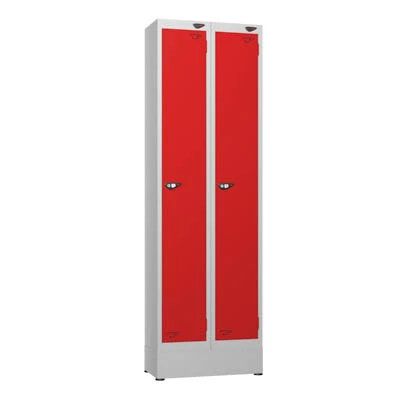 Click to enlarge