Lockers UK | Workplace, School and Commercial Lockers
April 10, 2026
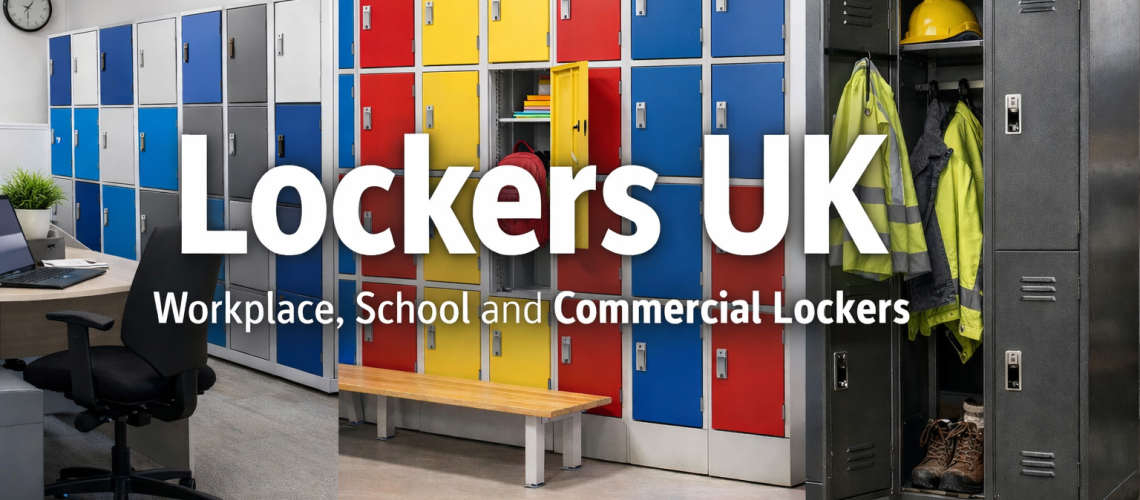
Lockers are an essential part of secure storage in schools, workplaces, leisure centres and commercial buildings across the UK. The right lockers improve security, reduce clutter and help staff, students and visitors store belongings safely. Total Locker Service supplies lockers in a wide range of sizes, materials and lock options, including metal lockers, workplace lockers, leisure lockers, Z lockers and specialist charging lockers for devices and equipment.
Choosing lockers is not just about buying storage units that fit against a wall. A good locker scheme supports daily routines, improves organisation and makes better use of available space. Corridor clutter can be reduced and pupils’ belongings kept secure with well-planned lockers in schools. Within offices, they support hybrid working, desk sharing and personal storage needs. For gyms and leisure centres, lockers provide users with confidence that clothing, phones, keys and bags remain safe while they train or use the facilities. Across industrial settings, they contribute to welfare arrangements, PPE storage and the separation of clean and dirty items.
This guide explains the main locker types, compares locker materials, looks at lock options, covers locker sizing and reviews layout planning for different sectors. It also brings together the main locker categories and locker-related guides on the Total Locker Service website, so this page can act as the main ranking anchor for lockers in the UK.
If you want to move straight to products, you can browse the full locker range, view staff lockers, explore swimming pool lockers or compare lockers with combination locks. If you want broader planning advice first, this page is the best place to start.
Lockers for every sector
Different sectors use lockers in different ways. That is why the best locker solution for one site is often the wrong choice for another. Some environments need simple day-use storage. Others need durable long-term assigned lockers. Some need wet-area resistance. Others need hanging space, charging points, visibility or stronger control over access. Understanding the sector is the first step in choosing the right lockers.
School lockers
School lockers are often installed along corridors, in common areas, in sports facilities and in sixth form or staff spaces. They need to stand up to heavy daily use, changing year groups and regular cleaning. In many schools, the best locker choice balances durability, good value and straightforward locking. Metal lockers remain popular, although other materials can work well in the right areas.
For education projects, it helps to read What Are the Best Lockers for High Schools?, School Lockers: Enhancing Educational Environments and Installing Lockers: Checklist for Schools and Gyms. These posts cover practical points around suitability, usage and installation.
Workplace lockers
Workplace lockers are used in offices, factories, warehouses, depots, staff areas and welfare spaces. They may store bags, coats, food, PPE, laptops, phones, uniforms or personal possessions. In offices, hybrid working has increased demand for shared and flexible locker systems. In industrial settings, garments, boots and equipment often affect the locker size and layout.
Start with Workplace Lockers for Offices, Factories and Warehouses if your project is mainly staff-focused. You may also want to review Best Lock Options for Workplace Lockers, What Should Office Staff Lockers Be Big Enough to Hold?, Do Hybrid Offices Need Different Locker Zones? and Workplace Locker Security.
Leisure lockers
Leisure lockers are used in gyms, changing rooms, sports centres, pools and spas. These projects usually place more emphasis on appearance, moisture resistance, cleaning and ease of use for short-term users. Depending on the setting, operators may prefer coin locks, hasp locks, combination locks or other managed access options.
You can browse leisure lockers, swimming pool lockers and outdoor lockers if you need products suited to more demanding environmental conditions.
Commercial and industrial lockers
Commercial and industrial sites may need more specialist storage. Warehouses, logistics sites, depots, engineering businesses and manufacturing facilities often require lockers for uniforms, PPE, boots, tools, batteries and personal items. This can lead to a need for garment lockers, larger compartments, mesh lockers or heated options for drying workwear.
In those settings, wire mesh lockers, garment lockers, heated lockers and XL lockers may be more suitable than standard personal storage lockers.
Locker types explained
Lockers come in many formats, and the most useful way to compare them is by application rather than by appearance alone. Below are the main locker types available through Total Locker Service.
Metal lockers
Metal lockers remain one of the most popular locker categories in the UK. They suit schools, workplaces, staff rooms and many commercial environments because they offer good durability, broad size options and competitive pricing. They are available in a wide range of door configurations, colours and lock options.
If value is the main priority, look at best value lockers. Brand-led options such as Probe lockers and Pure lockers may also be useful depending on your specification requirements.
Workplace and staff lockers
Workplace lockers and staff lockers are designed for business and employee use. In many cases, these are standard lockers specified with more suitable sizes, finishes and lock types for office or staff welfare use. They can be assigned to individual users or used as part of a shared hot-locker system.
Leisure and pool lockers
Leisure lockers are often chosen for gyms, changing rooms and customer-facing environments where appearance matters. Swimming pool lockers are intended for more demanding wet environments where corrosion resistance and hygiene are especially important.
Z lockers
Z lockers are useful when you want hanging space in a tighter footprint. They are often used in changing rooms, staff areas and workplaces where users need room for garments, bags and personal items without using the full floor space of standard full-length garment lockers.
Wire mesh lockers
Wire mesh lockers provide visibility and airflow, which can be helpful in industrial and operational settings. They are useful where supervision matters or where stored contents need ventilation. They are less private than enclosed lockers, but they solve a different kind of storage need.
Coin lockers and combination lockers
Coin-operated lockers are often used where short-term public or member use is common. Combination lockers reduce the need for keys and can be useful in shared workplaces, gyms and flexible-use environments.
Charging lockers
Many workplaces and education settings now need powered storage. Total Locker Service supplies laptop charging lockers, phone charging lockers and tool charging lockers for devices and equipment that need secure charging as part of the working day.
Garment lockers, heated lockers and specialist lockers
Garment lockers suit workplaces where uniforms or workwear need to be stored more carefully. Heated lockers help dry clothing or PPE. Golf lockers and bespoke lockers cover more specialist requirements where standard formats are not ideal.
Locker materials: steel, laminate, plastic and mesh
Locker material affects appearance, durability, moisture resistance, cost and long-term maintenance. Some materials are better suited to dry internal spaces. Others perform better in wet or hard-wearing environments. A good buying decision depends on where the lockers will be used and how they will be maintained over time.
Steel lockers
Steel is one of the most common locker materials because it offers strong value and broad application. It works well in schools, staff areas, offices, warehouses and many mixed commercial spaces. It is also available in many shapes and sizes, which makes planning easier. Quality powder coating and fabrication matter, so it is worth comparing like with like rather than choosing on headline price alone.
For more office-focused material comparison, read Best Materials for Office Lockers: Steel, Laminate or MFC?.
Laminate lockers
Laminate lockers are often chosen where the appearance of the storage matters more. Offices, premium changing rooms and design-led interior projects may prefer a finish that feels less industrial than standard steel. They can work particularly well where lockers are part of the visible design of the room rather than hidden in back-of-house spaces.
Plastic and wet-area lockers
Plastic and wet-spec lockers are often better suited to pools, wet changing rooms and damp environments. They resist corrosion well and can support easier cleaning in the right setting. If the environment is consistently wet, it is worth looking beyond standard steel options and reviewing swimming pool lockers or outdoor lockers.
Mesh lockers
Mesh lockers are not chosen for their finish. They are chosen for visibility, airflow and practicality. They are often a better fit for industrial sites, PPE storage, equipment storage and locations where contents may need to be seen quickly or aired properly. In public-facing spaces they may feel too exposed, but in operational areas they can be the right answer.
Sustainable locker choices
More buyers now want to consider sustainability as part of the locker brief. That includes material lifespan, repairability, long-term maintenance and whether the products continue to perform rather than needing early replacement. Our article on sustainable lockers explores this in more detail.
Lock options for lockers
The right lock option is central to how lockers work in practice. A lock affects user convenience, security, administration and maintenance. It also changes whether a locker is best suited to assigned storage, shared use or short-term day use.
Key locks
Key locks are familiar and easy to understand. They are often used for assigned lockers in workplaces and schools. Their main drawback is key administration. Keys get lost, spare management takes time and replacement processes need to be clear. Even so, they remain a reliable choice where personal allocation is stable.
Hasp locks and padlocks
Hasp lock arrangements allow the user to fit a padlock. This can reduce admin because users manage their own locking. It is common in schools, gyms and some staff areas. However, padlocks vary in quality and size, so site managers should think about consistency and usability before choosing this route. If you are upgrading existing lockers, see Hasp Lock Conversion.
Mechanical combination locks
Combination locks remove the need for keys and can work very well for shared or flexible use. They are especially useful in hybrid workplaces and staff areas where key management would be inconvenient. The trade-off is that users need clear instructions and occasional support for resets or misuse. See Best Lock Options for Workplace Lockers and CodeLocks: Understanding the Basics for more detail.
Coin-operated lockers
Coin locks remain popular in changing rooms and short-term leisure settings. They are familiar to users and can help operators manage temporary use. Depending on the lock type, they can either retain or return the coin, so it is important to choose the right operating model for the site. Browse coin lockers if this suits your environment.
Digital and smart locking
Smart locker access is becoming more relevant in workplaces, schools, delivery settings and device storage. Digital systems can reduce admin, improve audit trails and support shared locker use. They are not always necessary, but they can be a very strong option where the operational benefits justify the extra complexity. Read Smart Locker Systems in the UK and The Future of Smart, Secure and Scalable Lockers for a broader view.
How to choose the right locker size
Locker size has a major effect on user satisfaction and space efficiency. A locker that is too small becomes frustrating quickly. A locker that is too large takes up valuable floor space that might be better used elsewhere. Good planning starts by deciding what the user needs to store and how often they will use the locker.
Questions to ask include:
- Will users store only a bag and coat, or larger items as well?
- Do garments need to hang full length?
- Will boots, helmets, PPE or devices be stored inside?
- Do users need charging inside the locker?
- Is the locker assigned to one person or shared?
- Are the users school pupils, office staff, gym members or industrial workers?
Office environments often require smaller personal storage for laptops, bags, lunch and a coat. Changing rooms typically benefit from larger compartments or Z lockers, which provide more practical hanging space. Industrial settings may need bigger lockers or separate compartments to support welfare needs and operational requirements.
Our post What Should Office Staff Lockers Be Big Enough to Hold? is a useful starting point for workplace projects. For larger formats, explore big and XL lockers. For more compact garment storage, compare Z lockers.
Locker layout planning for workplaces, schools and changing rooms
Locker layout matters just as much as locker choice. A good layout supports movement, reduces congestion and makes the area easier to supervise and clean. A poor layout can make even good lockers frustrating to use. This is especially important in schools, workplaces, gyms and changing rooms where multiple users may arrive at once.
When planning a locker layout, think about:
- entry and exit flow
- peak use periods
- aisle width
- door opening space
- benches and changing space
- cleaning access
- visibility and supervision
- grouping by user type, team or department
Office projects may also need zoning for staff, visitors and contractors. That is why Do Hybrid Offices Need Different Locker Zones? is worth reading before finalising the arrangement. In schools and leisure sites, installation and access planning are equally important, so Installing Lockers: Checklist for Schools and Gyms and Locker Installation Regulations UK are useful supporting guides.
Layout should be treated as part of the specification process rather than left until after the order has been placed. That usually leads to a better fit and fewer compromises later.
Locker installation, security and compliance
Lockers need to be installed safely and managed properly once in use. Depending on the location and locker type, this may mean fixing them together, anchoring them securely or planning the installation to reduce tipping risk and improve long-term stability. Compliance is not the same on every site, but safety and sensible installation practice are always important.
Beyond installation, security depends on more than the lock fitted to the door. It also depends on where the lockers are placed, how visible the area is, whether faults are reported quickly and how well the system is maintained over time. If the locker bank feels unreliable, confidence in the storage drops quickly.
For more on this, see Locker Installation Regulations UK, UK Workplace Locker Laws 2025 and Workplace Locker Security.
Locker maintenance, repairs and long-term value
Long-term locker value depends on more than the purchase price. Locks fail, hinges wear, doors take knocks and layouts change over time. A better locker system is one that can be supported, repaired and maintained rather than replaced prematurely. That is why lifecycle value matters.
Regular cleaning, routine checks, quick repairs and access to replacement parts all help lockers last longer. This is especially important in schools, high-traffic workplaces and leisure facilities where damage or wear can build up quickly. Read Locker Repairs, Replacement Parts and Maintenance for practical advice.
It is also useful to look at Locker Range From Total Locker Service, Workplace Lockers and Lockers, Parts, and Service if you want more context around the broader offering.
How to choose the right lockers for your site
The most effective way to choose lockers is to start with the site and the users, not the product list. A simple process usually leads to a much better result.
- Define who will use the lockers.
- List what needs to be stored.
- Identify whether the area is dry, wet, public-facing, industrial or mixed-use.
- Decide whether the lockers will be assigned, shared or day-use.
- Choose the lock type based on user turnover and admin preference.
- Match the locker size to actual storage behaviour.
- Plan the layout before ordering.
- Think about maintenance, support and future expansion.
That process helps avoid common mistakes such as undersized lockers, awkward layouts, unsuitable materials or lock systems that create too much admin. It also makes it easier to choose between categories such as metal lockers, leisure lockers, wire mesh lockers and bespoke lockers.
Locker product categories
If you already know the kind of lockers you need, use the links below to go straight to the relevant product pages.
- Lockers
- Workplace lockers
- Staff lockers
- Metal lockers
- Best value lockers
- Probe lockers
- Pure lockers
- Leisure lockers
- Swimming pool lockers
- Outdoor lockers
- Z lockers
- Golf lockers
- Garment lockers
- Heated lockers
- Big and XL lockers
- Coin lockers
- Combination lockers
- Wire mesh lockers
- Fast delivery lockers
- Laptop charging lockers
- Tool charging lockers
- Phone charging lockers
- Bespoke lockers
Related locker guides and expert advice
This page is supported by the following locker-related blog posts and guides. Together, they help build a stronger internal linking cluster around lockers.
- Workplace Lockers for Offices, Factories and Warehouses: Staff Storage, Security, Compliance and Layout Guide
- Best Lock Options for Workplace Lockers
- What Should Office Staff Lockers Be Big Enough to Hold?
- Do Hybrid Offices Need Different Locker Zones for Staff, Visitors and Contractors?
- Best Materials for Office Lockers: Steel, Laminate or MFC?
- Locker Repairs, Replacement Parts and Maintenance
- Locker Installation Regulations UK
- Workplace Locker Security: How to Prevent Theft and Protect Employee Belongings
- Installing Lockers: Checklist for Schools and Gyms
- What Are the Best Lockers for High Schools?
- School Lockers: Enhancing Educational Environments
- Sustainable Lockers: Eco-Friendly Storage Solutions
- Smart Locker Systems in the UK: Types, Benefits and Considerations
- The Future of Smart, Secure and Scalable Lockers
- UK Workplace Locker Laws 2025
- Hasp Lock Conversion
- CodeLocks: Understanding the Basics
- Locker Range From Total Locker Service
- Workplace Lockers
- Lockers, Parts, and Service
- Enhancing Organisational Efficiency Through Comprehensive Storage
Frequently asked questions about lockers
What are the best lockers for workplaces?
The best workplace lockers depend on what staff need to store and how the space is used. Offices may need compact personal storage, while factories and warehouses may need larger lockers, garment lockers or more robust lock options. Workplace lockers are usually the best place to start.
What size locker do I need?
The right locker size depends on what the user needs to store. Small day-use lockers may be fine for bags, coats and laptops. Larger lockers may be needed for uniforms, PPE, sports kit or hanging garments. Our guide to office staff locker sizes can help with planning.
Are metal lockers better than laminate lockers?
Metal lockers usually offer better value and broad usability across schools and workplaces. Laminate lockers can be more suitable where appearance and finish are a bigger priority. The best material depends on the environment, budget and design brief.
Which lock is best for shared lockers?
Combination locks and some digital locking systems are often better for shared lockers because they reduce key administration. The best option depends on how often the lockers are shared and how much support the operator wants to provide.
What lockers are best for schools?
Schools often choose durable metal lockers with straightforward lock options, although the best choice depends on age group, location and storage need. You can read more in What Are the Best Lockers for High Schools?.
Can lockers be installed in wet areas?
Yes, but the material and specification need to suit the environment. Wet areas such as pools and changing rooms often need more specialist locker options than dry internal spaces. Swimming pool lockers are a better starting point for these areas.
Why choose Total Locker Service for lockers in the UK?
Total Locker Service offers lockers for schools, workplaces, leisure centres and commercial environments across the UK. The range includes standard and specialist products, which makes it easier to match the locker solution to the site rather than forcing one generic option into every project. That matters because many customers need more than one kind of locker across the same building or estate.
A school may need corridor lockers, PE changing-room lockers and staff lockers. A warehouse may need garment lockers, mesh lockers and heated lockers. A hybrid office may need a mix of personal lockers and shared-use storage with different lock types. A broader range makes it easier to solve those practical problems properly.
If you are comparing lockers for a live project, the best approach is to use this page as your starting point, then move into the most relevant category and supporting guide. That keeps the buying process simple while still helping you make a better long-term choice.
Need help choosing lockers?
If you are planning a new locker installation or replacing an older system, start with the locker category that best fits your site. Whether you need metal lockers, workplace lockers, leisure lockers, Z lockers, coin lockers, combination lockers or bespoke lockers, Total Locker Service can help you compare the options and choose lockers that suit the space properly.
The right lockers improve security, support day-to-day routines, make better use of space and help buildings stay organised. That is why choosing lockers properly is worth the effort from the start.
“`
Discover more from Blog Total Locker Service
Subscribe to get the latest posts sent to your email.