Codelocks KitLock Locker Locks: Models and Compatibility
August 20, 2023
Codelocks KitLock locker locks provide keyless access for lockers, cabinets and cupboards. The range includes keypad locks, MIFARE RFID models, time-sensitive NetCode access and more robust electronic locking systems. Choosing the correct KitLock model depends on the access method, operating mode, door compatibility and level of management required.
This guide compares the KitLock KL1050, KL1060, KL1100 and KL1200, explains their principal differences and outlines what UK buyers should check before ordering or retrofitting existing lockers.
For prices, individual specifications and ordering, visit our Codelocks KitLock locker locks range.
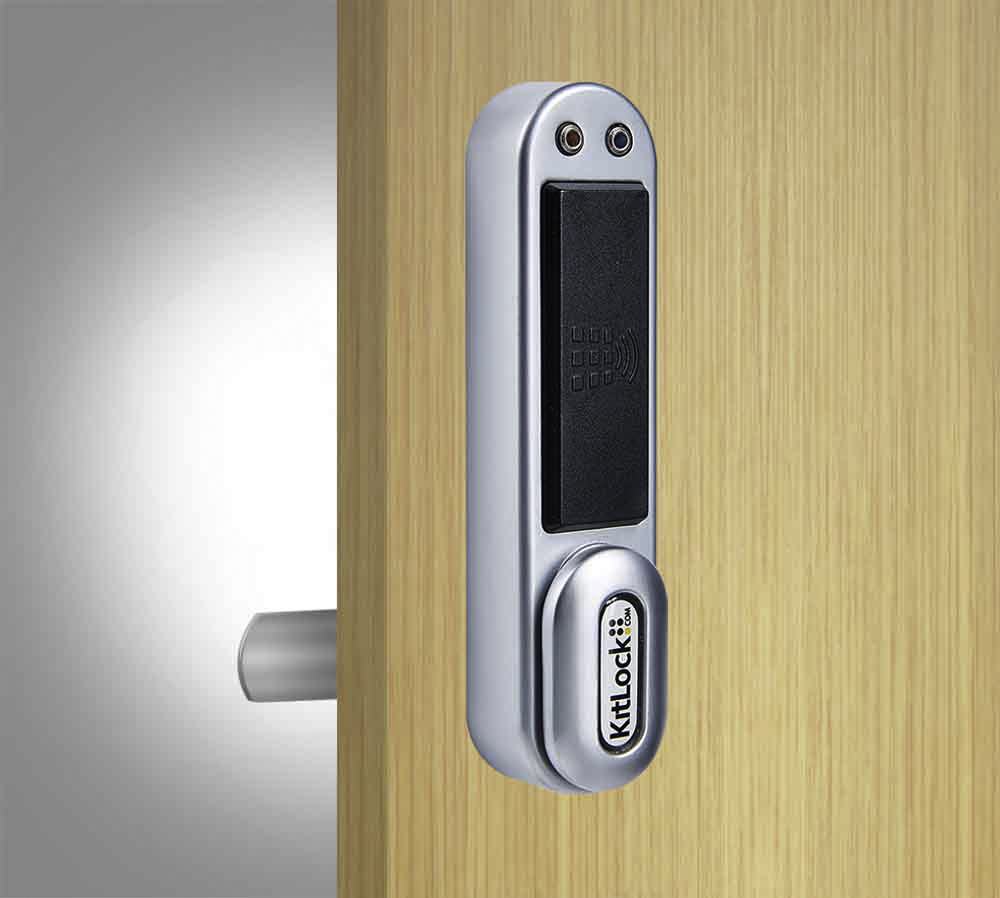
What are Codelocks KitLock locker locks?
Codelocks manufactures mechanical and electronic locking products. KitLock is its range of locks designed for suitable lockers, cabinets, cupboards and other storage applications.
Unlike conventional keyed cam locks, many KitLock products use a numerical code or compatible RFID credential for normal access. Most of the electronic models covered here operate as standalone battery-powered locks, so they do not require mains wiring to every locker door.
KitLock models vary considerably. Some provide straightforward keypad access for individual users, others accommodate frequently changing users, and NetCode products enable temporary access codes to be generated for defined periods.
Codelocks KitLock model comparison
The following table compares the principal functions of the models covered by Total Locker Service. Product names can differ between older installations and current ranges, so check the model reference before ordering a replacement.
| Model | Access method | Distinguishing feature | Typical application |
|---|---|---|---|
| KL1050 / KL1000 RFID | MIFARE RFID | Contactless access using compatible cards, fobs or wristbands | Assigned and shared lockers |
| KL1060 / KL1000 NetCode | Keypad and NetCode | Time-sensitive codes generated through the NetCode system | Temporary or remotely managed access |
| KL1100 Keypad | Electronic keypad | Slimline design with additional user-code and automatic-unlocking features | Workplace, school and shared lockers |
| KL1100 RFID | Compatible RFID credentials | Contactless access with additional credential-management options | Facilities managing multiple RFID lockers |
| KL1200 | Electronic keypad | More robust construction with additional programming options | Busier or more demanding locker applications |
Important: the KL1100 Keypad and KL1100 RFID are different products. Similarly, the KL1050 is an RFID model, while the KL1060 is associated with NetCode keypad operation. Do not select a replacement simply because the model numbers appear similar.
KitLock KL1050: MIFARE RFID locker lock
The KitLock KL1050, also known as the KL1000 RFID, provides keyless access using compatible MIFARE RFID credentials.
Instead of entering a PIN, the user presents a compatible card, fob or wristband to the lock. This makes the KL1050 suitable for applications where an organisation prefers contactless access or already uses compatible identification credentials.
KL1050 private and public functions
The KL1050 supports two principal operating arrangements.
- Private Function: intended for assigned lockers, using registered credentials. The published KL1050 specification supports up to 50 registered user cards per lock.
- Public Function: intended for temporary use. A user presents a compatible credential to secure an available locker and presents the same credential to reopen it.
The manufacturer’s specification also describes Master User Card and Technician Card functions, with different permissions depending on the operating mode.
KL1050 installation and power
The KL1050 is a standalone battery-powered lock using two AAA cells. The published specification describes fitting to compatible doors up to 25 mm thick, with vertical or horizontal positioning available.
For retrofit projects, confirm the existing door opening, fixing arrangement and locking cam. MIFARE compatibility must also be checked against the actual card or credential technology already used at the site.
View KL1050 RFID locker lock specifications and product options.
KitLock KL1060: NetCode electronic locker lock
The KitLock KL1060 is associated with the KL1000 NetCode range. Its principal difference from a conventional keypad lock is the ability to generate time-sensitive access codes.
NetCode is useful where an authorised person needs to arrange access without physically attending the locker to issue a permanent code or key.
How KL1060 NetCode works
NetCode enables authorised users to generate access codes for defined dates, times or durations through the supported NetCode portal or application interface.
The manufacturer describes different options for short-term, medium-term and longer-term access. Available code types and durations depend on the system configuration and version.
The lock itself operates locally. NetCode generation does not mean that the locker is continuously connected to a network or that a manager can necessarily see its live locked or unlocked status.
KL1060 operating functions
The published KL1060 NetCode documentation describes three modes.
- Private Function: a repeated user code for an assigned locker.
- Public Function: a temporary code selected by the user for shared locker operation.
- NetCode: time-sensitive access codes created through the supported management system.
The KL1060 therefore suits applications such as temporary contractor storage, managed access to cabinets and locker facilities where access needs to be arranged for specified periods.
KL1060 power and installation
The referenced KL1060 NetCode specification lists two AAA batteries, a low-battery indication and an external battery override arrangement. It also describes compatibility with suitable doors up to 25 mm thick.
Before selecting NetCode, confirm the required portal access, account arrangements, code-generation process and any service or communication charges associated with the chosen configuration.
View KL1060 NetCode locker lock specifications.
KitLock KL1100: keypad locker locks
The KitLock KL1100 Keypad is a slimline standalone electronic lock that retains conventional numerical-code access while introducing additional programming and operating functions.
It is intended for lockers and cabinets where users need a familiar keypad arrangement but the organisation wants more flexibility than a basic electronic cam lock provides.
The product range includes additional user-code functionality and automatic-unlocking options. These features must be configured according to the requirements of the site and the specific lock version.
KL1100 public and private use
The KL1100 Keypad can be used for permanently assigned lockers or temporary shared-use applications where the supported operating mode is configured appropriately.
Private-use operation can suit staff or student lockers assigned to regular users. Public-use operation can suit facilities where occupants change during the day.
KL1100 mounting requirements
The published KL1100 Keypad product specification describes fitting to compatible doors up to 25 mm thick. Existing door preparation, fixing positions and latch or cam operation must still be checked before a retrofit installation.
The environmental suitability of the complete installation should be considered separately from the lock’s published ingress-protection rating.
View KL1100 Keypad locker lock specifications.
KitLock KL1100 RFID: contactless access and card management
The KL1100 RFID is a separate model from the KL1100 Keypad. It uses compatible RFID credentials rather than a conventional numerical keypad for normal user access.
This model can be considered where multiple lockers use centrally issued credentials, particularly in facilities such as leisure centres, hospitals, universities and workplaces.
Depending on the selected management arrangement, credentials may be issued and controlled through supported reception or facilities-management equipment. Additional card-management functionality, including available audit features, depends on the specified system and accessories.
Do not assume that an existing site access card will operate the KL1100 RFID without checking the credential format and compatibility.
View KL1100 RFID locker lock specifications.
KitLock KL1200: robust electronic keypad lock
The KitLock KL1200 is designed for applications requiring a more robust electronic keypad lock with additional programming functions.
Compared with the simpler KL1000-style keypad range, the KL1200 provides a larger lock body and a specification intended for more demanding use.
KL1200 features
The published KL1200 specification includes the following features, subject to the version and configuration supplied.
- Private and public operating functions.
- Electronic keypad access with individual buttons.
- Additional programming options, including automatic unlocking.
- Two AAA batteries and low-battery indication.
- External emergency battery-power arrangement.
- Different fitting orientations and configurations.
The manufacturer’s referenced specification describes IP54 protection when fitted with the appropriate rubber gasket. This does not mean that the lock is suitable for continuous water exposure or every wet-area environment.
Different KL1200 generations and configurations may have different programming procedures and capabilities. Always identify the exact version before ordering a replacement or attempting to reprogramme an existing installation.
View KL1200 electronic keypad lock specifications.
Which Codelocks KitLock model should you choose?
The appropriate model depends primarily on how users will access the locker and how the site intends to manage the system.
| Requirement | Model to investigate | Reason |
|---|---|---|
| Contactless access using compatible cards or wristbands | KL1050 / KL1000 RFID | Standalone MIFARE RFID access |
| Temporary access codes issued remotely | KL1060 NetCode | Time-sensitive code generation |
| Keypad access with flexible programming | KL1100 Keypad | Additional code and automatic-unlocking features |
| RFID access with additional credential-management options | KL1100 RFID | Supported card-management arrangements |
| More demanding keypad-lock installations | KL1200 | Robust construction and additional functions |
These are starting points rather than interchangeable replacements. The available model version, locker construction and required management functions must all be checked before selecting a product.
Can KitLock locks be fitted to existing lockers?
Several KitLock models are suitable for compatible retrofit applications, allowing existing lockers to be upgraded without necessarily replacing the doors or locker bodies.
However, an existing cam-lock opening does not automatically make a door compatible with every KitLock model. The mounting method and locking arrangement can differ considerably between products.
KitLock retrofit measurements
Before ordering, confirm the following details.
- Door material: steel, laminate, timber or another construction.
- Door thickness: include any cover plates or additional components.
- Existing cut-out: measure the opening left by the original lock.
- Fixing positions: check whether the new lock requires additional mounting holes.
- Cam or latch: confirm engagement with the locker frame.
- Rear clearance: ensure the mechanism does not obstruct internal components.
- Orientation: check the required fitting direction and available model configuration.
A representative trial installation can be useful before converting a large bank of lockers. The lock should be tested for secure fixing, correct latch engagement and reliable operation with the door closed.
For the wider mechanical conversion process, see our Retrofit Locker Locks UK guide.
Managing KitLock user access and override procedures
Different KitLock models use different management arrangements. A keypad lock may have master and technician codes, while an RFID model may use designated management credentials. NetCode products require the appropriate code-generation and administration arrangements.
When specifying a system, establish who is authorised to administer the locks, how forgotten access will be handled and how credentials or codes will be changed when lockers are reassigned.
Keep the correct programming instructions for each model and version. Using procedures intended for a different KitLock model can result in incorrect settings or operational problems.
KitLock batteries, servicing and emergency access
The electronic KitLock models described in this guide use batteries rather than requiring a separate mains power supply at each locker.
Battery life depends on the specific model, usage and operating conditions. Follow the published battery specification and respond to any low-battery warning before the lock becomes difficult to operate.
Some models provide an external battery-power facility for authorised recovery. The precise arrangement differs between products and should be checked against the correct manufacturer instructions.
For general information about battery-powered locking systems, read our Electronic Locker Locks UK guide.
Codelocks KitLock suitability for wet and humid environments
Electronic locker locks may be used in leisure facilities, but suitability depends on the precise product specification, gasket arrangement and installation conditions.
The published documents for selected KitLock models specify ingress-protection ratings when the appropriate gasket is installed. These ratings apply under defined test conditions and should not be interpreted as approval for submersion, direct shower exposure or every poolside location.
For swimming pools, spas and other humid environments, confirm the exact lock version, required ingress protection, cleaning conditions and compatibility with the locker material before ordering.
Codelocks KitLock applications
Different KitLock models suit different locker management requirements.
- Workplaces: assigned staff lockers, changing rooms and shared storage.
- Schools and universities: student lockers with managed keypad or RFID access.
- Gyms and leisure centres: public-use lockers for changing users.
- Healthcare facilities: suitable staff lockers and non-specialist storage cabinets.
- Temporary-access applications: NetCode arrangements for time-limited access.
Where the requirement is straightforward and there is little benefit from electronic access, a conventional keyed cam lock, hasp lock or mechanical combination lock may remain a practical alternative.
Information needed when ordering KitLock replacements
For replacement or new-installation enquiries, the following information will help establish an appropriate model and configuration.
- Existing KitLock or locker manufacturer and model number, if known.
- Number of lockers and intended installation location.
- Photographs of the existing lock, door and rear fixing arrangement.
- Door material, thickness and mounting dimensions.
- Preferred access method: keypad, RFID or NetCode.
- Private-use, public-use or temporary time-limited access requirement.
- Any existing card, fob or wristband system that must be supported.
- Required administration, override and recovery procedures.
- Wet-area, humidity or cleaning requirements.
Total Locker Service can use these details to help identify a suitable product or determine which additional measurements are required.
Buy Codelocks KitLock locker locks in the UK
Total Locker Service supplies selected Codelocks KitLock electronic and mechanical locker locks for schools, workplaces, leisure facilities and commercial storage applications.
Browse our Codelocks KitLock product range to compare currently listed models, specifications and prices.
For alternative locking systems from other manufacturers, visit our locker locks range.
Codelocks KitLock FAQs
What is the difference between KitLock KL1050 and KL1060?
The KL1050, also known as the KL1000 RFID, uses compatible MIFARE RFID credentials. The KL1060 is associated with the KL1000 NetCode keypad range and supports time-sensitive access codes. They use different access methods and are not interchangeable simply because their model numbers are similar.
Is the KitLock KL1100 available with keypad and RFID access?
Yes. Separate KL1100 Keypad and KL1100 RFID models are available. The keypad model uses numerical codes, while the RFID version uses compatible contactless credentials. Their programming and management arrangements differ.
What is the KitLock KL1200 designed for?
The KL1200 is a more robust electronic keypad locker lock with additional programming features. It can be considered for busier or more demanding locker applications, subject to the installation environment and the specification of the version supplied.
Can the KitLock KL1050 use an existing staff access card?
It may be possible where the existing credential is compatible with the lock’s supported MIFARE RFID technology and configuration. Compatibility should be confirmed before purchasing locks for an existing card system.
Does KL1060 NetCode require a network connection at every locker?
No continuous network connection at each locker is required for normal NetCode operation. Codes are generated using the supported NetCode system and entered at the standalone lock. This is different from a continuously connected central access-control system.
Can Codelocks KitLock products replace existing cam locks?
Selected KitLock models can be retrofitted to compatible locker doors. Door thickness, existing cut-out, fixing positions, locking cam or latch and available clearance must be checked before selecting a replacement.
Are KitLock electronic locks suitable for swimming pool lockers?
Some models may suit particular leisure environments when correctly specified and installed. The exact model’s ingress-protection rating, gasket requirements, locker construction and expected exposure to moisture must be checked before purchase.
Summary: choosing the correct KitLock model
The Codelocks KitLock range covers several distinct access requirements. KL1050 provides MIFARE RFID access, KL1060 offers NetCode keypad functionality, KL1100 includes separate keypad and RFID models, and KL1200 provides a more robust keypad option with additional programming features.
Before ordering, confirm the operating mode, management requirements, door compatibility and exact model specification. For current product options, visit the Codelocks KitLock range from Total Locker Service.
Discover more from Blog Total Locker Service
Subscribe to get the latest posts sent to your email.