Locker Room Design UK: Layout, Lockers, Benches and Planning Guide
April 13, 2026
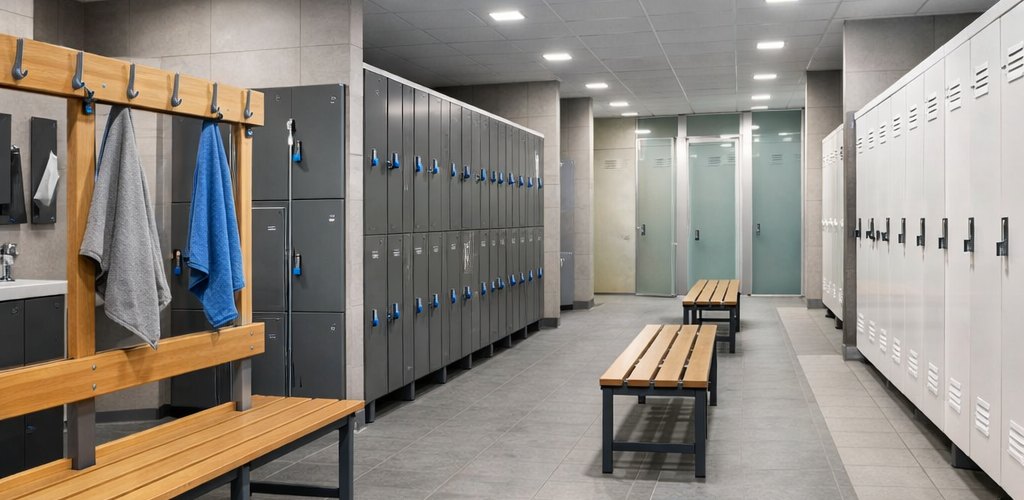
Locker room design affects far more than appearance. A well-planned space supports privacy, improves traffic flow, protects belongings, keeps wet and dry areas under better control and makes daily use easier for staff, students, visitors, members and site teams.
If you want to go deeper into specific decisions, read our locker layout planning guide, locker room sizes and space planning explained and locker spacing guidelines.
A poorly planned space does the opposite. It creates congestion, wastes floor area, reduces storage capacity and makes the room harder to clean, supervise and maintain.
In the UK, locker rooms are used in a wide range of settings. Offices need secure staff storage that fits modern working patterns. Schools need practical changing areas that can handle busy periods between lessons. Gyms and leisure centres need layouts that manage wet areas, regular turnover and user convenience. Industrial workplaces often need a more robust approach, with room for PPE, uniforms, boots and separation between clean and dirty items.
If you already know the type of storage you need, view our lockers for schools and workplaces. This guide explains the planning decisions before choosing a locker range.
That is why locker room design should never begin with locker colours or bench styles. It should begin with use. Before choosing products, it is important to understand who will use the room, how many people need access, what they need to store, how traffic will move through the space and what level of security, hygiene and durability is required. Once those points are clear, the right layout becomes much easier to plan.
This guide explains how to design a locker room that works in practice. It covers layout planning, capacity, locker selection, bench positioning, wet and dry zoning, lock choices, hygiene, maintenance and sector-specific design considerations. It also links to deeper guides where needed, so you can move from initial planning to a more detailed design approach with confidence.
If you are planning a staff changing room, school changing area, gym locker room or industrial welfare space, this guide will help you build a layout that is practical, efficient and easier to manage over time.
What Locker Room Design Includes
Locker room design is the process of planning how people move, change, store belongings and use shared facilities within a defined space. It includes the choice and positioning of lockers, the amount of circulation space between rows, the use of benches, the separation of wet and dry zones, the type of flooring and finishes, the level of supervision needed and the long-term cleaning and maintenance demands of the room.
That means a locker room is not just a room with lockers placed against a wall. It is a working environment with repeated patterns of use. In some locations, users arrive in waves. In others, access is staggered across the day. Some people may need to store a coat, bag and lunch. Others may need room for uniforms, footwear, tools, helmets or sports kit. Some spaces need quick turnover and easy visibility. Others need stronger security and more individual privacy.
A good design balances these needs without wasting floor space. It gives users enough room to move and change comfortably while still delivering the storage capacity the site requires. It also considers future use. Staff numbers can grow. Locking preferences can change. Cleaning demands may increase. A strong layout should cope with that change rather than becoming restrictive after a short period.
Main guide: how to design a locker room
Why Good Locker Room Design Matters
Well-designed locker rooms support daily efficiency. Users can find storage quickly, move through the space without unnecessary delay and keep personal items secure. Managers benefit too. A better layout can reduce damage, simplify supervision and improve cleaning access. In many settings, it also helps a site present a more organised and professional standard.
Capacity is one obvious benefit. A room that has been planned properly can often hold more useful storage than a room that has simply been filled with the largest possible lockers. This happens because the design accounts for door swing, access space, bench position and the relationship between circulation routes and storage rows. Practical capacity matters more than headline locker counts.
Safety and comfort matter too. Tight aisles, badly placed benches and poor wet area control can make a locker room awkward to use. Congested movement at shift changes, lesson changes or peak member times can also create frustration and increase wear on the room. A more considered design reduces these problems before they happen.
Finally, good locker room design strengthens the value of the products you install. Even excellent lockers can underperform in a poor layout. The right product choice only delivers its full benefit when it is part of a design that suits the room, the users and the pattern of use.
Start with a Clear Planning Framework
The most reliable way to design a locker room is to work through a clear planning framework. This avoids expensive guesswork and helps turn broad ideas into a practical specification.
- Define who will use the room
- Estimate how many users need storage
- Identify what must be stored
- Map peak traffic patterns
- Separate wet and dry activity where needed
- Choose locker types and sizes that fit the use
- Decide where benches are needed
- Select lock types based on risk and management needs
- Plan for cleaning, maintenance and future growth
This process sounds simple, but it prevents many common mistakes. For example, a site may assume that every user needs a full-height locker when a mix of compartment sizes would perform better. Another may focus on maximum locker count but overlook the need for comfortable changing space. Others may install suitable lockers but choose a lock system that becomes difficult to manage at scale.
A structured approach keeps the room balanced. It makes sure that layout, capacity, storage type and user experience are working together rather than competing with each other.
Main guide: how many lockers do you need
Workplace Locker Room Design
In workplace settings, locker room design often needs to balance staff convenience, site security and available floor space. Some workplaces need only straightforward personal storage for coats and bags. Others need changing facilities for uniforms, PPE, footwear or specialist workwear. In both cases, the layout should support predictable daily use without creating congestion during start and finish times.
For offices and commercial workplaces, the design may focus on compact staff storage, easy cleaning and a professional appearance. Lockers may be positioned in changing rooms, staff rooms, welfare areas or dedicated storage zones. Benches are useful where staff regularly change footwear or outerwear, but in low-intensity spaces they may not need to dominate the layout.
In warehouses, manufacturing sites and operational workplaces, the design is often more demanding. Users may need larger lockers, stronger materials and a layout that copes with workwear changes. Separation between clean clothing and used workwear may also matter. Boot storage, helmet storage or PPE integration can influence the locker size and internal fit-out required.
Workplace changing rooms should also be easy to supervise and maintain. Durable materials, practical lock systems and sensible aisle widths will usually outperform design choices that focus on appearance alone. Where staff arrive in waves, circulation becomes especially important. The room needs enough open space for people to access lockers, sit briefly if required and move back out without unnecessary crossing points.
Main guide: workplace lockers UK
School Locker Room and Changing Room Design
School locker room design usually centres on durability, supervision and efficient movement between periods of high use. In many schools, changing areas serve groups of students who arrive together and need to store clothes or kit quickly. That means access speed matters. Complicated layouts or narrow pinch points can slow the whole process down.
Designing for schools often means prioritising clear visibility, robust lockers and a simple arrangement that pupils can use without confusion. The right layout should also help staff supervise the area and reduce opportunities for misuse or accidental damage. Benches are often useful, but they need to be positioned so that they support changing rather than obstruct traffic.
Space planning is especially important in school environments because the room may need to cope with repeated surges of use during the day. Rows that are too close together can become problematic very quickly. It is also worth considering whether the changing room needs to support bags, shoes or sports equipment as well as clothing. That may change the locker format needed.
Materials should be selected with maintenance in mind. Easy-clean surfaces and durable doors can reduce long-term upkeep. Locking arrangements also need thought. Simplicity, resilience and low management overhead often matter more than advanced access features in school settings, although the right answer depends on the age group and how the room is used.
Gym and Leisure Locker Room Design
Gym and leisure environments place different demands on a locker room. Users often carry bags, outdoor clothing, towels, footwear and wash items. Wet conditions are more common. Turnover is frequent. The overall feel of the room matters too, because user experience influences how the facility is perceived.
In these settings, wet and dry zoning becomes a central part of the design. Lockers should be positioned with the wider room flow in mind, especially if users move between reception, changing areas, showers and poolside or workout zones. The design should reduce crossover where possible and avoid placing lockers in positions where wet traffic regularly passes through dry changing space.
Material choice can be more important in leisure environments because of moisture exposure. Depending on the room, laminate or plastic options may suit wet or humid conditions better than standard steel. Ventilation, cleaning access and bench finishes should also be considered carefully. The goal is not just to fit storage into the space. It is to create a room that stays usable, attractive and manageable under heavy repeated use.
Lock choice can also differ here. Many leisure facilities prefer simple user-operated systems that work well for short-term storage. The right solution depends on whether lockers are assigned, shared, day-use only or tied to a broader access control approach.
Main guide: how to choose changing room benches
Industrial Locker Room Design
Industrial locker rooms often need a more functional and robust design than other sectors. Users may need to store uniforms, PPE, high-visibility clothing, helmets, footwear, personal items and sometimes clean and used items separately. That changes both the locker specification and the layout strategy.
In these environments, durability is vital. Lockers must cope with more demanding use, and the layout must allow for practical movement during shift change periods. A design that looks efficient on paper can fail in practice if it does not account for boots, bulky clothing or the time users spend changing in and out of workwear.
Bench provision is often more important in industrial changing rooms, especially where footwear changes are routine. Wider access routes may also be needed. Some sites benefit from zoning that helps separate operational items from personal storage, while others may need locker formats designed specifically for PPE and uniform management.
Industrial spaces also benefit from simple, dependable locking systems and clear room organisation. In high-use areas, reliability and ease of maintenance often matter more than decorative design features. The best industrial locker room is one that supports the workflow of the site and stands up well to repeated daily use.
How Many Lockers Do You Need?
Locker capacity planning should begin with real use patterns, not assumptions. In some spaces, every user needs a dedicated locker. In others, shared or rotating access is possible. The correct number depends on how the room is used, whether occupancy changes throughout the day and what each user needs to store.
A workforce changing room with fixed staff may need one locker per person. A leisure site with casual short-stay use may need fewer lockers than its maximum visitor number because not every person uses the room at the same time. A school changing room may need enough access for a class group during a defined lesson period. Each case is different, which is why blanket ratios often lead to either wasted space or inadequate storage.
You also need to think about locker size, not just quantity. A room full of small lockers may look efficient but fail if users need to store larger items. On the other hand, overspecifying locker size can reduce overall capacity unnecessarily. The best approach is to define the storage need first, then build the locker count around that requirement.
Where space is tight, mixed locker sizes can sometimes produce a better result than a single-format layout. This can be useful where some users need only small personal storage and others need deeper or taller compartments.
Main guide: locker room sizes and space planning
Locker Sizes, Shapes and Formats
The right locker format depends on what users need to store, how long items remain inside and how much floor area is available. Full-height lockers are often suitable where clothing, uniforms or larger bags need to be stored. Multi-door lockers can work well where users need compact personal storage for smaller items. Z lockers can improve hanging space efficiency in some settings, especially where room width is limited but garment storage still matters.
Depth matters as much as height. A shallow locker may work for light personal items but be less useful for sports bags, workwear or PPE. Width matters too. Narrow compartments can increase count, but they can also reduce practicality. It is better to fit the storage to the real use case than to chase the highest possible number of doors.
Internal features can also change the suitability of a locker. Shelves, hooks, rails and compartment divisions all affect how useful the locker is in daily use. For example, a locker intended for uniform and personal item separation may need a different layout from one designed simply for coat and bag storage.
Choosing the right format early helps the rest of the design fall into place. Once locker dimensions and use are clear, it becomes much easier to plan aisle widths, bench locations and room capacity with confidence.
Main guide: locker layout and space planning guide
Planning the Layout: Rows, Walls and Access Routes
Layout is where locker room design succeeds or fails. It is not enough to fit lockers into the footprint. The layout must allow users to open doors, move past each other, use benches where needed and leave the room without awkward bottlenecks.
Wall-mounted runs can be effective in smaller spaces or where a simpler circulation path is needed. Central rows can increase storage capacity, but they must be positioned carefully. If central banks reduce aisle width too much, the room will feel cramped and may function poorly at peak times. Double-sided use can be efficient, but only when there is enough space to support it.
The best layouts usually make movement intuitive. Users should be able to enter, find storage, change and leave without crossing too many conflicting paths. This is especially important in busy workplace, school and leisure environments. Where a room includes showers or wash areas, the route from those spaces to lockers and benches should also be considered carefully to help manage wet traffic.
Door swing is another common oversight. Locker doors need space to open without interfering with neighbouring users or creating an obstacle in a narrow aisle. This becomes more significant when benches are placed nearby. A technically possible layout is not always a comfortable layout.
Main guide: locker and bench positioning
Traffic Flow and Congestion Control
Traffic flow is one of the most important parts of locker room planning, yet it is often overlooked. A room may look spacious when empty but become difficult to use once several people access lockers at the same time. This is why peak use patterns should be considered early in the design process.
Think about when the room is busiest. In schools, it may be just before and after PE lessons. In workplaces, it may be around shift changes. In gyms, it may be before and after morning, lunchtime or evening sessions. The layout should reflect those patterns rather than average use across the full day.
For examples and common pitfalls, see locker room layouts: small, medium and large and common locker room design mistakes and how to avoid them.
Good flow usually comes from a combination of sensible locker spacing, careful bench placement and a clear route through the room. The aim is to minimise pinch points and reduce unnecessary crossover. Users should not have to step around seated users, squeeze between open doors or backtrack through wet areas just to leave the room.
Where use is especially intense, simple zoning can help. One side of the room may work better for entry, another for changing and another for storage access. Even small layout choices can make a noticeable difference when applied consistently.
Main guide: traffic flow in changing rooms
Where Benches Fit into Locker Room Design
Benches are an important part of many locker rooms, but they should be planned as a functional feature rather than added at the end. In some environments, benches are essential. In others, they are useful but secondary. The correct choice depends on how long users spend changing, whether footwear changes are involved and how much circulation space is available.
For products, browse our lockers. If seating is part of the project, see our guide to choosing changing room benches.
Freestanding benches can offer flexibility and work well in open layouts. Wall-mounted options may suit more compact spaces. Single-sided and double-sided arrangements each have their place, depending on the room width and traffic pattern. In wetter environments, material choice becomes more important. In more robust workplace settings, durability may be the priority.
Bench positioning should support the locker layout, not disrupt it. If a bench blocks door access or narrows a key route, it will quickly become a problem. On the other hand, a bench placed where users naturally need a place to sit can improve comfort and make the room more efficient.
It is also worth thinking about whether benching should be concentrated in one zone or distributed through the space. The right answer depends on the room size, the storage pattern and the type of use.
Main guide: changing room benches guide
Wet and Dry Zone Planning
Not every locker room needs a formal wet and dry split, but where showers, pools, wash-down areas or high moisture levels are involved, zoning becomes very important. Wet and dry planning helps protect the condition of the room, improves user comfort and supports better hygiene and maintenance.
In simple terms, dry zones are where users enter, change and access lockers without regular water exposure. Wet zones are areas where floors are likely to be damp or users move directly from showers or similar facilities. Good design tries to stop wet traffic from spreading across the whole room.
This may affect the position of lockers, the type of benches used and the choice of locker material. It can also influence flooring and drainage decisions, though those sit beyond the locker selection itself. The key point is that the locker room should not force damp traffic through the middle of every storage area if that can be avoided.
Even in less obviously wet environments, localised zoning can help. For example, footwear change areas may benefit from a tougher surface and different bench arrangement than the main personal storage area. Small distinctions like this often improve the usability of the room.
Choosing Locker Materials
Locker material affects durability, appearance, maintenance and suitability for different environments. Steel lockers are a common choice because they are robust, versatile and suitable for many workplace and school applications. Laminate options can offer a more refined finish and may suit higher-spec leisure or commercial interiors. Plastic lockers often perform well in wet or humid conditions where corrosion resistance and easy cleaning are important.
The best material is not the most expensive or the most stylish. It is the one that fits the operating environment. A dry workplace changing room may perform perfectly well with steel lockers. A poolside or consistently damp area may benefit from a material better suited to wet conditions. A premium leisure site may place greater value on finish quality and visual presentation.
When comparing materials, think beyond first appearance. Consider how the lockers will be cleaned, how often they will be used, whether moisture is present, how visible wear might become over time and whether repairs or replacements need to be straightforward. Long-term performance is usually more important than the first impression alone.
Main guide: steel vs laminate vs plastic lockers
Choosing the Right Lock Type
Lock choice affects both user experience and day-to-day management. The right system depends on whether lockers are assigned or shared, how secure the environment needs to be and how much administrative control the site wants.
Key locks are simple and familiar, which makes them suitable for many assigned locker applications. Combination locks can reduce key management issues and may work well in shared environments. Digital and RFID solutions can provide added convenience and stronger management features in some settings, especially where user turnover is high or integration with other access systems is useful.
However, the most advanced option is not always the most practical. A busy industrial site may value straightforward reliability. A school may want low-maintenance simplicity. A leisure facility may prioritise quick user access. The lock should match the management model of the site, not just the theoretical security level.
It is also worth considering lost keys, reset procedures, staff time and how faults are handled. Good lock choice reduces friction over time. Poor lock choice creates a management burden long after installation.
Main guide: best lock types for changing rooms
Cleaning, Hygiene and Maintenance
A locker room should be designed so it can be cleaned and maintained without excessive effort. This is one of the most practical factors in long-term performance. If lockers, benches and access routes are arranged in a way that makes cleaning difficult, the room will become harder to manage no matter how good it looked at installation stage.
Easy-clean surfaces, sensible spacing and durable finishes all help. Where moisture is common, material choice becomes even more important. The layout should also make it possible to clean around benches and beneath accessible areas without constant obstruction. In some spaces, fewer better-positioned items will outperform a crowded design that is difficult to maintain.
Maintenance considerations include lock servicing, door adjustment, replacement parts and routine wear. A practical design makes these tasks easier. A more awkward design can increase downtime and cost. If the room is in heavy daily use, that matters quickly.
Thinking about maintenance early usually leads to better decisions on layout and product selection. It also reduces the risk of a room becoming tired or inconvenient sooner than expected.
Common Locker Room Design Mistakes
Many locker room problems are preventable. The most common mistakes tend to come from planning for products rather than planning for use.
- Choosing lockers before understanding what users need to store
- Trying to maximise locker count without protecting circulation space
- Adding benches without checking how they affect door access and movement
- Ignoring peak traffic periods
- Using the same material in every environment regardless of moisture level
- Selecting locks without considering management time and user behaviour
- Failing to plan wet and dry zones where they are clearly needed
- Overlooking cleaning and maintenance access
These errors often appear minor at planning stage, but they have a real effect on how the room works day after day. A stronger design process usually prevents them. It also creates a room that lasts longer and performs more consistently.
Main guide: common locker room design mistakes
Locker Room Design Comparison Table
| Environment | Main storage need | Typical locker priority | Bench requirement | Key design focus |
|---|---|---|---|---|
| Workplace office or commercial | Coats, bags, personal items | Compact secure storage | Often moderate | Efficiency, appearance, easy use |
| School changing room | Clothing, shoes, sports kit | Durability and supervision | Usually important | Fast flow, visibility, robust construction |
| Gym or leisure facility | Bags, towels, clothing, wash items | User convenience and moisture suitability | Often important | Wet and dry zoning, turnover, finish quality |
| Industrial workplace | Uniforms, PPE, boots, personal items | Strength and practical capacity | Often essential | Durability, workflow support, simple management |
Example Approach to Designing a Locker Room
A simple way to approach a new locker room project is to break the work into stages. First, define the user group and the main storage requirement. Second, estimate peak simultaneous use. Third, identify whether the room needs dry-only use or wet and dry zoning. Fourth, choose locker types that suit the storage need. Fifth, position benches only where they support changing activity. Sixth, test the layout for movement, door opening and maintenance access. Finally, select the lock system that best matches the operating model.
This sequence helps you build the room from function outward. It avoids the common mistake of choosing a locker range too early and then trying to force the rest of the design around it. It also makes it easier to compare different options with a clear reason for each decision.
If the project is larger or more complex, it can be useful to compare at least two layout approaches before making a final decision. One may offer slightly higher locker count. Another may offer better flow and long-term usability. The strongest choice is not always the one with the biggest headline storage number.
Main guide: example locker room layouts
Frequently Asked Questions
How much space should be allowed around lockers in a changing room?
The right amount depends on the locker size, bench position and how many users need access at the same time. The key point is that people must be able to open doors, access belongings and move past each other without the room becoming congested. Peak use matters more than quiet periods.
What is the best locker type for a locker room?
There is no single best option for every site. The best locker type depends on what users need to store, whether clothing needs to hang, how much room is available and whether the environment is dry, damp or wet. Full-height, compartment and Z locker styles all have their place.
Do all locker rooms need benches?
No. Some compact staff storage areas may work well with little or no seating. However, benches are often important in school, leisure and industrial changing rooms where users regularly change shoes, uniforms or sportswear.
Are steel lockers suitable for all locker rooms?
Steel lockers are suitable for many dry workplace and school environments, but they are not always the best choice for wetter settings. In humid or wet areas, other materials may offer better long-term performance depending on the conditions.
What is the most important factor in locker room design?
The most important factor is fit between the design and the real pattern of use. Capacity, layout, locker size, bench placement, lock choice and cleaning access all need to reflect how the room will actually be used each day.
Planning a Locker Room That Works Long Term
The best locker room designs perform well on day one and continue to work as the site changes. That means planning for durability, sensible maintenance and enough flexibility to handle future shifts in staff numbers, user patterns or storage needs. A room that is too tightly specified for current use can become restrictive very quickly.
Strong design usually comes from balancing three things. First, the room must be practical for users. Second, it must be manageable for the organisation. Third, it must make sensible use of the available space. When those three points align, the room feels easier to use, easier to clean and easier to justify as a long-term investment.
That is why locker room design should be treated as a complete planning task rather than a simple product purchase. The right lockers matter. The right benches matter. The right locks matter. However, the layout that connects them is what determines whether the room works smoothly in everyday use.
Locker Room Products and Related Guides
If you are moving from planning into specification, it helps to combine this guide with the right product and support pages. You may also want to review deeper guides for individual parts of the design process.
For a broader overview of locker types, product routes and use cases, start with the lockers UK guide. If you are still defining space, users and installation needs, use the locker planning guide before finalising the room design.
- lockers
- workplace lockers
- locker layout planning guide
- changing room benches guide
- changing room lock types
- locker material comparison
Final Thoughts
Locker room design works best when it starts with people, not products. Once you understand who is using the room, what they need to store and how they move through the space, the right locker layout becomes much easier to define. From there, you can make better decisions on locker size, material, benches, lock types and zoning.
Whether you are planning a workplace changing room, school facility, gym locker area or industrial welfare room, a structured design process will usually deliver a better result than trying to maximise storage alone. The strongest locker rooms are efficient, comfortable, easy to maintain and suited to the daily reality of the site.
If you need lockers, benches or support with choosing the right layout approach, Total Locker Service supplies a wide range of storage and changing room solutions for workplaces, schools, leisure sites and commercial environments across the UK.
For product options, sizes, lock choices and delivery support, browse our wiremesh locker range or contact Total Locker Service for advice.
Discover more from Blog Total Locker Service
Subscribe to get the latest posts sent to your email.