Choosing the Right Bench for Your Environment: A Practical Guide to Changing Room Seating
April 13, 2026
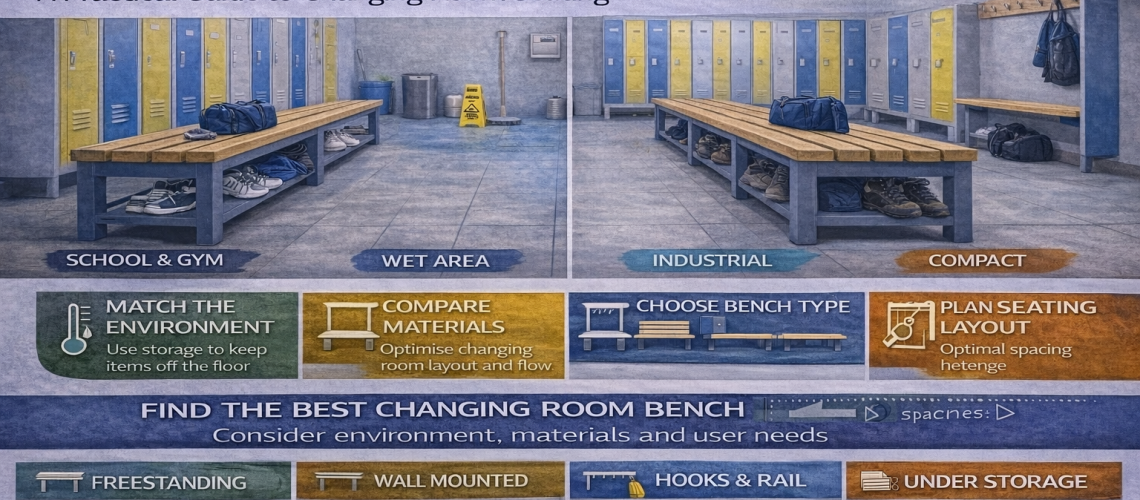
Choosing the right changing room bench means matching the seating to the environment, room layout, users and cleaning requirements. A bench that works well in a dry school changing room may not be suitable beside a swimming pool, while a light-duty seating system may be inappropriate for a busy factory or warehouse.
Changing room benches are available in freestanding, wall-mounted, single-sided, double-sided, hook-board, rail, storage and heavy-duty configurations. Materials also vary according to whether the installation is dry, damp or regularly exposed to water.
This guide explains the main bench types, materials, layouts and features available for UK schools, workplaces, gyms, leisure centres, swimming pools and industrial changing rooms.
To compare current products, dimensions and prices, browse our changing room bench seating.
Quick Guide to Changing Room Bench Types
| Bench type | Best for | Main advantage |
|---|---|---|
| Freestanding | Schools, workplaces and flexible layouts | Can be positioned without relying on a suitable wall |
| Wall mounted | Compact and hygiene-focused rooms | Clear floor area beneath |
| Single sided | Perimeter and changing-room layouts | Seating with optional hooks, rails or storage |
| Double sided | Central changing-room positions | Users can sit on both sides |
| Bench with hooks | Schools, workplaces and sports changing | Combines seating and hanging space |
| Bench with rail | Uniform and garment storage | Provides structured hanging space |
| Bench with shoe tray or storage | Workplaces, gyms and sports facilities | Keeps footwear and kit off walkways |
| Plastic bench | Pools, showers and wet environments | Moisture resistant and easy to clean |
| Heavy-duty bench | Factories, warehouses and industrial sites | Designed for demanding high-use environments |
Start With the Environment
The room environment should be established before deciding on the bench style or material.
- Is the changing room dry?
- Is it humid?
- Will the seating be exposed to shower or pool water?
- How frequently will the room be cleaned?
- Will users bring dirty footwear or PPE into the area?
- How heavily will the bench be used?
These questions affect material, construction, fixing, storage features and long-term maintenance.
Freestanding Changing Room Benches
Freestanding benches are flexible and can suit many schools, workplaces, gyms and staff changing rooms. They do not need to be mounted directly to a suitable wall, making them useful where the room layout may change or wall construction limits fixing options.
They can also be supplied in single-sided or double-sided arrangements depending on the room.
Wall-Mounted Benches
Wall-mounted benches leave the floor underneath relatively clear. This can improve cleaning access and reduce the amount of framework occupying a small changing room.
They work best where the wall construction is suitable for the required fixing system.
For a detailed comparison, see our Wall-Mounted vs Freestanding Benches guide.
Single-Sided and Double-Sided Benches
Single-sided benches
Single-sided benches are commonly positioned against walls or beside locker runs. They may include backrests, hook boards, rails or shoe trays depending on the product.
Double-sided benches
Double-sided benches are designed for users on both sides and can work well as central seating in larger changing rooms.
The room must provide enough space around both sides for seated users, people standing up, bags, locker doors and circulation.
Benches With Hooks
Bench systems with hook boards combine seating with nearby hanging space for coats, uniforms, towels, bags and other garments.
They are particularly useful in:
- school changing rooms;
- sports facilities;
- workplace staff areas;
- uniform changing rooms;
- and team changing facilities.
Benches With Rails
Rails provide more structured hanging space than individual hooks and can be useful for uniforms, jackets and workwear.
They can suit industrial and workplace changing rooms where users regularly need to hang garments during the changing process.
Benches With Storage Underneath
Under-bench storage makes use of space beneath the seat for footwear, bags or equipment.
- shoe trays;
- open shelves;
- divided storage;
- or clear storage areas beneath the seating.
This can reduce belongings being left in aisles, but it should not make the room harder to clean or encourage items to project into circulation routes.
For the dedicated subject, see our Locker Room Benches With Storage guide.
Benches With Hooks, Rails and Storage
Integrated bench systems combine several functions within one footprint. They can provide seating, hanging space and footwear or bag storage while reducing the need for separate furniture.
This approach is particularly useful where users need clothing and storage close to the changing position.
See our Benches With Hooks, Rails and Storage guide.
Heavy-Duty Changing Room Benches
Factories, warehouses, engineering facilities, depots and other industrial workplaces can place greater demands on changing-room seating.
Consider heavier-duty seating where:
- the room is used intensively at shift changes;
- users wear heavy workwear or PPE;
- footwear and equipment are regularly stored nearby;
- impact and rough use are more likely;
- or long-term durability is a particularly important requirement.
Changing Room Bench Materials
| Material | Typical environment | Main consideration |
|---|---|---|
| Hardwood or timber slats | Dry schools, workplaces and staff areas | Comfortable and traditional but better suited to controlled dry environments |
| Plastic / polymer | Pools, showers, wet areas and hygiene-focused environments | Moisture resistant and easy to clean |
| Steel frame | Most commercial changing-room systems | Provides structural strength and requires a suitable protective finish |
| Mixed material | General commercial use | Combines structural frame and appropriate seating surface |
For detailed material comparisons, see our Bench Materials Guide.
Wet-Area Changing Room Benches
Swimming pools, showers and other wet environments place very different demands on seating from dry workplace changing rooms.
Wet-area benches should be selected around:
- water exposure;
- humidity;
- cleaning chemicals;
- corrosion resistance;
- easy-clean surfaces;
- drainage;
- and safe cleaning access.
Plastic seating is often particularly useful in these environments because it will not rot or rust and its non-porous surfaces are straightforward to clean.
Dry-Area Changing Room Benches
Dry changing rooms usually provide more flexibility in materials and bench styles.
Schools, offices, warehouses and staff welfare rooms may use timber or plastic seating depending on the required appearance, durability and cleaning routine.
Bench Seating for Schools
School benches should support high daily use, PE changing and groups of pupils arriving at similar times.
- Use durable seating.
- Allow clear supervision.
- Keep bags and footwear away from circulation routes.
- Consider hooks where coats or PE kit need temporary hanging.
- Allow enough room around benches for busy class changes.
Bench Seating for Workplaces
Workplace changing rooms may need seating for shoes, uniforms, outerwear and PPE changes.
Useful options include hooks, garment rails, shoe trays and heavier-duty construction where the room experiences intensive shift-based use.
Bench Seating for Gyms and Leisure Centres
Gym and leisure changing rooms normally experience frequent turnover and regular cleaning. Benches should therefore combine user comfort with practical hygiene and circulation.
Where the seating is poolside or regularly exposed to water, choose materials specifically suitable for wet conditions.
Bench Seating for Industrial Changing Rooms
Industrial changing rooms often need seating to support staff changing into uniforms, workwear, boots and PPE.
Consider:
- strength and durability;
- shift-change occupancy;
- shoe or boot storage;
- hooks and garment rails;
- easy cleaning;
- and sufficient space around the bench for bulky clothing and equipment.
Bench Length
Changing-room bench seating is available in several standard lengths, with custom dimensions possible for selected products.
The correct length depends on:
- available wall or floor space;
- number of simultaneous users;
- locker-bank length;
- room shape;
- door positions;
- and required circulation space.
Do not simply install the longest bench that fits. Seating should support the changing process without creating a bottleneck.
Bench Layout and Spacing
A good bench can perform badly if it is positioned too close to lockers, doorways or another bench.
- Allow users to sit comfortably.
- Allow room for users to stand up.
- Keep locker doors usable.
- Keep entrances clear.
- Allow circulation past occupied seating where required.
- Allow space for bags, shoes and clothing.
- Preserve cleaning access.
For detailed planning, see our Bench Layout and Spacing Guide.
Wall-Mounted or Freestanding?
| Feature | Wall mounted | Freestanding |
|---|---|---|
| Floor cleaning | Clearer access underneath | Frame and legs remain on floor |
| Flexibility | Fixed position | Greater layout flexibility |
| Wall requirement | Needs suitable structure | Less dependent on wall construction |
| Central positioning | Not applicable | Can be used centrally |
Do You Need Hooks, Rails or Storage?
Additional features are worthwhile when they solve an actual storage problem.
Consider them when users regularly need somewhere for:
- coats;
- uniforms;
- bags;
- sports kit;
- shoes;
- boots;
- PPE;
- or towels.
Avoid adding features simply because they are available. In a very small changing room, additional storage can sometimes create more clutter rather than less.
Cleaning and Hygiene
Bench design affects how easy the changing room is to clean.
- Can the floor beneath the seating be reached?
- Can dirt be removed from corners?
- Can hooks and rails be wiped easily?
- Can shoe trays be cleaned?
- Are the materials appropriate for the cleaning chemicals used?
- Can wet areas drain and dry effectively?
Cleaning access should be considered before installation rather than after the bench has been fixed in place.
How Benches Work With Lockers
Changing-room benches and lockers should be planned as one system.
Check:
- locker door swing;
- standing space;
- bench position;
- circulation;
- bag and footwear storage;
- locker depth;
- and peak occupancy.
For the wider room arrangement, use our Locker Room Layout Planning Guide UK.
Common Bench Selection Mistakes
- Choosing by appearance alone.
- Using dry-area materials beside pools or showers.
- Ignoring cleaning access.
- Installing benches too close to locker doors.
- Maximising seating at the expense of circulation.
- Adding storage that encourages items to spill into walkways.
- Using light-duty benches in demanding industrial settings.
- Ignoring the items users need to change or store.
- Choosing wall-mounted seating without checking the wall construction.
- Failing to plan around peak occupancy.
Changing Room Bench Buying Checklist
- Is the environment wet or dry?
- Who will use the room?
- How busy is the changing area?
- Is the bench freestanding or wall mounted?
- Is single-sided or double-sided seating required?
- Which seating material suits the environment?
- Are hooks required?
- Is a garment rail required?
- Would shoe or bag storage help?
- How long should the bench be?
- Can users sit and stand comfortably?
- Will locker doors remain accessible?
- Can people circulate when the bench is occupied?
- Can the surrounding floor be cleaned?
- Does the construction suit the expected level of use?
Related Changing Room Bench Guides
- Changing Room Bench Seating – current bench products and specifications.
- Types of Changing Room Benches – compare main bench configurations.
- Wall-Mounted vs Freestanding Benches – direct format comparison.
- Bench Materials Guide – wood, plastic and metal.
- Benches With Hooks, Rails and Storage – integrated storage options.
- Benches With Storage Underneath – shoe, bag and kit storage.
- Bench Layout and Spacing – changing-room positioning.
- Locker Room Design UK – complete changing-room design.
Changing Room Bench FAQs
What type of bench is best for a changing room?
The best bench depends on the room environment, available space, user numbers, cleaning requirements and whether hooks, rails or storage are needed. There is no single format that suits every changing room.
Are wall-mounted or freestanding benches better?
Wall-mounted benches provide clearer floor access for cleaning but need a suitable wall structure. Freestanding benches offer greater layout flexibility and can be positioned away from walls.
What bench material is best for wet changing rooms?
Plastic or polymer seating is often well suited to swimming pools, showers and other wet environments because it resists moisture and is straightforward to clean. The complete bench construction and fixings should also suit the environment.
Are changing room benches available with coat hooks?
Yes. Bench systems can include hook boards or garment rails so users can hang coats, uniforms, bags and changing-room items close to the seating.
Can changing room benches include shoe storage?
Yes. Selected changing-room benches are available with shoe trays, shelves or usable storage areas beneath the seating for footwear, bags and kit.
What bench seating is suitable for factories and warehouses?
Industrial changing rooms normally benefit from durable commercial or heavy-duty bench seating selected around shift use, workwear, PPE, footwear storage and the actual cleaning environment.
How much space should be left around changing room benches?
Enough usable space should remain for users to sit, stand, access nearby lockers and circulate safely when the bench is occupied. The required clearance depends on the complete room layout and level of use.
Can benches be customised to fit a changing room?
Standard changing-room bench sizes are available, and selected products can also be manufactured to suit specific dimensions or project requirements.
Choose Bench Seating Around Real Use
The right changing room bench is the one that matches the users, environment and room rather than simply the cheapest or most visually attractive option.
Start by deciding whether the room is wet or dry. Then choose the appropriate bench format and material, decide whether hooks, rails or storage add useful functionality and check the final layout for cleaning, locker access and peak-time circulation.
Browse our changing room bench seating range for current configurations and specifications.
For help specifying benches for a school, workplace, gym, leisure centre or industrial changing room, call 01284 749211 or email sales@totallocker.co.uk.
Discover more from Blog Total Locker Service
Subscribe to get the latest posts sent to your email.