Locker Guides UK: Planning, Keys, Locks and Storage Advice
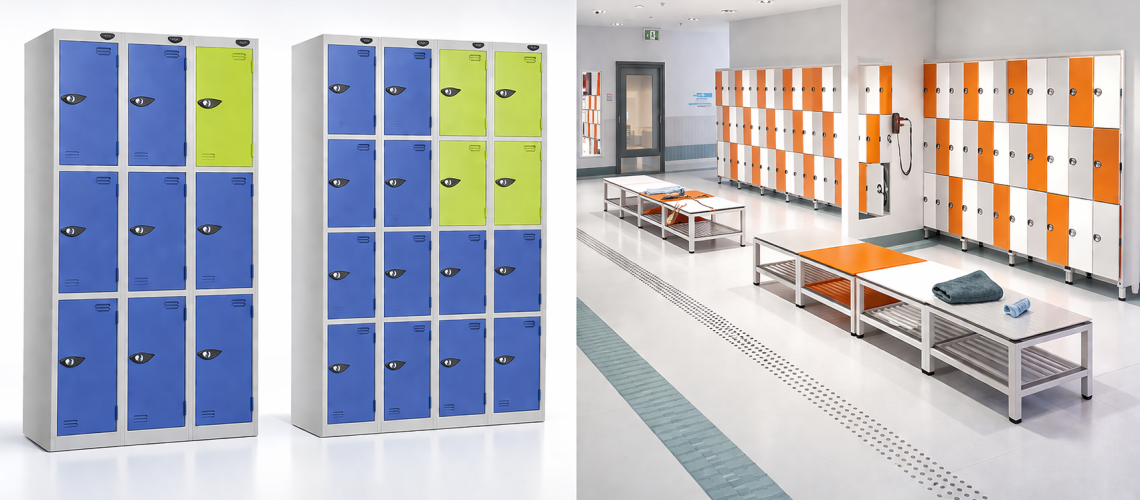
Practical UK guidance for choosing, planning, installing and managing commercial lockers, locker locks, replacement keys, key cabinets, smart access, changing rooms and secure storage for schools, workplaces, leisure facilities, healthcare settings and other organisations.
Choose the subject that matches your requirement. Each section starts with a main guide and links to more detailed buying, planning, maintenance or management advice.
Total Locker Service supplies lockers, storage and security products to schools, workplaces and organisations across the UK.
Find the Right Locker, Lock, Key or Storage Guide
| Your task | Go to |
|---|---|
| Choose lockers for a new project | Choosing Lockers |
| Choose lockers for a school or education site | School & Education Lockers |
| Specify workplace staff storage | Workplace & Staff Lockers |
| Plan a gym, leisure centre or changing room | Leisure, Gym & Changing-Room Lockers |
| Replace a locker key or compare locker locking methods | Locker Keys & Locks |
| Store, control or track workplace and site keys | Key Cabinets & Key Management |
| Choose smart lockers or digital locker access | Smart Lockers & Digital Access |
| Plan NHS or healthcare staff lockers and changing rooms | Healthcare & NHS Staff Lockers |
| Identify a damaged or unknown locker component | Locker Parts, Repairs & Service |
| Plan locker quantities, dimensions, room layouts or an existing estate | Locker Planning & Estate Management |
| Choose outdoor, mesh, PPE, heated or other specialist lockers | Specialist Locker Applications |
| Compare lockers, cabinets, safes and general storage systems | Storage Systems, Cabinets & Safes |
| Protect cash, takings, cards and business valuables from theft | Cash Safes & Business Security Safes |
| Protect USB drives, hard drives and backup media from fire | Data Safes & Digital Media Protection |
| Protect paper documents and business records from fire | Fire Safes & Fire-Protected Storage |
| Store and charge laptops, tablets, phones or tools | Charging Lockers |
| Choose changing-room seating | Changing-Room Bench Seating |
| Choose, size, fix, number, maintain or replace engraved identification | Engraved Identification & Locker Numbering |
| Select secure medicines storage | Medical Cabinets & Medicines Storage |
Choosing Lockers
Define the stored items, users, environment, available space and access method before choosing locker dimensions, materials, door configurations or lock types. Once the basic specification is clear, compare project cost, whole-life value, colours, finishes and installation accessories rather than relying on headline unit price alone. Sector-specific requirements are separated below: use School & Education Lockers, Workplace & Staff Lockers, Leisure, Gym & Changing-Room Lockers or Healthcare & NHS Staff Lockers where those environments apply.
Main guide: How to Choose Lockers: UK Buying and Selection Guide
Related locker selection guides
- Locker Materials Explained: Steel, Laminate and Plastic Lockers
- Commercial Locker Costs UK: What Affects Locker Prices?
- Locker Lifespan and Whole-Life Cost: How Long Do Commercial Lockers Last?
- Locker Colours and Finishes UK: How to Choose and Match Locker Colours
- Locker Stands, Plinths and Sloping Tops: Specification Guide
- View commercial locker ranges
School & Education Lockers
Plan pupil and staff locker storage around age group, belongings, corridor flow, supervision, access control, key management, changing-room use, device storage and long-term maintenance. For whole-room quantities, dimensions and general layout calculations, use the Locker Planning & Estate Management section.
Main guide: School Lockers UK: Choosing Lockers for Schools
School locker planning and management guides
- School Locker Systems UK: Student Storage, Access Control and Corridor Planning
- Best Locker Locks for Schools UK
- School Locker Key Management UK: Student Keys, Lost Keys and Safeguarding
- Break-Time Flow Management in Schools UK: Corridor Congestion and Movement
- Tablet Charging Lockers for Schools UK
- Locker Security Guide: Schools, Gyms and Workplaces
- Locker Cleaning & Maintenance Guide UK
- View school locker products
Workplace and Staff Lockers
Plan staff storage around clothing, bags, PPE, footwear, shift patterns, welfare facilities and hybrid attendance rather than using one locker format for every workplace. For hospitals, clinics and other healthcare staff changing facilities, use the dedicated Healthcare & NHS Staff Lockers section.
Main guide: Workplace Lockers UK: Staff Storage, Security, Compliance and Layout Guide
Workplace locker guides
- Workplace Lockers for a New Office Fit-Out
- Workplace Locker Layout Guide UK: Staff Flow and Shift Planning
- Workplace Changing Rooms: Staff Welfare and PPE Layout
- Assigned vs Shared Staff Lockers for Hybrid Workplaces
- Day-Use Office Lockers for Hybrid Workplaces
- Heated Lockers for Workplaces UK: Drying Workwear, PPE and Cycling Kit
- View workplace locker products
Leisure, Gym & Changing-Room Lockers
Choose and plan lockers for gyms, leisure centres, swimming pools, sports facilities and commercial changing rooms around user turnover, wet or dry conditions, locker material, temporary access, hygiene, ventilation, bench positioning and circulation. Use this section for leisure-specific locker selection and changing-room use. For general capacity, dimensions and installation planning, use Locker Planning & Estate Management.
Main guide: Gym Lockers: Choosing Lockers for Gyms and Leisure Centres
Leisure, gym and changing-room guides
- Changing Room Layout Guide UK: Wet vs Dry Areas, Spacing and Safe Planning
- Wet Area Changing Room Design: Showers, Pools and Hygiene
- Leisure Locker Access Systems UK: Keys, Coins, Codes, RFID and Temporary Access
- Stainless Steel Locker Key Pins UK: Leisure, Swimming Pool, Gym & Laundry Uses
- Coin Operated Locker Locks UK: Return vs Retain Systems Explained
- Locker Room Design UK: Layout, Lockers, Benches and Planning
- Changing Room Bench Sizes UK: 1 m, 1.2 m, 1.5 m or 2 m?
- View lockers for gyms, leisure centres and changing rooms
- View changing-room bench seating
Locker Keys and Locks
Identify locker key numbers, order replacements, understand locker master-key access and compare key, hasp, combination, coin, electronic and RFID locker locking systems. For cabinets used to store and control building, vehicle, equipment or site keys, use the separate Key Cabinets & Key Management section.
Main locker key hub: Replacement Locker Keys UK: Codes, Brands and Ordering
Key and lock guidance
- How to Find Your Locker Key Code UK
- Ronis Locker Keys UK: Key Codes, Identification and Replacement
- Locker Lock Identification Guide UK
- Locker Keys by Manufacturer and Brand
- Master Key Locker Systems UK: Override and Key Management
- Locker Locking Systems: Keys, Codes and Smart Access
- Locker Security UK: Theft Prevention, Locks and Access Control
- Order replacement locker keys cut to code
- Browse replacement locker locks
Key Cabinets & Key Management
Store, organise, issue and track physical keys using a system matched to key volume, access frequency and security risk. This section covers key cabinets, manual and digital key control, issue and return procedures, tracking, audit records, cabinet placement, compliance and the management of lost or high-risk keys. Locker replacement keys and locker master-key systems remain in the separate Locker Keys & Locks section.
Main guide: Key Storage Systems UK: Secure Key Management, Cabinets, Control and Compliance
Key cabinet and key management guides
- Key Cabinets Explained: Types, Sizes, Lock Options and Uses
- Commercial Key Cabinets: 42 to 600 Hook Capacity Options
- Mechanical vs Digital Key Cabinets
- Key Control Systems UK: Manual vs Digital Key Management
- Key Tracking Methods UK: Logs, Sign-Out Systems and Audit Trails
- How to Manage Keys in the Workplace UK: Policies, Logs and Access Control
- Key Storage Compliance UK
- Where to Install Key Cabinets
- Best Key Storage for Small Businesses
- Key Storage for Schools, Hospitals and Facilities Management
- Lost Keys: Risk, Cost and Recovery
- Key Cabinet vs Safe for Key Storage
- View key cabinets for secure key storage
Smart Lockers & Digital Access
Plan smart and digitally managed locker systems around the operating model first: who uses the lockers, how access is issued, whether lockers are assigned or shared, what administrators need to control, which events need an audit trail, how occupancy is measured and whether the system needs software, RFID credentials or wider integration. Use this section when the requirement goes beyond conventional keys, mechanical locks or simple stand-alone access.
Main guide: Smart Locker Systems UK: Digital Access, Management Software and Connected Locker Infrastructure
Smart locker and digital access guides
- Smart Locker Management Software UK — software, dashboards and administration.
- Locker Occupancy Management Systems UK — utilisation, vacancy and availability.
- Locker Access Permissions and Governance UK — administrator permissions, overrides and access policy.
- Locker Access Audit Systems UK — event logs, access records and audit trails.
- Smart Locker Analytics UK — trends, comparisons and performance analysis.
- RFID Locker Systems UK: Staff Cards, Fobs and Wristbands
- Smart Lockers UK 2026 Guide — commercial, procurement and investment decisions.
Healthcare & NHS Staff Lockers
Plan healthcare staff lockers and changing areas around shift handovers, uniforms, personal clothing, clean and used workwear, PPE workflows, staff-only access, cleaning, accessibility and the needs of permanent, bank, agency and visiting staff. This section is for staff changing and personal storage; medicines and controlled medical items remain in the separate Medical Cabinets & Medicines Storage section.
Main guide: NHS and Healthcare Changing Room Planning UK: Safe Layouts, Staff Flow and Clinical Storage Guide
- Healthcare Storage Systems UK: NHS Lockers, PPE & Cabinets
- NHS Locker Access Systems UK
- Accessible Locker Planning UK: Reach, Layout and Inclusive Design
- Locker Estate Audit UK: Condition, Usage and Replacement Planning
- Garment Dispenser and Laundry Lockers for Uniform and Workwear Management
- View commercial lockers for healthcare staff areas
Locker Parts, Repairs and Service
Use this route for damaged doors, hinges and locks, unknown components, obsolete parts, replacement components, repairs, servicing and planned locker maintenance. Where condition or recurring faults raise a wider question about whether lockers should remain in service, be refurbished, replaced or decommissioned, move into the lifecycle and replacement-planning guides linked below. If the requirement is only a replacement key or a comparison of locking methods, use the Locker Keys & Locks section instead.
Main guide: Locker Parts, Repairs and Servicing Guide
- Locker parts, repairs and maintenance services
- Browse replacement locker parts
- Compare replacement locker locks
- Identify a locker lock, key or replacement part
- Locker Lifecycle Management UK: Repair, Refurbishment and Replacement Decisions
- Locker Refurbishment UK: Repair, Repainting and Lock Upgrades
- Locker Replacement Planning UK: Phasing, Procurement and Renewal
- Refurbished locker locks
Clear photographs of the component front, rear mechanism, fixings, key and visible markings make identification more reliable. Where possible, also provide the locker manufacturer, dimensions and quantity required. Start with the failed component or service requirement, then move into lifecycle, refurbishment or replacement planning only where the evidence justifies it.
Locker Planning and Estate Management
Plan locker quantities, dimensions, room layouts, spacing and installation requirements, or create reliable records, audits, lifecycle decisions and phased replacement plans for an existing locker estate. Use this section for general planning and estate-level questions. School-specific operation, workplace-specific staff storage and healthcare-specific changing-room requirements are covered in their dedicated sections.
Main planning guide: Locker Planning UK: Layout, Space, Compliance and Installation Guide
Detailed planning and estate guides
- Locker Room Design UK: Layout, Lockers, Benches and Planning
- How Many Lockers Do You Need? Locker Capacity Planning Guide
- Locker Sizes UK: Dimensions and Configurations
- Locker Depth Guide UK: 300 mm vs 450 mm vs 600 mm
- Locker Aisle Width Guide UK: Safe and Practical Locker Room Spacing
- Locker Installation Planning UK: Access, Fixing and Site Preparation
- Locker Estate Management UK: Assets, Lifecycle and Occupancy
- Locker Infrastructure Systems UK: Access, Allocation, CAFM and Smart Integration
- Locker Lifecycle Management UK: Repair, Refurbishment and Replacement Decisions
- Locker Replacement Planning UK: Phasing, Procurement and Renewal
- Locker Asset Register UK: Assets, Locks, Keys and CAFM Tracking
- Locker Estate Audit UK: Condition, Usage and Replacement Planning
Specialist Locker Applications
Use this section when the storage requirement is driven by a particular environment, material or operational use rather than by a general sector alone. Outdoor exposure, ventilation, PPE, uniforms, wet workwear, equipment visibility and specialist compartment layouts can change the correct locker specification substantially.
Main guide: Where Lockers Are Used UK: Workplace, School, Leisure and Commercial Applications
Specialist locker guides
- Outdoor Lockers: Weatherproof Storage for External Locations
- Mesh Lockers UK: Secure Ventilated Storage
- PPE and Uniform Lockers for Workplaces: Clean and Dirty Storage
- Heated Lockers for Workplaces UK: Drying Workwear, PPE and Cycling Kit
- Multi-Compartment Wire Mesh Lockers: Sizes and Configurations
- Locker Ventilation and Airflow Guide UK
- Food Industry Lockers UK: Staff Changing & Hygiene Guide
- Compare commercial and specialist lockers
Storage Systems, Cabinets and Safes
Choose storage according to what is being stored, who needs access and the level of security, protection or control required. Lockers, general storage cabinets, COSHH cabinets, medical cabinets, cash safes, data safes, document fire safes and shelving solve different problems and should not be treated as interchangeable.
Main guide: Types of Storage Systems UK: Lockers, Cabinets and Safes
- Workplace Storage Systems UK: Lockers, Cabinets, Keys and Staff Storage
- School Storage Systems UK: Pupils, Staff, Classrooms and Facilities
- Industrial Storage Systems UK: Warehouses, Factories and Workshops
- Care Home Storage Systems UK: Medicines, Staff and Facilities
- Medical Cabinets vs Lockers, COSHH Cabinets and Safes UK
For cash, business takings and valuables, go directly to Cash Safes & Business Security Safes. For USB drives, hard drives, backup tapes and other heat-sensitive digital media, use Data Safes & Digital Media Protection. For paper documents and records requiring tested fire protection, use Fire Safes & Fire-Protected Storage. For physical key cabinets and key-control procedures, use Key Cabinets & Key Management.
Cash Safes & Business Security Safes
Choose a cash safe around what is being protected, the value and type of contents, how often staff need access, where the safe will be installed, how it will be anchored and which locking method suits the business. Cash safes are primarily selected for theft resistance and controlled access rather than fire protection, so they remain separate from both data safes and document fire safes.
Main guide: Cash Safes UK: Business Security, Cash Storage and Safe Selection Guide
Cash safe and business security guides
- Cash Safe Size Guide UK: Capacity, Internal Dimensions and What Size Safe Do You Need? — choose safe capacity around cash bags, coins, till cassettes, documents and usable internal dimensions.
- Cash Safe Installation & Fixing UK — floor fixing, wall fixing, anchoring and installation position.
- Key vs Electronic Cash Safes UK — compare everyday access, key control and electronic locking.
- Deposit Safes UK — secure cash deposits without routine access to the main safe compartment.
- Under-Counter Cash Safes UK — compact note-deposit storage close to tills and counters.
- Insurance-Rated Safes UK: EN 14450 vs EN 1143 — understand security standards and safe grading.
- View business and cash safes
- View deposit safes
Data Safes & Digital Media Protection
Use this section when the requirement is to protect heat-sensitive digital and removable media such as USB drives, external hard drives, SSDs, backup tapes, memory cards and other recovery media. Start with the main comparison guide, then move into capacity, suitable contents, fire-rating interpretation and business backup use before using the narrower USB and three-way comparison guides.
Main guide: Data Safes vs Fire Safes UK: Media Temperature Limits and Digital Storage Protection
Data safe and digital media guides
- What Size Data Safe Do I Need? – plan usable capacity for USB drives, hard drives, SSDs and backup media.
- What Can You Store in a Data Safe? – identify suitable media including USB drives, external hard drives, SSDs, tapes, memory cards and optical discs.
- Data Safe Fire Ratings Explained – understand protection duration, test standards and media classifications.
- Data Safes for Business Backup Storage UK – protect local recovery media with controlled, organised on-site storage.
- Can You Store USB Drives in a Fire Safe? – focused guidance on USB drives and similar removable digital media.
- Fire Safe vs Data Safe vs Filing Cabinet – compare protected storage for paper documents, digital media and active paper files.
- View Data Safes – compare commercial data safes for digital media and backup storage.
For paper documents and business records where the principal requirement is document fire protection, use Fire Safes & Fire-Protected Storage. For cash, takings and valuables where theft resistance is the main concern, use Cash Safes & Business Security Safes.
Fire Safes & Fire-Protected Storage
Use this section when a business knows it needs fire-protected storage for paper documents and needs to work through the decision in order: which records matter, how difficult they would be to replace, how much paper must be stored, how often staff need access and whether the requirement is best served by a document fire safe or fire-resistant filing cabinet. The main guide acts as the decision hub; the supporting guides below own rating interpretation, capacity, application-led selection, safe-vs-cabinet comparison, value, lifecycle and home-vs-business distinctions. Digital backup media remains in Data Safes & Digital Media Protection, while theft-focused cash storage remains in Cash Safes & Business Security Safes.
Main guide: What Fire Safe Do I Need for My Business? UK Guide
Fire safe and protected-storage guides
- Fire Safe Ratings UK: 30, 60, 90 and 120 Minute Guide
- Fire Safe Sizes Explained: What Size Fire Safe Do I Need?
- Best Fire Safes for Businesses UK
- Fire Safe vs Fire-Resistant Filing Cabinet: UK Business Guide
- Are Fire-Resistant Filing Cabinets Worth It? Cost, Value and Business Use
- How Long Do Fire Safes Last? Lifespan and Replacement Guide
- Fire Safe for Home vs Business: What Is the Difference?
- View fireproof safes and fire-resistant cabinets
Charging Lockers
Choose secure powered storage by working through the practical decisions in order: device and compartment size, required capacity, electrical supply, ventilation, operating method, allocation, environment, installation position and access control.
Start here: Charging Lockers UK: Complete Guide for Workplaces and Schools
Charging locker planning guides
- Charging Locker Sizes Explained — device dimensions, compartment space, chargers and room footprint.
- How to Plan Charging Locker Capacity — calculate the number of charging positions required.
- Charging Locker Power Requirements Explained
- Do Charging Lockers Need Ventilation?
- How Charging Lockers Work
- Shared vs Assigned Charging Lockers
- Charging Lockers for Schools vs Workplaces
- Where to Install Charging Lockers
- Best Lock Types for Charging Lockers
- View charging locker products
Changing-Room Bench Seating
Choose changing-room seating by bench length, available space, environment, material, fixing method, cleaning requirements, user flow and expected level of use. Start with the required seating length and room dimensions, then consider the relationship between benches, locker doors and circulation space rather than specifying seating in isolation.
Main guide: How to Choose Changing Room Benches UK
Bench seating guides
- Changing Room Bench Sizes UK: 1 m, 1.2 m, 1.5 m or 2 m?
- Bench Materials Guide UK: Wood vs Plastic vs Metal
- Locker Aisle Width Guide UK: Locker and Bench Circulation Space
- Locker Room Benches with Storage
- Changing Room Benches with Hooks, Rails and Storage
- View changing-room bench seating
Engraved Identification & Locker Numbering
Use this section for durable engraved identification on lockers, keys, doors, equipment and workplace storage. The guides are separated by decision type so that product choice, numbering, tag sizing, fixing and maintenance do not overlap unnecessarily. Start with the broad engraved-products guide when choosing the type of identification. Use the specialist guides when you already know the application and need help with locker identification, number plates, nameplates, managed key tags or hotel room fobs.
Main guide: Engraved Products UK: Locker Numbers, Key Fobs, Signs & Identification
Choose, size, fix and maintain engraved identification
- Engraved Tags for Lockers vs Key Tags vs Equipment: Choosing the Right Product — decide whether the identification should be a fixed locker plate, a mobile key tag or an equipment plate.
- What Size Should Engraved Tags Be? A Practical Guide for Lockers, Keys and Equipment — choose dimensions from viewing distance, character height, text quantity, available mounting space and tag proportions.
- How to Choose the Right Fixing Method for Engraved Tags and Nameplates — compare self-adhesive fixing, screws, rivets, drilled holes and hanging attachments according to the surface and environment.
- How to Maintain and Replace Engraved Tags and Identification Plates — cleaning, inspection, replacement matching, retained specifications, refurbishment and phased replacement.
- Locker Numbering & Labelling Guide UK — plan numbering sequences, prefixes, locations, records and expansion without duplicating physical plate specification.
Specialist engraved identification guides
- Engraved Tags for Lockers: Numbering and Identification — practical locker-door identification and situations where engraved tags are preferable to temporary labels.
- Engraved Locker Number Plates: Shapes, Fixings and Formats — locker-specific number plate shapes, materials, formats, placement and replacement applications.
- Engraved Key Tags: Systems for Key Cabinets and Asset Control — key identification within managed key systems, cabinet positions, issue-and-return procedures and replacement-key consistency.
Engraved identification products
- View engraved key fobs, number discs and identification products
- View custom numbered locker lock escutcheon plates
- View engraved hotel key fobs and room-number products
- View personalised locker key fobs
Medical Cabinets & Medicines Storage
Choose medical storage around what is being stored, who needs authorised access, how the cabinet will be used, the available room space and whether the requirement is for general medicines, specialist controlled-drug storage, clinic use or a wider medicine-storage system. This section separates cabinet selection, system planning, controlled-drug storage, compliance, access control, auditing, clinic use, internal organisation and cabinet-format decisions. For healthcare staff changing, uniforms and personal lockers, use Healthcare & NHS Staff Lockers.
Main guide: Medical Cabinets UK: Medicines Storage, Compliance and Security Guide
Medical cabinet and medicines storage guides
- Medicine Storage Systems UK — plan the wider storage system, including storage units, segregation, location, records and procedures.
- Controlled-Drug Cabinet UK — specialist storage where controlled-drug safe-custody requirements apply.
- Medical Storage Compliance UK — governance, documented controls and inspection readiness.
- Medical Cabinet Locks & Access Control UK — authorised access, keys, codes, credentials and staff access changes.
- Medicine Cabinet Audit Checklist UK — recurring stock, expiry, condition, replenishment and follow-up checks.
- Medical Cabinets for Clinics UK — treatment-room, consultation-room and clinic storage planning.
- Medical Cabinet Layout & Organisation UK — shelving, segregation, visibility, working stock and reserve stock.
- Medical Cabinets vs First Aid Cabinets UK — compare purpose, contents, access expectations and when both storage types are needed.
- Wall-Mounted vs Floor-Standing Medical Cabinets — compare capacity, room space, access height, cleaning and installation implications.
- View lockable medical cabinets
About These Locker and Storage Guides
Total Locker Service supplies commercial lockers for schools, workplaces, leisure facilities, healthcare settings and specialist applications, together with replacement locker locks, keys and parts, key cabinets, smart-access solutions, secure storage products, cash safes, business security safes, deposit safes, data safes, fire safes, charging lockers, changing-room bench seating and engraved identification. These guides connect practical buying, planning, installation, maintenance and estate-management information with the relevant product, service or specialist guide.
Start with the broad guide for your subject, then move to the narrower article that matches the specific decision you need to make. The sections deliberately separate buying, planning, sector, maintenance, lifecycle, refurbishment, replacement and specialist-storage intent so that each guide has a clear role. Product and service links are included where you are ready to compare options, order replacements or request support.
Product specifications, availability and dispatch times can change. Check the linked product page or contact the team before ordering when a particular dimension, lock, finish, compatibility requirement or delivery date is essential.