Best Lockers for Gyms UK: Complete Buying Guide (2026)
February 27, 2026
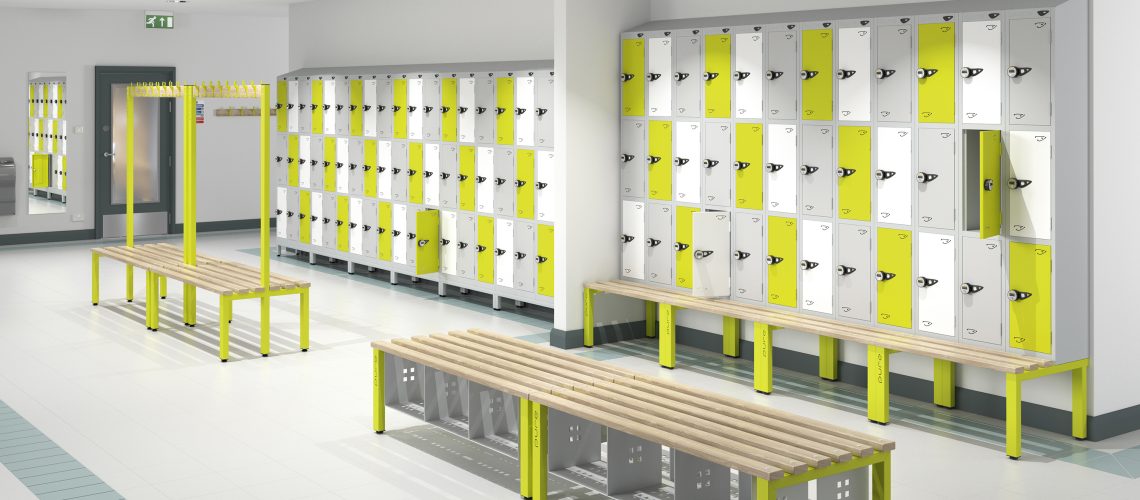
Gym lockers provide secure, practical storage for members and visitors while coping with frequent daily use, sports bags, clothing, footwear, damp towels and changing-room moisture. The correct specification depends on the environment, what users need to store, peak locker demand, how access will work and how the installation will be cleaned and maintained.
A dry fitness-club changing room can have very different requirements from a swimming-pool wet side. A small private gym may suit simple padlock or combination access, while a busy leisure centre may need coin-operated, public-use digital or RFID locker systems.
This Gym Lockers UK guide explains how to choose lockers for gyms, leisure centres, health clubs, swimming pools and sports facilities by material, compartment size, capacity, moisture resistance, locking system, layout, ventilation and whole-life cost.
If you are ready to compare products, browse our gym lockers or wider leisure locker range. For the complete changing-room design process, use our Locker Room Design UK guide.
Quick answer: which lockers are best for gyms?
| Gym or leisure environment | Locker type to consider | Main reason |
|---|---|---|
| Dry gym changing room | Metal or laminate-door lockers | Durable general-purpose storage with a wide choice of configurations and locks |
| Premium health club | Laminate-door lockers | Durable customer-facing finish with extensive colour choice |
| Swimming pool or wet area | Plastic or specialist wet-area lockers | Better suited to persistent humidity and moisture |
| Small fitness studio | Multi-tier lockers | Greater user capacity from limited floor space |
| Busy public leisure centre | High-use leisure lockers | Designed around temporary access, cleaning and frequent turnover |
| Sports club | Metal, laminate, Z or plastic lockers | Choice depends on bags, garments, moisture and available space |
| Outdoor leisure facility | Purpose-designed outdoor plastic lockers | Suitable construction for exposed environments |
| Space-constrained changing room | Z lockers or suitable multi-tier lockers | Can increase user capacity while retaining useful storage |
Start with the changing-room environment
The first question when specifying gym or leisure lockers should be:
Is the locker area dry, humid, wet or externally exposed?
The answer affects the locker body, doors, locks, hinges, bases and other fittings. Do not assume that every product marketed for gyms is automatically suitable beside showers or swimming pools.
Dry gym changing rooms
Metal lockers are suitable for many dry gym changing rooms, fitness studios and staff areas. They provide a practical combination of durability, multiple compartment options, replaceable locks and competitive initial cost.
- wide choice of one to six-door configurations;
- multiple lock options;
- replaceable keys and locks;
- straightforward cleaning;
- repairable components; and
- good suitability for normal dry internal changing rooms.
Humid and semi-wet changing rooms
A gym with showers nearby can experience substantially more humidity than a dry fitness studio.
Check:
- distance from showers;
- how much wet clothing enters the locker zone;
- whether floors are regularly washed;
- how long humidity remains high;
- building ventilation;
- floor drainage;
- locker base arrangements; and
- the suitability of the lock as well as the locker body.
Laminate-door lockers can provide a durable, higher-finish option for many dry and semi-wet changing environments, but the complete construction should still be checked against the actual moisture conditions.
Swimming pools and wet changing areas
Swimming pools, shower areas and wet-side changing rooms require greater care. Persistent humidity, wet swimwear, chlorinated environments and frequent wet cleaning can make standard dry-area specifications unsuitable.
For these areas, consider our wet-area and leisure lockers, including moisture-resistant plastic options.
The complete system needs to suit the environment. A moisture-resistant locker body fitted with an unsuitable lock, hinge or fitting is not a complete wet-area specification.
For detailed pool and shower planning, use our Wet Area Changing Room Design guide. It covers water movement, drainage, materials, cleaning and the transition between wet and dry zones.
Outdoor leisure lockers
Where lockers are installed outside, choose a product specifically designed for external or exposed use rather than placing a standard indoor locker outdoors.
Browse our outdoor plastic lockers for sports clubs, attractions and other external storage applications.
Weather resistance should not be confused with complete waterproofing. Siting, shelter, drainage, ground conditions and installation remain important.
Metal vs laminate vs plastic gym lockers
| Material | Best suited to | Main advantages | Check before specifying |
|---|---|---|---|
| Powder-coated metal | Dry gyms, studios and staff areas | Durable, economical and available in many configurations | Do not assume a standard dry-area product suits continuously wet locations |
| Metal body with laminate doors | Health clubs and customer-facing dry or semi-wet rooms | Strong decorative door and wide colour choice | The complete locker still needs to suit the environment |
| Plastic | Wet, humid and selected outdoor environments | No metal carcase to corrode and good moisture resistance | Check dimensions, lock options and exact environmental specification |
| Specialist wet-area construction | Pools and demanding public changing rooms | Designed around moisture, cleaning and frequent leisure use | Locks and fittings need the same environmental suitability |
For a broader comparison of commercial locker construction, see our Locker Materials UK guide.
What do gym members need to store?
Locker dimensions should be chosen around the belongings members actually bring into the facility.
- sports bags;
- backpacks;
- coats and jackets;
- work clothing;
- suits and dresses;
- training clothes;
- trainers and footwear;
- helmets;
- towels;
- phones;
- wallets and keys; and
- laptops or work bags carried by commuters.
A city-centre gym used before and after work may need larger compartments than a small fitness studio where users commonly arrive already dressed to train.
Measure a representative sports bag before choosing the locker. Internal dimensions, shelves, door openings and lock mechanisms can all reduce the usable storage space compared with the external cabinet dimensions.
Single-door or multi-tier gym lockers?
The number of compartments in each locker column affects both user capacity and the amount of storage available to each person.
| Locker configuration | Typical use | Main advantage | Main limitation |
|---|---|---|---|
| Single-door | Coats, hanging garments and large sports bags | Maximum vertical storage | Only one user per locker column |
| Two-tier | Sports bags, clothing and general gym use | Strong balance between capacity and compartment size | Bag dimensions still need checking |
| Three-tier | Clothing and smaller bags | Higher user capacity | Reduced vertical storage |
| Four-tier | Footwear, folded clothing and smaller possessions | Efficient use of wall space | May not accommodate normal sports bags |
| Five or six-tier | Small personal belongings | High compartment count | Limited usable storage per user |
More doors do not automatically create a better installation. Six-tier lockers can provide impressive capacity figures while disappointing users if ordinary backpacks will not fit.
A mixed scheme using more than one compartment size can sometimes serve a wider range of users than making every locker identical.
Z lockers for gyms and changing rooms
Z lockers provide two interlocking compartments within one vertical locker bay. They can increase user capacity while retaining useful hanging length for coats, uniforms or larger garments.
They can suit:
- health clubs;
- sports clubs;
- gym changing rooms;
- staff fitness facilities; and
- locations where hanging garments need to be accommodated within restricted floor space.
The internal Z-shaped compartment is less regular than a conventional rectangular locker, so check representative bags and garments against the actual dimensions before ordering.
How many gym lockers do you need?
Do not base locker quantity on total membership alone. A gym may have thousands of registered members but only a fraction present at the same time.
Capacity should normally follow realistic peak simultaneous demand.
- maximum building occupancy;
- peak morning and evening attendance;
- class timetables;
- pool capacity;
- staff locker requirements;
- members arriving already changed;
- day-use versus assigned lockers;
- seasonal peaks;
- accessible provision; and
- sensible reserve capacity.
Average daily attendance can be equally misleading if a large proportion of users arrive within a short evening period.
For the full calculation method, use our How Many Lockers Do You Need? Capacity Planning Guide.
Assigned lockers vs day-use gym lockers
A major operating decision is whether a user keeps the same locker over a longer period or takes any available compartment during each visit.
| Factor | Assigned locker | Day-use locker |
|---|---|---|
| User | Same member or member of staff | Different users throughout the day |
| Storage duration | Can support longer-term storage | Normally cleared after each visit |
| Capacity | One compartment remains allocated | Can improve utilisation |
| Typical access | Key, private combination or private electronic access | Coin, padlock, public combination, digital or RFID |
| Main management issue | Allocation and leavers | Release, abandoned lockers and resets |
Whatever system is used, establish what happens when a locker remains occupied after the facility closes.
Measure the changing room before choosing locker quantities
Locker-room capacity depends on more than the total floor area or length of available wall.
Measure and record:
- usable wall lengths;
- ceiling height;
- locker depth;
- doors and opening direction;
- windows;
- radiators and heaters;
- columns and structural projections;
- pipework and building services;
- shower entrances;
- bench positions;
- locker-door projection;
- main circulation routes; and
- maintenance access.
A plan showing only closed locker footprints can be misleading. Users also need space to stand, open doors, handle bags, change and move past other people.
For complete planning, see our Locker Planning UK: Layout & Space Guide.
Gym locker layout and peak user flow
A changing room should work during the busiest realistic period, not just when it is empty.
Consider what happens when:
- several adjacent locker doors are open;
- people are sitting on benches;
- users carry large sports bags;
- a group leaves a class at the same time;
- users are moving between showers and lockers;
- cleaners need access; and
- maintenance staff need to work on a lock or door.
Avoid unnecessary bottlenecks around entrances, showers, toilets, changing cubicles, exits and narrow aisles.
For busy leisure facilities, use our Locker Room Traffic Flow & Congestion Guide UK.
Where seating is required, plan it with the lockers rather than adding it afterwards. Browse our changing room bench seating.
Locker ventilation and damp gym clothing
Gym members regularly store damp towels, training clothing and footwear, so natural airflow within the compartment can be useful.
Depending on the locker range, ventilation may use:
- slots;
- door perforations;
- body ventilation openings; or
- other designed airflow paths.
Locker ventilation does not dry heavily wet clothing and does not replace adequate room ventilation or cleaning.
For the wider moisture and airflow subject, use our Locker Ventilation & Airflow Guide UK.
Choose gym locker locks around the operating model
The best locker lock is the one that matches the way the facility actually allocates and releases lockers. Total Locker Service supplies locker locks including keyed, hasp, coin-operated, mechanical combination, electronic keypad and RFID options.
| Lock type | Typical leisure use | Main management issue |
|---|---|---|
| Key lock | Assigned staff or member lockers | Key issue, replacement and return |
| Hasp and padlock | Facilities where users provide padlocks | Abandoned or forgotten padlocks |
| Mechanical combination | Keyless assigned or shared use | Forgotten codes and reset procedures |
| Coin-operated | Public leisure and temporary-use lockers | Coin value, return/retain mode and override |
| Electronic keypad | Managed, high-turnover facilities | Batteries, codes and administration |
| RFID/contactless | Facilities using compatible cards, tags or wristbands | Credential compatibility and administration |
For the specialist comparison, use our Best Locker Locks for Gyms & Leisure Centres UK guide. The broader Locker Locks UK guide compares the main commercial locking systems across all sectors. :chatgpt-content-reference{index=”1″}
Coin-return vs coin-retain locker locks
Coin-operated locks remain useful in public leisure facilities because they provide a familiar temporary-use system.
Coin-return locks
The user inserts the specified coin to operate the lock and receives it back when the locker is correctly reopened and released.
Coin-retain locks
The inserted coin is retained by the mechanism and can therefore support facilities that charge for locker use.
Before ordering, establish:
- coin denomination;
- coin-return or coin-retain operation;
- emergency or management access;
- who handles retained coins;
- whether users need wrist straps or key holders; and
- whether the exact lock is suitable for the locker environment.
Wet-area locker locks need separate consideration
A wet-area locker fitted with an unsuitable locking mechanism is not a complete wet-area system.
Where lockers are installed around swimming pools, showers or persistently humid changing areas, confirm the environmental suitability of:
- coin locks;
- key locks;
- combination locks;
- electronic locks;
- RFID systems;
- keys and wrist straps; and
- associated fixings and fittings.
Do not assume that a dry-area lock becomes suitable simply because it is fitted to a moisture-resistant locker.
Gym locker security is more than the lock
Locker security depends on the complete installation.
- locker body and door construction;
- hinge condition;
- lock type;
- locker-bank location;
- room access;
- visibility and supervision;
- management override;
- rules around valuables;
- procedures for abandoned lockers; and
- maintenance of damaged doors and locks.
A strong lock cannot compensate for a damaged locker door or poorly maintained installation. For the wider subject, see our Locker Security Guide UK.
Accessible gym and leisure lockers
Not every user can reach or operate every locker position comfortably. Accessibility should therefore be considered while the locker bank and surrounding changing space are being planned.
Consider:
- approach space;
- reachable compartment positions;
- lock and handle operation;
- manoeuvring space;
- bench position;
- clear numbering and visual identification; and
- allocation procedures so suitable compartments remain available to users who need them.
For detailed planning, use our Locker Accessibility & Inclusive Design Guide UK. The article also explains why current UK accessibility planning is broader than the legacy term “DDA”. :chatgpt-content-reference{index=”2″}
Cleaning and hygiene
Changing-room lockers need to fit the facility’s normal cleaning routine.
Check:
- whether floors can be cleaned beneath or around the lockers;
- whether stands or plinths suit the cleaning method;
- whether water can collect around locker bases;
- whether surfaces are practical to wipe;
- whether lockers need periodic internal clearing;
- whether sloping tops would discourage items being stored above locker banks; and
- whether damage can be inspected without dismantling the installation.
For ongoing housekeeping, use our Changing Room Cleaning & Maintenance guide.
Locker stands, plinths and sloping tops
The base and top of the locker bank affect cleaning, installed height and how users interact with the changing room.
- Open stands can raise lockers and provide access beneath where sufficient clearance is available.
- Plinths provide a more enclosed base around the bottom of the locker bank.
- Sloping tops reduce the flat horizontal surface above lockers and can discourage loose items being stored there.
Raising a locker does not make an unsuitable product suitable for a wet environment. The cabinet, base, fittings and locks all need to suit the conditions.
For the detailed comparison, see our Locker Stands, Plinths & Sloping Tops guide. :chatgpt-content-reference{index=”3″}
Gym locker numbering and identification
Clear locker numbering helps both users and facilities staff.
- members can find their locker;
- staff can report faults accurately;
- maintenance teams can identify doors and components;
- allocations can be recorded; and
- replacement keys can be connected to the correct locker record.
For numbering systems, engraved tags and identification planning, use our Locker Numbering & Labelling Guide UK. Browse locker accessories for number plates, fobs, wrist straps and related products. :chatgpt-content-reference{index=”4″}
Appearance and branding
In premium gyms, spas and customer-facing health clubs, the locker installation forms part of the interior design.
Consider:
- door colours;
- body colours;
- laminate finishes;
- locker numbering;
- end panels;
- sloping tops;
- bench finishes; and
- consistency with the surrounding interior.
Appearance should follow environmental suitability, not replace it. A visually attractive dry-area locker is still the wrong choice if it is unsuitable for the moisture conditions.
Consider whole-life cost, not just locker price
The cheapest initial locker does not necessarily produce the lowest long-term cost.
Compare:
- initial locker price;
- delivery;
- installation;
- stands, plinths and end panels;
- lock upgrades;
- replacement keys;
- replacement locks;
- batteries for electronic access;
- cleaning requirements;
- repairability;
- replacement doors and parts;
- software or credentials where applicable; and
- staff time required to administer the system.
A locker that can remain in service through replacement locks, keys, hinges or doors may provide better lifetime value than one that becomes difficult to maintain when individual components fail.
For the detailed calculation, use our Locker Lifespan & Lifecycle Cost UK guide.
Maintain gym and leisure lockers
High-use changing rooms benefit from regular inspection rather than waiting for lockers to fail.
- check door alignment;
- inspect hinges;
- test locks;
- check loose fixings;
- replace missing number plates;
- look for corrosion or water damage;
- replace electronic-lock batteries where required;
- inspect key straps and wristbands; and
- check stands, plinths and surrounding furniture.
Small repairs carried out early can prevent more extensive damage. Total Locker Service supports existing installations through locker servicing, repairs and replacement parts.
Common gym locker buying mistakes
- Choosing the locker before assessing moisture: the environment should influence materials and locks.
- Choosing compartments that are too small: measure realistic bags before ordering.
- Using total membership as locker demand: calculate peak simultaneous use instead.
- Planning around an empty changing room: include open doors, bags, benches and groups of users.
- Selecting locks purely by purchase price: resets, keys, batteries and administration all affect cost.
- Using dry-area locks in wet environments: check the environmental specification of the complete system.
- Ignoring ventilation: damp towels and clothing can create stale, humid compartments.
- Adding benches afterwards: lockers, seating and circulation should be planned together.
- Ignoring accessibility: provide usable locker positions and suitable approach space from the start.
- Ignoring cleaning access: locker bases and surrounding floors need an appropriate cleaning strategy.
- Buying on appearance alone: material suitability, capacity and serviceability come first.
Gym and leisure locker specification checklist
- What type of gym or leisure facility is this?
- How many users need lockers at peak periods?
- What do members normally store?
- What is the largest typical sports bag?
- Is the environment dry, humid, wet or outdoor?
- What wall space is available?
- What locker depth can the room accommodate?
- Which compartment sizes are appropriate?
- Which material suits the environment?
- Are lockers assigned or day use?
- Which lock suits the operating model?
- If coin locks are used, which denomination is required?
- Should coins be returned or retained?
- Does the lock need wet-area suitability?
- Are cards, tags or wristbands required?
- Is management override required?
- Is ventilation required?
- How will lockers be numbered?
- Are benches needed?
- Are stands, plinths or sloping tops required?
- Has accessible provision been included?
- Can the installation be cleaned easily?
- Can replacement locks, keys and parts be supplied?
- What is the delivery route?
- Is installation required?
- What is the expected whole-life cost?
Gym and leisure locker products
- Gym lockers
- Leisure and wet-area lockers
- Metal lockers
- Laminate-door lockers
- Outdoor plastic lockers
- Z lockers
- Locker locks
- Locker accessories, wrist straps and numbering
- Changing room benches
- Locker service and replacement parts
Gym locker FAQs
What type of locker is best for a gym?
The best gym locker depends on the environment and what users need to store. Metal lockers suit many dry areas, laminate-door lockers provide a durable customer-facing finish, and plastic or specialist wet-area lockers are generally more appropriate for persistently humid or wet locations.
Are plastic lockers suitable for swimming pools?
Plastic lockers can be well suited to swimming pools and other wet environments because the locker body does not rust. Locks, fittings, drainage, siting and installation should still be checked for the intended conditions.
What size locker should a gym use?
Choose the compartment size around the largest belongings users normally bring. Two-tier lockers often provide useful bag storage, while smaller multi-tier compartments are better suited to compact personal belongings. Measure typical sports bags before ordering.
How many lockers does a gym need?
Gym locker capacity should normally follow realistic peak simultaneous use rather than total membership. Consider peak attendance, classes, pool capacity, staff storage, day-use operation and accessible provision.
Which lock is best for gym lockers?
The correct lock depends on the operating model. Padlock fittings suit member-managed access, coin locks suit temporary public use, combination locks remove normal user keys, and RFID or electronic systems can support managed high-turnover facilities. Key locks remain practical for assigned lockers.
What is the difference between coin-return and coin-retain locker locks?
A coin-return lock gives the user’s coin back when the locker is correctly released, while a coin-retain lock keeps the coin and can support facilities that charge for locker use.
Do gym lockers need ventilation?
Ventilation can be useful where users store damp sports clothing, towels or footwear. Slots or perforations can support natural airflow, but they do not replace adequate room ventilation, cleaning or appropriate policies for wet belongings.
Are standard metal lockers suitable for wet changing rooms?
Standard dry-area metal lockers should not automatically be assumed suitable for swimming-pool or persistently wet environments. Check the exact product and consider plastic or specialist wet-area lockers where regular water and humidity are expected.
Can existing gym lockers be repaired rather than replaced?
Often, yes. Serviceable locker bodies may remain in use through replacement locks, keys, hinges, doors, number plates, straps and other parts. The repair route depends on the locker manufacturer, range, age and condition.
Choose gym lockers around the environment and users
The strongest gym locker installation starts with how the changing room is actually used. Define the environment, member belongings, peak demand, locker size, access model and maintenance requirements before comparing individual products.
Dry fitness rooms, premium health clubs and swimming-pool changing areas should not automatically use the same locker specification. Material, locks and installation details should follow the actual conditions.
For products, browse our gym lockers and leisure lockers. For wet environments, continue to our Wet Area Changing Room Design guide. For locker locks, use our Gym & Leisure Locker Locks guide, and for room planning see our Locker Room Design UK guide.
Discover more from Blog Total Locker Service
Subscribe to get the latest posts sent to your email.