Are Charging Lockers Safe?
April 16, 2026
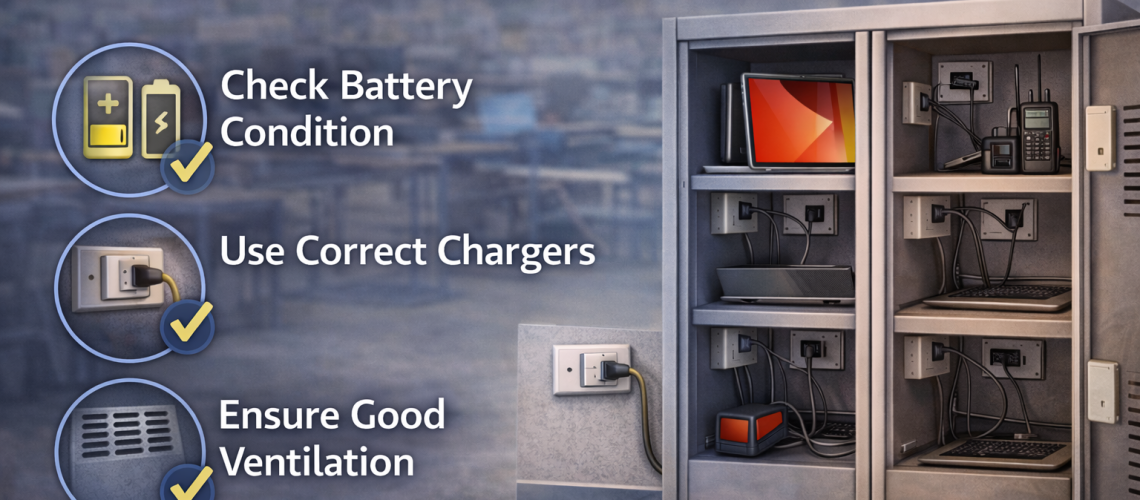
Yes, charging lockers can be a safe and practical way to store and charge devices, but safety depends on choosing the right locker, installing it in the right location and using it properly. charging lockers A charging locker is not automatically safe just because it has sockets inside, and it is not automatically unsafe just because it is used for battery-powered devices. The real answer depends on specification, installation, user behaviour and the type of equipment being charged.
When a charging locker is matched correctly to the devices it will hold, supported by sensible electrical setup and used with proper day-to-day controls, it can help create a tidier, more organised and more secure charging arrangement. In many schools, offices and workplaces, that is far safer than leaving devices charging loosely on desks, worktops or scattered around the building.
Need the wider background first? Start with our complete charging lockers guide.
That said, charging lockers still need to be treated as part of a wider safety plan. Heat, battery condition, charger quality, ventilation, locker location and user routine all matter. This is especially important where lithium-ion batteries are involved, because the main risks usually come from damaged batteries, unsuitable charging equipment, poor placement or weak management rather than from the idea of a charging locker itself.
This guide explains when charging lockers are safe, what can make them unsafe, which precautions matter most and how to choose a safer charging setup for your site.
If you are storing more demanding equipment, also compare tool charging lockers before making a decision.
Explore secure charging lockers for workplace and school use.
Why people ask whether charging lockers are safe
It is a sensible question because charging lockers combine electricity, enclosed storage and battery-powered devices. That makes people think about heat, fire risk, unattended charging and whether devices should be stored together while plugged in. Those concerns are reasonable, especially as more workplaces and schools rely on laptops, tablets, phones, handheld devices and battery-powered tools.
In many cases, the concern is really about battery charging safety rather than the locker itself. A good charging locker is simply one part of the overall setup. If the devices are appropriate, the chargers are correct, the locker is designed for charging use and the surrounding environment is suitable, the locker can support a much more controlled arrangement than informal charging around the building.
That is why the best question is not just “Are charging lockers safe?” but “Under what conditions are charging lockers safe?”
Charging lockers are safest when they are designed for charging
A purpose-made charging locker is very different from an ordinary locker with power added as an afterthought. Charging lockers should be designed to hold devices properly, support cable management, allow suitable airflow where needed and provide a layout that works for the equipment being stored. Those design features matter because safe charging depends on control and predictability.
If a locker is too cramped, poorly ventilated, awkwardly wired or not really intended for charging, it is less likely to perform well in daily use. By contrast, a well-designed charging locker helps keep devices organised, reduces cable clutter and creates a more structured charging routine. For the broader overview, read our complete guide to charging lockers.
That is one reason purpose-built charging lockers are often a better option than improvised charging arrangements using open shelves, loose extension blocks or general storage cupboards.
What makes a charging locker safe?
A safe charging locker setup usually depends on several things working together rather than one feature alone.
- the locker is suitable for the devices being charged
- the electrical setup is appropriate and tidy
- the locker is installed in a sensible location
- the ventilation and room conditions are suitable
- the correct chargers are used
- damaged batteries or devices are kept out of use
- users follow a clear charging routine
- the site includes the setup within its wider safety and fire-risk thinking
When those elements are in place, a charging locker can be a strong part of a safe storage and charging system. If several of them are missing, the same locker may become much less dependable.
What can make a charging locker unsafe?
Most charging locker problems come from misuse, poor planning or unsuitable equipment rather than from the basic concept of the locker. A few recurring issues tend to cause the most concern.
- using damaged, swollen or poor-condition batteries
- charging with the wrong charger or incompatible equipment
- placing the locker in an unsuitable location
- blocking airflow or using a locker not designed for the charging load
- overcrowding compartments with devices and plugs
- using trailing leads or awkward power arrangements
- charging in areas that are hard to supervise or inspect
- treating battery charging as ordinary storage with no extra controls
These issues matter because the safety of a charging locker depends on the whole arrangement, not just the cabinet doors and lock.
Battery condition matters more than many people realise
One of the most important safety points is the condition of the batteries and devices being charged. A charging locker does not remove the risk created by a damaged battery, poor-quality replacement battery or unsuitable charger. If anything, it makes it more important that the charging routine is controlled properly.
That is why damaged devices should not simply be placed back in the locker and left to charge. If a battery shows signs of swelling, overheating, leaking, impact damage or other obvious fault, it should be dealt with through the site’s battery safety procedure rather than returned to normal storage.
In practice, many safer charging systems depend as much on inspection and user awareness as on the locker itself.
Using the correct charger is essential
A charging locker is safest when the devices inside are charged with the correct equipment. Using the charger supplied with the device, or one recommended by the manufacturer, helps reduce the risk of overcharging problems, electrical mismatch and unnecessary stress on the battery. This matters in schools, offices and workplaces alike.
For related technical advice, see how charging lockers work and do charging lockers need ventilation?.
Where multiple devices are being stored together, charger control becomes even more important. A tidy locker with poor charger discipline is still not a good setup. That is why many sites benefit from a simple rule: only approved charging equipment goes into the locker. Safety becomes clearer when reviewed alongside charging locker ventilation, where to install charging lockers and how charging lockers work.
Location plays a major role in safety
Even a good charging locker can become a poor solution if it is installed in the wrong place. Charging lockers should be placed where they have suitable power access, sensible room conditions and enough surrounding clearance for everyday use. They should not obstruct movement or create awkward access problems when users return devices.
A good location supports supervision, inspection and routine access. A poor location can make the area hotter, more cramped, harder to monitor or less safe in day-to-day use. That is why locker placement should always be part of the safety decision, not an afterthought.
Ventilation and heat management matter too
Charging creates heat, so a safe charging locker needs to cope with that reality. In many cases, passive ventilation is enough, especially for lighter-duty charging applications such as tablets or laptops in suitable environments. In more demanding settings, such as heavier battery use or higher charging density, stronger ventilation and more careful specification may be needed.
Safety does not always require fans or a specialist high-tech cabinet, but it does require a locker and room setup that can manage heat sensibly. A sealed or poorly planned unit is less desirable than a charging locker designed with real use in mind.
Are charging lockers safer than charging devices on desks or worktops?
Often, yes. A charging locker can be safer than loose charging around the building because it creates a more controlled environment. Devices are stored in one place. Cables are more organised. Equipment is less likely to be left in unsuitable locations. The charging process becomes easier to manage and supervise.
That does not mean every charging locker is automatically safer than every open charging setup. It means that a good charging locker can reduce clutter, improve organisation and support better routines. In many real workplaces and schools, that is a meaningful safety benefit.
Are charging lockers safe for laptops and tablets?
Yes, in many cases they are. Laptops and tablets are among the most common uses for charging lockers, especially in schools, colleges, offices and shared IT environments. These devices are usually well suited to purpose-built charging lockers when the compartment sizing, charger setup and ventilation are appropriate.
For these applications, charging lockers often improve both security and organisation while supporting tidy device storage. They are particularly useful where multiple devices need to be returned and recharged as part of a regular routine.
Are charging lockers safe for phones?
They can be, especially where a site needs secure personal or shared phone charging. Compact charging lockers are widely used for staff phones, visitor phones and personal device storage. As with larger lockers, the same principles still apply. The locker should be suitable for the devices, the charging equipment should be correct and the area should be appropriate for routine use.
Because phone charging lockers are often used by lots of people, lock choice, user understanding and overall placement can be particularly important.
Are charging lockers safe for tools and batteries?
They can be, but this is usually the area that needs the most care. Tool batteries, radio batteries and other more demanding charging applications may create greater heat and may be exposed to rougher use, impact damage or heavier charging cycles. That means the locker specification, charging equipment and daily controls all matter more.
In these settings, it is especially important to choose a locker designed for the task and to avoid treating battery charging as an informal afterthought. The more demanding the battery type and charging pattern, the more carefully the setup should be planned.
How to make charging lockers safer in day-to-day use
A few practical steps can make a big difference to charging locker safety.
- use a locker designed for charging rather than adapting general storage
- install it in a suitable internal location with proper power access
- use only approved chargers and suitable devices
- check for damaged batteries, plugs and leads regularly
- avoid overcrowding compartments
- choose a ventilation level that suits the charging load
- keep the area around the locker tidy and accessible
- set clear user rules for charging and reporting faults
None of these steps is complicated on its own, but together they create a much stronger safety position.
Charging lockers and fire-risk planning
Charging lockers should be considered as part of the wider safety and fire-risk planning for the site. That does not mean every charging locker is a major hazard. It means that battery charging, electrical provision, locker placement and user controls should be reviewed within the real conditions of the building.
To browse products, view our charging lockers range. You can also return to the main charging lockers guide.
For most sites, that leads to sensible practical measures rather than dramatic changes. The goal is to make sure the charging arrangement is appropriate, supervised where needed and supported by clear routines. A charging locker works best when it is treated as part of a managed system rather than just another cupboard.
So, are charging lockers safe?
Yes, charging lockers can be safe when they are specified correctly, installed in the right place and used properly. In many environments, they can improve safety by reducing clutter, organising charging activity and keeping devices in a controlled location. They are often a better option than leaving valuable equipment charging loosely around the building. For the full category overview, including use cases and specification factors, see our charging lockers UK guide.
The most important point is that safety comes from the full setup. The locker, the charger, the battery condition, the location and the user routine all matter. A good charging locker supports a safer process. A poor setup can still create avoidable problems.
Final thoughts on charging locker safety
Charging lockers are not automatically safe or unsafe in isolation. They are safe when they are chosen and used well. For laptops, tablets, phones and many workplace devices, a properly planned charging locker can provide secure, practical and organised storage that supports everyday use. For more demanding batteries and tools, the same principle applies, but the need for careful specification becomes even more important.
If you are reviewing charging lockers for a school, office or workplace, focus on suitability rather than assumptions. The right locker in the right place with the right routine can be a very sound solution.
Total Locker Service supplies charging lockers for schools, offices and workplaces in a range of sizes and configurations. charging lockers If you need help choosing a safer charging locker setup for your site, contact us for practical advice on the right solution for your devices, users and space.
Discover more from Blog Total Locker Service
Subscribe to get the latest posts sent to your email.