Blog Total Locker Service

Blog storage solutions

What Are Charging Lockers? Complete UK Guide for Workplaces and Schools

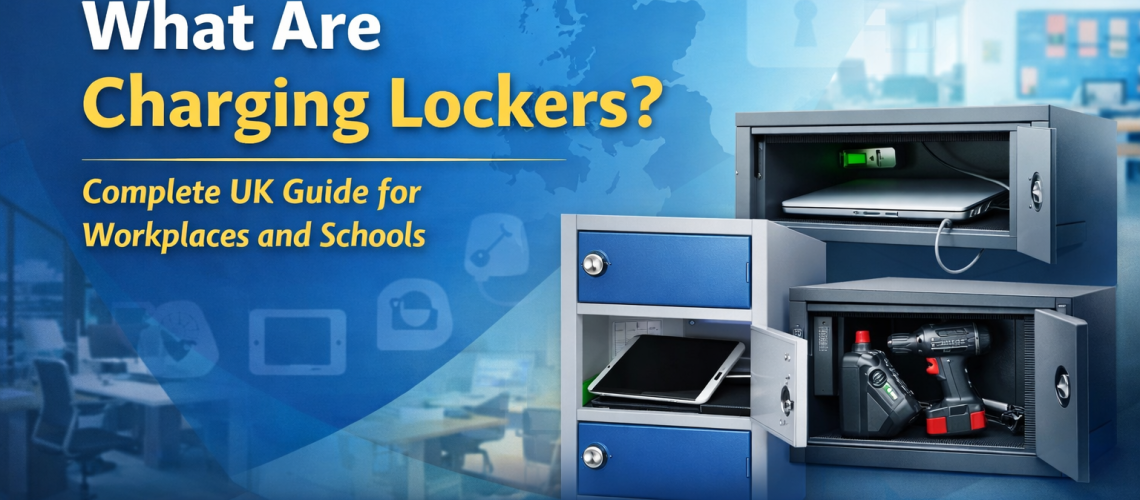
Charging lockers for laptops, tablets and power tools in a secure UK workplace storage area

Charging lockers have moved from being a specialist storage product to becoming a practical requirement in many UK workplaces, schools and operational environments. Laptops, tablets, handheld devices, radios, scanners, cordless tools and rechargeable batteries all need a secure place to be stored between uses. In many settings, they also need to be charged at the same time. That changes the storage brief completely. A standard locker may keep equipment out of sight, but it does not necessarily support safe charging, organised cable routing, controlled access or efficient day-to-day device management.

A charging locker is designed to solve those problems in one system. It combines secure storage with integrated power so that devices or tools can be stored, protected and charged in defined individual compartments. That makes charging lockers useful in offices, schools, colleges, workshops, warehouses, depots, healthcare sites and public buildings where powered equipment needs to be available, secure and ready for use.

This guide explains what charging lockers are, how they differ from standard lockers, which types are best for laptops, tablets and tools, and how to plan the right layout, capacity, security and charging setup for your site. It is designed to act as a true pillar page for the topic, so it covers the practical questions that buyers, facilities teams, workplace managers, schools and specifiers usually ask before choosing a system.

If you want to browse product options first, see our charging lockers range, our laptop charging lockers and cabinets and our tool charging lockers. If you are planning a wider locker project, you may also want to review our main lockers range.

What charging lockers are

Charging lockers are secure storage units with integrated power inside each compartment or within the locker structure. They are designed so that laptops, tablets, phones, radios, scanners, power tools or rechargeable batteries can be stored while charging safely. Each compartment is normally separately lockable, which helps keep devices protected from theft, accidental use and casual handling while still allowing equipment to remain connected to power.

That sounds simple, but the practical difference is significant. A standard locker gives you a secure compartment. A charging locker adds an electrical function, and that creates new design priorities. The locker has to support safe power distribution, practical cable management, enough space for both the device and its charger, and in many cases some level of airflow or ventilation. In industrial and workshop settings, that becomes even more important because cordless tools and batteries can create more heat, use bulkier chargers and need a more robust compartment layout.

Charging lockers can be configured in different ways depending on the equipment they are meant to store. Laptop charging lockers are sized for laptops, notebooks and sometimes tablets. Tablet charging lockers are designed around slimmer devices and more compact storage arrangements. Tool charging lockers are built for heavier-duty use, with compartments suited to rechargeable tools, batteries and chargers. Some ranges also support smaller electronics such as phones, radios, data collection devices and handheld equipment.

The result is a storage solution that does more than tidy equipment away. It helps protect assets, reduce downtime, support issue-and-return routines and keep devices or tools ready for the next shift, class, task or meeting.

Why charging lockers matter now

More organisations now rely on rechargeable equipment as part of ordinary daily work. Offices issue laptops to support hybrid working. Schools use shared tablets, laptops and Chromebooks across classrooms and IT spaces. Facilities teams and engineers depend on cordless power tools, scanning devices, radios and mobile kit. Healthcare environments may need secure storage for operational devices. Public buildings increasingly manage shared technology as part of front-line services.

As soon as equipment becomes portable, rechargeable and valuable, the storage question changes. It is no longer enough to ask where the equipment should go when it is not in use. You also need to ask whether it will be charged, whether it will be secure, whether users can find it quickly, whether chargers and cables will be protected and whether the equipment will be ready when needed. Charging lockers answer all of those questions in one place.

They also help organisations avoid familiar problems. Devices left on desks or in classrooms can go missing. Chargers become mixed up or damaged. Tools are taken home or moved between teams without clear control. Batteries are charged in ad hoc locations that were never really meant for routine equipment storage. Cables create clutter. Equipment is not ready at the point of need. A proper charging locker system reduces those issues by centralising storage, power and access control.

Charging lockers vs standard lockers

One of the biggest buying mistakes is assuming that a standard locker and a charging locker are broadly the same thing. They are not. A standard locker is designed first and foremost for storage. It may be ideal for bags, coats, PPE, books, tools or personal items, but it is not automatically designed to handle powered equipment and chargers in a controlled way.

A charging locker is built around a different use case. It needs to accommodate charging leads, plugs or USB points, allow practical access to sockets and support regular use by people who are taking devices in and out every day. Depending on the range, it may also need ventilation, heavier-duty compartments, digital lock options or layouts designed for particular equipment types.

FeatureStandard lockerCharging locker
Main purposeSecure storageSecure storage plus charging
Integrated powerUsually noYes
Cable managementLimited or noneDesigned for chargers and leads
VentilationGeneral locker ventilation onlyMay be configured for safer charging airflow
Best forPersonal items, PPE, general storageLaptops, tablets, tools, batteries and devices
Operational benefitStores items securelyKeeps equipment secure, organised and ready to use

That distinction matters because the buying intent behind charging lockers is broader than simple storage. The organisation is usually trying to solve a combination of security, readiness, charging, layout and control. Choosing the wrong type can leave you with a product that stores equipment but does not support the workflow around it.

Main types of charging lockers

Charging lockers can be grouped by the type of equipment they are designed to hold. That is the most useful way to assess them because the physical requirements of laptops, tablets and tools are not the same.

Laptop charging lockers

Laptop charging lockers are designed to store and charge laptops, notebooks and in some cases larger tablets or hybrid devices. They are commonly used in offices, meeting spaces, staff rooms, schools, colleges, libraries, healthcare settings and public buildings. Compartments are sized to protect devices while giving enough room for charging cables and plugs. In many workplaces, these lockers help support hybrid working by giving staff a secure place to leave devices between visits to the office or between shifts.

Where organisations issue laptops to mobile or desk-based teams, laptop charging lockers can reduce clutter, lower the risk of devices being left unsecured and make it easier to centralise charging. They are also useful where a pool of shared laptops is being managed rather than equipment being assigned permanently to one person.

Tablet charging lockers

Tablet charging lockers are typically used where multiple tablets or smaller devices need to be stored in a controlled and organised way. Education is one of the clearest examples. Shared classroom devices, departmental tablets and IT suite equipment all benefit from having secure charging storage rather than being spread across trolleys, desks or cupboards. Tablet lockers are also useful in visitor settings, healthcare, retail and public services where handheld devices are shared across teams.

Because tablets are smaller, tablet charging lockers can sometimes offer more compartments within a compact footprint. That makes them practical where space is tight but device numbers are relatively high.

Tool charging lockers

Tool charging lockers are built for a different environment. These units are designed for cordless power tools, rechargeable batteries and trade equipment that need secure overnight or between-shift charging. They are commonly used in workshops, warehouses, factories, depots, maintenance departments and site support environments. Compared with device lockers, tool charging lockers often need more robust construction, practical airflow, larger compartment sizes and layouts that suit chargers, battery packs and heavier equipment.

They are especially useful where several users share equipment, where expensive cordless tools need to be protected from theft or where battery-powered working has replaced corded tools in daily operations. A proper tool charging locker helps reduce cable clutter, protect equipment and keep tools ready for use.

Phone and small-device charging lockers

Some sites also need charging lockers for phones, radios, scanners and other small electronic items. These can be useful in workplaces with mobile staff, shared communications equipment or visitor-facing operations. Although this pillar focuses on laptops, tablets and tools, smaller-device charging can sit within the same wider storage strategy.

You can explore these product directions via our charging lockers, laptop charging lockers, tool charging lockers and phone charging lockers.

Where charging lockers are used

Charging lockers can support very different environments, so the best specification depends heavily on the setting. The storage need may look similar on the surface, but the workflow, equipment type and user behaviour can vary a great deal between sectors.

Workplaces and offices

In offices, charging lockers are often used to support laptop storage, shared devices, hybrid working routines and flexible desk arrangements. Staff may move between home and office, attend meetings in different areas or only come into the workplace on selected days. Charging lockers help create an organised base for devices when staff are not using them. They can also support visitor devices, pooled equipment and secure overnight storage.

For workplaces trying to keep desk areas clearer and improve asset control, charging lockers can sit alongside broader workplace locker provision. If that is part of your project, our workplace lockers page may also be useful.

Schools, colleges and universities

Education settings often need to store and charge multiple laptops or tablets for staff and students. Shared classroom devices, central IT resources and issued student equipment all create a need for controlled charging. Charging lockers can help schools reduce device loss, improve organisation and keep equipment available for lessons without relying on improvised cupboard storage or open shelving.

In this context, ease of access, clear numbering and practical capacity planning matter just as much as security. If one class set is always waiting for charge time, or if devices are spread across too many locations, the storage system can become a bottleneck. The right locker layout helps avoid that.

Workshops, factories and industrial environments

Tool charging lockers are particularly useful where engineers, maintenance teams, warehouse staff or site support workers use cordless tools as part of ordinary daily work. Instead of chargers and batteries being scattered around benches, offices or stores, the equipment can be secured in one charging location. That improves readiness and can also support better discipline around who uses which kit and when it should be returned.

Industrial environments may place more emphasis on durability, lock choice, compartment size and ventilation. A unit designed for tablets in a school is not the right answer for grinders, impact drivers and battery chargers in a workshop. Matching the range to the environment is critical.

Healthcare and public buildings

Healthcare sites, libraries, public buildings and mixed-use service environments often need secure charging for devices used by rotating teams. That may include tablets, laptops, handheld scanners or operational devices. Here, charging lockers can support controlled issue procedures and help keep equipment protected between uses.

Facilities and mobile teams

Facilities teams often manage a mixture of technology and tools. A single site might need charging for radios, handheld terminals, tablets and cordless tools. In those cases, it may make sense to use separate specialist lockers for different device types rather than forcing everything into one compromise solution. The right configuration depends on whether the goal is centralisation, departmental storage or shift-based issue and return.

How charging lockers work

The core principle is simple. Each compartment or section contains access to power, allowing the stored equipment to remain connected while the door is closed and locked. The precise arrangement varies by range. Some lockers use standard UK 3-pin sockets. use USB charging. may support a mix depending on the type of equipment involved.

That internal power setup means the user can plug the device or charger in, store it inside the locker, close the compartment and leave the equipment to charge securely. The benefit is not only that the device gains power. It is that the device, the charger and the cable all remain together in a protected, organised location rather than being spread around the room.

Good charging-locker design also needs to consider day-to-day usability. Compartments should be large enough for the intended device. Doors should allow straightforward access. Power should be positioned so users can connect equipment without awkward handling. Cables should not be pinched or strained. The locker should support repeated use without becoming frustrating.

Tool charging lockers may place more emphasis on standard 3-pin sockets and ventilation because chargers and battery packs often require more internal space and can generate more heat. Device lockers may focus more on compact layouts, secure individual doors and efficient storage of laptops or tablets within a smaller footprint.

Power, sockets and charging formats

When comparing charging lockers, one of the first practical points to check is how power is delivered inside the unit. For many UK buyers, standard 3-pin sockets remain the most flexible option because they allow the original charger supplied with the device or tool to be used. This is particularly useful for laptops and for cordless tools with dedicated charging docks or brand-specific chargers.

USB charging can be useful for smaller devices and can help reduce plug clutter where the power demand is more modest. Some ranges may be available with USB or mixed charging arrangements, which can be useful in phone or small-device applications.

The right answer depends on the equipment. Laptops and tools often benefit from traditional socket-based charging because the charging hardware is more varied. Tablets and phones may suit USB-based arrangements in some cases. The important point is to match the locker power setup to the real devices being used, not to assume one approach works for everything.

Do charging lockers need ventilation?

Ventilation becomes more important when a locker is being used to charge equipment regularly, especially tools and batteries. Charging generates heat, and some devices, chargers or battery systems can create more heat than others. A locker that supports safe airflow is therefore a better fit than a sealed box that was never meant for regular powered storage.

This does not mean every charging-locker project needs a highly technical airflow design, but it does mean that charging should be treated as a real performance requirement rather than an afterthought. If tools, battery packs or multiple devices are being charged in enclosed compartments, ventilation and sensible installation matter. That is one reason specialist tool charging lockers are different from ordinary lockers and from slim device-storage units.

It is also why placement matters. Even a well-designed locker works best when installed in an appropriate environment with adequate surrounding space, sensible power access and a location that suits the way the equipment is actually used.

Security and lock options

Charging lockers are security products as much as storage products. Laptops, tablets and cordless tools all represent real asset value, and in many settings they also hold operational value because work depends on them being available. Protecting the equipment matters just as much as charging it.

Different charging-locker ranges can be supplied with different locking options depending on the site and the user model. Traditional cam locks, hasp-style arrangements, digital locks and RFID-based options may all be appropriate in different situations. The right choice depends on whether the lockers are assigned to individuals, shared across a team, opened frequently through the day or used in a more controlled management process.

For example, a workplace issuing one laptop locker per user may prefer a simple personal lock arrangement. A school storing shared devices may focus more on manager-controlled access. A tool charging area used by several engineers may need lock options that support both security and practical shift use. Higher-value or shared-use environments often benefit from considering broader lock strategy at the start rather than as a late specification detail.

If wider access control is part of your project, our locker locks page provides related lock-type context.

Capacity planning: how many charging lockers do you need?

Capacity planning is one of the most important parts of the project because it affects both current usability and future flexibility. Too little capacity creates daily friction. Devices are left out, users start sharing spaces informally and the very system that was meant to improve control becomes a source of inconvenience. Too much capacity is usually less harmful, especially if growth is likely, but it still needs to be balanced against space and budget.

The best way to assess capacity is to start with how the equipment is actually used. Ask:

  • How many laptops, tablets or tools need to be stored and charged?
  • Are these permanently assigned items or pooled equipment?
  • Will all devices need charging at the same time?
  • Do spare devices or spare batteries need dedicated positions?
  • Are peak days or shift changes likely to increase demand?
  • Is future expansion expected?

Within a school environment, planning often centres on class sets, departmental allocation or a shared central pool. For office settings, the focus typically shifts to peak attendance and how many staff are on site at the same time. Across workshops, the priority is usually the number of tool kits or battery sets issued per shift. The answer is rarely just the headcount. It is about the charging pattern and storage model.

As a rule, allow some headroom. Growth is common. Devices change size. Spare equipment appears. New teams join the system. A locker arrangement that is completely full from the start leaves little room for proper organisation.

Shared vs assigned charging lockers

Another important decision is whether the lockers will be assigned to individuals or shared as part of a pooled resource system. Both models can work well, but they solve slightly different problems.

Assigned charging lockers work well where each user has their own regular device, laptop or tool set. This can suit staff lockers in workplaces, personal laptop storage, or environments where one user is responsible for one piece of kit. The main benefit is simplicity. Ownership is clear and routine is straightforward.

Shared charging lockers are usually better where devices belong to the organisation rather than the individual user. Schools often use this model for tablets or shared laptops. Facilities teams may use it for pooled radios or tools. The advantage is flexibility, but the system usually needs stronger management and clearer numbering because different people may access the same locker positions over time.

The right model depends on equipment ownership, how often items move between users and whether your main priority is personal storage or centralised control.

Planning layout and installation

The success of a charging-locker project depends not only on the product but also on where and how it is installed. A well-specified locker in the wrong place can still create awkward access, poor cable management, congestion or unnecessary risk. Layout planning should therefore be treated as part of the buying decision, not something to think about after the order is placed.

Start with the user journey. Who will use the lockers? How often? At what times? Will people arrive in waves, such as the start of a school day, a shift handover or the start of a maintenance round? Will users need to queue at the lockers? Is there enough room for doors to open safely and for people to connect chargers without standing in a circulation route?

Then consider the infrastructure. Charging lockers need suitable power access. They should be installed where the electrical supply is practical and where the locker can be used without trailing leads or unsuitable extensions. The location should also support security. A locker holding expensive laptops or cordless tools should not be positioned where uncontrolled public access undermines the purpose of the system.

For workplace and education projects, it is often wise to think about charging lockers alongside the wider locker and storage layout. If you are planning a broader scheme, our locker layout planning guide provides related thinking on circulation, positioning and practical space planning.

Materials and durability

Material choice matters because charging lockers are used in very different environments. Steel remains a strong fit for many charging applications because it offers durability, security and a professional finish. In industrial settings, the robust construction of a steel charging locker is particularly useful because the unit has to cope with heavier use, larger equipment and more demanding surroundings.

For device storage in offices, schools and public buildings, the required emphasis may be slightly different. The unit still needs to be secure and durable, but appearance, footprint, door arrangement and day-to-day ease of use may become more important than purely industrial ruggedness. In many cases, a well-made steel locker range still provides the best balance.

The key point is to specify the product for the environment. A charging locker used in a clean office is solving a different problem from one used in a workshop or warehouse. Matching the locker type to the wear level, user pattern and equipment weight will produce a better long-term result.

Charging lockers for laptops, tablets and tools: quick comparison

Use caseBest locker typeMain prioritiesTypical environments
Laptops and notebooksLaptop charging lockersSecure storage, cable management, user access, compact footprintOffices, schools, colleges, healthcare, public buildings
Tablets and small devicesTablet charging lockersHigher compartment count, organised shared access, easy storageSchools, visitor settings, shared-device operations
Power tools and batteriesTool charging lockersRobust construction, ventilation, 3-pin charging, securityWorkshops, warehouses, factories, maintenance teams
Phones, radios and handheld kitSmall-device charging lockersCompact access, controlled issue, mixed charging optionsFacilities, public services, mobile teams

Common mistakes to avoid

Charging lockers usually perform very well when the specification is matched to the environment. Problems tend to come from predictable mistakes rather than from the idea itself.

  • Using a standard locker instead of a charging locker. Secure storage alone does not solve the charging problem.
  • Choosing by appearance without checking the equipment size. A laptop locker needs to suit the actual laptop, charger and usage pattern.
  • Ignoring ventilation where tools or batteries are involved. Charging creates heat and should be treated properly.
  • Underestimating capacity. Full occupancy from day one leaves no room for growth.
  • Placing the lockers in the wrong area. Poor location can undermine both security and convenience.
  • Failing to decide between shared and assigned use. This affects numbering, lock choice and workflow.
  • Separating storage from process. A locker works best when it supports a clear issue-and-return routine.

How charging lockers support better operations

The real value of charging lockers is not just that they provide power inside a secure compartment. Their value is operational. They help create a controlled system around equipment that might otherwise be spread across desks, classrooms, benches, cupboards and back rooms. That saves time, reduces confusion and makes it easier to keep equipment ready for use.

For schools, this can make devices simpler to issue before lessons and easier to return afterwards. In office environments, it provides flexible workers with a reliable place to store and charge laptops. Within workshops, cordless tools can be charged overnight in a secure location instead of being left around the building. From a facilities management perspective, shared radios, handheld devices and chargers are kept under tighter control.

That is why charging lockers should be assessed not only as storage furniture but as part of an operational system. When the process is clearer, equipment lasts longer, availability improves and staff spend less time dealing with avoidable friction.

Frequently asked questions about charging lockers

What are charging lockers used for?

Charging lockers are used to store and charge laptops, tablets, phones, radios, handheld devices, tools and rechargeable batteries securely in one organised system.

Are tool charging lockers different from laptop charging lockers?

Yes. Tool charging lockers are usually designed for heavier-duty use, larger chargers, rechargeable batteries and more robust environments. Laptop charging lockers are designed around laptops and similar IT devices.

Do charging lockers need ventilation?

Ventilation becomes particularly important where tools, batteries or regularly charged equipment are involved. A specialist charging-locker design is a better fit than a standard locker not intended for that purpose.

Can charging lockers be used in schools?

Yes. They are commonly used for laptops and tablets in schools, colleges and universities where shared devices need secure storage and charging between classes or at the end of the day.

What should I check before buying charging lockers?

Check the equipment type, compartment size, charging format, ventilation, lock options, capacity, installation location and whether the lockers will be shared or assigned to individual users.

Choose the right charging lockers for your site

The best charging-locker project starts with a clear understanding of what needs to be stored, who will use it and how the equipment moves through the day. Laptops, tablets and power tools may all need charging, but they do not all need the same locker. A good specification matches the product to the equipment, the environment and the workflow rather than assuming one format will suit every setting.

If you need secure charging storage for office devices, shared education technology or cordless tools in workshops and industrial spaces, the right charging locker can improve readiness, reduce clutter, support better asset control and make storage far more consistent. It can also help future-proof the site as rechargeable equipment becomes a more central part of daily operations.

To compare options, browse our charging lockers, laptop charging lockers and tool charging lockers. If your project also includes wider locker provision, visit our main locker range for related storage options.


Discover more from Blog Total Locker Service

Subscribe to get the latest posts sent to your email.