Medical Storage Compliance UK: Complete Guide 2026
March 3, 2026
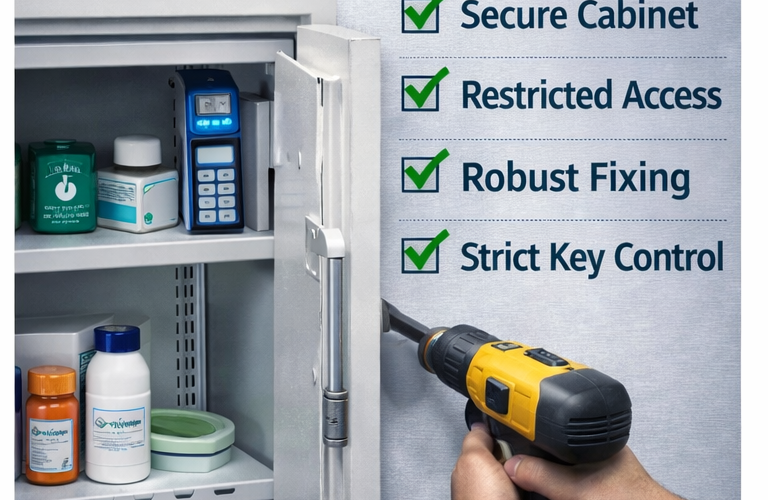
Medical storage compliance is not defined by the cabinet alone. It depends on whether the organisation can show that medicines are stored securely, access is controlled, specialist requirements are recognised, routine checks are completed and problems are recorded and acted upon.
This guide focuses on medical storage governance and inspection readiness. Use it for documented controls, defined responsibilities, review routines, incident handling and the evidence an organisation should be able to demonstrate.
For cabinet selection, use the Medical Cabinets UK guide. For how the full storage system should be planned, use Medicine Storage Systems UK. For controlled-drug storage, use the dedicated Controlled-Drug Cabinet UK guide.
Quick Answer: What Does Medical Storage Compliance Mean?
In practice, medical storage compliance means being able to show that the storage arrangement is suitable for the medicines and setting, that authorised access is controlled, that specialist requirements are recognised, and that routine checks, incidents and corrective actions are documented.
| Compliance area | What should be demonstrable |
|---|---|
| Storage suitability | The storage arrangement matches the contents and setting |
| Access control | Authorised access is defined and managed |
| Segregation | Different medicine or stock categories are separated where required |
| Specialist storage | Controlled-drug or temperature-sensitive requirements are recognised separately |
| Routine checks | Storage condition, stock and access controls are reviewed |
| Records | Checks, incidents and corrective actions can be evidenced |
| Review | The system is updated when risks, staff or workflows change |
What This Compliance Guide Covers
This article focuses on the organisational controls around medical storage rather than detailed product selection.
- governance and responsibility;
- inspection readiness;
- documented access arrangements;
- routine storage checks;
- incident and discrepancy records;
- corrective actions;
- review of procedures when circumstances change.
Detailed cabinet type, capacity, lock choice and fixing decisions are covered in the relevant specialist guides. This page stays focused on governance, evidence and review.
Define Responsibility for Medical Storage
A compliant storage system should make responsibility clear. Staff should know who is responsible for the storage area, who may access it, who carries out checks and who acts when a problem is found.
- Who owns the medicine-storage procedure?
- Who is authorised to access each storage area?
- Who checks stock, cabinet condition and access controls?
- Who records incidents or discrepancies?
- Who approves corrective action?
Evidence That Access Is Controlled
The important compliance question is not which lock looks strongest. It is whether the organisation can demonstrate that access is restricted appropriately and managed consistently.
- Define authorised roles.
- Control keys, codes or credentials.
- Review access when staff change role or leave.
- Record access arrangements where the setting requires it.
- Have a response for lost keys, shared codes or compromised credentials.
For detailed lock choice and authorised-access procedures, use Medical Cabinet Locks & Access Control UK.
Recognise Specialist Storage Requirements
A key compliance control is recognising when general medicine storage is no longer sufficient.
- Controlled drugs may require specialist storage and tighter access controls.
- Some medicines require temperature-controlled storage.
- Personal medication may need clearer individual separation.
- Different stock categories may need distinct storage or procedures.
Detailed controlled-drug specification belongs in the Controlled-Drug Cabinet UK guide. The compliance question here is whether the need for specialist storage has been recognised, documented and incorporated into the organisation’s controls.
Maintain Clear Segregation
Compliance is easier to evidence when the storage system makes different stock categories physically and operationally clear.
- avoid mixing unrelated stock;
- keep specialist storage distinct from routine medicine storage where required;
- make personal medication clearly attributable where necessary;
- avoid overcrowding that makes checks and identification difficult.
Detailed physical layout belongs in the medical cabinet organisation guide. Here, the question is whether separation remains clear, understandable and maintainable.
Build Routine Checks Into the System
Routine checks provide evidence that storage controls are still working after installation.
- cabinet condition;
- lock or access-control condition;
- storage organisation and segregation;
- stock condition and expiry review where applicable;
- key or credential control;
- evidence of damage, tampering or unauthorised access.
For the detailed recurring audit sequence, use the Medicine Cabinet Audit Checklist UK. This guide focuses on whether those checks are defined, documented and followed through.
Keep Records That Show the Controls Are Working
Inspection readiness depends on evidence. An organisation should be able to show what its storage controls are and what happens when something goes wrong.
- routine check records;
- access-control records where required;
- incident or discrepancy reports;
- maintenance and repair records;
- corrective actions;
- reviews following changes to staff, stock or procedures.
Record and Act on Storage Problems
A weak compliance system records problems but does not close them out. A stronger system links the issue to an action and then confirms the action has been completed.
| Issue | Typical control response |
|---|---|
| Lost or compromised key | Record the incident, secure access and review key control |
| Damaged lock or cabinet | Restrict use if necessary, arrange repair and record completion |
| Overcrowded storage | Review stock volume, organisation and capacity |
| Unauthorised access concern | Review permissions, credentials and access procedure |
| Repeated stock or expiry issues | Review checking and replenishment process |
Inspection Readiness
Inspection readiness is easier when the storage system is understandable without relying on one person’s memory.
- Responsibilities are defined.
- Access arrangements are clear.
- Specialist storage has been identified where necessary.
- Routine checks are documented.
- Incidents and corrective actions can be traced.
- The system is reviewed when circumstances change.
Compliance Depends on the Setting
Medical-storage controls vary according to the service, medicines, operating procedures and governance environment. A care home, clinic, school medical room and workplace first aid point may all require different levels of control and evidence.
Use sector-specific guidance for the detailed application. For clinic and treatment-room use, see Medical Cabinets for Clinics UK. This page remains focused on the common compliance structure: suitable storage, controlled access, clear responsibility, routine checks and evidence.
When the Compliance System Should Be Reviewed
- new medicine categories are introduced;
- controlled drugs enter or leave scope;
- staff roles or access arrangements change;
- storage moves to a different room;
- stock volume increases materially;
- a security incident or discrepancy occurs;
- a cabinet, lock or fixing is replaced;
- an audit identifies repeated weaknesses.
Common Medical Storage Compliance Failures
- No clear responsibility: staff are unsure who owns the storage process.
- Access is assumed rather than documented: keys or codes circulate informally.
- Specialist requirements are missed: general storage is used where a separate requirement exists.
- Checks happen inconsistently: there is no repeatable routine.
- Problems are recorded but not closed: corrective action is unclear.
- The system is never reviewed: stock, users and workflow change while the controls remain static.
Medical Storage Compliance Checklist
- Is the storage arrangement suitable for the medicines and setting?
- Are authorised users clearly defined?
- Are keys, codes or credentials controlled?
- Have specialist storage requirements been identified?
- Is segregation clear and maintainable?
- Are routine checks defined?
- Are incidents and discrepancies recorded?
- Are corrective actions tracked to completion?
- Can the organisation evidence how the system is managed?
- Is there a trigger for reviewing the system when circumstances change?
Related Medical Storage Guides
- Medical Cabinets UK – broad cabinet selection and buying guide.
- Medicine Storage Systems UK – storage units, workflow and system planning.
- Controlled-Drug Cabinet UK – specialist higher-security storage.
- Medical Cabinet Locks & Access Control UK – lock and authorised-access governance.
- Medicine Cabinet Audit Checklist UK – stock, expiry and recurring checks.
- Medical Cabinets for Clinics UK – clinic and treatment-room application.
Medical Cabinets from Total Locker Service
Total Locker Service supplies lockable medical cabinets for UK healthcare, care, education and workplace environments.
Use this compliance guide to define the controls and evidence your organisation needs. Use the main Medical Cabinets UK guide when you are ready to choose the physical cabinet format.
Medical Storage Compliance FAQs
What does medical storage compliance mean?
It means the organisation can show that medicines are stored suitably, access is controlled, specialist requirements are recognised, routine checks are completed and issues are recorded and acted upon.
Is a secure cabinet enough to demonstrate compliance?
No. The physical cabinet is only one part of the system. Access control, responsibilities, routine checks, records and corrective actions also matter.
What records should support medical storage?
Useful records can include routine checks, access arrangements where required, incidents, maintenance, corrective actions and reviews following changes to the storage system.
When should a medical storage system be reviewed?
Review it when medicine types, staff roles, access arrangements, storage location, stock volume or specialist requirements change, and after incidents or repeated audit findings.
How can an organisation improve inspection readiness?
Make responsibilities clear, document access controls and routine checks, record incidents and corrective actions, and ensure specialist storage requirements are identified and reviewed.
Conclusion: Compliance Is About Evidence and Control
The cabinet matters, but compliance depends on whether the whole storage process can be explained and evidenced. Suitable storage, authorised access, routine checks, clear records and corrective action should all work together.
Use this guide for governance, evidence and inspection readiness. Use the specialist pages for cabinet selection, access control, controlled drugs and recurring audit procedures.
Discover more from Blog Total Locker Service
Subscribe to get the latest posts sent to your email.