Charging Lockers for Facilities Management Teams
April 16, 2026
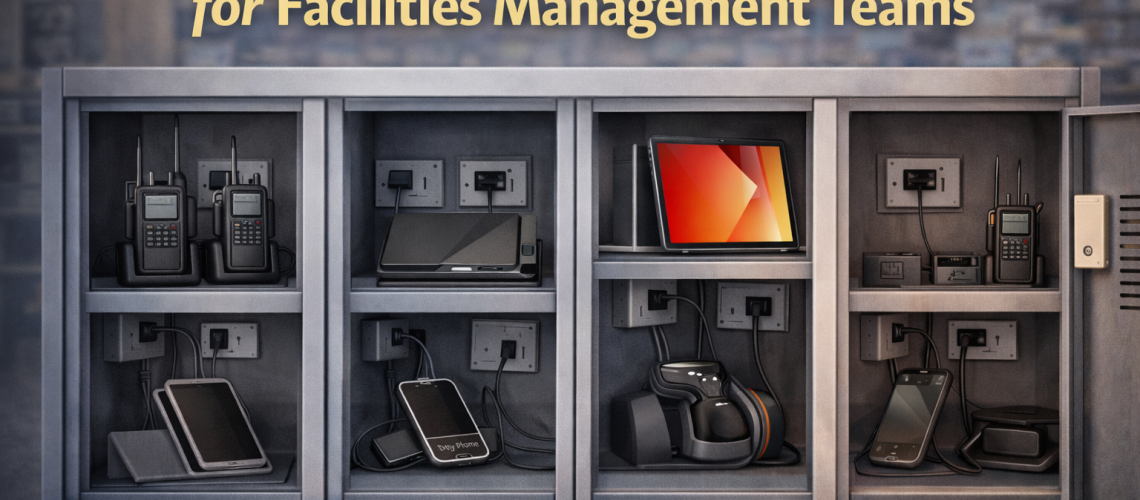
Facilities management teams often rely on a wide mix of battery-powered equipment every day. Radios, tablets, handheld devices, mobile phones, scanners, inspection tools and other essential kit all need somewhere secure to be stored and charged. charging lockers When that equipment is left on desks, benches, shelves or worktops, it quickly becomes harder to manage. Devices can go missing, chargers get mixed up, cables become untidy and shift handovers become less efficient. That is where charging lockers can make a real difference.
Charging lockers give facilities teams a controlled place to store and charge equipment between shifts, during the working day or overnight. They help keep devices organised, improve accountability and reduce clutter in maintenance rooms, help desks, reception areas and FM stores. In busy buildings and multi-site operations, that kind of control can make everyday routines much smoother.
This guide explains how charging lockers support facilities management teams, what they are useful for, where they can be installed and how to choose a setup that matches the way your team works.
View charging lockers for facilities teams and shared workplace devices.
Why facilities management teams need structured charging storage
Facilities teams are usually responsible for more than one type of equipment. A single team may handle handheld radios, duty phones, laptops, inspection tablets, scanners, battery chargers and portable testing devices across the same site. In some cases, the team may also manage equipment for cleaning staff, security, contractors or front-of-house support. That makes charging storage harder to control if there is no dedicated system in place.
Loose charging arrangements often create avoidable problems. Devices may be returned to the wrong place. Chargers may be swapped between items. Shared kit can become difficult to track. Worktops end up crowded with cables and equipment. Staff arriving for a shift may waste time checking whether the right device is charged and ready. For a broader introduction, read our complete guide to charging lockers.
A charging locker helps bring order to that environment. It gives every device a defined home and helps turn charging into a more reliable routine rather than an improvised task at the end of the day.
What facilities teams use charging lockers for
Charging lockers can support a wide range of facilities management equipment. The best use depends on the site, the team structure and the type of tasks being carried out.
- two-way radios and communication devices
- duty mobile phones
- inspection tablets and digital check devices
- shared laptops for maintenance and site reporting
- handheld scanners and readers
- small battery-powered tools and accessories
- portable testing or compliance devices
- visitor or contractor issue devices
On some sites, one charging locker may be enough for the main FM team. On others, separate lockers may support different departments or device types. The key is to match the charging storage to the real daily workflow rather than treating every item the same.
How charging lockers improve day-to-day FM operations
Facilities work depends on responsiveness. Staff need to know where equipment is, whether it is charged and who is using it. A charging locker supports that in several practical ways.
First, it creates a defined issue and return point. Equipment is stored in one place rather than being spread across desks, cupboards or staff rooms. That makes it easier to find devices quickly and easier to see whether anything is missing.
Second, it supports tidier charging. Cables stay within the locker, chargers remain with the right equipment and work surfaces stay clearer. This usually makes maintenance rooms and FM bases feel more organised and easier to manage.
Third, it helps with consistency. Staff know where to put items back. Incoming teams know where to collect them. Supervisors can review the locker visually without searching the building. Over time, that improves control and reduces friction in everyday operations. For the wider product and planning overview, see our charging lockers UK guide.
Charging lockers and shift handover
Many facilities management teams work across shifts, staggered schedules or extended site hours. In that kind of environment, shift handover can be one of the biggest reasons to use charging lockers. Equipment often needs to be returned by one team and ready for the next without delay.
When devices have a proper charging location, handover becomes more dependable. Radios can be returned to the same compartments. Tablets can be placed back on charge ready for the next inspection round. Shared phones can be stored in one place rather than being left in pockets, on counters or in different rooms.
That matters because handover routines shape the whole day. If teams lose time searching for equipment or checking battery levels, the site becomes less efficient. A well-planned charging locker helps reduce that problem. Facilities teams should review charging locker sizes and how to plan charging locker capacity so the setup matches radios, tablets, duty phones and shared devices.
Shared versus assigned charging lockers for FM teams
Facilities teams can use either shared or assigned charging lockers depending on how equipment is managed. Shared charging works well where devices are pooled and issued to whoever is on duty. Assigned charging works better where a specific device is tied to a named person, role or vehicle.
Shared lockers are often useful for radios, spare phones, contractor devices and general-use tablets. They allow the team to store equipment centrally and use the available space efficiently. Assigned lockers can be stronger where supervisors, engineers or specialist operatives carry the same device every day and need a fixed return point.
Some FM teams benefit from a mixed system. Shared compartments can hold pooled equipment, while assigned spaces support regular users or role-specific devices. That approach often works well in larger buildings or teams with mixed responsibilities.
Why accountability matters in FM environments
Facilities management often depends on reliable records, clear responsibilities and fast response times. Devices are part of that. If equipment is shared but not properly controlled, it becomes harder to track who had what, which charger belongs to which item and whether the kit was returned in working condition.
A charging locker can support stronger accountability simply by creating structure. Compartments can be numbered, labelled by role or organised by device type. Supervisors can check returns more easily. Staff can identify missing items faster. Even a basic charging locker layout can improve visibility compared with loose charging on open shelves.
For FM teams working across compliance tasks, maintenance logging or contractor coordination, that extra control can be very useful.
Best types of equipment to keep in FM charging lockers
The best equipment for a charging locker is usually the equipment that is shared, frequently used or easy to lose when left loosely around the site. In many FM operations, that includes radios, tablets and duty phones first, because those items are used constantly and often move between staff.
Laptops may also suit charging lockers where teams use them for reporting, permit systems, contractor administration or building management tasks. Handheld readers and inspection devices are another strong fit, especially where they are used across shifts. Small battery tools may also be suitable where the locker has the right internal size and the charging setup is appropriate for the equipment. It also helps to compare shared vs assigned charging lockers, the best lock types for charging lockers and where to install charging lockers in maintenance rooms and FM bases.
The most important point is that the locker should match the real size, charging needs and handling routine of the equipment being stored.
Where should facilities teams install charging lockers?
The best place to install a charging locker for facilities management is usually close to the team’s natural issue and return point. That may be a maintenance room, FM office, supervisor base, security hub, help desk or staff equipment room. The location should support convenient access, sensible power provision and a routine that feels natural for the team.
A good installation point allows staff to return equipment without blocking busy routes or creating clutter elsewhere. It should also support easy inspection and day-to-day oversight. If the locker is hidden away in an awkward corner, staff may be less likely to use it properly. If it is placed in a busy circulation area, it may create congestion instead.
The strongest locations are the ones that fit the team’s workflow and make charging storage the easiest option rather than an inconvenience.
Charging lockers for multi-site and large building operations
Facilities teams often work across more than one area, floor or building. In those situations, charging lockers can help centralise equipment control or support distributed issue points depending on how the operation is run. A central FM base may use one larger charging locker for pooled devices. A larger site may use several smaller charging lockers across different departments or zones.
This can be especially useful in hospitals, universities, commercial campuses, logistics centres, shopping centres and multi-tenant office buildings where the FM function serves a wide spread of spaces. Charging lockers help stop equipment from drifting between departments and support more consistent return routines.
On larger sites, the question is often not whether charging lockers are useful, but whether one locker or several smaller ones will support the team more effectively.
Lock options for facilities management charging lockers
The right lock type depends on whether the equipment is shared, assigned or controlled by supervisors. For pooled FM devices, combination locks, digital locks or controlled shared-access systems often make sense because they avoid physical key handling. For assigned devices, key locks or fixed code locks may work well where each user has a regular compartment.
The best choice is usually the one that supports control without slowing the team down. A very complex system can be just as unhelpful as an unsecured one if it makes access awkward during a busy shift. Facilities teams usually benefit from locks that are easy to understand, easy to manage and appropriate for the level of accountability required.
What to look for in a charging locker for FM use
Facilities management teams often need something more practical than decorative. The best charging locker for FM use should match the equipment size, the number of users and the working routine.
- the right compartment size for radios, tablets, phones or laptops
- a charging layout that keeps leads and plugs organised
- lock options that suit shared or assigned use
- a footprint that fits the available room without causing congestion
- suitable ventilation for the charging load
- a robust design that can cope with everyday operational use
- clear layout for numbering, labelling or device grouping
For some teams, a compact locker is enough. For others, especially multi-shift or multi-device teams, a larger or more segmented unit may be the better choice.
How charging lockers help reduce clutter in FM spaces
Maintenance rooms and facilities offices often become catch-all spaces very quickly. Tools, spares, paperwork, permits, chargers and devices all compete for the same surfaces. Charging lockers help relieve that pressure by taking powered devices off benches and giving them a dedicated storage point.
This usually improves more than appearance. Clearer work surfaces make rooms easier to use, easier to clean and easier to manage. It also reduces the chance of chargers being unplugged, moved or mixed between devices. In day-to-day facilities work, that kind of basic organisation can save time and reduce frustration.
Questions facilities managers should ask before choosing a charging locker
A few practical questions usually help narrow the choice.
- What devices need to be stored and charged?
- How many staff need access?
- Is the equipment pooled or individually assigned?
- Will all devices return at the same time?
- Where is the natural issue and return point?
- Does the team need one locker or several smaller units?
- Would numbered or labelled compartments improve control?
- What lock type will be easiest to manage day to day?
Answering these questions before buying helps ensure the locker works with the FM routine instead of adding another layer of inconvenience.
Why charging lockers make sense for facilities management teams
Facilities teams depend on equipment being available, charged and easy to locate. Charging lockers help make that happen. They support shift handover, improve accountability, reduce clutter and create a clearer routine for storing shared or assigned devices. In many FM environments, that structure is exactly what keeps everyday operations running more smoothly.
The benefit is not just security. It is control, organisation and readiness. When equipment has a proper charging home, the whole team usually works more efficiently.
Final thoughts on charging lockers for facilities management teams
Charging lockers are a strong fit for facilities management because they support the realities of shared equipment, shift work and site-wide operations. Whether the team is managing radios, duty phones, tablets or laptops, a charging locker can improve how devices are stored, charged and handed over between users. The right setup depends on the equipment mix, the team structure and the location, but the overall benefit is usually the same: better organisation and a more dependable workflow.
Total Locker Service supplies charging lockers for facilities teams, workplaces, schools and shared device environments. charging lockers If you need help choosing the right charging locker for radios, tablets, phones or other FM equipment, contact us for practical advice on the best setup for your site.
Discover more from Blog Total Locker Service
Subscribe to get the latest posts sent to your email.