
Emergency Key Boxes and Group Lockout Boxes
Emergency Key Boxes and Lockout Boxes
 Click to enlarge
Features
Emergency Key Boxes and Group Lockout Boxes
Total Locker Service supplies emergency key boxes for controlled access to critical keys and group lockout boxes for managing machinery, electrical and equipment isolation procedures.
Emergency key boxes keep a designated key protected and close to the location where it may be required. Group lockout boxes secure isolation keys while maintenance is in progress, helping prevent equipment from being reactivated until every authorised user has removed their personal padlock.
Products are available for factories, workshops, plant rooms, facilities management teams, commercial premises, healthcare sites, schools and public buildings. Construction, capacity, access method and mounting arrangements vary by model.
Emergency Key Box or Group Lockout Box?
Although both products control access to keys, they perform different functions. An emergency key box makes a designated key available when authorised access is required. A group lockout box prevents isolation keys from being retrieved while maintenance or repair work remains in progress.
| Feature | Emergency Key Box | Group Lockout Box |
|---|---|---|
| Primary purpose | Provides controlled access to an emergency, override or restricted key. | Secures isolation keys during maintenance, servicing or repair work. |
| Typical contents | Door key, plant-room key, access card or authorised override device. | Keys removed from machinery, electrical or other energy-isolation points. |
| Access method | Breakable panel, lift-up cover, removable seal or key-operated lock. | Multiple personal padlocks attached to individual locking positions. |
| Typical users | Authorised staff, facilities teams, security personnel and emergency responders. | Engineers, electricians, technicians, maintenance teams and contractors. |
| Installation | Normally wall-mounted close to the relevant access point. | Wall-mounted, portable or positioned at a designated isolation station. |
| Common locations | Plant rooms, service corridors, controlled doors and building-services areas. | Factories, workshops, production facilities and maintenance departments. |
How Emergency Key Boxes and Lockout Boxes Work
Emergency Key Boxes for Critical Access
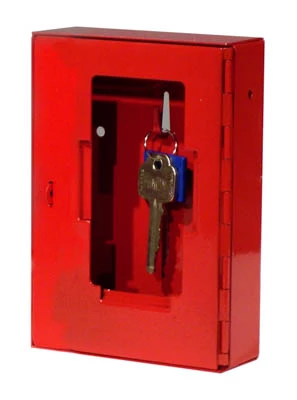
An emergency key box stores a specific key or small access device close to the location where it may be needed. The enclosure discourages casual or unauthorised use while keeping the contents clearly identified for approved access procedures.
Depending on the selected model, access may be provided through a breakable panel, removable cover, lift-up flap or conventional lock. Transparent fronts and inspection windows are available on selected products, allowing staff to confirm that the key is present without opening the box.
- Plant-room and building-services keys
- Keys for controlled internal doors
- Alarm, shutdown and authorised override keys
- Access cards and small override devices
- Facilities management and security procedures
An emergency key box should not replace a correctly designed emergency escape arrangement. Product suitability should be confirmed against the door function, site risk assessment and applicable building or workplace requirements.
Group Lockout Boxes for Equipment Isolation
A group lockout box supports maintenance procedures involving several engineers, technicians or contractors. After equipment has been isolated, the relevant isolation keys are placed inside the box.
Each person working on the equipment attaches their personal padlock to an available locking position. The isolation keys cannot be removed until every personal padlock has been released, helping prevent machinery or equipment from being restarted while work remains in progress.
- Machinery maintenance and servicing
- Electrical isolation procedures
- Industrial plant shutdowns
- Engineering and production environments
- Contractor-controlled maintenance work
- Multi-person lockout and tagout procedures
Lockout equipment should be used as part of a documented isolation procedure based on the site risk assessment, machinery instructions and established health and safety controls.
Features and General Specifications
The range includes compact single-key boxes, larger emergency key enclosures and multi-user group lockout boxes. Exact dimensions, capacity, materials and access arrangements should be checked against the individual product before ordering.
| Product types | Emergency key boxes, breakable-panel key boxes, key access boxes and group lockout boxes |
|---|---|
| Construction | Powder-coated steel, coated metal or durable moulded material, depending on the model |
| Access options | Breakable panel, lift-up cover, removable seal, key lock or multiple personal padlocks |
| Capacity | Single key, multiple keys, small access devices or multiple lockout padlock positions |
| Visibility | Solid front, transparent panel or inspection window on selected models |
| Identification | Emergency key wording, lockout labels, warning markings or high-visibility finishes |
| Installation | Wall-mounted or portable designs, depending on the product and application |
| Fixing arrangements | Rear fixing holes or integral mounting plates on applicable wall-mounted models |
| Typical environments | Commercial buildings, industrial sites, workshops, plant rooms and public-sector premises |
Choosing and Installing the Correct Box
First determine whether the product is intended to provide access to a designated key or to prevent access to isolation keys during maintenance. This distinction determines whether an emergency key box or group lockout box is required.
Check Before Ordering
- The number and dimensions of the keys or devices being stored
- The required access or locking method
- The number of people involved in the isolation procedure
- Whether a wall-mounted or portable product is required
- Whether the contents need to remain visible
- Compatibility with the selected personal padlocks
- The installation environment and wall construction
- The site's access policy, isolation procedure and risk assessment
Wall-mounted boxes should be installed using fixings appropriate for the wall construction and loaded weight of the enclosure. Position the box where authorised personnel can find it quickly without creating an obstruction or exposing it to unnecessary damage.
Emergency key boxes should be checked regularly to confirm that the correct key is present and the enclosure, fixing points and labels remain secure. Group lockout boxes, personal padlocks and associated tags should be included within the site's inspection and maintenance programme.
Where several keys are accessed regularly rather than retained for emergency use, a dedicated key cabinet may provide a more suitable key-management solution.
Emergency Key Storage from Total Locker Service
Total Locker Service supplies emergency key boxes, group lockout products, key cabinets and related security equipment to organisations throughout the UK.
We can help compare capacities, access methods and installation options for commercial, industrial, educational, healthcare and public-sector environments. Product suitability should always be confirmed against the intended application and the site's established safety procedures.
Specification
Emergency Key Box Specification
Emergency key boxes provide a clearly identified location for storing a designated key or small access device. They help discourage casual use while keeping the contents available to authorised personnel when urgently required.
| Product type | Single-key or multiple-key emergency access box |
|---|---|
| Construction | Powder-coated steel or durable moulded material, depending on the model |
| Access options | Breakable panel, lift-up cover, removable cover or key-operated lock |
| Capacity | Single key, multiple keys, access card or small override device, depending on internal dimensions |
| Visibility | Solid front, transparent panel or inspection window on selected models |
| Identification | Emergency key wording, coloured finish or warning label, depending on the product |
| Installation | Wall-mounted using rear fixing holes or an integral mounting plate |
| Typical contents | Door keys, plant-room keys, access cards and authorised override devices |
| Typical environments | Commercial buildings, industrial premises, healthcare sites, schools and public buildings |
Emergency Key Box Features
- Clearly identified storage for a designated emergency or override key
- Wall-mounted construction for a fixed and visible installation
- Breakable-panel, lift-up-cover or lockable access options
- Inspection windows available on selected products
- Compact models for single keys and larger models for several keys
- Durable finishes suitable for commercial and workplace environments
- Replacement panels or seals available for applicable models
Group Lockout Box Specification
Group lockout boxes are designed for maintenance procedures involving more than one person. After equipment has been isolated, the relevant isolation keys are placed inside the box. Each person working on the equipment then attaches their personal padlock to an available locking point.
The isolation keys cannot be removed until every personal padlock has been released. This helps prevent machinery or equipment from being returned to service while work is still taking place.
| Product type | Wall-mounted or portable group lockout box |
|---|---|
| Construction | Steel or durable moulded material, depending on the model |
| Locking method | Multiple padlock positions for individual users |
| Capacity | Varies according to the number of authorised personnel and isolation keys |
| Contents | Keys removed from machinery, electrical or other energy-isolation points |
| Visibility | Solid or transparent front, depending on the model |
| Identification | Lockout wording, warning labels or high-visibility finish |
| Installation | Wall-mounted, carried between work areas or positioned at an isolation station |
| Typical users | Engineers, electricians, technicians, maintenance teams and contractors |
Group Lockout Box Features
- Multiple padlock positions for group isolation procedures
- Secure internal storage for one or more isolation keys
- Wall-mounted and portable configurations available
- High-visibility identification on selected models
- Transparent viewing panels available on applicable products
- Suitable for multi-person maintenance and shutdown procedures
- Compatible with appropriately sized personal lockout padlocks
General Product Specifications
The following information provides a general comparison. Exact dimensions, capacity, material and access method must be checked against the individual product before ordering.
| Specification | Available Options |
|---|---|
| Product range | Emergency key boxes, breakable-panel boxes, key access boxes and group lockout boxes |
| Materials | Powder-coated steel, coated metal or moulded material, depending on the model |
| Access methods | Breakable panel, lift-up cover, removable seal, key lock or personal padlocks |
| Capacities | Single key, multiple keys or multiple padlock positions |
| Mounting | Wall-mounted or portable designs |
| Front panel | Solid, transparent or partially glazed, depending on the product |
| Finish | High-visibility or powder-coated finish on selected products |
| Fixings | Rear fixing holes or mounting plate on applicable wall-mounted models |
| Use | Controlled key access or multi-person equipment isolation |
Emergency Key Box and Lockout Box Applications
| Environment | Typical Application | Suitable Product |
|---|---|---|
| Factories | Machinery isolation and controlled access to plant keys | Group lockout box or emergency key box |
| Workshops | Maintenance isolation and secure storage of equipment keys | Group lockout box |
| Plant rooms | Access to authorised override or plant-room keys | Emergency key box |
| Commercial buildings | Controlled access to restricted service areas | Emergency key box |
| Healthcare premises | Authorised access to service rooms or essential building controls | Emergency key box |
| Construction sites | Temporary machinery and electrical isolation | Portable group lockout box |
| Facilities management | Key access, planned maintenance and contractor isolation procedures | Either product, depending on the procedure |
How to Select the Correct Key or Lockout Box
Begin by deciding whether the box will provide access to a key or prevent access to isolation keys. This determines whether an emergency key box or group lockout box is required.
Emergency Key Box Selection
- Confirm the dimensions and number of keys or devices being stored
- Choose the required access method
- Decide whether the contents must remain visible
- Check whether a replacement panel or seal will be required after use
- Select fixings suitable for the wall material
- Confirm the installation position through the site risk assessment
Group Lockout Box Selection
- Confirm the maximum number of people involved in the isolation procedure
- Provide one secure locking position for each authorised user
- Check that the internal space is sufficient for all isolation keys
- Choose between wall-mounted and portable construction
- Confirm compatibility with the selected personal padlocks
- Include the box within the site's documented isolation procedure
Where keys need to be organised for regular daily use rather than emergency access, consider a dedicated key cabinet.
Installation and Routine Inspection
Wall-mounted products should be installed on a suitable surface using fixings appropriate for the construction and loaded weight of the box. The position should be visible and accessible to authorised personnel without causing an obstruction.
Emergency key boxes should be checked regularly to confirm that the correct key is present, the enclosure is secure and all labels remain legible. Breakable panels, seals and covers should be replaced promptly after use.
Group lockout boxes, personal padlocks and associated tags should be inspected as part of the site's maintenance and isolation programme. Damaged or incorrectly functioning equipment should be removed from use.
Emergency Key Box and Lockout Box FAQs
What is an emergency key box?
An emergency key box is a clearly identified enclosure used to store a designated key close to the location where it may be needed. Depending on the model, access may be provided through a breakable panel, lift-up cover, removable seal or conventional lock.
What is a group lockout box?
A group lockout box holds keys removed from machinery, electrical or other energy-isolation points. Each person working on the equipment attaches a personal padlock to the box so the isolation keys cannot be retrieved until everyone has finished.
What is the difference between an emergency key box and a lockout box?
An emergency key box provides controlled access to a designated key. A lockout box prevents access to isolation keys while maintenance is being completed. The products therefore support different workplace procedures.
How does a group lockout box work?
After equipment has been isolated, the relevant keys are placed inside the lockout box. Each engineer or technician attaches a personal padlock to an available locking point. The box cannot be opened until every personal padlock has been removed.
Can emergency key boxes be wall-mounted?
Many emergency key boxes are designed for wall mounting and include rear fixing holes or a mounting plate. Suitable fixings should be selected according to the wall construction and the loaded weight of the box.
Do all emergency key boxes use glass panels?
No. Products may use glass, acrylic or another breakable material. Other emergency key boxes use lift-up covers, removable seals or conventional locks. Check the individual product specification before ordering.
Can an emergency key box hold an access card?
Some models can hold an access card or small override device, provided the internal dimensions and access opening are suitable. Confirm the size of the item before selecting the box.
How many padlocks can a group lockout box accept?
Capacity varies by model. The selected box should provide at least one suitable locking position for every person who may be involved in the isolation procedure.
Are personal padlocks supplied with a lockout box?
This depends on the product package. Some lockout stations include padlocks, while other boxes are supplied separately. Check the product description to confirm exactly what is included.
Can an emergency key box be used for a fire-exit key?
Suitability depends on the door function, building design and applicable fire-safety requirements. An emergency key box should not replace a correctly designed escape arrangement that allows occupants to leave safely without depending on a separate key.
Where should an emergency key box be installed?
It should be installed close enough to the relevant access point to be found quickly, while remaining protected from accidental damage and unauthorised interference. The final position should be determined by the site's access procedure and risk assessment.
Should emergency key boxes be inspected?
Yes. Regular checks should confirm that the correct key is present, the enclosure and fixing points are secure, access components operate correctly and labels remain visible.
When is a key cabinet more suitable than an emergency key box?
A key cabinet is normally more suitable when several keys need to be organised, numbered and accessed regularly. Emergency key boxes are intended for designated keys that are only required during specific access or emergency procedures.
Does Total Locker Service supply other security products?
Yes. Total Locker Service supplies security products, key cabinets and related key storage equipment for commercial, industrial and public-sector premises.
Delivery
Delivery Information
The approximate lead time is 5 Working Days.
Standard delivery is available to mainland UK addresses, Monday to Friday between 8:00 am and 5:00 pm.
Deliveries are kerbside only. Products may be delivered by a third-party pallet or specialist carrier using a suitable commercial vehicle.
The customer is responsible for providing suitable personnel and equipment to unload the delivery safely.
Please tell us before ordering about restricted access, specific delivery dates or times, FORS requirements or other special delivery arrangements. These may be available at an additional cost.