Secure Storage Systems for Businesses: Protecting Assets, Equipment and Documents (UK Guide 2026)
May 1, 2026
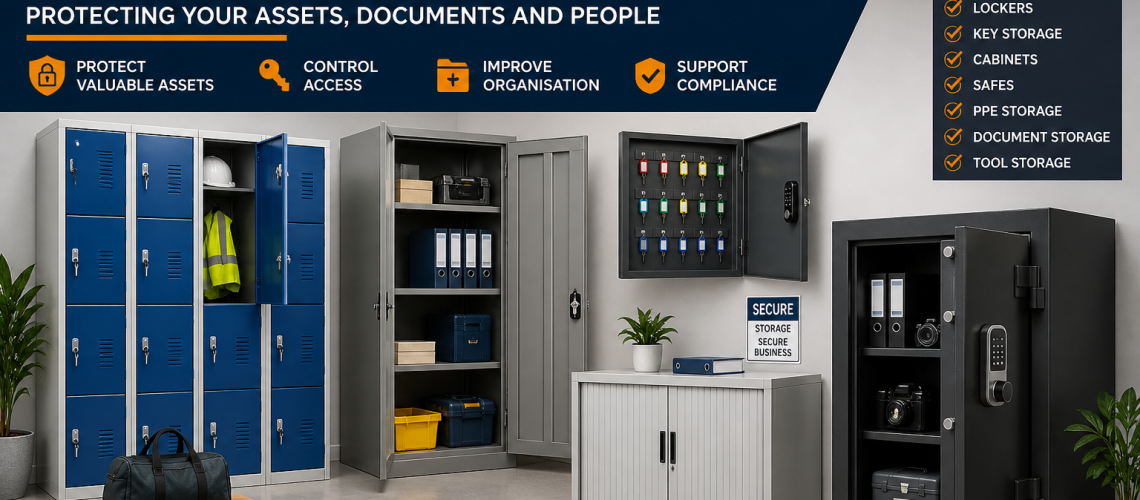
Secure storage systems for businesses help protect staff belongings, keys, documents, equipment, stock, tools and sensitive items. A good system reduces loss, controls access and keeps important items organised.
Business storage is not only about having enough cupboards or lockers. It is about matching the storage unit, lock type, location and management process to the level of risk.
This guide explains the main types of secure business storage, where each option works best, and how to plan a system that supports daily operations.
What Are Secure Storage Systems for Businesses?
Secure storage systems are planned solutions used to protect items from theft, loss, misuse, damage or unauthorised access. They can include lockers, cabinets, safes, key cabinets, charging lockers, cupboards and specialist storage units.
The right system depends on what is being stored, who needs access, how valuable the items are and how often they are used.
Why Businesses Need Secure Storage
Every business stores items that need protection. Some are valuable. Others are sensitive, regulated or essential for daily work. Poor storage can lead to missing keys, damaged equipment, exposed documents and wasted staff time.
A secure storage system helps create accountability. Staff know where items belong. Managers can control access. Important assets are easier to monitor, replace and audit.
Common Items That Need Secure Storage
- Staff bags, coats and personal belongings
- Keys, fobs and access cards
- Business documents and records
- Laptops, tablets, radios and handheld devices
- Tools, maintenance equipment and site assets
- PPE, uniforms and workwear
- Cash, valuables and sensitive items
- Cleaning products and hazardous substances
- Medicines, first aid stock or controlled supplies
Business Lockers for Staff and Personal Storage
Lockers are one of the most common secure storage options for businesses. They give staff a safe place to store personal belongings, workwear, phones, bags and issued equipment.
Single-door lockers suit coats, uniforms and larger items. Multi-door lockers are useful where many users need compact storage. Charging lockers protect devices while keeping them powered and ready for use.
For business staff storage, see our workplace lockers.
Key Cabinets and Key Control Systems
Keys are a common business risk. Lost keys can affect vehicles, offices, plant rooms, cupboards, lockers and restricted areas. A lockable key cabinet gives every key a fixed place and helps reduce confusion.
Smaller businesses may only need a basic key cabinet. Larger sites may need numbered hooks, sign-out logs, restricted access or electronic key control.
For a full overview, read our key storage systems UK guide.
Secure Cabinets and Cupboards
Lockable cabinets and cupboards are suitable for documents, stationery, stock, files, equipment and shared workplace items. They are simple to use and work well in offices, schools, warehouses, workshops and healthcare settings.
Steel cupboards are often used in busy commercial areas because they are durable and easy to clean. Filing cabinets are better for structured document storage. Specialist cabinets should be used when items need extra protection or controlled access.
Safes for Higher-Value Business Items
Safes are used when standard cabinets do not provide enough protection. They are suitable for cash, valuables, sensitive documents, backup drives and small high-risk items.
Some businesses need fire-resistant safes for paper records. Others may need data safes for digital media. The right safe depends on the item type, risk level and required protection.
Charging Lockers for Business Devices
Many businesses now need secure storage for laptops, tablets, scanners, radios and handheld devices. Charging lockers protect devices while charging them between shifts, lessons or working periods.
These systems are useful in offices, schools, logistics sites, healthcare buildings and industrial workplaces where shared devices must be ready for regular use.
Secure Tool and Equipment Storage
Tools and equipment are easy to misplace when storage is poorly organised. Lockable tool cabinets, cupboards and heavy-duty storage units help keep equipment secure, visible and easy to return.
Workshops, factories, warehouses and facilities teams often benefit from stronger storage with clear labelling and controlled access.
Specialist Storage for Hazardous Items
Some items should never be stored in standard cupboards. Chemicals, flammable products, acids and toxic substances require specialist cabinets designed for safer storage and clearer identification.
COSHH cabinets, flammable storage cabinets and acid cabinets help separate hazardous substances from general workplace storage. They also support better access control and safer handling routines.
Choosing the Right Lock Type
The lock is a major part of any secure storage system. A strong cabinet with the wrong lock may still be difficult to manage. A simple locker can work well when the lock suits the users.
- Key locks: simple, familiar and easy to replace.
- Combination locks: useful where key management is a problem.
- Digital locks: practical for shared or changing users.
- Coin locks: common in leisure and changing room areas.
- Padlock fittings: useful where users bring their own padlocks.
- Electronic access: suitable for higher-control environments.
Where Should Secure Storage Be Installed?
Location matters as much as the product. Secure storage should be easy for authorised users to access, but not exposed to unnecessary public traffic.
Key cabinets usually work best in staff-only areas. Lockers should be placed where users can access them without blocking walkways. Safes and high-risk storage should be positioned in controlled rooms where possible.
How to Plan a Secure Business Storage System
Start with a simple audit. List the items that need storage, then rank them by value, sensitivity, access frequency and risk. This helps separate general storage from secure storage.
- Identify what needs to be protected.
- Decide who needs regular access.
- Choose the right product for each item type.
- Match the lock type to the users.
- Plan the location before ordering.
- Allow enough capacity for future growth.
- Use labels, numbers or sign-out systems where needed.
- Review the system as the workplace changes.
Common Secure Storage Mistakes
One common mistake is using general storage for high-risk items. Important keys, valuable equipment and sensitive records often need more than a basic cupboard.
Another mistake is choosing storage without considering users. If staff cannot access items easily, the system may be ignored. Good security should protect items without making daily work unnecessarily difficult.
Capacity is also important. A system that is full on day one leaves no room for new staff, extra equipment or future site changes.
Secure Storage Checklist for Businesses
- Use lockers for staff belongings and personal items.
- Use key cabinets for keys, fobs and access cards.
- Use safes for cash, valuables and sensitive small items.
- Use lockable cupboards for documents and shared supplies.
- Use specialist cabinets for hazardous substances.
- Use charging lockers for laptops, tablets and devices.
- Keep high-risk storage away from public access.
- Choose locks that suit user behaviour.
- Label storage clearly to improve accountability.
- Review storage needs regularly.
FAQ
What are secure storage systems for businesses?
Secure storage systems are combinations of lockers, cabinets, safes and controlled storage units designed to protect business assets from theft, loss, damage or unauthorised access.
What is the most secure type of business storage?
The most secure option depends on the item. Safes are best for high-value items and cash. Lockable cabinets suit documents and equipment. Key cabinets are designed for access control, while lockers are ideal for staff belongings.
Do businesses need both lockers and cabinets?
Most businesses benefit from using both. Lockers are used for personal storage, while cabinets are better for shared items such as documents, tools or supplies.
How do businesses control access to stored items?
Access is controlled using locks such as keys, combinations, digital locks or electronic systems. Some businesses also use sign-out logs, restricted keys or audit trails to track usage.
What storage is best for business documents?
Lockable cupboards or filing cabinets are suitable for daily use documents. Safes or fire-resistant cabinets are better for sensitive or high-value records.
Are secure storage systems required for compliance?
Certain industries require secure storage for specific items. For example, chemicals must be stored in COSHH cabinets, and medicines may need controlled storage depending on the environment.
What is the best way to store business keys securely?
A key cabinet with organised hooks is suitable for most businesses. Larger sites or higher-risk environments may require key control systems with tracking and restricted access.
How do I choose the right secure storage system?
Start by identifying what needs protection, then assess risk level, user access and available space. Choose storage that matches the item type and provides the right level of security without restricting daily use.
Where should secure storage be placed in a business?
Storage should be easy for authorised users to access but positioned away from public areas. High-risk items are best stored in staff-only or restricted rooms.
What are common mistakes in business storage security?
Common issues include using basic storage for high-risk items, poor layout planning, lack of access control and not allowing enough capacity for future growth.
Final Thoughts
Secure storage systems help businesses protect assets, improve organisation and reduce day-to-day disruption. The best solution is rarely one product on its own. Most businesses need a planned mix of lockers, cabinets, safes, key storage and specialist units.
For a wider overview, read our storage systems explained guide. For staff storage, explore our workplace lockers UK.
Discover more from Blog Total Locker Service
Subscribe to get the latest posts sent to your email.