Care Home Storage Systems UK: Staff Lockers, Key Storage, Equipment and Secure Storage
May 1, 2026
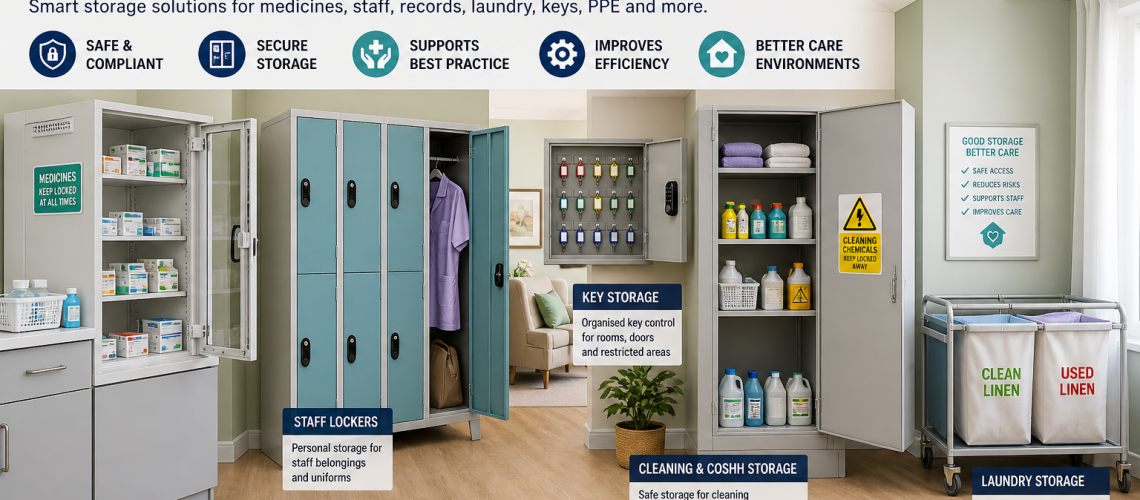
Care home storage systems combine staff lockers, secure cupboards, key storage, document storage, PPE storage, laundry storage and other practical storage around the daily needs of residents, care teams and facilities staff.
The correct care-home storage system is rarely one product. Staff belongings, resident-related items, records, laundry, keys, equipment and specialist supplies all have different access, hygiene and security requirements.
This guide focuses on the whole care-home storage mix: which types of storage are commonly needed, where they fit and how staff, resident, administration and operational storage can work together.
For detailed medicines storage, use Care Home Medicines Storage UK. For general storage formats, use Types of Storage Systems UK.
Quick Answer: What Storage Systems Do Care Homes Need?
Most care homes need several storage systems rather than one universal cabinet or locker.
| Care-home requirement | Typical storage approach |
|---|---|
| Staff belongings and uniforms | Staff lockers |
| Care records and paperwork | Lockable document storage |
| Building and operational keys | Key cabinet or specialist key storage |
| PPE | Cupboards, shelving or suitable dedicated storage |
| Linen and laundry | Separated shelving, cupboards or labelled storage |
| Resident belongings | Wardrobes, drawers and other appropriate personal storage |
| Facilities equipment | Cupboards, cabinets or shelving |
| Medicines and specialist items | Purpose-specific storage appropriate to the application |
What This Care Home Storage Guide Owns
| Subject | Ownership |
|---|---|
| Whole care-home storage mix | This guide |
| Staff belongings and uniform storage at overview level | This guide |
| Care records and administration storage | This guide |
| Key storage at overview level | This guide |
| PPE storage at overview level | This guide |
| Laundry and linen storage | This guide |
| Resident personal storage at overview level | This guide |
| Facilities and housekeeping storage | This guide |
| Storage requirements by care-home area | This guide |
What This Guide Hands Off
| Detailed question | Use this guide |
|---|---|
| How should medicines be stored? | Care Home Medicines Storage UK |
| Which access method should storage use? | Storage Access Control UK |
| How should physical keys be stored? | Key Storage Systems UK |
| How should the complete storage project be planned? | Storage System Planning Checklist UK |
| Which staff lockers should be specified? | Workplace Lockers |
| Which broad storage format should we choose? | Types of Storage Systems UK |
Why Care Homes Need Several Types of Storage
Care homes contain many different storage requirements within one building. Staff belongings, resident items, documents, linen, equipment and keys should not all be treated as one storage problem.
A clear storage structure can help:
- give staff appropriate personal storage;
- keep records in defined secure locations;
- keep keys organised;
- separate clean linen from used items;
- keep PPE accessible to staff;
- give facilities teams organised equipment storage;
- and reduce unnecessary clutter in shared areas.
Staff Lockers and Personal Storage
Care staff may need secure storage for bags, coats, phones, uniforms, footwear and personal belongings during shifts.
Staff lockers can be used in:
- staffrooms;
- changing rooms;
- back-of-house areas;
- offices;
- and dedicated staff welfare areas.
The compartment size should follow what staff actually store. Smaller compartments may be sufficient for personal items, while full-height lockers can be more suitable for coats, uniforms or larger bags.
Browse our workplace lockers for staff storage options.
Care Records and Document Storage
Care homes can hold resident paperwork, personnel records, administration documents, maintenance information and other physical records.
Suitable formats may include:
- lockable cupboards;
- filing cabinets;
- secure office cabinets;
- and stronger purpose-specific storage where the contents justify it.
Where fire protection or a particular security rating is required, choose a product specifically designed and tested for that purpose rather than assuming an ordinary steel cupboard provides equivalent protection.
Key Storage for Care Homes
Care homes can manage keys for resident rooms, offices, cupboards, staff areas, external doors, plant areas, maintenance spaces and other parts of the building.
At care-home application level, these keys need a defined storage location appropriate to the number and importance of the keys.
A smaller home may use a conventional cabinet, while larger sites may need more capacity or a more structured system.
The detailed choice between key-cabinet types, capacity, access technology and day-to-day management belongs in the dedicated key-management cluster. Start with Key Storage Systems UK or browse our commercial key cabinets.
PPE Storage
Care homes may need storage for gloves, aprons, masks, eye protection and other PPE used by staff.
The appropriate format depends on where the equipment is used and whether rapid access, stock control or restricted access is important.
- Open shelving can suit suitable staff-only areas where fast access is useful.
- Cupboards can keep stock contained and organised.
- Labelled compartments can separate different items or sizes.
- Central stock storage can support replenishment to smaller point-of-use locations.
The storage arrangement should suit the actual PPE, local procedures and care-home operating requirements.
Laundry and Linen Storage
Laundry and linen storage is a distinctive care-home requirement because clean items, used items and resident clothing may move through different parts of the building.
Storage can include:
- shelving for clean linen;
- cupboards for uniforms or supplies;
- labelled areas for resident clothing;
- trolleys or carts used within the laundry process;
- and separate arrangements for items awaiting laundering.
The key application principle is clear separation and identification so that staff can tell which items are clean, used, resident-specific or awaiting processing.
Resident Belongings and Personal Storage
Resident storage is different from staff locker storage. It forms part of the resident’s living environment rather than simply providing a temporary compartment during a work shift.
Depending on the room and the individual’s needs, resident storage may include:
- wardrobes;
- drawers;
- bedside storage;
- labelled personal-item storage;
- and appropriate secure storage for selected smaller possessions.
Shared areas may also need defined places for activity equipment, mobility aids and labelled personal belongings so items can be returned to the correct resident.
Equipment and Mobility-Aid Storage
Care homes can also need storage for larger operational items such as mobility aids, moving-and-handling equipment, maintenance equipment and shared care resources.
Large equipment often requires a designated storage area rather than a cupboard.
Consider:
- the physical size of the equipment;
- how frequently it is used;
- whether it needs charging;
- whether staff need rapid access;
- and whether parked equipment could obstruct normal movement.
Housekeeping and Maintenance Storage
Housekeeping and facilities teams may require storage for cleaning equipment, maintenance tools, PPE, consumables, replacement parts and operational supplies.
| Requirement | Typical starting point |
|---|---|
| Maintenance tools | Tool cupboard or equipment cabinet |
| Replacement parts | Shelving, bins or cupboards |
| PPE | Suitable cupboard, shelving or compartment storage |
| General housekeeping equipment | Designated storage area or cupboard |
| Operational paperwork | Document storage |
| Keys | Key cabinet |
Where a product or substance requires specialist storage, select that storage from the actual item information, site procedures and relevant assessment rather than assuming all housekeeping products belong in one generic cabinet type.
Medicine Storage in the Care-Home Storage Mix
Medicines are part of the care-home storage picture, but they should not be treated as ordinary general storage.
This page therefore only identifies medicines as a specialist storage category. Detailed questions about medicine cabinets, controlled medicines, temperatures, access and medicine-management procedures belong in the dedicated guide.
Use Care Home Medicines Storage UK for the detailed subject.
Care Home Storage by Area
| Care-home area | Typical storage requirements |
|---|---|
| Staffrooms and changing areas | Staff lockers and shared staff cupboards |
| Offices | Records, files, keys and secure document storage |
| Laundry areas | Clean linen, resident clothing and laundry-process storage |
| Resident rooms | Wardrobes, drawers and personal-item storage |
| Shared resident areas | Activity equipment, labelled belongings and mobility aids |
| Facilities areas | Tools, PPE, parts, housekeeping equipment and supplies |
| Medicine or treatment areas | Purpose-specific specialist storage |
Access Control for Care Home Storage
Different storage within a care home can require very different access arrangements.
A staff locker may use a conventional key or combination, while records, operational keys or specialist storage may require a different approach.
This page does not need to own the technology comparison. Establish who needs access and whether the users are individual, shared or restricted, then use Storage Access Control UK for the detailed comparison.
Position Storage Around Daily Care Activity
The location of storage affects how practical it is during everyday work.
At a broad application level:
- frequently used staff supplies should be reasonably convenient to access;
- resident storage should fit naturally within living areas;
- operational equipment should have a defined home;
- staff-only storage should be positioned appropriately;
- and storage should not unnecessarily obstruct movement through the building.
Detailed space, delivery, access, installation and growth planning belongs in Storage System Planning Checklist UK.
Common Care Home Storage Mistakes
- Using one cupboard for unrelated items. Staff belongings, records, PPE and operational supplies often need different storage.
- Treating medicines as ordinary general storage. Use the specialist medicines-storage guidance.
- Leaving keys without a defined home. Physical keys benefit from organised dedicated storage.
- Mixing resident and staff storage. They serve different purposes.
- Poor laundry identification. Clean, used and resident-specific items need clear separation.
- Storing shared equipment without a designated area. Large items can migrate into corridors or inappropriate spaces.
- Using generic storage for specialist items. Some contents require a purpose-specific solution.
- Choosing lock technology before defining users. Establish the access requirement first.
- Ignoring changes in residents, staff or equipment. Storage requirements can change over time.
Care Home Storage Decision Table
| Requirement | Start with | Detailed guide or range |
|---|---|---|
| Staff belongings | Staff lockers | Workplace Lockers |
| Care records | Secure document storage | This guide |
| Keys | Key cabinet | Key Storage Systems UK |
| PPE | Cupboard, shelving or suitable dedicated storage | This guide |
| Laundry and linen | Separated and labelled storage | This guide |
| Resident belongings | Appropriate personal storage | This guide |
| Medicines | Purpose-specific medicine storage | Care Home Medicines Storage UK |
| Access technology | Key, code or other suitable access method | Storage Access Control UK |
| Whole-project planning | Storage planning checklist | Storage System Planning Checklist UK |
Care Home Storage from Total Locker Service
Total Locker Service supplies commercial storage products for care homes, healthcare staff areas, offices, facilities teams and other UK organisations.
For employee belongings and uniforms, browse our workplace lockers. For physical key storage, see our commercial key cabinets. For broader secure storage, browse our safes and secure cabinets.
Related Care Home Storage Guides
- Care Home Medicines Storage UK for detailed medicine-storage guidance.
- Types of Storage Systems UK for general comparison of storage formats.
- Storage Access Control UK for keys, codes and electronic access.
- Key Storage Systems UK for physical key-storage options.
- Storage System Planning Checklist UK for complete pre-purchase planning.
- Workplace Storage Systems UK for broader commercial workplace storage.
Care Home Storage Systems FAQs
What are care home storage systems?
Care home storage systems are combinations of lockers, cupboards, key storage, document storage, PPE storage, laundry storage and other products used to organise staff, resident and operational items.
What storage do care homes need?
A care home may need staff lockers, secure record storage, key cabinets, PPE storage, laundry and linen storage, resident personal storage, facilities equipment storage and specialist storage for medicines or other controlled items.
What storage is suitable for care-home staff?
Staff lockers can provide personal storage for bags, coats, phones, uniforms and other suitable belongings during shifts. The compartment size should match what employees actually need to store.
How should care-home keys be stored?
Care-home keys should have a defined physical storage location appropriate to the number and importance of the keys. This can range from a standard key cabinet to a more structured key-storage system.
How should laundry and linen storage be organised?
Laundry storage should clearly distinguish clean linen, used items and resident-specific clothing where appropriate. Shelving, cupboards, labelled areas and other storage can be combined according to the home’s laundry process.
How should PPE be stored in a care home?
PPE should be kept in suitable organised storage according to the equipment and local procedures. Options can include cupboards, shelving, labelled compartments or central stock storage.
Should medicines be covered by a general care-home storage guide?
Only at overview level. Medicines are a specialist storage category and detailed decisions about medicine cabinets, controlled medicines, temperature, access and medicine-management procedures should use dedicated medicines-storage guidance.
How do I choose a care home storage system?
Separate staff, resident, document, key, laundry, PPE, equipment and specialist storage requirements first. Then choose suitable storage for each category rather than trying to use one product for every requirement.
Build Care Home Storage Around Residents, Staff and Daily Operations
A strong care-home storage system separates staff belongings, resident items, records, keys, PPE, laundry and operational equipment into storage suited to each job.
Use this page for the broad care-home storage mix, then move to the specialist guides for medicines, access control, key storage and detailed project planning.
For staff belongings and uniforms, browse our workplace lockers.
Discover more from Blog Total Locker Service
Subscribe to get the latest posts sent to your email.