Locker Specification Planning UK: Choosing Sizes, Layouts, Materials and Access Systems
May 12, 2026
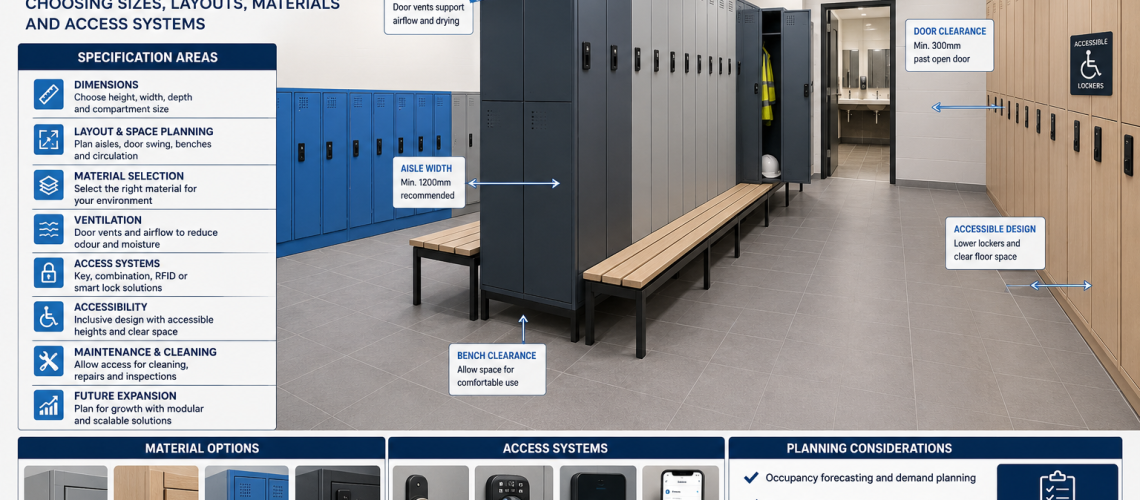
Locker specification planning helps architects, facilities managers, contractors and procurement teams choose lockers that fit the building, suit the users and remain practical to manage after installation.
A good locker specification is not just a product choice. It covers locker dimensions, layout, material, ventilation, access control, occupancy, cleaning, maintenance and future expansion. When these details are planned early, the finished locker area is easier to use, safer to manage and more cost-effective over its lifetime.
For wider layout guidance, use our Locker Planning UK guide. For access decisions, see our Locker Access Control Systems UK guide.
Quick Answer: What Should a Locker Specification Include?
A locker specification should include locker size, compartment layout, material, finish, ventilation, lock type, user model, aisle spacing, door clearance, accessibility requirements, cleaning access, maintenance access and allowance for future demand.
| Specification area | What to decide | Why it matters |
|---|---|---|
| Dimensions | Height, width, depth and compartment size | Controls capacity and usability |
| Layout | Rows, aisles, benches and door swing | Prevents congestion and blocked access |
| Materials | Steel, laminate, plastic or wet-area materials | Affects durability and cleaning |
| Ventilation | Door vents, airflow and drying needs | Reduces odour and damp storage issues |
| Locks | Key, coin, combination, RFID or smart access | Controls security and administration |
| Occupancy | Assigned, shared, hot locker or temporary use | Prevents overbuying or under-capacity |
| Maintenance | Access for repairs, cleaning and replacement | Reduces long-term disruption |
Why Locker Specification Planning Matters
Lockers are often specified too late. This creates problems during installation and daily use. Doors can clash with benches. Aisles can become too narrow. Wet-area lockers may be placed in damp environments without the right material. Locks may be chosen without considering lost keys, shared use or staff turnover.
A clear specification avoids these issues. It gives the contractor a practical brief. This gives procurement a measurable standard. It also gives facilities teams a locker system that can be cleaned, repaired, audited and expanded.
Locker Dimensions and Compartment Size
Locker dimensions should be chosen around what users need to store. Staff lockers, school lockers, PPE lockers, gym lockers and industrial lockers all need different compartment sizes.
| Locker depth | Typical use | Planning note |
|---|---|---|
| 300 mm | Small personal items, schools, compact spaces | Useful where space is limited |
| 450 mm | Workplace lockers, bags, coats and daily storage | Common general-purpose depth |
| 600 mm | PPE, uniforms, boots and larger equipment | Needs more aisle and door clearance |
For a detailed size breakdown, link this section to the Locker Depth and Projection Guide UK.
Layout, Aisles and Door Clearance
The locker layout must allow users to open doors, collect items and move safely through the space. A good layout considers aisle width, bench position, door swing, turning space and the number of people using the area at peak times.
Back-to-back locker rows can increase capacity, but they need enough circulation space. Lockers beside benches need extra clearance so users do not block each other. School and workplace changing areas also need planning for peak demand.
Useful supporting pages include the Locker Aisle Width Guide UK, Locker Door Clearance Guide UK and Locker Room Layout Planning Guide UK.
Material Selection
Material choice should match the environment. A dry office does not need the same locker material as a swimming pool, changing room, factory or healthcare area.
| Material type | Best suited to | Specification concern |
|---|---|---|
| Steel lockers | Offices, schools, warehouses and general workplaces | Durable and cost-effective for dry areas |
| Laminate lockers | Leisure, education and premium changing rooms | Good appearance and moisture resistance depending on grade |
| Plastic or wet-area lockers | Pools, spas and washdown areas | Better suited to damp or corrosive environments |
| Heavy-duty lockers | Industrial, construction and high-wear sites | Useful where impact and rough use are likely |
Ventilation and Airflow
Ventilation is important where users store clothing, shoes, PPE, towels or damp items. Door vents, perforated sections and sensible room airflow help reduce odour, trapped moisture and poor drying conditions.
Ventilation should be planned with the room use. A dry office locker area may only need standard vents. A sports or industrial changing room may need stronger airflow and more robust cleaning routines.
Fire Considerations
Locker specifications should not block fire exits, escape routes, access panels or safety equipment. Fire considerations are usually about placement, materials, route protection and avoiding obstruction.
In higher-risk areas, the specification should be checked against the building fire strategy. Lockers should not create hidden storage risks in corridors, plant areas or escape routes.
Wet and Dry Area Suitability
Wet and dry areas need different locker decisions. Dry workplaces can often use standard steel lockers. Wet changing rooms, leisure centres and poolside areas may need moisture-resistant materials, suitable fixings and lock systems that tolerate humidity.
For leisure or pool environments, link to Locker Locks for Wet Areas UK and any wet-area locker product pages.
Lock Selection and Access Systems
The lock is part of the locker specification. It affects administration, lost key handling, user behaviour and long-term running cost.
| Access type | Best for | Planning issue |
|---|---|---|
| Key locks | Assigned lockers and simple staff storage | Needs key control and replacement process |
| Combination locks | Sites wanting fewer physical keys | Needs code reset procedure |
| Coin locks | Leisure centres and public changing rooms | Needs coin/token policy |
| RFID locks | Schools, workplaces and controlled access sites | Needs credential management |
| Smart locker access | Hybrid workplaces and shared-use estates | Needs software, reporting and administration |
For lock decisions, link to Locker Locks UK, Locker Lock Selection Tool UK and Locker Management Systems UK.
Occupancy Forecasting
Locker capacity should be based on real occupancy, not only total headcount. This is especially important in hybrid workplaces, schools, shift-based sites and shared-use facilities.
Planning should consider peak usage, rotating staff, temporary users, visitors, seasonal demand and future workforce changes. A site with 200 staff may not need 200 personal lockers if shared-use and hot locker systems are managed properly. Another site may need more lockers than headcount if PPE, uniforms or department separation are required.
For this section, link to Locker Occupancy Management Systems UK.
Future Expansion Planning
A good specification leaves room for change. Extra users, new departments, altered shift patterns and changing access systems can all affect locker demand.
Future expansion planning may include spare wall space, modular locker banks, standardised lock footprints, matching finishes and consistent compartment sizes. This makes later additions easier and avoids mismatched locker areas.
Cleaning Access
Cleaning access is often missed in locker specifications. Lockers should be positioned so floors, walls, bases and adjacent areas can be cleaned without unnecessary obstruction.
In changing rooms, schools, healthcare areas and industrial workplaces, cleaning access should be treated as a core specification issue. Plinths, stands, sloping tops and layout spacing can all affect cleaning routines.
Maintenance Access
Facilities teams need access to repair locks, replace doors, tighten fixings, inspect frames and manage damaged compartments. A locker system that looks efficient on plan can become expensive if maintenance access is poor.
Specifications should allow access to lock mechanisms, end panels, fixing points and replacement parts. For technical lock planning, see the Locker Lock Compatibility Guide UK.
Accessibility Planning
Accessible locker planning should consider reach height, aisle access, door operation, lock usability, wheelchair turning space and bench position. Not every locker needs to be identical. However, the specification should include suitable accessible options for the users and building type.
For a dedicated guide, link to Locker Accessibility and DDA Planning UK.
Locker Specification Checklist
- Confirm user groups and storage needs.
- Choose locker height, width, depth and compartment type.
- Plan aisle width, door clearance and bench spacing.
- Select materials for dry, damp or high-wear areas.
- Confirm ventilation and airflow requirements.
- Check fire routes, escape routes and obstruction risks.
- Select the right lock or access system.
- Forecast occupancy and peak demand.
- Allow for future expansion.
- Plan cleaning access and maintenance access.
- Include accessible locker positions and suitable reach heights.
- Link the specification to procurement, installation and management processes.
Best Internal Links for This Page
| Link target | Suggested anchor text | Where to place it |
|---|---|---|
| /blog/locker-planning-uk-layout-space-installation-guide/ | Locker Planning UK guide | Introduction and final CTA |
| /blog/locker-depth-and-projection-guide-uk/ | Locker Depth and Projection Guide UK | Dimensions section |
| /blog/locker-aisle-width-guide-uk/ | Locker Aisle Width Guide UK | Layout section |
| /blog/locker-door-clearance-guide-uk/ | Locker Door Clearance Guide UK | Layout and access section |
| /blog/locker-access-control-systems-uk/ | Locker Access Control Systems UK | Lock selection section |
| /blog/locker-occupancy-management-systems-uk/ | Locker Occupancy Management Systems UK | Occupancy forecasting section |
| /blog/locker-management-systems-uk/ | Locker Management Systems UK | Access and operations sections |
| /Lockers.php | workplace and commercial lockers | Final CTA |
Conclusion
Locker specification planning gives a project a clear technical and operational foundation. It helps teams choose the right locker sizes, materials, layouts and access systems before installation begins.
The strongest specifications consider how the lockers will be used every day. They plan for users, cleaning, maintenance, access control, occupancy and future expansion. This creates a locker system that works for the building, the facilities team and the people using it.
For product support, visit our workplace and commercial lockers page or contact Total Locker Service for help planning a locker specification.
FAQ: Locker Specification Planning UK
What is locker specification planning?
Locker specification planning is the process of choosing locker sizes, materials, layouts, lock types and management requirements before lockers are purchased or installed.
What size lockers should I specify?
The right locker size depends on what users need to store. Small personal storage may suit compact lockers, while PPE, uniforms, bags and boots usually need deeper or larger compartments.
What locker material is best?
Steel lockers suit many dry workplaces and schools. Wet areas may need moisture-resistant lockers. Industrial sites may need heavy-duty lockers with stronger construction.
Should locker locks be specified early?
Yes. Lock choice affects key control, access management, user behaviour, maintenance and long-term running cost. It should be planned as part of the main locker specification.
How do you plan locker capacity?
Locker capacity should be based on occupancy, user groups, shift patterns, peak demand and whether lockers are assigned, shared, temporary or hot lockers.
Why is maintenance access important?
Maintenance access allows facilities teams to repair locks, replace parts, inspect damage and keep lockers working without major disruption.
Discover more from Blog Total Locker Service
Subscribe to get the latest posts sent to your email.