Locker Door Clearance Guide UK: How Much Space Do Locker Doors Need to Open? (2026)
April 29, 2026
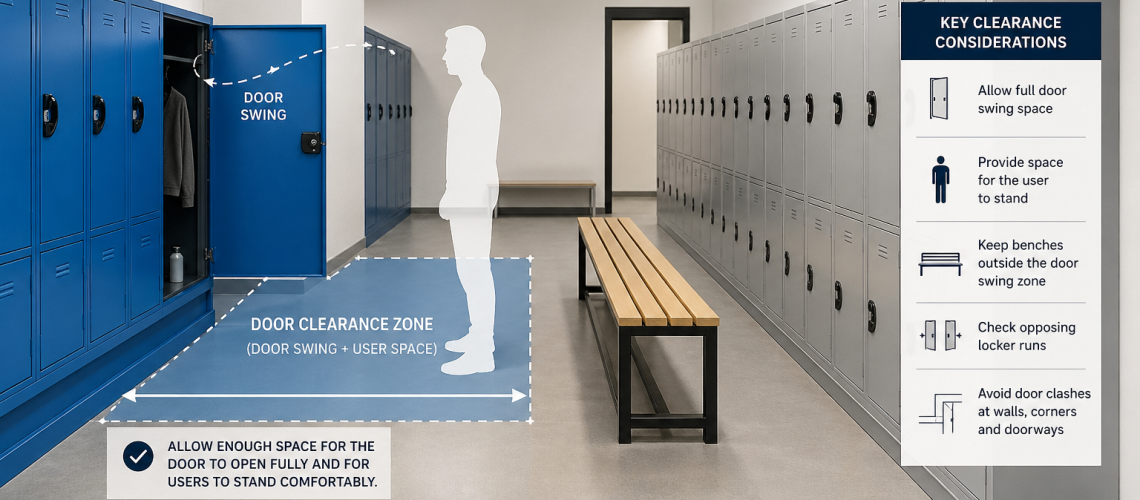
Locker door clearance is the space needed for a locker door to open safely without blocking walkways, hitting benches, clashing with nearby lockers or restricting user access. Good door clearance improves comfort, reduces congestion and helps the whole locker area work properly.
This guide explains how much opening space locker doors need, what affects door swing, where clearance problems usually happen, and how to plan locker layouts before installation.
This guide supports the wider locker room spacing guide, but focuses only on door opening space. For positioning decisions, read the locker placement guide. For room arrangement, see locker layout planning.
Quick answer: locker doors need enough clear space to open fully while leaving room for the user to stand, turn and access belongings. The required opening space depends on locker width, door type, bench position, aisle width and how many users access the area at the same time.
Locker spacing plans the whole room. Locker door clearance checks whether each door can open and be used properly. Treating them separately helps prevent layout mistakes.
What is locker door clearance?
Locker door clearance is the free space needed in front of a locker so the door can open and the user can reach inside. This space must account for the door swing, the person standing in front of the locker, and any nearby benches, walls, partitions or opposite locker runs.
A locker may physically fit into a room but still be difficult to use if the door cannot open properly. Poor clearance can make users stand sideways, block other people or leave doors projecting into busy routes.
Why locker door clearance matters
Clearance affects how the locker area works every day. It is not just a fitting detail. It changes access, movement, safety and user comfort.
- Users need room to open doors without stepping backwards into traffic
- Open doors should not hit benches, walls or other furniture
- Walkways should remain usable when lockers are being accessed
- Shared changing areas need space for several users at once
- Staff areas need enough room for bags, uniforms and personal belongings
- Schools and leisure centres need layouts that reduce door clashes and congestion
Typical locker door opening space
This guide gives practical planning advice, not a fixed legal clearance rule. Always check the locker type, room use and any site-specific accessibility or safety requirements before installation.
As a practical planning rule, allow enough clear space for the full door swing plus the person using the locker. The exact requirement depends on the locker width, door type and surrounding layout.
| Area | Clearance consideration | Planning note |
|---|---|---|
| Single locker run | Door swing plus user standing space | Keep the front access zone clear |
| Opposing locker runs | Doors may open towards each other | Allow wider circulation space |
| Locker and bench layout | Bench depth reduces usable door space | Avoid placing benches too close |
| End of locker run | Door may clash with wall or return | Check hinge side and opening direction |
| Corner layout | Two door swings can conflict | Avoid tight internal corners |
Door swing and locker width
The wider the locker door, the more space it needs when open. A full-width door usually projects further into the room than a narrow tiered locker door. This is why door clearance should be checked against the specific locker configuration, not just the overall locker run length.
Single-door lockers, two-tier lockers and six-tier lockers behave differently. A tall single-door locker may need more usable opening space than a smaller compartment door, even when both lockers have the same body width.
Where locker door clearance problems usually happen
Most clearance issues appear where lockers meet another feature. These areas should be checked before finalising the layout.
Lockers opposite lockers
Opposing locker runs need enough space for people to use both sides without doors clashing. If two users open lockers at the same time, the central aisle can narrow quickly.
Lockers near benches
Benches improve usability, but they also occupy floor space. A bench placed too close to lockers can stop doors opening fully or force users to lean awkwardly over the seat.
Lockers near walls
End lockers can be affected by walls, returns and partitions. The hinge side should be checked so the door does not strike the wall or open into a restricted corner.
Lockers near doorways
Locker doors should not open across entrances, exits or main routes. A user standing at a locker should not block people entering or leaving the room.
Corner locker layouts
Corner layouts often look efficient on a plan, but they can create door conflicts. Two lockers placed at right angles may not open comfortably if the corner is too tight.
Locker door clearance vs aisle spacing
Door clearance and aisle spacing are connected, but they are not the same thing. Aisle spacing deals with movement through the area. Door clearance deals with the working zone needed while the locker is in use.
A corridor may appear wide enough when all doors are shut. Once several doors open, the usable route can become restricted. This is why locker layouts should be assessed in the open-door condition, not only the closed-door footprint.
How to plan locker opening space
Start by marking the closed locker depth. Then add the door swing and the user standing zone. Finally, check what happens when several lockers are used at the same time.
- Confirm the locker width, depth and door type
- Check which side the door hinges from
- Allow space for the door to open without obstruction
- Keep benches outside the main door swing zone
- Protect main access routes from open-door obstruction
- Check corners, end walls and doorway conflicts
- Review the layout as if several users are present at once
Door clearance by locker type
Different locker types create different clearance risks. The table below shows the main planning considerations.
| Locker type | Clearance issue | Planning advice |
|---|---|---|
| Single-tier lockers | Larger door swing | Allow generous opening space |
| Two-tier lockers | Medium door swing with frequent use | Check shared changing areas carefully |
| Multi-tier lockers | Smaller doors but more users per run | Plan for congestion, not just door size |
| Z lockers | Longer door shape and mixed access points | Check both upper and lower access positions |
| Charging lockers | Users may stand longer while connecting devices | Keep access zones clear and controlled |
| Wet area lockers | Busy use in changing environments | Allow space for bags, towels and movement |
Bench position and door clearance
Benches should support locker use rather than block it. In many changing rooms, the best layout keeps benches close enough for comfort but far enough away to let doors open and users move naturally.
Where space is limited, consider whether the bench should sit between locker runs, against a separate wall or in a central island. The right answer depends on room width, user numbers and the type of lockers being installed.
Door clearance in schools, workplaces and leisure sites
Different environments place different pressure on locker opening space.
- Schools: peak use between lessons can create heavy congestion, so door conflicts should be reduced wherever possible
- Workplaces: staff may need room for coats, bags, PPE or uniforms, especially at shift changeover
- Gyms and leisure centres: users often carry bags, towels and wet clothing, so access space matters
- Industrial sites: bulkier clothing, boots and equipment can increase the working space needed in front of lockers
- Healthcare and staff areas: clear access helps support hygiene, organisation and controlled movement
Locker door clearance checklist
- Can the locker door open fully?
- Can a user stand in front of the locker comfortably?
- Does the open door block a walkway?
- Could the door hit a bench, wall or another locker?
- Will several users be able to use nearby lockers at once?
- Has the layout been checked with doors open, not only closed?
Common locker door clearance mistakes
- Planning from closed locker dimensions only
- Placing benches inside the door swing zone
- Using opposing locker runs without enough aisle width
- Ignoring end walls and hinge-side restrictions
- Putting lockers too close to entrances or exits
- Assuming all locker types need the same clearance
- Forgetting that several users may access lockers at the same time
When to use a wider layout
A wider layout is usually better when the locker area will be busy, shared or used by people carrying bags, uniforms, sports kit or work equipment. It is also useful where lockers sit opposite each other or where benches are included.
Trying to force too many lockers into a tight space can reduce usability. In some cases, fewer lockers with better access will work better than a higher locker count that creates constant obstruction.
Summary
If you are planning a locker installation, compare our locker range or contact us for help matching locker type, door style, bench position and room layout.
This locker door clearance guide helps separate door opening space from wider spacing, placement and layout decisions.
Locker door clearance is a small planning detail with a large effect on usability. A good layout allows doors to open fully, keeps access routes clear and gives users enough space to stand, reach and move comfortably.
For wider planning, use this guide alongside our locker room spacing guide, locker placement guide and locker room design guide.
Together, they help turn a basic locker layout into a practical storage area that works in real use.
Next steps
FAQs about locker door clearance
How much space do locker doors need to open?
Locker doors need enough space for the full door swing and the person using the locker. The exact amount depends on the locker width, door type, room layout and whether benches or opposite locker runs are nearby.
Can lockers face each other?
Lockers can face each other, but the aisle must be wide enough for doors to open and users to stand comfortably on both sides. Opposing runs need more careful planning than a single locker run against a wall.
Should benches sit in front of lockers?
Benches can sit near lockers, but they should not block the door swing or make users lean awkwardly to reach inside. Bench position should be planned with locker access, movement and user comfort in mind.
Why is door clearance different from locker spacing?
Locker spacing covers the wider layout, including aisles, walkways and bench gaps. Door clearance focuses on the space directly needed for locker doors to open and for users to access the locker safely.
What happens if locker door clearance is too small?
If clearance is too small, doors may hit benches, walls or other lockers. Users may also block walkways, struggle to reach their belongings or create congestion at busy times.
Discover more from Blog Total Locker Service
Subscribe to get the latest posts sent to your email.