How to Choose Lockers: UK Buying and Selection Guide
April 20, 2026
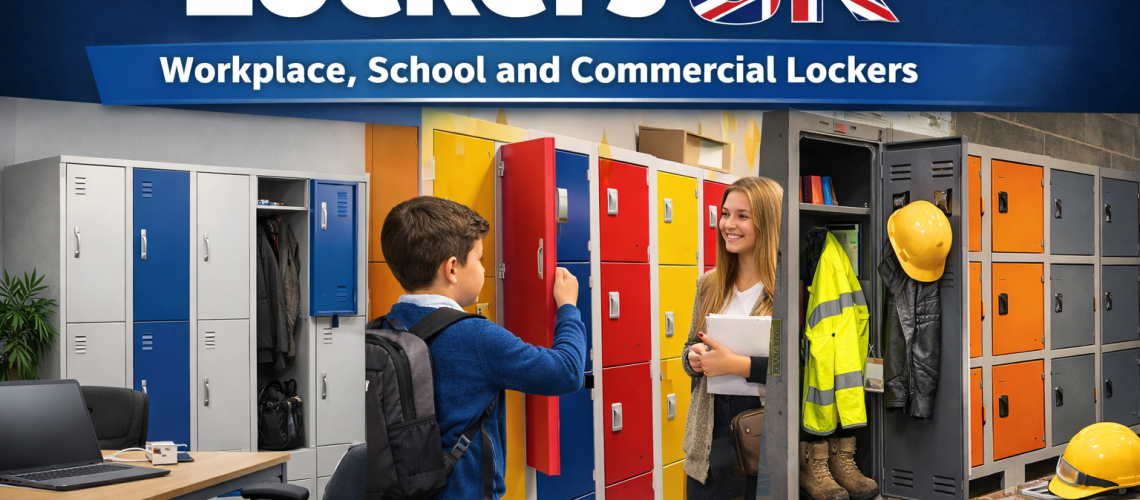
Choosing the right lockers starts with understanding how they will actually be used. A locker suitable for a school corridor may be very different from one required for a factory changing room, hybrid office, swimming pool, healthcare staff area or secure device store.
The main decisions are the items being stored, number of users, assigned or shared use, available space, environment, locker material, compartment size, lock type and long-term maintenance. Making these decisions before comparing individual products helps avoid buying lockers that are too small, unsuitable for the environment or difficult to manage.
This UK locker buying and selection guide explains the main locker types, materials, sizes, configurations, locking options and planning considerations. It is intended as the main starting point for choosing lockers before moving to the more detailed specialist guides for workplaces, schools, locker rooms, locks, materials and installation.
Total Locker Service is a UK locker supplier offering storage solutions for schools, workplaces, leisure centres and other organisations.
If you already know what you require and want to compare products, specifications and prices, browse our commercial locker range.
Quick Answer: How Do You Choose the Right Lockers?
Start with the users and what they need to store. Then establish the environment, locker capacity, compartment size, material and access method. Finally, check that the proposed lockers physically fit the room and can be installed, cleaned, maintained and used comfortably.
- Identify who will use the lockers.
- List what needs to be stored.
- Decide whether lockers are assigned or shared.
- Calculate how many storage compartments are required.
- Check the available floor and wall space.
- Identify whether the environment is dry, humid, wet or external.
- Choose a suitable locker material.
- Choose the compartment size and tier configuration.
- Select a lock that matches the user pattern.
- Check door opening, aisles, benches and access routes.
- Plan installation, cleaning and maintenance.
- Allow for future changes or additional capacity where appropriate.
Choose lockers around the people, belongings and environment first. Product range, colour and price should come afterwards.
What Are Lockers Used For?
Lockers provide individual or shared secure storage in buildings where people need somewhere to leave belongings, clothing, equipment or devices.
Common locker applications include:
- personal belongings;
- coats and outdoor clothing;
- work uniforms;
- PPE;
- bags and rucksacks;
- books and school equipment;
- sports clothing;
- helmets and footwear;
- tools and equipment;
- phones and personal electronics;
- laptops and tablets;
- and temporary visitor storage.
The items being stored should determine the internal space required. It is usually better to start with the largest regular item rather than choosing a locker configuration simply because it provides the greatest number of doors.
Step 1: Identify Where the Lockers Will Be Used
The environment is one of the strongest influences on locker specification.
| Environment | Typical storage | Main considerations |
|---|---|---|
| Schools and colleges | Books, bags, coats and sports equipment | Durability, capacity, user age and simple access |
| Offices | Bags, coats, laptops and personal belongings | Appearance, hybrid working, shared use and location |
| Factories and warehouses | Clothing, uniforms, PPE and personal items | Durability, shift patterns, changing facilities and cleaning |
| Gyms and leisure centres | Clothing, bags and personal belongings | Temporary use, moisture and high user turnover |
| Swimming pools | Clothing and valuables | Humidity, water resistance and suitable lock systems |
| Healthcare | Staff belongings, clothing and uniforms | Changing users, cleaning and controlled staff access |
| Device storage | Phones, tablets, laptops and equipment | Compartment dimensions, security and charging where required |
| External locations | Equipment or personal storage | Weather exposure and material suitability |
A locker designed for a dry office should not automatically be assumed suitable for a swimming pool, washdown area or exposed external site.
Step 2: Decide What Needs to Be Stored
Locker selection becomes much easier when the storage requirement is defined first.
Coats, uniforms and workwear
Full-height or larger compartments are often appropriate where users need hanging space for clothing, uniforms or coats.
Bags and everyday personal items
Two-tier or medium-sized compartments can provide a useful balance between storage volume and the number of users served by each locker column.
Small personal belongings
Multi-tier lockers can provide high storage density where users mainly need space for smaller bags, phones, wallets or similar personal belongings.
PPE and work equipment
Check the actual dimensions of helmets, boots, protective clothing, bags and equipment. Do not base compartment choice only on the number of employees.
Laptops and devices
For devices, check the largest equipment dimensions together with chargers, cases and cables. If devices need to charge while stored, a purpose-designed charging locker may be more appropriate than a general storage locker.
Step 3: Decide How Many Lockers You Actually Need
The number of people associated with a site is not always the same as the number of locker compartments required.
Consider:
- total number of users;
- maximum number present at the same time;
- shift overlap;
- hybrid attendance;
- assigned versus shared lockers;
- temporary users;
- visitors and contractors;
- seasonal changes;
- and sensible spare capacity.
Assigned lockers
An assigned locker is retained by one user. If 100 people each require permanent storage, approximately 100 usable compartments will normally be needed, plus any reserve capacity the organisation chooses to provide.
Shared or day-use lockers
Shared lockers can serve different users at different times. This can reduce the number of physical compartments required where attendance varies substantially, but it needs an operating process that prevents lockers becoming permanently occupied.
For detailed calculations, use our locker capacity planning guide.
Step 4: Choose the Locker Configuration
Locker configuration determines the balance between compartment volume and total user capacity.
| Configuration | Typical use | Main advantage |
|---|---|---|
| Single tier | Coats, uniforms and larger belongings | Maximum space per user |
| Two tier | Bags, clothing and general personal storage | Good balance between capacity and compartment size |
| Three or four tier | Smaller bags and personal belongings | Higher user density |
| Five or six tier | Compact personal storage | Maximum number of compartments in limited wall space |
| Z lockers | Clothing where hanging space and capacity both matter | Combines taller internal space with multiple users |
More doors do not necessarily mean a better locker installation. If the compartment becomes too small for normal belongings, users may leave bags, coats or footwear elsewhere.
Single-Tier Lockers
Single-tier lockers provide one tall compartment per locker column. They are particularly useful for:
- coats;
- workwear;
- uniforms;
- larger bags;
- longer items;
- and storage requiring hanging space.
The trade-off is capacity. A full-height locker uses considerably more vertical space per user than a multi-tier configuration.
Two-Tier Lockers
Two-tier lockers divide the column into two compartments. They can suit bags, folded clothing and personal belongings where full hanging height is not required.
They are common in workplaces, schools, changing facilities and other environments that need more capacity without reducing compartment size too aggressively.
Multi-Tier Lockers
Four, five and six-tier lockers provide more individual compartments within a given wall area.
They can work particularly well for:
- small personal belongings;
- day-use storage;
- compact bags;
- high-capacity school installations;
- leisure environments;
- and shared storage locations.
Measure representative belongings before choosing a high-tier configuration.
Step 5: Choose the Locker Material
Locker material influences durability, appearance, cleaning, moisture resistance and cost.
| Material | Typical environment | Main characteristic |
|---|---|---|
| Steel | Schools, workplaces, factories and general internal use | Durable and widely available |
| Laminate door | Offices, leisure and higher-spec interiors | Decorative finish with robust doors |
| Plastic | Wet, humid and corrosion-sensitive locations | High resistance to moisture and corrosion |
| Specialist construction | Application-dependent | Selected for specific environmental or storage requirements |
For a more detailed material comparison, see our locker materials guide.
Steel Lockers
Steel lockers are widely used for general internal storage because they provide a practical combination of strength, configuration choice and cost.
Typical applications include:
- schools;
- offices;
- factories;
- warehouses;
- staff changing areas;
- commercial premises;
- and general-purpose storage.
For commercial product options, see our metal lockers.
Laminate Door Lockers
Laminate door lockers can provide a more decorative appearance while retaining a practical locker structure.
They are often selected for:
- offices;
- premium workplace changing rooms;
- leisure facilities;
- health clubs;
- and locations where appearance is an important part of the interior design.
Plastic Lockers
Plastic lockers are particularly useful where moisture, humidity or corrosion would be a concern for conventional steel equipment.
Applications can include:
- swimming pools;
- wet changing areas;
- leisure centres;
- humid environments;
- and locations subject to frequent cleaning.
The specific material and lock should still be checked for the actual environment.
Step 6: Choose the Right Locker Size
Locker size should be based on the objects that must fit inside and the number of users the room needs to support.
Check:
- overall locker height;
- overall width;
- overall depth;
- usable internal compartment dimensions;
- door opening;
- shelves;
- coat hooks or hanging rails;
- and any internal divider.
Do not judge capacity from external dimensions alone. Shelves, lock bodies and internal fittings can reduce usable storage space.
For a dedicated comparison, see our locker sizes guide.
Locker Depth Matters
Depth affects both storage capacity and how far the locker bank projects into the room.
Deeper lockers may accommodate larger bags or equipment but also reduce circulation space. Shallower lockers can help in restricted rooms but may not suit bulky belongings.
Check the actual items being stored and the room layout rather than selecting depth in isolation.
Step 7: Decide Whether Lockers Are Assigned or Shared
This decision influences both capacity and lock selection.
| Model | How it works | Typical use |
|---|---|---|
| Assigned | One person retains the same locker | Permanent staff and pupils |
| Shared day-use | Different users occupy a locker on different occasions | Hybrid offices and flexible workplaces |
| Public use | Locker is taken temporarily and released after use | Gyms, pools and leisure centres |
| Temporary allocation | Locker is issued for a limited period | Visitors, contractors and temporary workers |
A site with 200 employees does not automatically need 200 lockers if attendance is highly flexible and the lockers are genuinely managed as shared day-use storage. Equally, shared lockers will not save space if users begin treating them as permanent storage.
Step 8: Choose the Locker Lock
The lock should match the user pattern and the amount of administration the site can support.
| Lock type | Typical strength | Main consideration |
|---|---|---|
| Keyed lock | Simple assigned storage | Keys need issuing and replacement |
| Padlock fitting | User-managed access | Padlock quality and abandoned locks |
| Mechanical combination | Keyless storage without batteries | Forgotten codes and reset procedures |
| Coin or token | Temporary leisure use | Coin/token and service management |
| Electronic PIN | Flexible keyless access | Batteries and administration |
| RFID | Contactless card, fob or wristband access | Credential compatibility |
| Smart system | Shared and centrally managed storage | Software, infrastructure and administration |
For the full comparison, use our locker locking systems guide.
Keyed Locker Locks
Keyed locks remain a strong choice where users retain the same locker for long periods and key management is straightforward.
Before ordering, decide whether management needs master-key access and how replacement keys will be controlled.
Combination Locker Locks
Combination locks remove the need to issue an ordinary user key. Mechanical versions avoid battery maintenance, while electronic versions can provide additional operating modes and management functions.
The site still needs a clear procedure for forgotten codes and authorised override.
RFID and Smart Locker Access
RFID and smart locker systems become attractive where users change frequently or already carry compatible cards, fobs or wristbands.
More advanced systems can support shared allocation, temporary access, occupancy information and central administration. Those features should solve a genuine operational problem rather than being added solely because they are available.
Step 9: Plan the Locker Layout
A locker can be suitable in isolation and still perform badly when installed in the wrong location.
Consider:
- locker depth;
- door swing;
- aisle space;
- users standing in front of open doors;
- opposing locker rows;
- benches;
- room doors;
- columns and radiators;
- cleaning access;
- maintenance access;
- lighting;
- visibility;
- and the busiest period of use.
For the full planning process, use our Locker Planning UK guide.
Allow for Locker Door Opening
Locker doors project into the circulation area when open. This matters particularly where two locker banks face each other or benches occupy the same room.
Check the proposed layout with doors shown in the open position rather than treating lockers as fixed rectangular blocks on a floor plan.
Think About Peak-Time Use
A locker area may work perfectly when one or two people use it and become congested when a shift ends, a school break begins or a leisure class finishes.
Ask:
- How many users arrive together?
- How long do they remain in front of the lockers?
- Do they need to change clothing?
- Are benches required?
- Will bags be placed on the floor?
- Will people entering cross those leaving?
The busiest realistic period is usually more useful for layout planning than average daily use.
Accessibility and User Comfort
Locker areas should be practical for the people expected to use them. Avoid designing every decision around the easiest-to-reach middle compartments.
Depending on the users and site, consider:
- lower and more easily reached compartments;
- lock controls that users can operate comfortably;
- clear access in front of the locker;
- circulation space around benches and doors;
- clear numbering and identification;
- good lighting;
- and whether particular users require a different locker position or configuration.
Accessibility should be considered as part of the complete room and building design rather than treating the locker as an isolated product.
Step 10: Plan Installation Before Ordering
Before placing a large order, confirm how the lockers will reach their final position and what is required for installation.
- Measure doorways and access routes.
- Check stairs and lifts where relevant.
- Confirm the delivery and unloading arrangement.
- Check the floor condition.
- Check walls where fixing is required.
- Allow for skirting, pipework and services.
- Confirm final locker positions.
- Check whether plinths, stands or sloping tops are required.
- Plan how the area will remain accessible during installation.
Detailed installation planning should be carried out before the lockers arrive, particularly for large or occupied sites.
Step 11: Consider Cleaning and Maintenance
A locker installation needs to remain practical after the initial fit-out.
Plan how staff will:
- clean locker surfaces;
- reach floors around and beneath the installation;
- inspect hinges;
- check door alignment;
- replace damaged locks;
- replace keys;
- change electronic-lock batteries;
- replace number labels;
- and access the locker safely for repairs.
Cleaning and periodic inspection help identify loose hinges, damaged doors, worn locks and minor faults before they develop into larger problems.
Locker Ventilation
Ventilation can be important where lockers store clothing, footwear, uniforms or damp items.
The requirement depends on:
- what is stored;
- how long items remain inside;
- room ventilation;
- locker construction;
- and the environment.
Ventilated doors, perforations or other designs may help in suitable applications, but the complete room conditions should also be considered.
Step 12: Think About Future Changes
Locker requirements can change as organisations grow, staffing patterns alter or buildings are refurbished.
Consider:
- whether additional lockers may be required;
- whether departments may move;
- whether assigned lockers could become shared;
- whether the organisation may later introduce electronic access;
- whether replacement locks and parts are available;
- and whether the selected range can be expanded consistently later.
A modest amount of planned spare capacity can be easier to manage than discovering immediately after installation that every compartment is already allocated.
Choosing Lockers for Schools
School lockers need to balance durability, storage capacity, ease of use and the available corridor or room space.
Consider:
- student age;
- bags, books and coats;
- sports equipment;
- number of pupils;
- assigned versus shared use;
- locker height and reach;
- lock management;
- supervision;
- corridor or room layout;
- and resistance to frequent daily use.
For education-specific selection, use our school lockers guide.
Choosing Lockers for Workplaces
Workplace locker requirements vary considerably between an office, warehouse, factory and staff changing facility.
Start with what employees actually bring to work:
- coats;
- bags;
- uniforms;
- boots;
- PPE;
- helmets;
- laptops;
- personal belongings;
- and work equipment.
Then consider shift patterns, hybrid attendance, assigned or shared storage and changing-room requirements.
For the specialist workplace guide, see Workplace Lockers UK.
Choosing Lockers for Gyms and Leisure Centres
Leisure lockers usually have frequent user turnover and may operate differently from permanently assigned staff lockers.
Consider:
- temporary public use;
- wet or humid conditions;
- bags and clothing;
- user throughput;
- coin, combination, RFID or electronic access;
- wristband systems;
- cleaning;
- and maintenance access.
The locker material and lock should both be suitable for the actual changing environment.
Choosing Lockers for Factories and Warehouses
Industrial locker installations often need to accommodate more than everyday personal belongings.
- Workwear
- PPE
- Boots
- Helmets
- Personal items
- Tools or equipment where appropriate
Shift patterns and peak changing periods can have a major effect on both capacity and room layout.
Choosing Lockers for Offices and Hybrid Workplaces
Office storage has changed as fixed desks and permanent daily attendance have become less universal.
Ask whether staff need:
- permanent assigned storage;
- day-use lockers;
- bookable lockers;
- shared lockers;
- laptop storage;
- charging;
- space for coats;
- or storage close to hot-desking areas.
Do not automatically reduce compartment size because lockers are shared. The belongings still need to fit.
Charging Lockers vs Standard Lockers
If the requirement includes charging phones, tablets, laptops or tools while they are stored, use a purpose-designed charging solution.
A standard personal locker and a charging locker solve different problems. Charging lockers need suitable electrical provision, internal power equipment and appropriate installation planning.
Locker Accessories and Finishing Options
The locker cabinet is only one part of the complete installation.
Depending on the site, useful additions can include:
- stands or legs;
- plinths;
- sloping tops;
- locker numbering;
- number plates;
- key fobs;
- coat hooks;
- shelves;
- benches;
- replacement keys;
- master keys;
- and replacement or upgraded locks.
Specify accessories at the planning stage where possible rather than treating them as an afterthought.
Replacement Parts and Long-Term Support
Commercial lockers may remain in service for many years, so availability of replacement components can affect whole-life value.
Common future requirements include:
- replacement locker keys;
- replacement locks;
- cams;
- master keys;
- number plates;
- coat hooks;
- hinges;
- doors;
- and lock conversion components.
Keeping a basic record of locker manufacturer, model, lock type and key series can make future maintenance considerably easier.
Whole-Life Cost Matters More Than Purchase Price Alone
When comparing locker quotations, consider the complete expected cost of ownership.
- locker purchase price;
- delivery;
- installation;
- accessories;
- replacement keys;
- replacement locks;
- batteries where applicable;
- cleaning;
- maintenance;
- repair parts;
- and likely service life.
A cheaper locker that performs poorly in the intended environment can cost more over its service life than a better-specified product.
Common Locker Buying Mistakes
- Choosing lockers by price before defining the requirement.
- Specifying the number of doors without checking compartment size.
- Ignoring the largest item users need to store.
- Choosing lockers from total headcount rather than realistic demand.
- Ignoring assigned versus shared operation.
- Choosing the wrong material for a wet or humid environment.
- Ignoring door swing.
- Ignoring locker depth.
- Failing to consider peak-time congestion.
- Selecting the lock without planning how it will be managed.
- Assuming electronic access removes administration.
- Ignoring cleaning access.
- Ignoring accessibility and user reach.
- Failing to check delivery access.
- Failing to plan future repairs and replacement parts.
- Ordering a large quantity before confirming the specification works in practice.
Locker Buying Checklist
- Who will use the lockers?
- How many users are there?
- How many are present at peak times?
- What must fit inside each compartment?
- Are coats or uniforms stored?
- Are bags stored?
- Is PPE stored?
- Are devices stored?
- Is charging required?
- Are lockers assigned or shared?
- Is the environment dry?
- Is it wet or humid?
- Is the installation outdoors?
- What locker material is appropriate?
- What compartment size is required?
- What tier configuration is appropriate?
- How deep can the lockers be?
- What lock type suits the users?
- Who manages lost keys or forgotten codes?
- Is master or override access required?
- How much wall and floor space is available?
- How far do locker doors project when open?
- Are benches required?
- How busy is the area at peak times?
- Are users of different heights and abilities considered?
- Can floors and locker surfaces be cleaned easily?
- How will the lockers be delivered into the building?
- What fixing or installation work is required?
- Are replacement locks, keys and parts available?
- Is additional future capacity likely?
A Simple Step-by-Step Locker Selection Process
- List the user groups.
- Record the belongings each group needs to store.
- Measure representative large items.
- Establish peak user demand.
- Choose assigned or shared operation.
- Identify dry, wet, humid or external conditions.
- Select the appropriate material family.
- Choose the compartment configuration.
- Check internal dimensions.
- Choose the access method.
- Define management and override procedures.
- Measure the available room.
- Position locker banks.
- Check locker depth.
- Show doors in their open positions.
- Allow for users standing in front of lockers.
- Check benches and circulation.
- Consider accessibility and reach.
- Plan cleaning and maintenance access.
- Check delivery and installation routes.
- Identify required accessories.
- Check replacement-part support.
- Allow sensible future capacity.
- Compare suitable commercial locker ranges.
- Confirm the final specification before ordering.
Which Locker Guide Should You Read Next?
- Workplace Lockers UK – staff storage, workplaces and industrial use.
- School Lockers UK – education-specific locker selection.
- Locker Materials – steel, laminate and plastic comparison.
- Locker Sizes UK – dimensions and tier configurations.
- Locker Capacity Planning – calculating how many compartments are required.
- Locker Planning UK – layout, space and installation planning.
- Locker Room Design UK – complete changing and locker room design.
- Locker Locking Systems – keys, combinations, RFID and smart access.
- Commercial Lockers – compare available locker products and ranges.
Locker Buying and Selection FAQs
How do I choose the right lockers?
Start with who will use the lockers and what they need to store. Then consider the number of users, assigned or shared use, environment, compartment size, material, lock type, available room space and long-term maintenance.
What type of locker is best?
The best locker depends on the application. Full-height lockers suit coats and uniforms, multi-tier lockers provide higher capacity for smaller belongings, plastic lockers can suit wet environments and charging lockers are designed for secure powered device storage.
What size locker do I need?
Choose the locker size from the largest items users regularly need to store. Consider internal dimensions rather than overall cabinet dimensions alone, and balance storage volume against the number of users that must be accommodated.
Are single-tier or multi-tier lockers better?
Neither is universally better. Single-tier lockers provide more individual storage space, while multi-tier lockers allow more users to be accommodated within the same wall area. The correct choice depends on what users need to store.
What are lockers commonly made from?
Commercial lockers are commonly made from steel, plastic or combinations using laminate doors. Material choice should reflect the environment, required appearance, moisture exposure, cleaning and expected use.
What locker material is best for wet areas?
Plastic and other purpose-designed moisture-resistant locker systems are commonly chosen for wet and humid areas. The complete locker and lock specification should be checked for the actual environment.
What lock should I choose for lockers?
Keyed locks often suit permanently assigned lockers. Combination locks remove ordinary user keys, coin locks suit some temporary leisure applications, while PIN, RFID and smart systems can suit shared or more actively managed storage.
How many lockers do I need?
The required number depends on peak demand, whether lockers are permanently assigned or shared, shift overlap, hybrid attendance, temporary users and the amount of spare capacity required. Total headcount alone is not always the correct number.
What is the difference between assigned and shared lockers?
An assigned locker remains with one regular user, while a shared locker can be used by different people at different times. Shared storage can reduce physical capacity requirements where attendance varies but requires suitable access and management procedures.
What should I consider when planning locker room space?
Consider locker depth, open door projection, users standing in front of lockers, aisle space, opposing rows, benches, room doors, cleaning access, accessibility and the number of people using the area at peak times.
How should lockers be maintained?
Lockers should be cleaned and periodically inspected for damaged locks, loose hinges, door-alignment problems, damaged fittings and other wear. Electronic systems may also require battery and credential management.
Should accessibility be considered when choosing lockers?
Yes. Locker location, compartment height, user reach, lock controls, circulation space and access around the locker should be considered as part of the overall room and building design.
Can existing lockers be upgraded instead of replaced?
Often, yes. Sound lockers can frequently be fitted with replacement locks, upgraded locks, new keys, number plates and other replacement components. The condition of the locker and compatibility of the proposed parts should be checked first.
Choose the Locker Around the Requirement
The strongest locker specification begins with the people and belongings, not the product catalogue.
Identify what needs to be stored, how many users need storage at the busiest time, whether lockers are assigned or shared and what conditions the equipment will face. Then choose the compartment configuration, material and locking system before finalising the room layout and installation.
This approach helps avoid lockers that are too small, unsuitable for the environment, awkward to use or unnecessarily complicated to manage.
Once the requirement is defined, browse the Total Locker Service commercial locker range to compare suitable options for schools, workplaces, leisure facilities, healthcare, industry and other UK environments.
For help selecting lockers or discussing a project, call Total Locker Service on 01284 749211 or email sales@totallocker.co.uk.
Discover more from Blog Total Locker Service
Subscribe to get the latest posts sent to your email.