How to Stop Lost Locker Keys: Alternatives to Traditional Key Locks
May 7, 2026
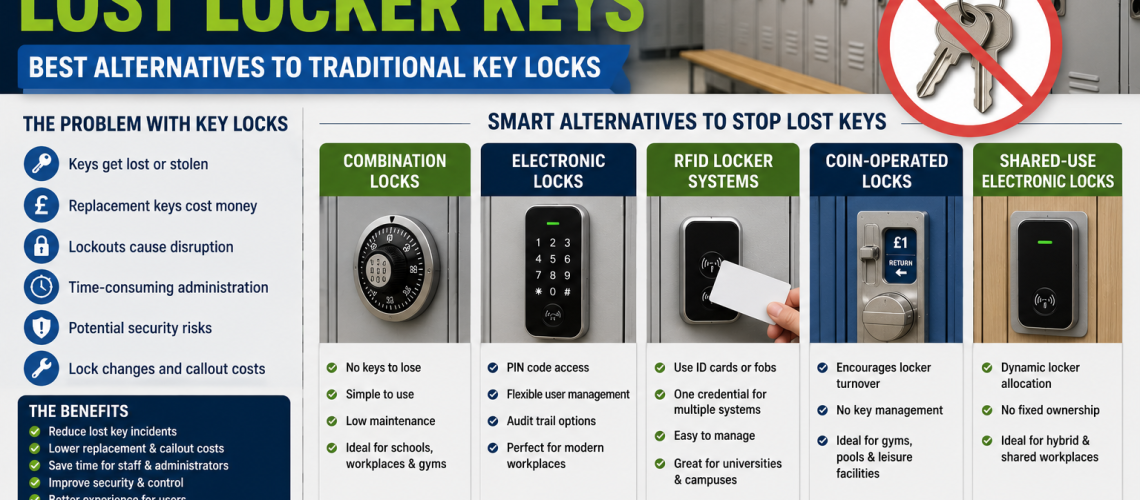
Lost locker keys create one of the biggest ongoing problems in schools, workplaces, gyms and changing rooms. Replacing keys, opening locked lockers, changing barrels and managing spare keys can quickly become expensive and time-consuming. Many organisations now use alternative locker lock systems specifically designed to reduce or eliminate lost key problems.
This guide explains how to stop lost locker key problems in UK workplaces, schools, gyms, leisure centres and commercial facilities. It compares the best alternatives to traditional key locks, including combination locker locks, electronic locker locks, RFID systems and shared-use locker technologies.
Quick answer: Mechanical combination locks and electronic locker locks are usually the best alternatives to keyed locker systems because they remove the need for physical keys while reducing administration and replacement costs.
For broader guidance, see our Locker Locks UK master hub, compare keyed vs combination locker locks or explore mechanical vs electronic locker locks.
Why lost locker keys become a major problem
Traditional keyed locker systems are simple and reliable, but they create long-term management problems when users lose keys.
Common issues include:
- Replacement key costs
- Master key callouts
- Lock barrel replacement
- Locker downtime
- Administration workload
- Security concerns after lost keys
- Staff disruption
Lost key problems become even larger in environments with:
- High user turnover
- Large student populations
- Shared locker systems
- Public access facilities
- Temporary users
Best alternatives to traditional locker keys
| Locker Lock Type | Main Benefit | Best For |
|---|---|---|
| Mechanical combination locks | No physical keys | Schools and workplaces |
| Electronic locker locks | Flexible digital access | Modern workplaces and gyms |
| RFID locker systems | Card or fob access | Universities and leisure centres |
| Coin-operated locks | Temporary shared use | Gyms and public facilities |
| Shared-use electronic lockers | Dynamic locker allocation | Hybrid workplaces |
Why combination locker locks reduce lost key problems
Mechanical combination locker locks are one of the most effective ways to remove physical key management entirely.
Main advantages include:
- No keys to lose
- No replacement key costs
- Lower administration
- Good durability
- No batteries required
- Simple long-term operation
Combination locks are especially popular in:
- Secondary schools
- Factories
- Warehouses
- Staff changing rooms
- Shared-use lockers
However, organisations may still need procedures for:
- Forgotten codes
- Combination resets
- Emergency locker access
Read our Locker Combination Locks UK guide.
How electronic locker locks solve key management problems
Electronic locker locks eliminate traditional keys completely while adding flexible access management.
Electronic systems may use:
- PIN codes
- RFID cards
- Key fobs
- Mobile phone access
- Temporary user credentials
- Central management systems
Main advantages include:
- No physical keys
- Fast locker reassignment
- Flexible shared-use operation
- Reduced manual administration
- Potential audit trail features
Electronic systems work especially well in:
- Hybrid offices
- Universities
- Premium gyms
- Healthcare facilities
- Modern commercial workplaces
However, electronic systems may also require:
- Battery replacement
- Software management
- Technical servicing
- Higher installation costs
See our Electronic Locker Locks UK guide.
Why RFID locker systems are growing
RFID locker systems allow users to unlock lockers using existing ID cards, wristbands or access credentials.
This removes the need for separate locker keys entirely.
RFID systems are increasingly used in:
- Universities
- Corporate offices
- Leisure centres
- Healthcare facilities
- Smart buildings
Main advantages include:
- Single credential access
- Fast user management
- Easy reassignment
- Reduced physical key handling
- Modern user experience
When coin-operated locker locks help reduce lost keys
Coin-operated locker locks are useful in temporary-use environments where lockers are shared rather than permanently assigned.
These systems reduce lost key problems because lockers are not normally tied to long-term users.
Coin-operated systems are especially common in:
- Gyms
- Swimming pools
- Leisure centres
- Visitor facilities
Read our Coin-Operated Locker Locks UK guide.
Can workplaces keep keyed locker systems?
Yes. Many workplaces still successfully use keyed locker systems, especially for assigned long-term staff lockers.
However, organisations can reduce lost key problems by improving:
- Key tracking procedures
- Master key control
- Duplicate key management
- Locker assignment policies
- Spare key storage
Some workplaces also use hybrid systems where permanent staff use keyed lockers while visitors use shared electronic lockers.
See our Keyed Locker Locks UK guide and replacement locker key service.
How lost locker keys affect operational costs
Lost locker keys create hidden operational costs beyond simply cutting replacement keys.
Costs may include:
- Facilities staff time
- Lock replacement
- Emergency opening procedures
- Administration workload
- Security risks
- User disruption
- Locker downtime
Large organisations often save money long term by moving to lower-administration locker systems.
Best locker lock recommendations by environment
| Environment | Recommended Alternative to Keys |
|---|---|
| Secondary schools | Mechanical combination locks |
| Hybrid offices | Electronic shared-use lockers |
| Universities | RFID locker systems |
| Gyms and leisure centres | Coin-operated or electronic locks |
| Factories and warehouses | Combination locker locks |
| Healthcare facilities | Electronic or RFID locker systems |
How to choose the best alternative to locker keys
Start with the operational behaviour of the site.
- Need simple low-maintenance lockers? → Combination locks
- Need flexible shared lockers? → Electronic locker systems
- Need smart credential integration? → RFID locker systems
- Need temporary public-use lockers? → Coin-operated systems
- Need assigned long-term staff lockers? → Managed keyed or combination locks
- Need reduced administration? → Electronic or combination systems
You can also explore our broader Storage Systems UK guide for wider workplace and facility storage planning.
Related locker lock and management guides
- Locker Locks UK master hub
- Keyed locker locks UK
- Locker combination locks UK
- Electronic locker locks UK
- Coin-operated locker locks UK
- Shared-use vs assigned-use locker locks
- Mechanical vs electronic locker locks
- Locker locks product range
Frequently Asked Questions
What is the best alternative to locker keys?
Mechanical combination locks and electronic locker locks are usually the best alternatives because they remove the need for physical keys.
How can schools stop lost locker keys?
Many schools reduce lost key problems by switching to mechanical combination locker locks.
Are electronic locker locks better than keyed locks?
Electronic locker locks can reduce administration and eliminate physical keys, but they usually cost more and require additional maintenance.
Do combination locker locks eliminate lost keys?
Yes. Combination locks remove physical keys entirely, although users may still forget their access codes.
What are RFID locker systems?
RFID locker systems allow users to unlock lockers using access cards, wristbands or digital credentials instead of physical keys.
Why are lost locker keys expensive?
Lost locker keys create costs through replacement keys, lock changes, staff time, administration and operational disruption.
Can workplaces still use keyed locker locks?
Yes. Keyed locker systems still work well for assigned long-term staff lockers when supported by good key management procedures.
Which locker systems require the least administration?
Mechanical combination locks and some electronic locker systems usually reduce administration compared to traditional keyed locker systems.
Discover more from Blog Total Locker Service
Subscribe to get the latest posts sent to your email.