How to Manage Locker Access in High-Turnover Environments
May 7, 2026
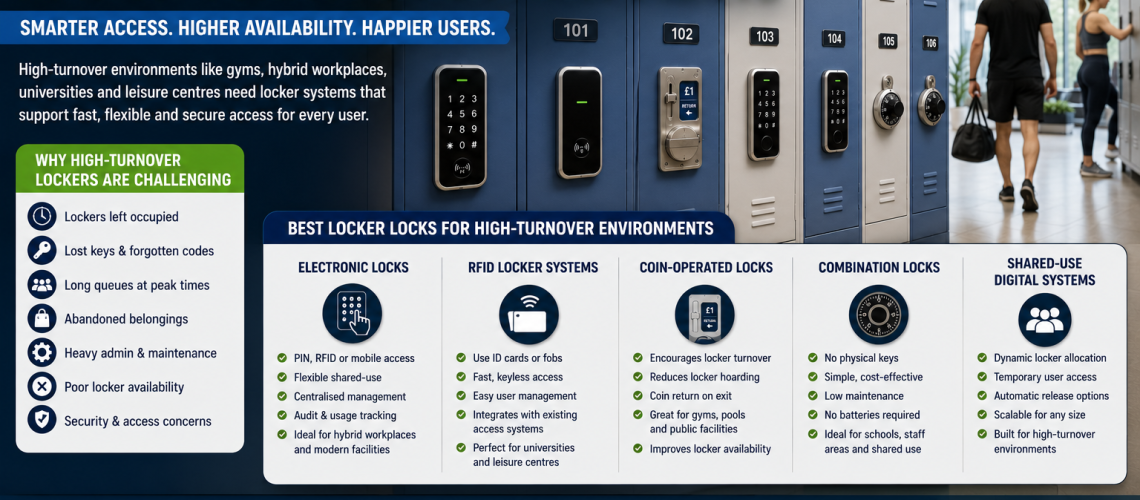
High-turnover locker environments create unique operational challenges. When large numbers of people use lockers temporarily throughout the day, poor locker management can quickly lead to unavailable lockers, lost keys, abandoned belongings, security issues and heavy administration workloads. The right locker lock system and access strategy can dramatically improve locker availability, user flow and operational control.
This guide explains how to manage locker access in high-turnover environments across UK gyms, leisure centres, hybrid workplaces, universities, healthcare facilities and commercial sites. It compares the best locker lock systems, shared-use strategies and access control approaches for environments where lockers are constantly changing users.
Quick answer: Electronic locker systems, coin-operated locks and shared-use combination locker systems are usually the best options for high-turnover environments because they reduce administration, improve locker circulation and support temporary user access.
For broader guidance, see our Locker Locks UK master hub, compare shared-use vs assigned-use locker systems or explore mechanical vs electronic locker locks.
What is a high-turnover locker environment?
A high-turnover locker environment is any site where lockers are regularly used by different people throughout the day rather than being permanently assigned to one user.
Examples include:
- Gyms and leisure centres
- Swimming pools
- Hybrid offices
- Hot-desking workplaces
- Universities
- Healthcare changing rooms
- Visitor facilities
- Temporary contractor areas
In these environments, locker availability and user turnover become more important than permanent locker ownership.
Why high-turnover locker systems become difficult to manage
Without the right locker management system, high-turnover environments can quickly experience operational problems.
Common issues include:
- Lockers remaining occupied unnecessarily
- Abandoned belongings
- Lost locker keys
- Long queues during peak periods
- Poor locker availability
- Heavy administration workload
- User confusion
- Security concerns
The larger the facility and the faster the user turnover, the more important locker access management becomes.
Best locker lock systems for high-turnover environments
| Locker Lock Type | Main Advantage | Best For |
|---|---|---|
| Electronic locker locks | Flexible shared access | Hybrid offices and premium gyms |
| Coin-operated locker locks | Encourages locker turnover | Leisure centres and swimming pools |
| Mechanical combination locks | No physical keys | Shared staff and education lockers |
| RFID locker systems | Fast user identification | Universities and smart buildings |
| Shared-use digital systems | Dynamic locker allocation | Modern workplaces |
Why electronic locker locks work well in high-turnover environments
Electronic locker locks are one of the strongest solutions for high-turnover environments because they support flexible shared access without physical key management.
Electronic systems may allow:
- Temporary user access
- Automatic locker release
- RFID card integration
- PIN-based operation
- Central locker management
- Shared-use allocation modes
- Usage tracking
Main advantages include:
- No lost keys
- Fast user turnover
- Lower manual administration
- Flexible locker reassignment
- Modern user experience
Electronic systems work especially well in:
- Hybrid offices
- Premium gyms
- Healthcare facilities
- Universities
- Corporate workplaces
Read our Electronic Locker Locks UK guide.
How coin-operated locker locks improve locker turnover
Coin-operated locker locks are specifically designed to encourage users to empty lockers after use.
This helps prevent lockers remaining occupied unnecessarily during busy periods.
Coin-operated systems reduce:
- Locker hoarding
- Abandoned lockers
- Peak-time shortages
- Staff intervention
Coin-operated systems are especially effective in:
- Swimming pools
- Public leisure centres
- Visitor attractions
- Shared changing rooms
Read our Coin-Operated Locker Locks UK guide.
Why combination locker locks reduce administration
Mechanical combination locker locks work well in high-turnover environments because they eliminate physical key management.
Main advantages include:
- No keys to issue
- No replacement key workload
- Simple user operation
- Low maintenance
- No batteries required
Combination systems are commonly used in:
- Universities
- Staff changing rooms
- Shared workplace lockers
- Education environments
However, organisations still need procedures for:
- Forgotten codes
- Emergency access
- Combination resets
Read our Locker Combination Locks UK guide.
How RFID locker systems improve user flow
RFID locker systems allow users to access lockers using ID cards, wristbands or integrated credentials.
This speeds up user flow and reduces the need for separate locker keys.
RFID systems are especially useful in:
- Universities
- Leisure centres
- Healthcare sites
- Smart office buildings
Main benefits include:
- Fast access
- Reduced user confusion
- Central credential management
- Improved locker circulation
- Reduced physical key handling
Why locker layout also affects high-turnover access
Locker access problems are not caused only by lock systems. Poor locker layouts can also create congestion and user frustration.
Facilities should also consider:
- Aisle widths
- Peak user flow
- Wet and dry zones
- Locker grouping
- Changing room congestion
- Queue management
For planning guidance, see:
- Locker layout planning guide UK
- Locker room spacing guide UK
- Locker room traffic flow and congestion planning UK
Best locker management recommendations by environment
| Environment | Recommended Locker System |
|---|---|
| Hybrid offices | Electronic shared-use lockers |
| Gyms | Coin-operated or electronic systems |
| Swimming pools | Coin-return locker locks |
| Universities | RFID or electronic locker systems |
| Healthcare facilities | Electronic assigned/shared systems |
| Visitor facilities | Coin-operated lockers |
How to improve locker management in high-turnover environments
Start with the operational behaviour of the facility rather than focusing only on the locks themselves.
- Need high locker turnover? → Coin-operated systems
- Need flexible user allocation? → Electronic locker systems
- Need lower administration? → Combination locker locks
- Need fast user flow? → RFID locker systems
- Need hybrid workplace support? → Shared-use electronic lockers
- Need reduced lost key problems? → Keyless locker systems
You can also explore our broader Storage Systems UK guide for wider workplace and facility storage planning.
Related locker lock and planning guides
- Locker Locks UK master hub
- Shared-use vs assigned-use locker systems
- Electronic locker locks UK
- Coin-operated locker locks UK
- Locker combination locks UK
- How to stop lost locker keys
- Locker room spacing guide UK
- Locker locks product range
Frequently Asked Questions
What is a high-turnover locker environment?
A high-turnover locker environment is any site where lockers are regularly used by different people throughout the day rather than being permanently assigned.
Which locker locks are best for high-turnover environments?
Electronic locker locks, coin-operated systems and shared-use combination locks are usually the best options for high-turnover environments.
Why do gyms use coin-operated locker locks?
Coin-operated locker locks encourage users to empty lockers after use, helping improve locker availability during busy periods.
Are electronic locker systems good for hybrid workplaces?
Yes. Electronic locker systems work extremely well in hybrid workplaces because they support flexible shared locker allocation.
How do RFID locker systems work?
RFID locker systems allow users to access lockers using ID cards, wristbands or integrated digital credentials instead of physical keys.
Which locker systems require the least administration?
Combination locker locks and many electronic shared-use systems usually reduce administration compared to traditional keyed locker systems.
Can locker layout affect user flow?
Yes. Poor locker layouts can create congestion, queues and poor circulation during peak periods even if the locker lock system itself works well.
How can organisations reduce lost locker keys?
Many organisations reduce lost key problems by switching to electronic, RFID or combination locker systems that remove physical key management.
Discover more from Blog Total Locker Service
Subscribe to get the latest posts sent to your email.