April 29, 2026
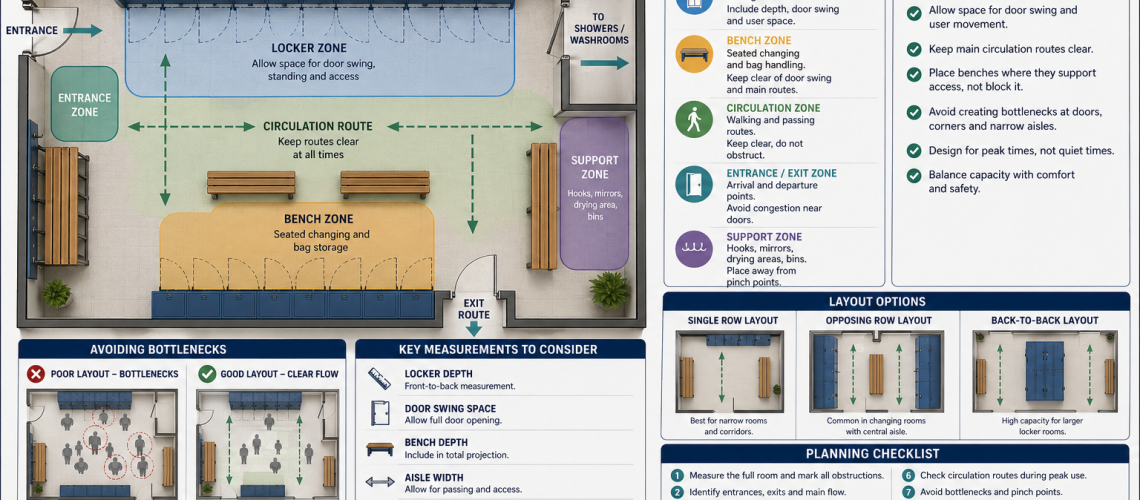
Locker room layout planning turns measurements into a practical working space. A good layout balances lockers, benches, circulation routes, door clearance and user movement so the room works safely during normal daily use.
Blog storage solutions
April 29, 2026
Locker room layout planning turns measurements into a practical working space. A good layout balances lockers, benches, circulation routes, door clearance and user movement so the room works safely during normal daily use.
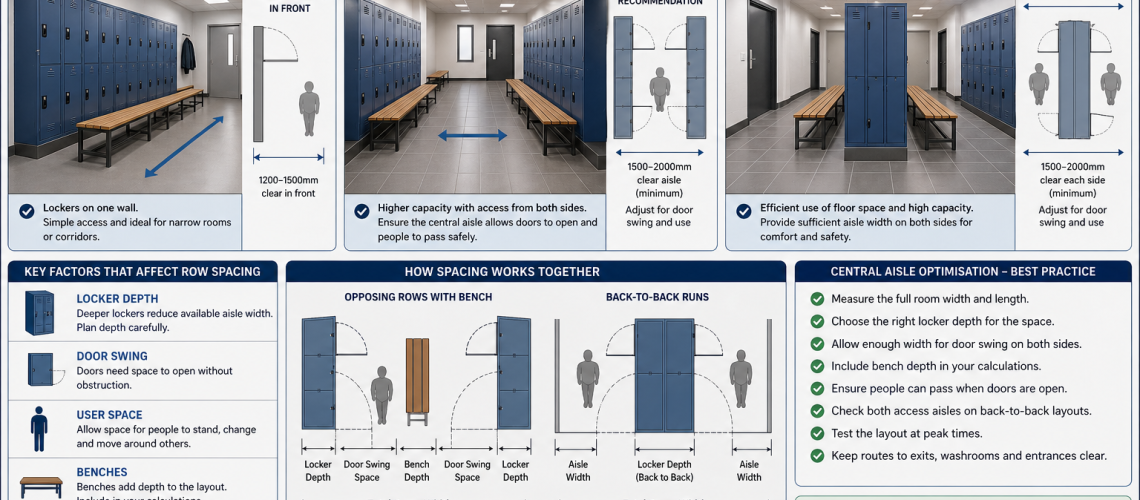
Locker row spacing is the planned space between locker runs, walls, benches and walkways. Good row spacing allows users to open doors, stand, pass, sit and move safely without creating congestion.
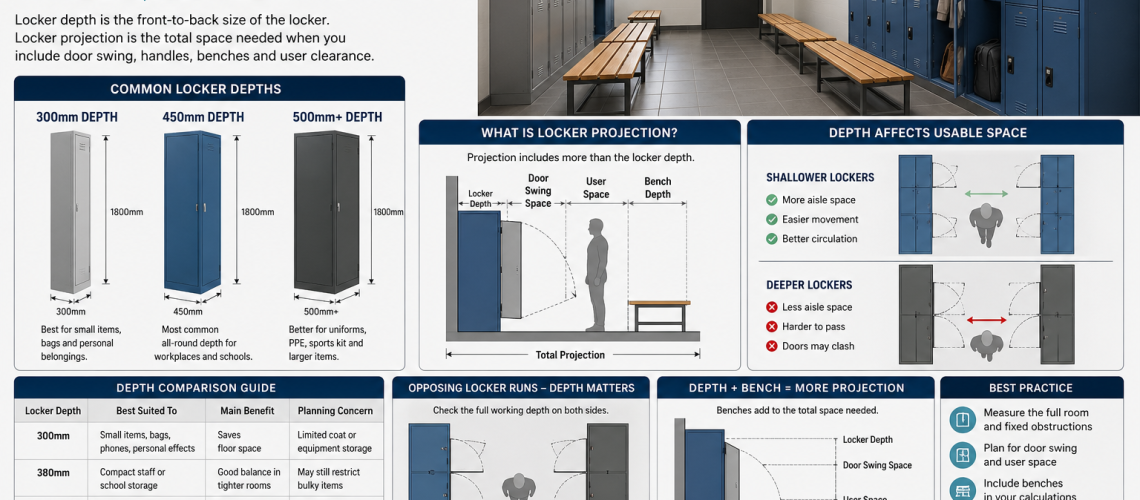
Locker depth is the front-to-back size of a locker. Locker projection is the total space the locker occupies once door swing, handles, locks, plinths, benches and user clearance are considered. Planning both measurements helps create safer, easier and more practical locker rooms.
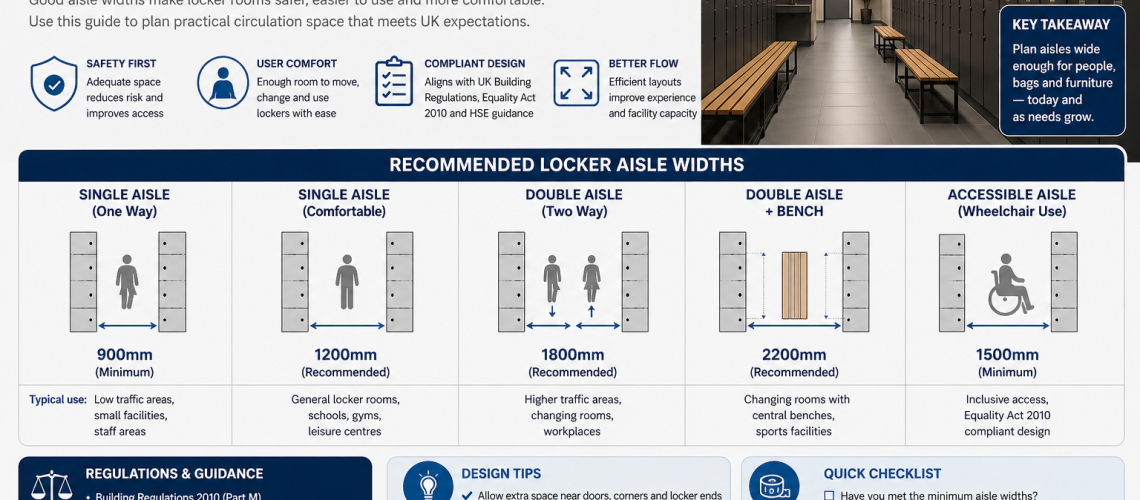
Locker aisle width is the clear space between locker runs, benches, walls or other fixed features. Good aisle width gives users room to walk, open locker doors, stand safely and access belongings without causing congestion.
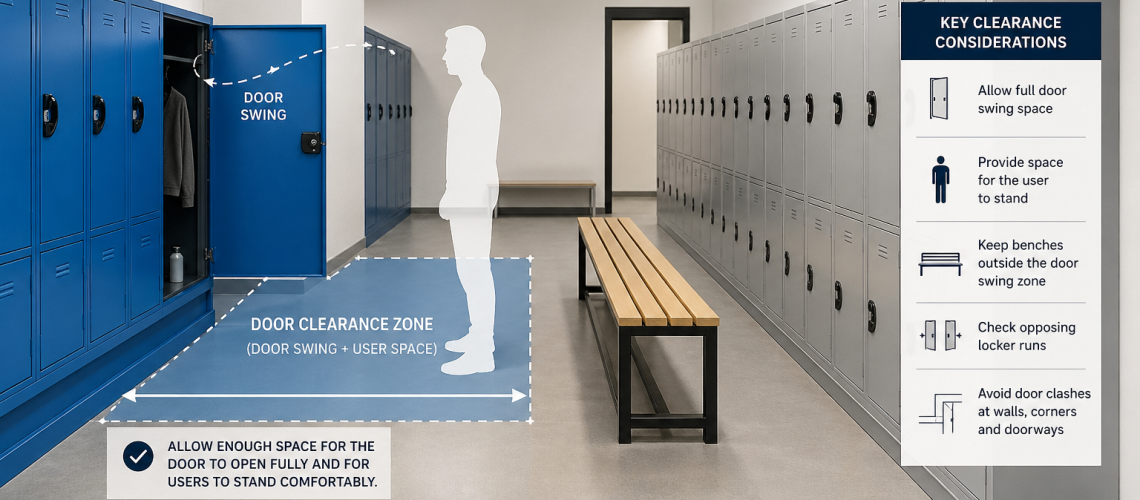
Locker door clearance is the space needed for a locker door to open safely without blocking walkways, hitting benches, clashing with nearby lockers or restricting user access. Good door clearance improves comfort, reduces congestion and helps the whole locker area work properly.

Locker placement is the process of deciding exactly where lockers, benches and access routes should sit within a changing room, workplace or shared storage area. Good placement improves flow, reduces congestion and makes the space easier to use from day one.
April 22, 2026
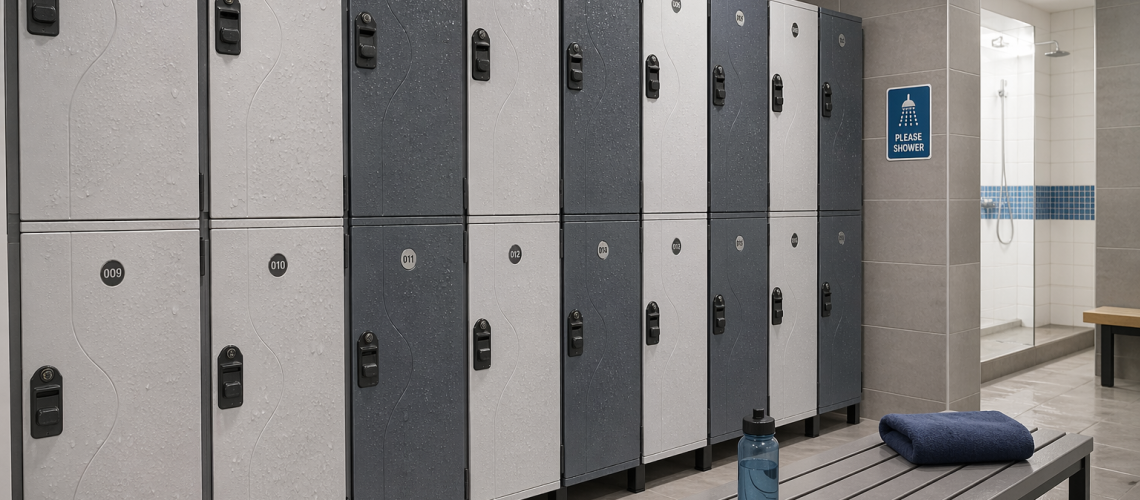
Wet area lockers are designed for environments where moisture, humidity and frequent cleaning make standard locker choices less suitable. They are commonly used in gyms, pools, spas, leisure centres and changing rooms where lockers need to stay practical, secure and durable in damp conditions.
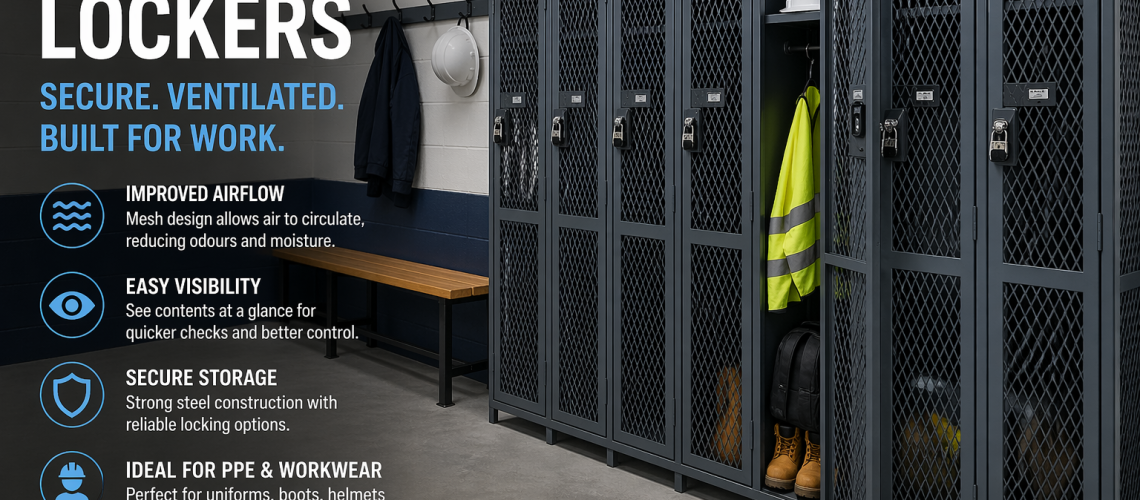
Mesh lockers are ventilated storage lockers made with a mesh steel construction that allows air to circulate while still providing secure storage. They are often used in workplaces, schools, gyms, warehouses and industrial settings where visibility, airflow and robust construction are important.

Z lockers are space-saving lockers designed to provide hanging room and personal storage within a narrower footprint than two full-height lockers placed side by side. They are commonly used in workplaces, schools, leisure facilities and changing areas where users need room for clothing, bags and personal items but floor space is limited.
April 21, 2026
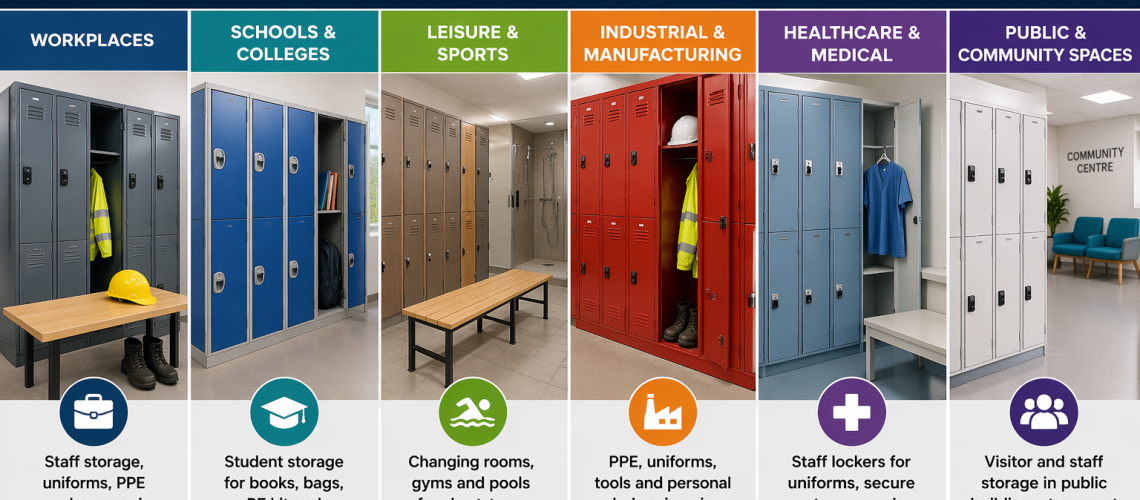
Lockers are used in a wide range of UK environments because they provide secure, organised storage for personal belongings, uniforms, equipment, devices and specialist items. From schools and workplaces to gyms, hospitals and industrial sites, the right locker system helps control clutter, improve security and support day-to-day organisation.