Locker Keys UK: Replacement Keys, Key Numbers, Ordering and Locker Lock Compatibility
May 14, 2026
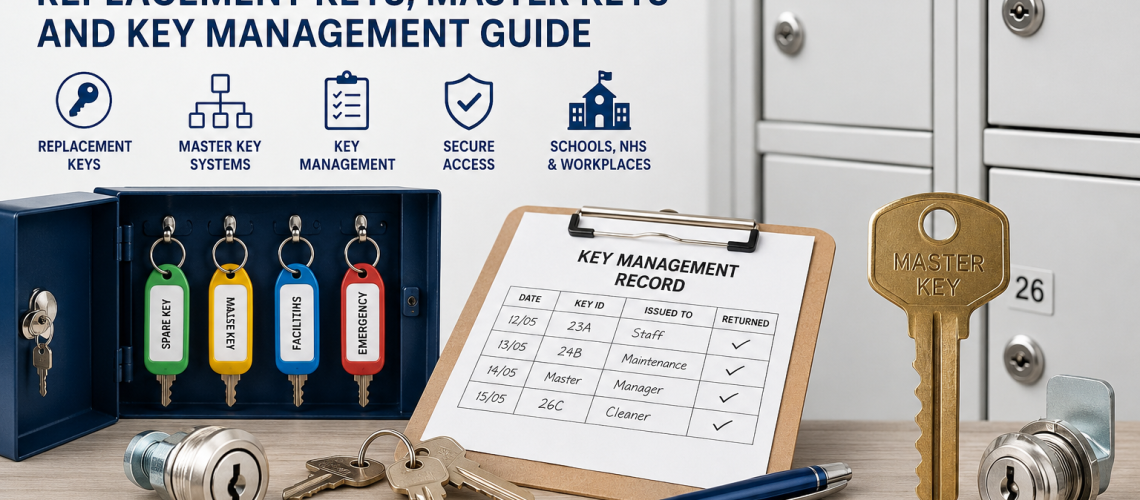
Locker keys are a small part of a locker system, but they control access, security, daily use and long-term locker management. When a key is lost, broken or copied incorrectly, one locker can quickly become a problem for a whole workplace, school, gym, warehouse or public building.
Total Locker Service supplies replacement locker keys, locker locks and key management support for organisations across the UK. This guide explains how to identify locker keys, how key numbers work, how to order replacement keys, and how locker keys connect to wider locker lock compatibility.
What Are Locker Keys?
Locker keys are cut to match the lock fitted to a locker door. They may operate a cam lock, coin lock, latch lock, key lock, master-keyed system or specialist locker access mechanism. In most cases, a replacement locker key can be supplied when the correct key number, lock number or lock information is known.
For many UK sites, locker keys are not just spare parts. They are part of access control, staff welfare, student storage, visitor management, asset protection and facilities administration.
Replacement Locker Keys UK
Replacement locker keys are commonly needed when keys are lost, damaged, stolen, snapped, returned late or missing after a staff change. Schools, leisure centres, factories and offices often need repeat replacement keys because lockers are used by many people over many years.
- Replacement locker keys cut to code
- Spare locker keys for schools and workplaces
- Bulk locker key orders
- Keys for staff lockers, student lockers and changing room lockers
- Support for common locker lock brands
- Help identifying unknown locker locks
The most important detail is the key number or lock number. This code normally tells the supplier which key pattern is needed.
How to Identify a Locker Key
Before ordering a replacement locker key, check the existing key, lock face and locker door. Many locker keys have a stamped or engraved number. Some locks also show the same number on the front of the barrel.
| Where to Check | What to Look For | Why It Matters |
|---|---|---|
| Existing key | Stamped number or code | Usually the quickest way to order a replacement |
| Lock face | Barrel number or manufacturer mark | Helps identify the correct key series |
| Locker door | Locker number or asset number | Useful for site records, but not always the key code |
| Lock body | Brand name or lock shape | Helps with compatibility checks |
| Site key register | Recorded lock and key numbers | Useful for schools, gyms and workplace estates |
Locker Key Numbers Explained
A locker key number is the code used to identify the cut of the key. It is not always the same as the locker door number. This is one of the most common ordering mistakes.
For example, locker door 24 may not need key 24. The lock fitted to that door may use key number 361, 7421, A018 or another manufacturer-specific code. Always check the actual key or lock before ordering.
How to Order Replacement Locker Keys
- Find the key number or lock number.
- Check whether the lock has a brand name or code.
- Confirm how many copies are required.
- Send the key number, lock photo or key photo if identification is needed.
- Confirm the delivery address and urgency.
- Keep a record of the replacement keys supplied.
Common Locker Key and Lock Types
Different locker systems use different locks. The correct replacement key depends on the lock type, key profile and key series.
| Lock Type | Common Use | Replacement Key Notes |
|---|---|---|
| Cam lock | Workplace lockers, school lockers and staff lockers | Often ordered by key number or lock face number |
| Coin return lock | Leisure centres, gyms and changing rooms | May need lock brand, coin value and key code |
| Coin retain lock | Public-use lockers | Key and lock series must match |
| Latch lock | Padlock-operated lockers | Usually no locker key unless an added lock is fitted |
| Master-keyed lock | Schools, workplaces and managed estates | Requires careful control and record keeping |
| Electronic lock | Modern locker systems | May use override keys, codes, RFID or digital credentials |
Common Locker Lock Brands
Many UK lockers use lock systems from established lock manufacturers. Identifying the brand can make replacement faster and more accurate.
- Lowe & Fletcher locker keys
- Ojmar locker keys
- Ronis locker keys
- Euro-Locks locker keys
- Camlock Systems locker keys
- ASSA ABLOY locker systems
If the brand is unknown, a clear photograph of the lock face, existing key and locker door can help identify the correct replacement route.
Locker Key Compatibility
Locker key compatibility means the replacement key must match the correct lock series, key profile and lock mechanism. A similar-looking key may not operate the lock if the profile or cut is wrong.
Compatibility becomes especially important when older lockers have been repaired, refurbished or fitted with replacement locks over time. A site may have several lock types across the same locker estate.
Lost Locker Keys
Lost locker keys should be handled quickly, especially in schools, gyms, offices, factories and healthcare buildings. A lost key may be a simple access issue, but it can also create a security risk if the locker contains personal items, PPE, documents, equipment or controlled materials.
- Check whether the locker is assigned or shared-use.
- Confirm whether the key is lost or held by another user.
- Use a master key only if authorised.
- Record the incident in the site key register.
- Order a replacement key or replace the lock if security is compromised.
Broken Locker Keys
A locker key can bend, snap or wear down after repeated use. If a broken key is stuck inside the lock, do not force it. Forcing the lock can damage the barrel and may increase the repair cost.
Where possible, keep the broken key parts. The number may still be readable, and the key shape may help identify the correct replacement.
Master Keys for Lockers
Master keys allow authorised staff to open multiple lockers in a managed system. They are useful for schools, leisure centres, workplaces, facilities teams and emergency access procedures.
However, master keys must be controlled carefully. A lost master key can affect many lockers, not just one door. Sites should keep a clear record of who holds each master key and when it is used.
Bulk Locker Key Orders
Bulk locker key orders are useful when a site has many missing keys, a new locker allocation cycle, a school term change, a refurbishment project or a locker audit. Ordering in bulk can also help rebuild a proper key register.
- Schools replacing missing student locker keys
- Gyms preparing changing room lockers for reopening
- Workplaces reallocating staff lockers
- Warehouses issuing PPE lockers
- Facilities teams standardising key records
Locker Keys for Schools
School locker keys need simple administration. Pupils lose keys, lockers change users, year groups move, and estates teams need quick access when lockers are abandoned or damaged.
A school should keep a key register that records locker number, key number, user allocation, spare key status and lock condition. This makes replacement easier and reduces delays at the start of term.
Locker Keys for Workplaces
Workplace locker keys support staff storage, uniform control, PPE storage, changing rooms and hybrid working. In larger workplaces, key control should sit inside the wider locker management process.
When staff leave, change roles or move departments, locker keys should be returned, recorded and reassigned correctly. This prevents unused lockers, missing keys and avoidable lock replacements.
Locker Keys for Gyms and Leisure Centres
Gyms and leisure centres often use coin locks, wet-area locks, wrist straps, numbered keys and public-use changing room lockers. These environments need durable keys and clear replacement procedures because lockers are used heavily every day.
Where keys are regularly lost or damaged, it may be worth reviewing the lock type, numbering system and access control method.
When Should You Replace the Lock Instead?
Replacement keys are not always the right answer. Sometimes the lock should be replaced instead.
| Problem | Best Action |
|---|---|
| Key lost but code known | Order a replacement key |
| Key snapped but lock still works | Remove broken key and order a replacement |
| Lock barrel damaged | Replace the lock |
| Security risk after key loss | Replace or re-key the lock |
| No key number or lock information | Send photos for identification |
| Repeated key loss | Review key management or upgrade the lock system |
Locker Key Management
Locker key management is the process of recording, issuing, returning, replacing and auditing locker keys. It is especially important for larger locker estates.
- Record every locker number and key number.
- Keep spare keys in a secure location.
- Control master key access.
- Audit missing keys regularly.
- Replace damaged locks before they fail.
- Review whether key locks remain suitable for the site.
Internal Locker Key Register Example
| Locker Number | Key Number | Location | User Type | Status | Action Needed |
|---|---|---|---|---|---|
| 001 | 4582 | Staff changing room | Assigned | In use | No action |
| 002 | 4583 | Staff changing room | Assigned | Missing key | Order replacement |
| 003 | 4584 | Warehouse PPE area | Shared | Lock stiff | Inspect lock |
| 004 | 4585 | Visitor lockers | Shared | Available | No action |
Locker Keys and Locker Estate Management
Locker keys should not be managed separately from the wider locker estate. A good locker system connects keys, locks, users, locations, condition scores, occupancy and replacement planning.
This is especially important for multi-site organisations, schools, NHS estates, councils, leisure operators and large workplaces. Without key records, locker management becomes reactive. With good records, facilities teams can plan repairs, reduce downtime and control access properly.
Related Locker Guides
- Locker Locks UK
- Locker Lock Compatibility Guide UK
- Locker Lock Replacement Guide UK
- Locker Key Management Systems UK
- Locker Access Control Systems UK
- Locker Estate Management UK
Frequently Asked Questions About Locker Keys
Can I order replacement locker keys by number?
Yes. In many cases, replacement locker keys can be supplied from the key number or lock number. The number must relate to the key or lock, not just the locker door number.
Is the locker number the same as the key number?
Not always. The locker number may identify the door or location. The key number identifies the key cut or lock series. Always check the key or lock face before ordering.
What if I do not know the key number?
If the key number is unknown, send a clear photo of the lock face, existing key, locker door and any markings. This can help identify the correct replacement route.
Can I order locker keys in bulk?
Yes. Bulk locker key orders are common for schools, gyms, workplaces, warehouses and managed estates.
Should I replace the key or the whole lock?
If the lock is working and the correct key number is known, a replacement key is often enough. If the lock is damaged, insecure or unknown, lock replacement may be better.
Order Locker Keys from Total Locker Service
Total Locker Service can help with replacement locker keys, key identification, locker lock compatibility and wider locker access control. Whether you manage a few staff lockers or a large locker estate, accurate key control helps keep storage secure, organised and easy to manage.
Discover more from Blog Total Locker Service
Subscribe to get the latest posts sent to your email.