Locker Lock Maintenance Guide UK: Inspection, Lubrication, Batteries and Preventative Care
May 8, 2026
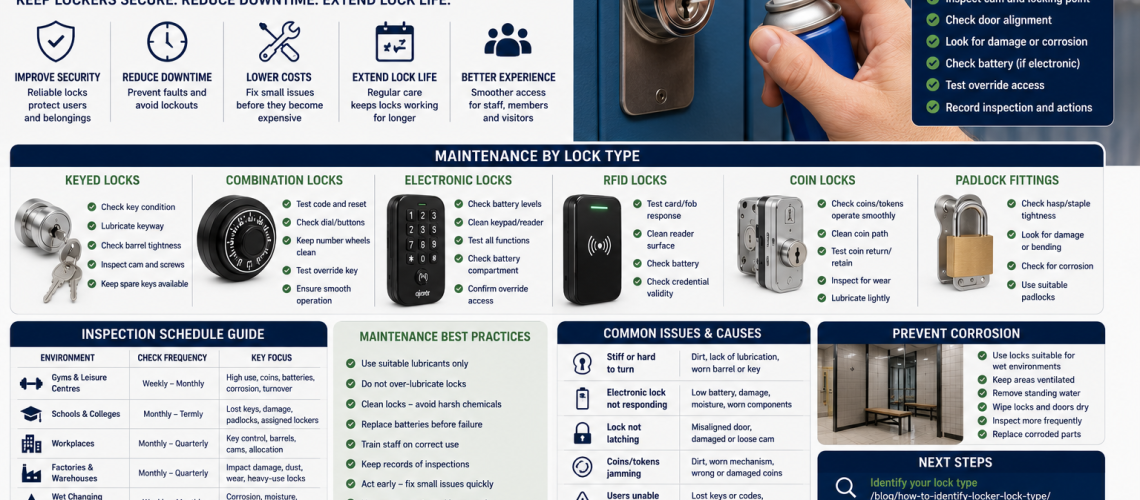
Locker lock maintenance helps keep lockers secure, reliable and easy to manage. Regular checks can prevent jammed locks, lost access, worn keys, damaged cams, flat batteries, corrosion and avoidable locker downtime across workplaces, schools, gyms, leisure centres and staff changing rooms.
This guide explains how to maintain locker locks in the UK, including inspection schedules, lubrication, key control, cam checks, electronic locker lock maintenance, RFID lock care, battery management, corrosion prevention and when to repair, replace, retrofit or upgrade old locker locks.
Quick answer: Locker locks should be inspected regularly for loose fixings, worn keys, stiff barrels, damaged cams, weak batteries, corrosion and poor door alignment. High-use sites such as gyms, schools and leisure centres should check locker locks more often than low-use staff areas.
This page forms part of the Locker Locks UK master guide. For parts and repairs, see locker lock parts and spares UK, or view our locker locks range.
Why locker lock maintenance matters
Many locker lock failures develop gradually. A lock may become stiff, a cam may loosen, a key may wear, or an electronic lock may show low battery warnings before it fails completely.
Regular maintenance helps reduce:
- Jammed locker locks
- Lost access to occupied lockers
- Broken keys
- Loose lock barrels
- Damaged cams
- Flat electronic lock batteries
- Corrosion in wet changing rooms
- Unplanned maintenance calls
- Locker downtime
- Early lock replacement costs
Good maintenance also improves user confidence and reduces the amount of time staff spend dealing with lockouts or access problems.
Locker lock maintenance schedule
The right inspection frequency depends on use level, environment and lock type. A public gym locker system usually needs more frequent checks than a small staff locker area.
| Environment | Suggested check frequency | Priority checks |
|---|---|---|
| Gyms and leisure centres | Weekly to monthly | Coin locks, electronic batteries, corrosion and locker turnover |
| Schools and colleges | Monthly to termly | Lost keys, damaged locks, padlock fittings and assigned locker checks |
| Workplaces | Monthly to quarterly | Key control, barrels, cams and staff locker allocation |
| Factories and warehouses | Monthly to quarterly | Impact damage, padlock fittings, dust, wear and heavy-use locks |
| Wet changing rooms | Weekly to monthly | Corrosion, moisture damage, sticking locks and door alignment |
| Low-use staff areas | Quarterly to annually | Basic lock operation, keys, cams and loose fixings |
This table is a practical guide only. Sites with heavy use, misuse, moisture or frequent lockouts should inspect more often.
Basic locker lock inspection checklist
A simple inspection can identify many problems before the lock fails.
- Check that the lock opens and closes smoothly.
- Check that the key, code, coin, card or fob works correctly.
- Look for loose lock bodies or spinning barrels.
- Check the cam engages properly behind the frame.
- Inspect hinges and door alignment.
- Check for bent doors or damaged frames.
- Look for corrosion, dirt or moisture damage.
- Check that master keys or override tools work.
- Confirm that locker numbers and user records match.
- Record locks that need repair, parts or replacement.
If the lock type is unclear, use our guide on how to identify your locker lock type.
Maintaining keyed locker locks
Keyed locker locks are simple and reliable when keys, barrels and cams are kept in good condition.
Check keyed locks for:
- Worn or bent keys
- Stiff key turning
- Loose lock barrels
- Keys that do not fully enter the lock
- Damaged or missing key numbers
- Loose cam screws
- Cams failing to engage properly
- Signs of forced use or tampering
If a key is lost but the lock still works, replacement may be cheaper than changing the whole lock. See replacement locker keys cut to code UK.
Locker lock lubrication
Locker lock lubrication can help some mechanical locks operate smoothly, but the wrong product or too much lubricant can attract dirt and make problems worse.
Good lubrication practice includes:
- Use a suitable lock lubricant rather than heavy oil.
- Apply only a small amount.
- Avoid over-lubricating lock barrels.
- Do not force stiff keys.
- Clean visible dirt before lubricating.
- Check whether the lock manufacturer gives specific guidance.
- Replace worn locks rather than repeatedly lubricating failing mechanisms.
If a lock remains stiff after cleaning and suitable lubrication, the barrel, cam or lock body may need replacement.
Maintaining combination locker locks
Combination locker locks need clear code management and smooth dial or button operation. Forgotten codes are often a management issue rather than a mechanical fault.
Check combination locks for:
- Stiff dials or buttons
- Users unable to reset codes
- Codes being forgotten regularly
- Loose lock bodies
- Damaged number wheels
- Public-use locks not resetting properly
- Override keys or reset tools working correctly
If codes are regularly forgotten, the site may need clearer instructions, better reset procedures or an alternative lock type. See locker combination locks UK.
Electronic locker lock maintenance
Electronic locker locks need mechanical checks and electrical maintenance. Battery condition is one of the most important factors.
Electronic locker lock maintenance should include:
- Checking battery levels or low-battery warnings
- Replacing batteries before failure
- Testing keypad or RFID response
- Checking override access
- Inspecting battery compartments
- Checking for moisture or impact damage
- Cleaning keypads or reader surfaces carefully
- Testing public-use or private-use settings
- Confirming user instructions are visible
Electronic locks can reduce administration, but they still need planned maintenance. See electronic locker locks UK and locker lock management systems UK.
RFID locker lock maintenance
RFID locker locks need regular checks to make sure cards, fobs, wristbands and reader units remain reliable.
Check RFID systems for:
- Reader response time
- Cards, fobs or wristbands not registering
- Damaged credentials
- Battery condition
- Override access
- Public-use or private-use settings
- Locker allocation records
- Reader surface damage
- Compatibility with existing access credentials
RFID locks are strongest when credential management is clear. For more detail, read RFID locker locks UK.
Coin-operated locker lock maintenance
Coin-operated locker locks are often used in gyms, swimming pools and leisure centres. They need regular checks because public-use environments create high wear.
Check coin locks for:
- Coins or tokens jamming
- Coin return issues
- Coin retain mechanisms working correctly
- Dirt or debris in the coin path
- Corrosion in wet areas
- Damaged key override function
- Loose lock bodies
- Heavy wear from repeated use
If coin locks jam regularly, replacement or upgrade may be more cost-effective than repeated repair. See coin-operated locker locks UK.
Padlock fitting maintenance
Padlock fittings are simple, but they can still fail if hasps, staples, plates or fixings become bent or loose.
Check padlock fittings for:
- Bent hasps
- Loose staples
- Damaged fixing screws
- Corrosion
- Oversized padlocks causing strain
- Abandoned padlocks
- Door misalignment
- Sharp edges or damaged fittings
For more detail, read padlock fittings for lockers UK.
Preventing locker lock corrosion in wet areas
Wet changing rooms, swimming pools, spas and leisure centres create higher corrosion risk. Moisture can affect lock barrels, coin mechanisms, electronic components, cams, screws and hinges.
To reduce corrosion risk:
- Use locks suitable for the environment.
- Inspect wet-area lockers more often.
- Keep changing rooms ventilated where possible.
- Remove standing water around locker areas.
- Check for rust on cams, screws and fittings.
- Clean dirt, residue and moisture from lock faces.
- Replace heavily corroded parts before failure.
- Review whether the current lock type suits wet use.
Wet-area lock issues are often environmental as well as mechanical. If corrosion keeps returning, the lock type, locker material or room conditions may need review.
Battery management for electronic locker locks
Battery management is essential for electronic, RFID and some smart locker locks. A flat battery can cause access problems and increase staff workload.
Good battery management includes:
- Recording battery replacement dates
- Checking low-battery warnings
- Replacing batteries before peak failure periods
- Using suitable battery types
- Testing locks after battery replacement
- Keeping emergency override procedures available
- Training staff on battery access
- Checking battery compartments for corrosion or damage
High-use locker areas should have a planned battery routine rather than waiting for individual locks to fail.
Maintenance for high-turnover locker environments
High-turnover locker areas need more frequent maintenance because locks are used repeatedly by different people throughout the day.
Common high-turnover environments include:
- Gyms
- Leisure centres
- Swimming pools
- Universities
- Hybrid offices
- Visitor storage areas
- Shared staff locker rooms
These sites should prioritise reset reliability, clear user instructions, override access, spare parts and routine inspection. See managing locker access in high-turnover environments.
When should locker locks be replaced instead of maintained?
Maintenance is not always enough. Some locks should be replaced when wear, damage or repeated faults make continued servicing uneconomical.
Replace locker locks when:
- The lock repeatedly jams.
- The barrel is badly worn.
- The cam no longer secures properly.
- Keys snap or wear quickly.
- Electronic locks repeatedly lose power or fail to respond.
- Corrosion has damaged the mechanism.
- Spare parts are no longer available.
- The lock type no longer suits how the lockers are used.
- The site needs public-use, shared-use or keyless access.
For replacement guidance, read locker lock replacement guide UK, retrofit locker locks UK and locker lock upgrade guide UK.
Locker lock maintenance record checklist
Facilities teams should keep simple records for larger locker installations.
- Locker number
- Lock type
- User or department where relevant
- Date inspected
- Fault found
- Action taken
- Parts replaced
- Battery replacement date
- Key number or lock code where relevant
- Next inspection date
Good records help identify repeated faults, weak lock types and areas where upgrades may save administration time.
Related locker lock guides
- Locker Locks UK master guide
- Locker lock replacement guide UK
- Retrofit locker locks UK
- Locker lock upgrade guide UK
- Locker lock management systems UK
- Common locker lock problems and fixes
- Electronic locker locks UK
- RFID locker locks UK
- Coin-operated locker locks UK
- Locker locks product range
Frequently Asked Questions
How often should locker locks be maintained?
Locker locks should be checked regularly based on use level. Gyms, leisure centres, schools and wet changing rooms usually need more frequent checks than low-use staff locker areas.
Should locker locks be lubricated?
Some mechanical locker locks can benefit from suitable lock lubricant, but heavy oil or over-lubrication can attract dirt. Always use a suitable product and avoid forcing stiff keys.
How do you maintain electronic locker locks?
Electronic locker lock maintenance includes checking batteries, testing keypads or RFID readers, inspecting battery compartments, checking override access and confirming public-use or private-use settings.
Why do locker locks jam?
Locker locks may jam because of worn barrels, damaged keys, loose cams, poor door alignment, dirt, corrosion or internal mechanism wear.
How can gyms maintain locker locks?
Gyms should check locker locks frequently for heavy wear, coin jams, battery condition, user damage, corrosion, reset reliability and locker turnover issues.
How do you prevent locker lock corrosion?
Use locks suitable for wet areas, inspect regularly, keep locker rooms ventilated where possible, remove moisture, clean lock faces and replace corroded cams, screws or fittings early.
When should locker locks be replaced?
Locker locks should be replaced when they repeatedly jam, parts are worn, corrosion is severe, electronic locks fail often, or the current lock type no longer suits how the lockers are used.
Discover more from Blog Total Locker Service
Subscribe to get the latest posts sent to your email.