Medicine Storage Rules in Care Homes UK: Cabinets, Compliance and Safe Handling Guide
May 5, 2026
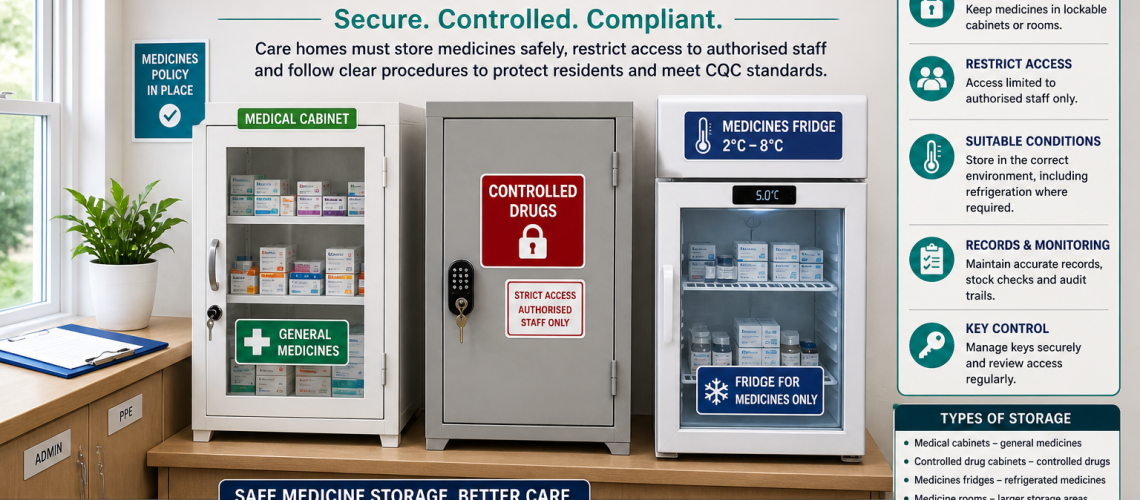
Medicine storage in UK care homes must be secure, controlled and supported by clear procedures. Medicines should be accessible only to authorised staff, stored in suitable conditions and managed with accurate records, stock checks and safe handling processes.
This guide explains medicine storage rules for UK care homes, including secure cabinet requirements, controlled drug storage, temperature control, key management, stock control and common compliance risks.
Start here: This page forms part of the main Medical Cabinets UK: Medicines Storage, Compliance and Security Guide, which explains how to choose, plan and manage secure medicine storage.
Who this guide is for
- Care home managers reviewing medicine storage.
- Registered managers preparing for inspections.
- Facilities teams choosing medical cabinets or medicine rooms.
- Staff responsible for medicine keys, stock checks or access routines.
CQC medicine storage expectations
CQC expects care homes to store medicines securely, restrict access to authorised staff, manage storage keys safely, monitor storage conditions where needed and keep clear medicine records. These expectations should be reflected in the care home’s medicines policy and daily procedures.
Quick answer: Care homes must store medicines securely, restrict access to authorised staff and use appropriate storage such as lockable medical cabinets, controlled drug cupboards and medicines fridges where required.
For a wider overview of cabinet types, compliance and storage selection, read the medical cabinets UK guide.
Note: This guide supports storage planning only. Always follow your organisation’s medicines policy, risk assessments and current regulatory guidance.
Where general medicines are stored, a lockable medical cabinet is usually required. Controlled drugs and refrigerated medicines will need more specialist storage depending on risk and policy.
Choose your care home medicine storage setup
| What are you storing? | Recommended storage | Main control needed |
|---|---|---|
| General medicines | Lockable medical cabinet | Restricted staff access |
| Controlled drugs | Controlled drug cupboard or cabinet | Stricter key control and records |
| Refrigerated medicines | Locked medicines fridge | Temperature monitoring |
| Larger medicine stock | Secure medicine room or storage area | Controlled entry and clear procedures |
| First aid supplies | Separate first aid cabinet | Fast access without mixing with medicines |
If you are unsure which cabinet type fits your site, use the what medical cabinet do I need guide before choosing a product.
Need secure storage? View our medical cabinets for care homes, or use this guide to decide whether a cabinet, controlled drug cupboard or medicines fridge is required.
Medicine storage rules in UK care homes
Care homes are regulated by the Care Quality Commission (CQC), which sets expectations for safe medicines management. Medicines must be stored securely, with access limited to authorised staff and supported by clear processes for handling, recording and monitoring.
Storage systems should match the types of medicines held, the level of risk and how medicines are used in the care setting. A care home may need more than one storage type because general medicines, controlled drugs, refrigerated medicines and first aid supplies should not all be managed in the same way.
Secure medicine storage requirements
- Medicines must be stored in a secure, lockable cabinet, cupboard or room.
- Access must be limited to authorised staff only.
- Storage should prevent misuse, loss or unauthorised access.
- Medicines should be kept separate from general items.
- Storage should be located in a safe, supervised area.
- Storage should support stock checks, expiry checks and audit routines.
For full storage planning across medicines, cabinets, access control and records, see the medical storage compliance UK guide.
For wider cabinet selection advice, read the what medical cabinet do I need guide.
Types of medicine storage in care homes
| Storage type | Used for | Requirement level |
|---|---|---|
| Medical cabinet | General medicines | Lockable, restricted access |
| Controlled drug cabinet | Controlled drugs | Higher security, strict access control |
| Medicines fridge | Refrigerated medicines | Locked, temperature monitored |
| Medicine room | Larger storage areas | Secure, controlled entry |
| First aid cabinet | Emergency first aid supplies | Accessible to responsible staff |
General medicines usually need a lockable medical cabinet, while controlled drugs and refrigerated medicines may require more specialist storage.
Controlled drug storage rules
Controlled drugs require stricter storage and monitoring. CQC guidance states that access to the controlled drugs cupboard should be restricted according to need, spare keys must be stored securely and controlled drug cupboards should not be used for other items.
For deeper requirements on controlled drug cupboards, fixing, access and records, read the controlled drug cabinet requirements UK guide.
- Use a dedicated controlled drug cabinet or cupboard.
- Limit access to authorised staff only.
- Keep keys secure and controlled.
- Maintain accurate records and audit trails.
- Keep controlled drugs separate from general medicines and valuables.
Temperature control and medicines fridges
Some medicines must be stored within a controlled temperature range. In care homes, medicines fridges should be secure, accessible only to authorised staff and capable of maintaining the correct temperature for the medicines stored.
- Typical range: 2°C to 8°C, where required by product guidance.
- Monitor and record fridge temperatures regularly.
- Do not store food or unrelated items in medicines fridges.
- Act quickly if the fridge falls outside the required temperature range.
Key control and access management
Secure storage is only effective if access is properly controlled. Care homes should have clear procedures for managing cabinet keys, spare keys, codes or digital access systems.
- Assign responsibility for medicine cabinet keys.
- Control access to authorised staff only.
- Secure spare keys separately.
- Review access when staff roles change.
- Record concerns, missing keys or access failures quickly.
For a full key process, including spare keys, staff changes and access responsibility, use the medical cabinet key management guide.
Stock control and record keeping
Care homes must maintain clear records for medicines. This includes stock checks, administration records, expiry checks and safe disposal processes.
- Carry out regular stock checks and expiry-date checks.
- Keep clear records for receipt and administration.
- Separate current stock, returned medicines and items awaiting disposal.
- Maintain audit trails for controlled drugs.
- Review storage when medicines, residents or staff responsibilities change.
For expiry checks, returned medicines, stock movement and audit routines, read the stock control for care home medicines guide.
Care home medicine storage as a system
A care home medicine storage setup should work as a complete system, not just a cabinet on a wall. It forms part of a wider storage systems UK approach where secure storage, access control, stock records, temperature monitoring and staff procedures work together.
Medicine storage vs first aid storage
Medicine storage and first aid storage should usually be separated. Medicines normally need restricted access, stock checks and clear responsibility, while first aid supplies often need faster access during an incident.
Common medicine storage mistakes
- Using unlocked cupboards → medicines may be accessed by unauthorised people.
- Mixing controlled drugs with general medicines → records, access and storage duties become harder to manage.
- Poor key control or shared access → cabinet security is weakened.
- Overfilled cabinets → stock checks, expiry checks and separation become harder.
- Ignoring temperature requirements → medicines may be stored outside the correct range.
- Storing medicines in public or unsupervised areas → misuse, loss or access failures become more likely.
- Not reviewing access after staff changes → unsuitable users may retain access.
Care home medicine storage checklist
- Use lockable cabinets or secure storage areas.
- Separate medicine types clearly.
- Restrict access to authorised staff.
- Use dedicated controlled drug storage where required.
- Implement key control procedures.
- Monitor temperature where required.
- Carry out regular stock checks.
- Maintain accurate records.
- Review storage when needs change.
For full compliance planning, see the medical storage compliance UK guide.
Ready to choose secure storage? View our medical cabinets for care homes or continue to the medical storage compliance UK guide.
Related care home medicine storage guides
| If you need help with | Read this guide | Why it helps |
|---|---|---|
| Choosing the right cabinet | What medical cabinet do I need? | Helps match medicines, controlled drugs, fridges and first aid supplies to the right storage type. |
| Full cabinet overview | Medical cabinets UK guide | Acts as the parent pillar for medical cabinets, compliance and secure medicine storage. |
| Compliance planning | Medical storage compliance UK | Explains wider compliance planning across storage, access, records and procedures. |
| Controlled drug storage | Controlled drug cabinet requirements UK | Covers dedicated controlled drug storage, access control, key security and records. |
| Medicine cabinet keys | Medical cabinet key management | Supports safe key control, spare key handling and staff access reviews. |
| Access records and audits | Medical cabinet access and audit | Helps with access logs, audit checks and accountability routines. |
| Stock checks and records | Stock control for care home medicines | Covers stock movement, expiry checks, returned medicines and disposal routines. |
| Wider storage planning | Storage systems UK | Connects medicines storage to the wider storage systems canister. |
Medicine storage in care homes UK FAQs
How should medicines be stored in care homes?
Medicines should be stored securely in lockable cabinets, cupboards, fridges or rooms, with access limited to authorised staff and supported by clear procedures and records.
Do care homes need lockable medicine cabinets?
Yes. In most cases, care homes use lockable cabinets or secure storage systems to meet requirements for restricted access and safe medicines management.
What are the rules for controlled drugs in care homes?
Controlled drugs must be stored in secure, dedicated cabinets or cupboards with restricted access, controlled key management and accurate record keeping.
Do medicines need to be refrigerated?
Only medicines that require refrigeration should be stored in a medicines fridge, typically between 2°C and 8°C, depending on product instructions.
Who should have access to medicines in care homes?
Only authorised staff should have access to medicines, based on their role, responsibilities and training.
Should first aid supplies be stored with medicines?
First aid supplies and medicines should usually be separated. First aid items often need fast access, while medicines normally need controlled access and clearer responsibility.
Discover more from Blog Total Locker Service
Subscribe to get the latest posts sent to your email.