Lowe & Fletcher Locker Keys UK
May 14, 2026
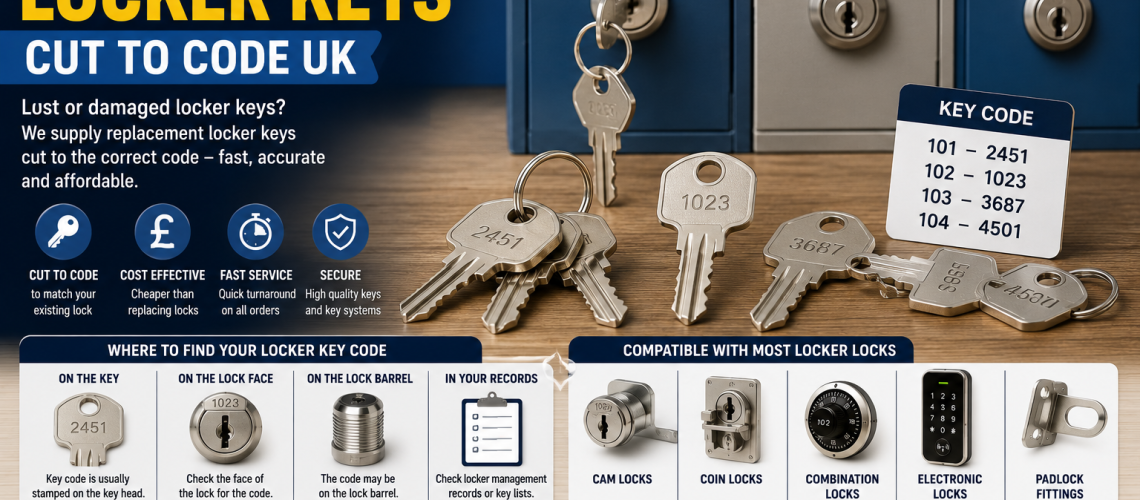
Lowe & Fletcher locker keys are used on many locker locks across UK workplaces, schools, leisure centres, offices and staff changing rooms. If a key is lost, damaged or missing, a replacement key may be possible when the correct key number or lock code is known.
This guide explains how to identify Lowe & Fletcher locker keys, where to find the key number, how replacement keys by code work and when a replacement locker lock may be needed.
Quick answer: can Lowe & Fletcher locker keys be replaced?
Yes. Many Lowe & Fletcher locker keys can be replaced by code if the key number or lock number is available. The code may be stamped on the key, shown on the lock face or held in a site key register. Lowe & Fletcher’s own shop lists replacement locker keys and key series identification support. Source
| Detail to check | Why it matters |
|---|---|
| Key number | Helps identify the correct replacement key |
| Lock face number | May be usable when the key is lost |
| Key series | Confirms the correct Lowe & Fletcher range |
| Locker number | Useful for site records, but not always the key number |
| Lock condition | Shows whether a key or full lock replacement is needed |
What are Lowe & Fletcher locker keys?
Lowe & Fletcher is a UK lock manufacturer supplying locking systems and replacement keys. Their locker lock range includes camlocks, latchlocks, coin locks, handles, mechanical combination locks and electronic locks. Source
For locker users, the most important point is simple: the key must match the correct lock series and code. A similar-looking key may not work if the code, profile or series is different.
Where to find a Lowe & Fletcher locker key number
The key number is usually the starting point for replacement. Check every possible location before ordering.
- On the head of the key.
- On the front face of the locker lock.
- On a spare key tag.
- In a school, gym or workplace key register.
- On previous order paperwork.
- On old locker installation or maintenance records.
Lowe & Fletcher’s online key shop also separates replacement keys by key series, which shows why the full number and range are important. Source
Locker number vs Lowe & Fletcher key number
The locker number is not always the key number. This is one of the most common ordering mistakes.
| Number type | Meaning | Use for replacement key ordering? |
|---|---|---|
| Locker number | The number on the locker door | Only if your records confirm it matches the key code |
| Key number | The code used to identify the replacement key | Yes |
| Lock face number | The number shown on the lock cylinder or face | Often useful |
| Master key reference | Management key or access system reference | Check carefully before using |
How to order Lowe & Fletcher locker keys by code
Before ordering, record the code exactly as shown. Do not guess missing letters or digits.
- Write down the full key number.
- Check whether the code includes letters.
- Take a close-up photo of the key, if available.
- Take a close-up photo of the lock face.
- Record the locker number separately.
- Confirm how many keys are required.
- Check whether the lock still works smoothly.
If the lock is damaged, a replacement key may not solve the problem. In that case, check the lock type, cam and fixing before replacing the lock.
Common Lowe & Fletcher key code mistakes
Small errors can result in the wrong key. Codes must be read carefully, especially when stamped numbers are worn.
| Possible error | How to avoid it |
|---|---|
| O confused with 0 | Send a clear photo |
| I confused with 1 | Check under bright light |
| S confused with 5 | Compare with another key if available |
| B confused with 8 | Use close-up photos from different angles |
| Using the locker door number | Check the key or lock code instead |
What if the Lowe & Fletcher key is lost?
If the key is lost, check the lock face first. Some locker locks show the number on the front of the lock. If the number is visible, a replacement key may still be possible.
If there is no visible number, take clear photos of the lock face, locker door and rear of the lock if accessible. You may need lock identification or a replacement lock.
What if the key number is not recognised?
If the number is not recognised, the lock may belong to a different series, the code may have been misread, or the lock may not be a Lowe & Fletcher lock. The next step is to identify the lock brand, keyway, cam and lock body.
Use our How to Identify Your Locker Lock UK guide before replacing parts.
When to replace the key
Choose a replacement key when the lock is working and the correct code is known.
- The original key is lost.
- A spare key is needed.
- The key is bent or worn.
- A staff member has left without returning the key.
- The lock number is readable.
When to replace the lock
Choose a replacement lock when the lock is damaged, forced, seized, obsolete or impossible to identify.
- The key snaps inside the lock.
- The lock does not turn.
- The cam does not secure the door.
- No code can be found.
- The site wants to change lock type.
- The locker bank uses mixed or inconsistent locks.
Lowe & Fletcher locker keys for schools
Schools often need replacement Lowe & Fletcher locker keys when pupils lose keys during the year. A key register helps the site team avoid unnecessary lock changes.
- Record the locker number and key number separately.
- Keep spare keys in controlled storage.
- Update records when locks are changed.
- Check damaged locks during school holidays.
- Order spare keys before the start of term where possible.
Lowe & Fletcher locker keys for workplaces
Workplaces may use Lowe & Fletcher keys on staff lockers, PPE lockers, uniform lockers, changing room lockers and office storage. Replacement keys help restore access without replacing good working locks.
Lowe & Fletcher locker keys for gyms and leisure centres
Leisure sites may use keyed locks, coin locks, combination locks or electronic locker locks. If a standard keyed Lowe & Fletcher lock is fitted, the key number is the main detail needed. If the site uses coin or electronic locks, it may need service keys, master keys or lock parts instead.
Build a Lowe & Fletcher locker key register
A key register helps reduce lost-key problems and speeds up repeat orders.
| Register field | Purpose |
|---|---|
| Locker number | Identifies the door |
| Location | Shows room, site or department |
| Lowe & Fletcher key number | Supports replacement key ordering |
| Lock type | Confirms keyed, coin, hasp or digital access |
| Spare keys held | Reduces emergency replacements |
| Last checked | Supports audits and maintenance |
| Lock changed date | Prevents old-code errors |
Internal links for Lowe & Fletcher locker key support
- Locker Keys UK – order replacement locker keys.
- Replacement Locker Keys by Code UK – order keys using a lock or key number.
- Locker Key Number Guide UK – find and read key numbers.
- Lost Locker Keys UK – what to do when a key is missing.
- How to Identify Your Locker Lock UK – identify lock type and cam details.
- Locker Locks – replacement locker locks and parts.
FAQ: Lowe & Fletcher locker keys
Can I get a replacement Lowe & Fletcher locker key?
In many cases, yes. A replacement may be possible if the correct key number, lock number or key series is known.
Where is the Lowe & Fletcher key number?
It may be stamped on the key head, shown on the lock face or recorded in a site key register.
Is the locker door number the same as the key number?
Not always. The door number identifies the locker. The key number identifies the replacement key. Check records before ordering.
What if my Lowe & Fletcher key code is unreadable?
Take clear close-up photos of the key and lock face. If the code still cannot be confirmed, the lock may need to be identified or replaced.
Do Lowe & Fletcher only make keyed locker locks?
No. Their locker lock range includes several lock types, including camlocks, latchlocks, coin locks, handles, mechanical combination locks and electronic locks. Source
Need Lowe & Fletcher locker keys?
Total Locker Service can help with replacement locker keys, locker lock identification and replacement locker locks. Record the full key number, take clear photos and confirm the number of keys required before ordering.
Discover more from Blog Total Locker Service
Subscribe to get the latest posts sent to your email.