Replacement Locker Keys Cut to Code UK: Complete Guide
May 7, 2026
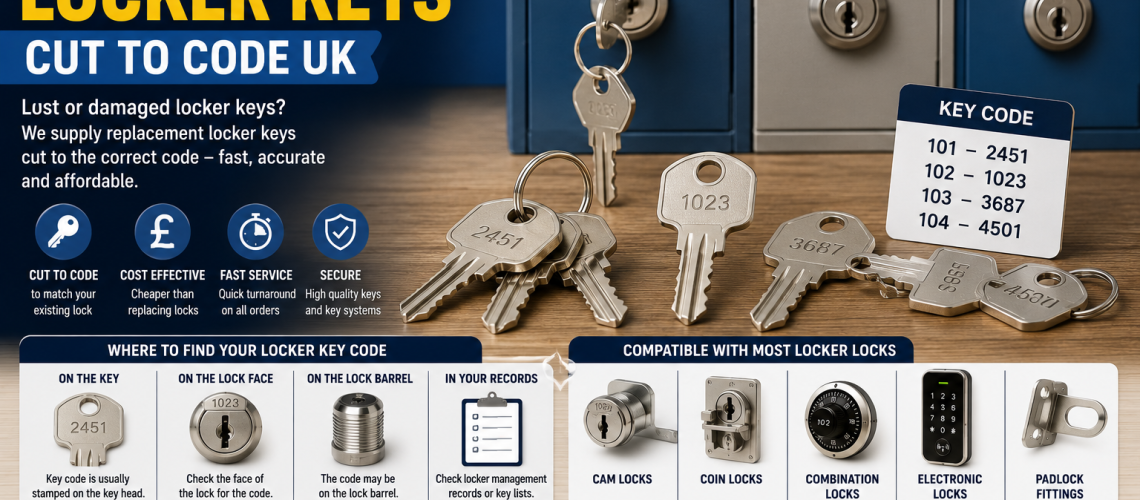
Replacement locker keys cut to code allow lost or damaged locker keys to be replaced quickly without changing the full lock. Many school, workplace, gym and leisure locker locks use numbered key systems that can be matched and cut using the original key code or lock number.
This guide explains how replacement locker keys cut to code work in the UK, what information is needed, how locker key systems are identified and when a replacement key is possible instead of replacing the whole lock.
Quick answer: Most replacement locker keys can be cut to code if the key number or lock number is known. This is usually faster and cheaper than replacing the entire locker lock.
For broader guidance, see our replacement locker key service, explore our Locker Locks UK master hub or read our Locker Lock Parts and Spares UK guide.
What does “cut to code” mean?
Cutting a locker key to code means creating a replacement key using the original lock or key number rather than copying a physical key.
Many locker locks use numbered systems where the key profile and cut pattern match a specific code.
This allows replacement keys to be produced even when:
- The original key is lost
- The key is broken
- No spare key exists
- Large numbers of lockers use coded systems
Where is the locker key code found?
The locker key code is usually stamped onto:
- The original key
- The face of the lock
- The lock barrel
- The locker management records
Common examples include:
- 001–999 series
- Letter and number combinations
- Manufacturer-specific codes
- Master-key system references
Before ordering replacement keys, check the code carefully because even one incorrect digit may produce the wrong key.
How replacement locker keys are identified
Replacement locker keys are normally identified using:
- Key number
- Lock number
- Locker manufacturer
- Lock brand
- Key shape or profile
- Photographs of the lock or key
The more information available, the easier it is to match the correct replacement key.
Some older lockers may use obsolete lock systems where replacement keys are harder to source.
Why replacement locker keys are often better than replacing locks
Replacing a lost locker key is usually faster and cheaper than replacing the entire lock.
Main advantages include:
- Lower maintenance costs
- Minimal locker downtime
- No need to remove locks
- Preserves existing master key systems
- Faster return to service
This is especially useful in large locker installations where replacing full lock systems would be expensive and disruptive.
Common environments using cut-to-code locker keys
Replacement locker keys are widely used across:
- Schools and colleges
- Workplaces and offices
- Factories and warehouses
- Gyms and leisure centres
- Healthcare facilities
- Universities
- Staff changing rooms
Large facilities often hold spare key records to simplify future replacement orders.
What happens if the locker key code is missing?
If the code is missing, a replacement key may still be possible depending on the lock type.
Possible options include:
- Checking the code on the lock barrel
- Using locker management records
- Identifying the lock manufacturer
- Using master key access
- Replacing the lock barrel
- Replacing the full lock
Some locks may need decoding by a specialist if no identifying information remains.
Master keys and replacement locker keys
Many locker systems use master keys for management access.
Master key systems are especially common in:
- Schools
- Workplaces
- Leisure centres
- Healthcare facilities
- Universities
When ordering replacement keys, it is important to check:
- Whether the lock is master keyed
- Whether replacement keys must preserve master key compatibility
- Whether keyed alike systems are used
Incorrect replacement keys may interfere with the wider lock management system.
When should the locker lock be replaced instead?
Replacing the whole lock may be better if:
- The lock is damaged
- The barrel is worn out
- Security has been compromised
- The key code is unknown
- The lock system is obsolete
- Multiple keys are missing
Some organisations also replace locks during refurbishments or when upgrading to keyless systems.
See our Locker Lock Replacement Guide UK.
Can locker systems be upgraded to avoid lost keys?
Yes. Many organisations upgrade from keyed systems to:
- Combination locker locks
- Electronic locker locks
- RFID locker systems
- Shared-use electronic lockers
This helps reduce future lost key problems and lower administration workload.
Read our How to Stop Lost Locker Keys guide and Locker Combination Locks UK guide.
Common mistakes when ordering replacement locker keys
- Reading the code incorrectly
- Confusing locker numbers with key numbers
- Ordering from the wrong manufacturer series
- Ignoring master key compatibility
- Using worn or partially damaged code markings
- Assuming all locker keys are universal
Always double-check codes and provide photographs where possible.
Best locker key management practices
- Record locker key numbers
- Store spare keys securely
- Maintain master key records
- Label lockers consistently
- Track issued keys
- Replace worn keys early
- Keep lock manufacturer information
Good key management reduces disruption and simplifies future replacement orders.
Best replacement key approach by environment
| Environment | Most Common Key Requirement |
|---|---|
| Schools | Student locker replacement keys |
| Workplaces | Master-key compatible replacements |
| Gyms | Shared-use locker keys |
| Universities | Large-volume coded key systems |
| Factories | Heavy-duty keyed locker replacements |
| Healthcare facilities | Controlled staff locker access keys |
Related locker lock and key guides
- Replacement locker keys service
- Locker Locks UK master hub
- Locker Lock Parts and Spares UK
- Locker Lock Replacement Guide UK
- How to stop lost locker keys
- Keyed locker locks UK
- Locker combination locks UK
- Locker locks and accessories
Frequently Asked Questions
Can replacement locker keys be cut without the original key?
Yes. Many replacement locker keys can be cut using the lock number or key code without needing the original key.
Where do I find the locker key code?
The key code is usually stamped on the original key, the lock face or the lock barrel.
Are locker keys universal?
No. Locker keys vary by manufacturer, lock series and key profile.
Can master-keyed locker systems still use replacement keys?
Yes. Replacement keys can usually be supplied while maintaining compatibility with the master key system.
Is replacing a locker key cheaper than replacing the lock?
Usually, yes. Replacing the key is often much cheaper and faster than replacing the entire locker lock.
What if the locker key number is worn away?
The lock may still be identifiable using the lock barrel, manufacturer information or locker management records.
Can old locker keys still be replaced?
Sometimes. Older locker lock systems may still support replacement keys if the series is known and parts remain available.
How can organisations reduce lost locker key problems?
Many organisations reduce lost key problems by improving key tracking or upgrading to combination or electronic locker systems.
Discover more from Blog Total Locker Service
Subscribe to get the latest posts sent to your email.