Anti-Vandal Locker Locks UK: Secure Locks for Schools, Transport and Public Facilities
May 8, 2026
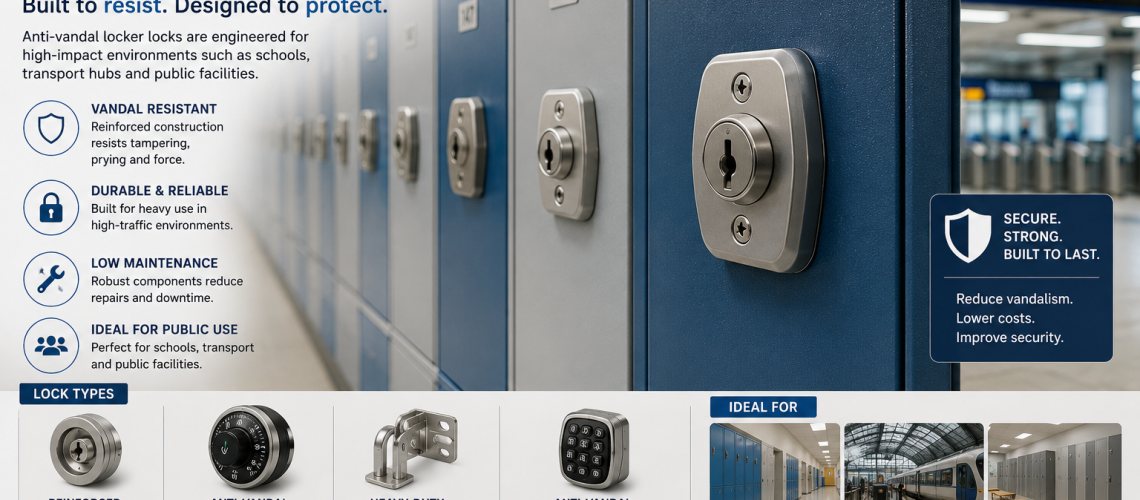
Anti-vandal locker locks are designed to resist tampering, forced entry and misuse in high-risk environments such as schools, transport hubs and public facilities. Standard locks often fail in these environments due to physical abuse, attempted break-ins and repeated heavy use.
This guide explains how anti-vandal locker locks work, which types are suitable for UK environments, and how to reduce damage, maintenance costs and security risks in public and high-traffic areas.
Quick answer: Use reinforced, tamper-resistant locker locks with protected mechanisms, minimal external components and strong internal fixings. Mechanical or specialist anti-vandal electronic locks are best for schools, transport settings and public use.
Why standard locker locks fail in public environments
Locks in public and semi-public environments are exposed to different risks compared to workplaces.
- Physical force: Pulling, twisting or striking lock components
- Tampering: Attempts to pick, bypass or damage mechanisms
- Misuse: Incorrect operation or deliberate abuse
- High turnover: Constant daily use increases wear
- Lack of ownership: Shared use reduces accountability
These conditions require locks that are specifically engineered to resist damage rather than simply provide access control.
What makes a locker lock anti-vandal?
Anti-vandal locker locks are built to minimise attack points and withstand force.
- Flush or low-profile design: Reduces grip points for forced removal
- Reinforced housings: Strong metal or composite casings
- Protected cylinders and mechanisms: Internal components shielded from attack
- Anti-pick and anti-drill features: Increased resistance to tampering
- Secure internal fixings: Prevents removal from the outside
The aim is to make forced entry difficult, time-consuming and visible, which discourages attempts.
Best locker lock types for anti-vandal use
Reinforced keyed locks
Heavy-duty keyed locks with protected cylinders are widely used in schools and public facilities.
- Strong mechanical reliability
- Secure internal mounting
- Available with master key systems
Anti-vandal hasp and staple systems
When combined with high-security padlocks, reinforced hasp systems can provide strong resistance to forced entry.
- Thick steel construction
- Protected hinge points
- Replaceable padlock component
These are often used where flexibility and replacement speed are important.
Mechanical combination locks (anti-vandal grade)
Combination locks remove the need for keys while maintaining durability.
- No lost keys or replacements
- Robust dial or push-button designs
- Suitable for shared environments
Anti-vandal versions use reinforced components and protected mechanisms.
Anti-vandal electronic locks
Electronic locks designed for public use offer advanced control with reinforced construction.
- RFID or keypad access
- Audit trails and user tracking
- Strong external housings
These are increasingly used in transport hubs and modern public facilities.
Where anti-vandal locker locks are used
Schools and education
School lockers are subject to heavy daily use and occasional misuse.
- Combination locks reduce key management issues
- Reinforced locks prevent damage and downtime
- Master key systems support staff control
Transport hubs
Train stations, bus depots and airports require secure, durable locker systems.
- High security against tampering
- Short-term and public use compatibility
- Often integrated with electronic systems
Public facilities
Gyms, leisure centres and public buildings require locks that withstand frequent use and abuse.
- Durable and low maintenance
- Resistant to tampering and misuse
- Suitable for shared access
How to choose anti-vandal locker locks
Selection should be based on risk level and usage patterns.
- Environment: School, transport or public facility
- User behaviour: Controlled vs uncontrolled access
- Security level: Basic deterrence vs high security
- Maintenance capability: On-site support vs minimal intervention
- Access method: Key, code or electronic
The correct specification reduces long-term repair costs and improves reliability.
Reducing damage and maintenance costs
Anti-vandal locks reduce maintenance, but system design also matters.
- Choose locks with replaceable components where possible
- Standardise lock types across facilities
- Inspect regularly for early damage signs
- Train staff on override and maintenance procedures
This improves uptime and reduces lifecycle costs.
How this fits into your locker system
Anti-vandal locker locks are one part of a wider locker security strategy.
- Used with locker systems in public environments
- Combined with locker lock types across different areas
- Linked to storage systems for full facility planning
This ensures consistent performance across mixed-use environments.
Next steps
FAQ: Anti-Vandal Locker Locks UK
What are anti-vandal locker locks?
They are locks designed to resist tampering, forced entry and misuse through reinforced construction and protected mechanisms.
Are combination locks suitable for schools?
Yes. Anti-vandal combination locks are widely used in schools because they remove the need for keys and reduce management issues.
Which locks are best for public lockers?
Reinforced keyed locks, anti-vandal combination locks and secure electronic locks are commonly used depending on the environment and security needs.
Do anti-vandal locks prevent break-ins?
They reduce the likelihood of successful break-ins by making attacks more difficult and time-consuming, but no lock is completely tamper-proof.
Are anti-vandal locker locks more expensive?
They typically cost more upfront but reduce long-term maintenance, repair and replacement costs in high-risk environments.
Discover more from Blog Total Locker Service
Subscribe to get the latest posts sent to your email.