First Aid Cabinet Guide UK: Supplies, Placement, Labelling and Refill Management (2026)
May 5, 2026
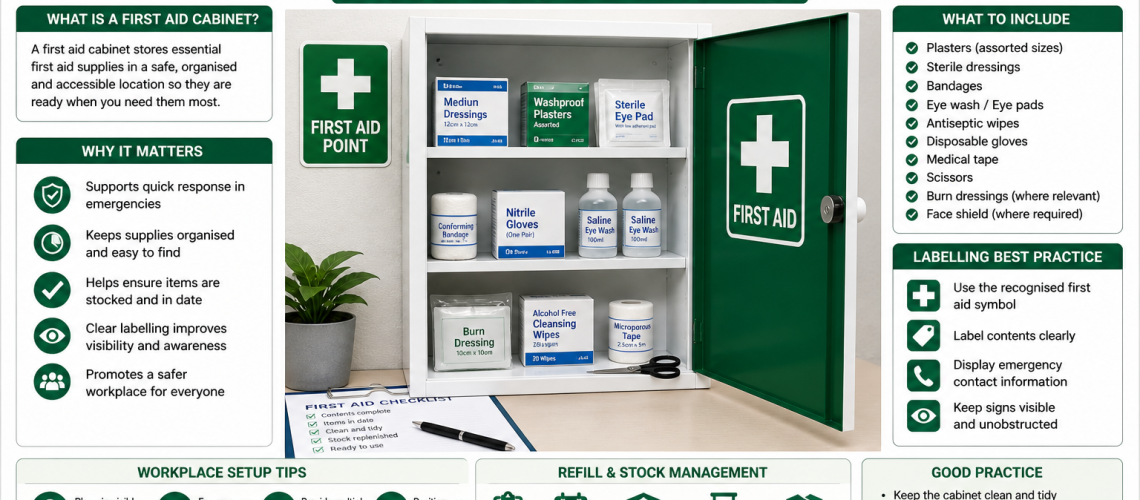
First aid cabinets help UK workplaces organise emergency supplies, keep items easy to find and ensure first aid equipment is available when needed. A good first aid setup includes the cabinet, correct supplies, clear labelling, accessible locations and a simple refill and checking routine.
This guide explains how to choose a first aid cabinet, what supplies to include, where cabinets should be placed and how to manage labelling and refills in UK workplaces, schools, warehouses, offices and facilities.
Start here: This page forms part of the main Medical Cabinets UK: Medicines Storage, Compliance and Security Guide, which explains how to choose, plan and manage secure medicine storage.
It supports wider storage planning via the Storage Systems UK guide and product selection through storage cabinets.
What is a first aid cabinet?
A first aid cabinet is a dedicated storage unit used to hold first aid supplies such as dressings, plasters, bandages, wipes and protective equipment. It helps keep supplies organised, visible and ready for use during an incident.
First aid cabinets are different from medicine cabinets. They are used for emergency treatment supplies rather than general or prescribed medicines.
Why first aid cabinets matter in workplaces
First aid equipment must be easy to access and clearly organised. In an emergency, delays caused by poor storage, missing items or unclear labelling can affect response time.
- Improves response time during incidents.
- Keeps supplies organised and easy to locate.
- Reduces risk of missing or expired items.
- Supports workplace health and safety procedures.
- Helps staff quickly identify the correct equipment.
Types of first aid cabinets
First aid cabinets vary based on size, location and the type of workplace.
| Type | Best use | Main benefit |
|---|---|---|
| Wall-mounted first aid cabinet | Offices, schools, staff rooms | Saves space and keeps supplies visible |
| Large first aid cabinet | Factories, warehouses, larger sites | Higher capacity for more supplies |
| Portable first aid kit | Mobile workers, vehicles, remote areas | Flexible and easy to carry |
| Multi-point cabinet system | Large buildings or multi-floor sites | Improves access across different areas |
What should be in a first aid cabinet?
The contents of a first aid cabinet depend on the workplace risk assessment. However, most workplaces include core items.
- Plasters (various sizes)
- Sterile dressings
- Bandages
- Eye wash or sterile eye wash pods
- Antiseptic wipes
- Disposable gloves
- Medical tape
- Scissors
- Burn dressings (where relevant)
- Resuscitation face shield (where required)
Higher-risk workplaces may require additional items based on hazards, such as chemical exposure, machinery or manual handling risks.
Where to place first aid cabinets
Location is critical. Cabinets must be easy to find and accessible at all times.
- Place near main working areas.
- Ensure visibility and clear signage.
- Avoid locked or restricted rooms unless controlled access is required.
- Install at a practical height for easy reach.
- Provide multiple cabinets in large or multi-floor buildings.
- Position near higher-risk areas such as workshops or kitchens.
First aid cabinet labelling
Clear labelling ensures that staff can identify first aid storage quickly and understand what is inside.
- Use recognised first aid symbols (green background with white cross).
- Label cabinet contents where helpful.
- Include emergency contact information nearby.
- Ensure labels are visible from a distance.
- Keep labelling consistent across the site.
Labelling should support fast recognition during an emergency, not create confusion.
Refill and stock management
First aid cabinets must be checked regularly. Missing or expired items reduce effectiveness during an incident.
Refill management checklist
- Assign responsibility to a trained staff member.
- Check cabinet contents regularly.
- Replace used items immediately.
- Remove expired items.
- Restock based on usage patterns.
- Keep a simple record of checks if required.
Busy workplaces may need more frequent checks, especially where first aid supplies are used regularly.
First aid cabinet checks and maintenance
- Confirm cabinet is accessible and not obstructed.
- Check contents are complete and organised.
- Verify expiry dates.
- Ensure packaging is intact.
- Confirm signage is visible and clear.
- Replace damaged or missing items.
Common first aid cabinet mistakes
- Using cabinets for non-first aid items.
- Poor labelling or no signage.
- Cabinet placed in hard-to-reach areas.
- Missing or expired supplies.
- No clear responsibility for refills.
- Too few cabinets for the size of the site.
How to choose the right first aid cabinet
- Assess workplace risks.
- Match cabinet size to staff numbers and site layout.
- Choose visible and durable design.
- Ensure easy access in emergencies.
- Plan refill and inspection routine before installation.
Best setup by workplace type
| Workplace | Recommended setup | Key priority |
|---|---|---|
| Office | Wall-mounted cabinet | Visibility and ease of access |
| Warehouse | Multiple cabinets across site | Coverage and response time |
| Factory | Larger cabinet with expanded supplies | Higher-risk support |
| School | Cabinet in staff-access area | Controlled but quick access |
| Mobile workforce | Portable first aid kits | Flexibility and availability |
Related guides
Final advice
A first aid cabinet is only effective if it is stocked, accessible and maintained. The best systems are simple, visible and regularly checked.
Start with a risk assessment, choose the right cabinet size and location, and put a clear refill routine in place. This ensures that first aid supplies are ready when they are needed.
For suitable workplace storage options, see our range of storage cabinets.
FAQ: First aid cabinet UK
What should be in a workplace first aid cabinet?
Typical items include plasters, dressings, bandages, wipes, gloves and eye wash. The exact contents should match the workplace risk assessment.
How often should first aid cabinets be checked?
They should be checked regularly, with frequency based on usage and workplace risk. Items should be replaced immediately after use.
Where should first aid cabinets be located?
They should be placed in visible, accessible locations near work areas, with clear signage and no obstructions.
Should first aid cabinets be locked?
In most workplaces, first aid cabinets should remain accessible without delay. Locking may be used in specific environments, but access must still be quick during emergencies.
Who is responsible for first aid cabinet refills?
A trained staff member or designated person should be responsible for checking and refilling first aid supplies.
Can medicines be stored in a first aid cabinet?
First aid cabinets are intended for first aid supplies. Medicines should only be stored if appropriate and in line with workplace policy. Higher-risk medicines should be stored separately.
Discover more from Blog Total Locker Service
Subscribe to get the latest posts sent to your email.