What Are Charging Lockers? Complete UK Guide for Workplaces and Schools
April 16, 2026
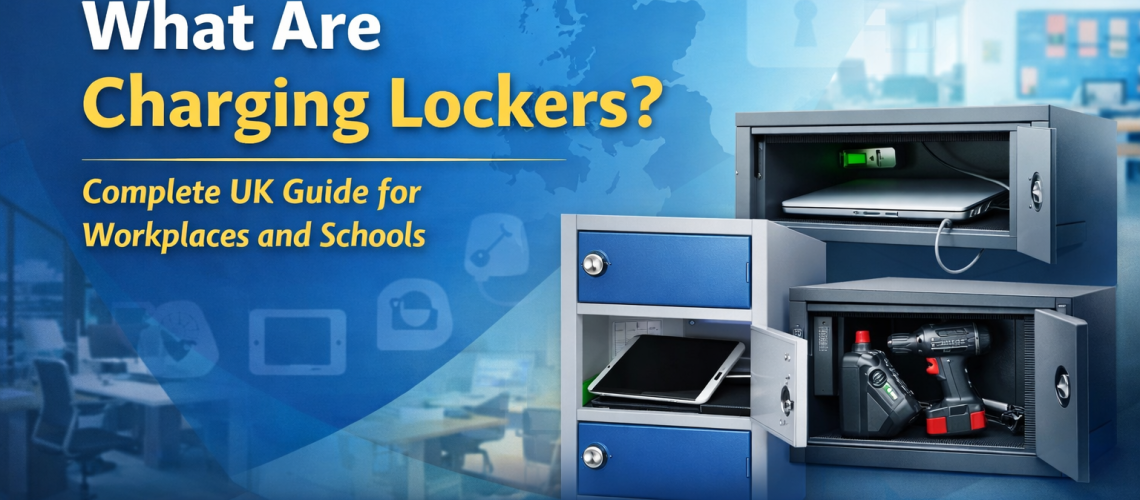

Charging lockers are secure storage units with built-in power that allow devices or rechargeable equipment to be stored and charged at the same time. They are used in workplaces, schools and technical environments where equipment must remain secure, organised and ready for use.
Charging lockers combine secure storage, built-in power and organised device management in one system.
- Store equipment securely
- Charge devices while stored
- Keep items organised and ready
Without a structured charging system, devices are often left on desks, stored in unsuitable cupboards or plugged in wherever space is available. This leads to clutter, inconsistent charging and poor control over equipment. Charging lockers solve this by creating a fixed, secure and organised powered storage system.
This guide is part of a complete charging locker system covering sizes, capacity, ventilation, lock types and installation. lockers UK guide
Why organisations use charging lockers
- Secure storage for valuable devices and equipment
- Charging between uses so items are ready when needed
- Clear organisation for shared or centrally managed equipment
- Reduced clutter from loose chargers and cables
- Improved accountability and tracking
- Consistent return and storage routines
How charging lockers work
Charging lockers work through a simple process:
Devices are placed inside, connected to a charger and secured while charging continues. This allows equipment to remain protected and ready for the next use without being left exposed.
- Devices are placed inside compartments
- Chargers connect internally
- Doors are secured
- Charging continues while locked
This layout separates storage, power and cable routing within each compartment, helping maintain organisation and safe day-to-day use.
For a full technical breakdown, read how charging lockers work: power, ventilation and safety explained.
Charging lockers vs standard lockers
The key differences between standard lockers and charging lockers are shown below:
| Feature | Standard lockers | Charging lockers |
|---|---|---|
| Main purpose | General storage | Secure storage with charging |
| Power access | No | Yes |
| Use case | Personal items | Devices and equipment |
| Cable management | Not supported | Designed for chargers and cables |
| Ventilation | Basic | Often more important |
| When to choose | General storage | When devices must be charged, managed and ready |
| Best choice for | Everyday storage | Managed devices that must stay charged and ready |
Charging lockers are the better choice where devices need to be secured, charged and ready for repeated use.
For a full side-by-side comparison, read charging lockers vs standard lockers: what’s the difference?.
Where charging lockers are used
Workplaces and offices
In workplaces, especially in shared or hot-desking environments, charging lockers are used for laptops, tablets and shared devices. Without control, devices can be left on desks, not returned or not charged between users. This creates delays, inconsistency and lost productivity.
Charging lockers create a fixed return point, improve accountability and ensure devices are ready for the next user.
For environments where staff share devices across shifts or desks, see laptop charging lockers for offices and hybrid workplaces.
Schools and education
In schools, charging lockers are used to manage shared tablets, laptops and classroom devices. Without controlled storage, devices are often returned uncharged, misplaced or unavailable at the start of lessons.
Charging lockers provide structured storage, consistent charging and clear control over shared equipment.
For sites managing class sets and pooled devices, see tablet charging lockers for schools and shared classroom storage.
Industrial and technical settings
In industrial environments, charging lockers are used for tools, batteries and chargers that move between teams and shifts. Without structured storage, equipment can be stored inconsistently, chargers can be separated and availability becomes harder to manage. lockers UK guide
Charging lockers centralise storage and charging, improving organisation and reducing equipment loss.
For heavier-duty charging and storage requirements, see tool charging lockers UK for power tools and batteries.
When charging lockers are not required
- When items do not need charging
- When storage is purely personal
- When mobile charging is required and a trolley is more suitable
How to choose the right charging locker
Once you understand how charging lockers are used, the next step is choosing the right type for your environment.
- What are you charging? Laptops, tablets, tools and batteries all need different compartment sizes and layouts.
- How many devices? Base this on real usage, not just total stock.
- Shared or assigned use? Decide whether users return to fixed compartments or use a pooled system.
- Where will it be installed? The location needs to be practical, secure and easy to manage.
- What power and ventilation is required? Charging patterns, heat output and access control all affect the right specification.
If these factors are not considered, devices may not fit, charging may be inconsistent and the system may fail in daily use.
Power, ventilation and daily use
Charging lockers typically use standard UK power connections and allow devices to remain plugged in between uses. Small tablets usually create less heat than laptops, while tools, chargers and battery systems can demand more careful specification depending on the equipment and charging pattern.
Usage intensity matters as much as device type. Occasional charging places less demand on the system than repeated charging across multiple compartments throughout the day.
For more detailed guidance, read how charging lockers work: power, ventilation and safety explained.
If you are still narrowing down the specification, read our charging locker sizes explained guide, our do charging lockers need ventilation guide and our where to install charging lockers guide.
For airflow and heat management, see do charging lockers need ventilation. To match the unit to the room properly, read where to install charging lockers.
Once you know the use case, the next step is to compare charging locker sizes explained with the practical guidance in where to install charging lockers.
Charging lockers are typically used for:
- Laptops in workplaces
- Tablets in schools
- Tools and batteries in industrial settings
Frequently asked questions
What is a charging locker?
A charging locker is a secure locker with built-in power designed to store and charge devices at the same time.
How do charging lockers work?
They provide a lockable compartment with access to power so equipment can be placed inside, connected to a charger and stored securely while charging continues.
Are charging lockers safe?
Yes, when they are correctly specified for the equipment, installed properly and used as intended.
Do charging lockers need ventilation?
Often, yes, depending on the equipment, charger size and charging intensity.
Are charging lockers worth it?
Charging lockers are worth it where devices need to be stored securely, organised and kept charged between uses, especially in shared environments.
What can be stored in a charging locker?
Laptops, tablets, phones, radios, scanners, batteries and rechargeable tools are all common examples.
How many devices can a charging locker hold?
That depends on the locker design and the size of the equipment. Tablets can often be stored at higher densities than laptops or tools.
Choose the right charging locker for your environment
The simplest way to choose the right charging locker is to match it to how your environment actually uses equipment:
Charging lockers are designed to keep devices and rechargeable equipment secure, organised and ready for use. The right option depends on the environment, the equipment and how the system will be used day to day.
- For offices → laptop charging lockers
- For schools → tablet charging lockers
- For industrial use → tool charging lockers
This approach makes it easier to choose a charging system that fits the real equipment, usage pattern and storage demands of your site.
To explore available options, view our charging lockers and locker storage solutions.
Discover more from Blog Total Locker Service
Subscribe to get the latest posts sent to your email.