Common Storage Problems in Workplaces (and How to Fix Them)
April 28, 2026
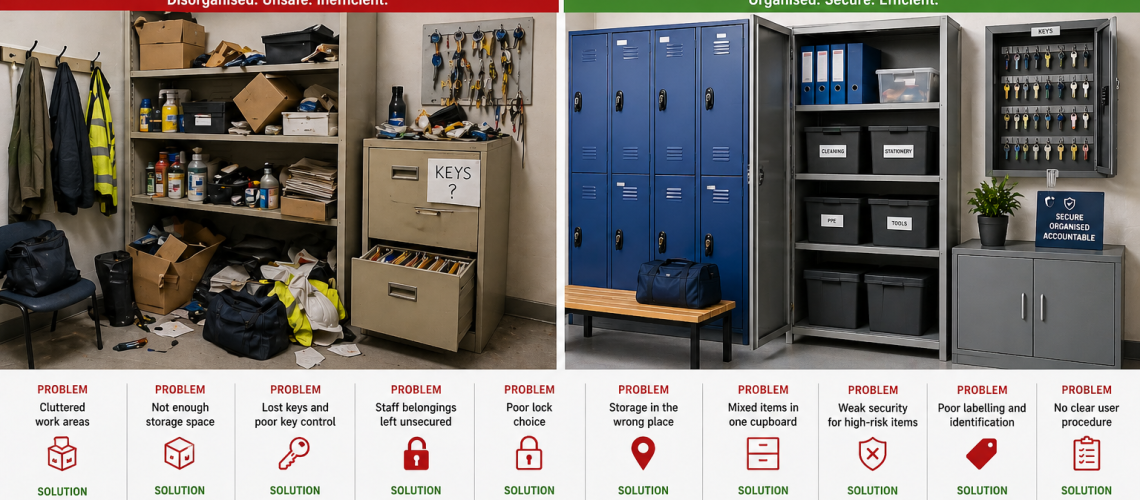
Workplace storage problems usually come from poor planning, limited space, weak access control or storage systems that no longer match how the workplace operates. The right fix depends on what is being stored, who uses it and what risk the current setup creates.
This guide explains the most common storage problems in workplaces and how to fix them with better layout, clearer control, suitable lockers, secure cabinets, key storage and improved day-to-day procedures.
Why workplace storage problems happen
Storage problems rarely appear overnight. They usually build up as staff numbers change, equipment increases, working patterns shift or old storage no longer supports the way people use the space.
A storage system may have been suitable when first installed, but can become inefficient if capacity, access, security or layout needs change.
1. Cluttered work areas
Clutter is one of the clearest signs that storage is not working properly. Bags, coats, tools, boxes, paperwork or equipment may start to appear in walkways, offices, staff rooms or operational areas.
How to fix it
Start by separating items by use. Personal belongings, shared equipment, documents, keys and tools should not all compete for the same storage space.
- Use lockers for personal belongings
- Use cabinets for shared supplies and equipment
- Use filing or secure cabinets for documents
- Remove unused or duplicated items from active areas
- Keep frequently used items close to where they are needed
A clear storage role for each item reduces clutter and makes the workplace easier to manage.
2. Not enough storage space
Limited storage space often leads to overfilled lockers, crowded cupboards and poorly organised cabinets. The issue may be a lack of total capacity, but it can also be caused by using the wrong type of storage.
How to fix it
Measure the items being stored before adding more units. A better configuration may solve the problem without taking up much more floor space.
- Use multi-tier lockers where users only need small compartments
- Choose full-height lockers for coats, bags and uniforms
- Use wall-mounted key cabinets to save floor space
- Replace mixed storage with dedicated cabinets
- Plan spare capacity for future users or equipment
Extra storage is useful only if it matches the items and users. Adding random cupboards often creates more confusion.
3. Lost keys and poor key control
Lost keys create security risks, delays and replacement costs. Problems often happen when keys are stored in drawers, passed between staff without records or kept in unlabelled locations.
How to fix it
Use a dedicated key storage system and create a clear process for issuing and returning keys.
- Install a lockable key cabinet
- Label hooks clearly
- Use numbered tags for identification
- Keep a sign-out record for important keys
- Restrict access to authorised staff
For higher-risk sites, an electronic key control system may provide stronger tracking and accountability.
4. Staff belongings left unsecured
When staff do not have suitable personal storage, belongings may be left under desks, in staff rooms, in corridors or in shared work areas. This can create security, hygiene and housekeeping issues.
How to fix it
Provide lockers that match the working pattern and the items staff need to store.
- Use single-door lockers for coats, bags and uniforms
- Use multi-door lockers for smaller personal items
- Use charging lockers for phones, tablets or laptops
- Choose wet area lockers for changing rooms or leisure spaces
- Place lockers where staff can access them without disrupting work areas
Assigned lockers usually work well for permanent staff. Shared-use locks may be better for flexible workspaces, gyms or visitor areas.
5. Poor lock choice
A storage system can fail if the lock does not match the way people use it. Keyed locks may be simple and reliable, but they can create key management problems in busy shared environments.
How to fix it
Choose locks based on user behaviour, not just cost.
- Use keyed locks for assigned lockers
- Use hasp locks where users bring their own padlocks
- Use mechanical combination locks where keys are inconvenient
- Use digital locks for controlled shared access
- Use RFID or smart locks for managed environments
The right lock should be easy to manage, suitable for the level of risk and simple enough for users to operate correctly.
6. Storage installed in the wrong place
Even good storage products can cause problems if they are installed in poor locations. Bad placement can create congestion, reduce supervision or make the system inconvenient to use.
How to fix it
Plan placement around user flow, supervision and item risk.
- Place staff lockers near entrances, changing areas or staff zones
- Install key cabinets in secure staff-only areas
- Keep hazardous or controlled storage away from public access
- Avoid blocking exits, walkways or service routes
- Allow enough space for doors, drawers and users to move safely
Good placement makes storage easier to use and harder to misuse.
7. Mixed items stored in one cupboard
Many workplaces use one cupboard for everything. Over time, this can lead to lost items, poor stock control and unsafe storage of incompatible items.
How to fix it
Separate storage by item type, access level and risk.
- Store keys in a key cabinet
- Store personal belongings in lockers
- Store medicines in suitable medical cabinets
- Store chemicals in suitable COSHH cabinets
- Store documents in filing cabinets or secure cabinets
- Store devices in charging lockers where power is needed
Segregation improves safety, organisation and accountability.
8. Weak security for high-risk items
Some items need more than basic storage. Keys, laptops, medicines, documents, tools and valuables may require controlled access and stronger protection.
How to fix it
Match the security level to the risk. The more valuable, sensitive or restricted the item is, the stronger the storage system should be.
- Use secure cabinets for controlled equipment
- Use safes for valuables or sensitive items
- Use charging lockers for devices
- Use restricted-access key cabinets for important keys
- Use clear procedures for who can access stored items
A lock alone is not always enough. Secure storage also depends on who controls access and how the system is monitored.
9. Poor labelling and identification
Unlabelled storage wastes time and increases mistakes. Staff may open the wrong cabinet, take the wrong key or store items in the wrong place.
How to fix it
Use clear labels, numbering systems and simple visual organisation.
- Number lockers clearly
- Use labelled key hooks and key tags
- Label cabinets by contents or department
- Use signs for restricted storage areas
- Keep naming systems consistent across the site
Good labelling reduces confusion and makes storage easier to audit.
10. No clear user procedure
Even the best storage system can fail without a clear process. Staff need to know who can use it, what can be stored, how access works and who is responsible for problems.
How to fix it
Create simple procedures that match the storage system.
- Define who can access each storage area
- Set rules for issued keys, codes or access cards
- Keep records for high-risk items
- Review storage capacity regularly
- Assign responsibility for checks and maintenance
Procedures do not need to be complicated. They need to be clear, followed and reviewed when the workplace changes.
Workplace storage problem checklist
Use this quick checklist to identify where your current system may be failing.
- Are items regularly left outside storage areas?
- Are cupboards, lockers or cabinets overfilled?
- Are keys difficult to find or track?
- Are staff belongings left unsecured?
- Are different item types mixed together?
- Are high-risk items stored in basic cupboards?
- Are storage areas poorly labelled?
- Are users unclear about access rules?
- Is the storage located in the wrong place?
- Is there enough spare capacity for future needs?
If several answers are yes, the issue is likely to be system design rather than a single missing product.
How to build a better workplace storage system
A better storage system starts with a clear plan. List the items, users, risks and locations before choosing products.
- Group items by type and risk
- Choose the correct storage product for each group
- Select locks that match how people use the system
- Install storage in practical and secure locations
- Add clear labels and numbering
- Create simple access procedures
- Review capacity before it becomes a problem
This approach creates a storage system that supports the workplace instead of creating daily friction.
Summary
Common workplace storage problems include clutter, limited capacity, poor key control, weak security, bad placement and unclear procedures. Most issues can be fixed by matching the storage system to the items, users and risks involved.
The best solution is rarely one product on its own. Effective workplace storage combines the right lockers, cabinets, key systems, locks, layout and procedures into one clear system.
Workplace Storage Problems FAQs
What are the most common storage problems in workplaces?
Common problems include cluttered areas, not enough storage space, lost keys, unsecured belongings, poor lock choice, bad placement, mixed storage of different items and unclear access procedures.
Why do workplace storage systems fail?
Storage systems usually fail when they no longer match how the workplace operates. Changes in staff numbers, equipment, working patterns or layout can make an existing system inefficient or unsuitable.
How can I reduce clutter in a workplace?
Separate items by type and use dedicated storage for each category. Use lockers for personal belongings, cabinets for equipment and proper filing or secure storage for documents. Remove unused items and keep frequently used items accessible.
What is the best way to manage workplace keys?
Use a lockable key cabinet or key control system with labelled hooks and a clear sign-out process. Restrict access to authorised staff and keep records for important keys.
How do I choose the right lockers for staff?
Select lockers based on what staff need to store. Use full-height lockers for coats and bags, smaller compartments for personal items and charging lockers for devices. Consider whether lockers should be assigned or shared.
Where should workplace storage be installed?
Storage should be placed in practical, secure locations that support user flow and supervision. Avoid blocking walkways or exits, and keep controlled storage in staff-only areas where possible.
What type of lock should be used for workplace storage?
The best lock depends on usage. Keyed locks suit assigned lockers, while combination, digital or RFID locks are often better for shared environments or where stronger access control is needed.
How can I improve storage security?
Match the storage type and lock to the level of risk. Use secure cabinets or safes for high-value items, restrict access, label storage clearly and create simple procedures for managing access.
Is it better to add more storage or improve existing storage?
Improving existing storage is often more effective. Reorganising, changing storage types or improving layout can solve many problems without needing significantly more space.
How often should workplace storage be reviewed?
Storage should be reviewed whenever there are changes in staff, equipment or working patterns. Regular checks help prevent problems from building up over time.
Discover more from Blog Total Locker Service
Subscribe to get the latest posts sent to your email.