Storage vs Secure Storage: What’s the Difference?
April 28, 2026
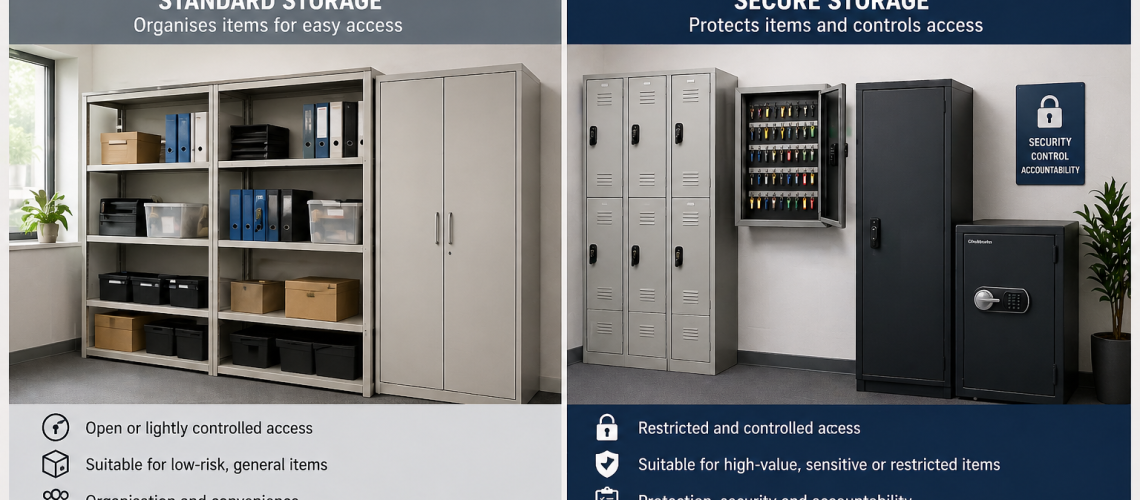
Storage and secure storage are not the same thing. Standard storage helps organise items, while secure storage protects items from loss, misuse, theft, damage or unauthorised access.
This guide explains the difference between storage and secure storage, where each option is used, and how UK workplaces can choose the right system for staff belongings, keys, tools, documents, equipment and controlled items.
What is storage?
Storage is any system used to keep items organised, accessible and easy to manage. It may include lockers, cupboards, shelving, filing cabinets, boxes, benches with storage, cloakroom units or general workplace cabinets.
The main purpose of standard storage is organisation. It helps reduce clutter, save space and make items easier to find.
What is secure storage?
Secure storage adds protection and control. It usually includes stronger materials, locks, restricted access, fixing points, audit procedures or specialist construction depending on the risk level.
The purpose is not only to store items. It is to control who can access them, reduce risk and provide a safer way to manage valuable, sensitive or restricted items.
Storage vs secure storage: key differences
| Feature | Storage | Secure storage |
|---|---|---|
| Main purpose | Organisation and access | Protection, control and accountability |
| Typical products | Shelving, open cupboards, basic cabinets, cloakroom storage | Lockers, safes, key cabinets, security cabinets, medical cabinets |
| Access | Open or lightly controlled | Restricted by lock, key, code, RFID or procedure |
| Risk level | Low | Medium to high |
| Best for | General items, stationery, coats, low-value equipment | Keys, devices, documents, medicines, tools, valuables and controlled items |
| Accountability | Limited | Higher, especially with sign-out systems or audit trails |
When standard storage is enough
Standard storage is usually enough when the stored items are low risk, low value or not sensitive. It works well where speed and visibility matter more than access restriction.
- Office stationery
- General supplies
- Cleaning materials that do not require specialist control
- Low-value equipment
- Coats, bags or personal items in supervised areas
In these cases, simple organisation may be the main requirement. Open shelving, cupboards or basic cabinets can often provide a practical solution.
When secure storage is needed
Secure storage is needed when items must be protected from unauthorised access, theft, damage, misuse or loss. It is also important where staff need clear responsibility for stored items.
- Workplace keys and master keys
- Staff belongings
- Laptops, tablets and mobile devices
- Tools and site equipment
- Medical supplies and medicines
- Confidential documents
- Cash, valuables or sensitive assets
- Hazardous or controlled materials
Higher-risk items need more than a place to sit. They need controlled access, suitable locking and a clear management process.
Examples of secure storage systems
Lockers
Lockers provide individual or shared secure compartments for staff, students, visitors or equipment. They are widely used in workplaces, schools, gyms, leisure centres and industrial environments.
Key cabinets
Key cabinets keep workplace keys organised and restricted. They help prevent lost keys, improve accountability and support better key control.
Secure cabinets
Secure cabinets are used for controlled items such as tools, documents, medicines, PPE, chemicals or business equipment. The correct cabinet depends on the item type and risk level.
Safes
Safes are designed for higher-value or higher-risk items. Some protect against theft, while others are designed to protect documents or digital media from fire.
Access control is the main difference
The clearest difference between storage and secure storage is access control. Standard storage asks where items are kept. Secure storage asks who can access them and how that access is managed.
Common access options include:
- Key locks for simple assigned use
- Padlock fittings for flexible control
- Mechanical combination locks for shared areas
- Digital keypad locks for controlled access
- RFID or smart locks for higher management control
- Sign-out logs and audit trails for accountability
Secure storage and compliance
Some workplaces need secure storage because of legal, safety or inspection requirements. This is common in healthcare, education, industrial, facilities management and public-facing environments.
Compliance usually depends on the full system, not only the product. A suitable cabinet still needs the right lock, fixing method, access process and staff procedure.
- Medicines may need restricted access and clear records
- Hazardous substances may need specialist cabinets
- Keys may need controlled issue and return procedures
- Confidential documents may need restricted storage
- Workplace belongings may need secure personal storage
How to decide which option you need
Start with the item, not the product. The right choice depends on what you are storing, who needs access and what could go wrong if control fails.
- Low value and low risk: standard storage may be enough.
- Personal belongings: lockers are usually more suitable.
- Shared keys: use a key cabinet or key control system.
- Documents or valuables: consider a secure cabinet or safe.
- Medicines or controlled items: choose storage with restricted access and clear procedures.
- Devices: use secure device lockers or charging lockers where power is needed.
Common mistakes when choosing storage
Many storage problems happen because the product is chosen before the risk is understood. This can lead to poor security, weak accountability or unnecessary replacement later.
- Choosing open storage for items that need restricted access
- Using a basic cupboard for keys, medicines or valuables
- Ignoring how many people need access
- Forgetting about future capacity
- Installing storage in the wrong location
- Relying on a lock without a clear access procedure
Summary: storage organises, secure storage protects
Storage helps keep items organised and accessible. Secure storage adds protection, access control and accountability.
For low-risk items, standard storage may be enough. For keys, belongings, tools, medicines, documents, devices or valuables, secure storage is usually the better choice.
The best solution combines the right product, suitable lock, sensible placement and clear user procedure. That is what turns simple storage into a reliable secure storage system.
Storage vs Secure Storage FAQs
What is the main difference between storage and secure storage?
Storage is used to organise and hold items, while secure storage is designed to protect items and control access. Secure storage includes locks, restricted access and procedures to reduce risk.
Do I always need secure storage in a workplace?
Not always. Standard storage is suitable for low-value, low-risk items. Secure storage is needed when items are valuable, sensitive, restricted or at risk of loss or misuse.
What items require secure storage?
Items such as keys, staff belongings, tools, devices, medicines, confidential documents, cash and hazardous materials usually require secure storage to control access and reduce risk.
Are lockers considered secure storage?
Yes, lockers are a form of secure storage when fitted with appropriate locks. They provide controlled access for personal belongings, equipment and workplace items.
What types of secure storage are commonly used in the UK?
Common types include lockers, key cabinets, secure cabinets, COSHH cabinets, medical cabinets and safes. The choice depends on what is being stored and the level of protection required.
Is a locked cupboard classed as secure storage?
A locked cupboard can provide basic security, but it may not be suitable for higher-risk items. Stronger cabinets, dedicated storage systems or safes are usually more appropriate where control and accountability are important.
What access control options are used in secure storage?
Secure storage can use key locks, padlocks, mechanical combination locks, digital keypads, RFID systems or smart locks. The right option depends on the number of users and level of control required.
Does secure storage help with compliance?
Yes. Many UK workplaces must control access to certain items. Secure storage supports compliance by restricting access, improving accountability and helping meet safety or inspection requirements.
Can standard storage be upgraded to secure storage?
In some cases, yes. Adding locks, improving fixing or changing access methods can increase security. However, high-risk items may still require purpose-built secure storage systems.
What is the best way to choose between storage and secure storage?
Assess the value of the items, who needs access and what could happen if control fails. Low-risk items may only need basic storage, while higher-risk items should always be placed in secure storage systems.
Discover more from Blog Total Locker Service
Subscribe to get the latest posts sent to your email.