Why Storage Systems Matter for Business Efficiency and Security
April 28, 2026
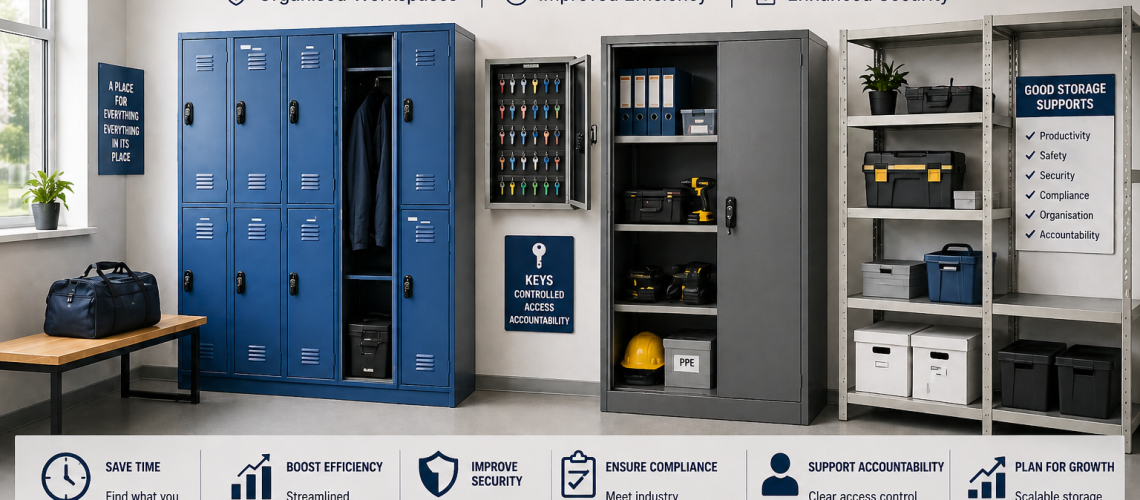
Storage systems matter because they help businesses keep items organised, secure and easy to manage. The right system reduces wasted time, protects important assets and supports safer day-to-day operations.
In many workplaces, poor storage causes avoidable problems. Staff lose time looking for keys, equipment, documents or personal items. Shared spaces become cluttered. Valuable items may be left unsecured. Over time, these small issues can affect productivity, security and workplace standards.
This guide explains why storage systems are important for business efficiency and security, and how lockers, key cabinets, secure cabinets and safes can support a better working environment.
What is a business storage system?
A business storage system is a structured way to store and control items used in the workplace. It may include lockers, cabinets, key storage, shelving, safes, charging lockers or specialist secure storage.
The best systems do more than provide space. They define where items belong, who can access them and how they are managed.
A complete storage system usually considers:
- What needs to be stored
- How often items are used
- Who needs access
- What level of security is required
- Where the storage should be located
- How the system will be managed over time
Why storage systems improve efficiency
Efficient workplaces depend on clear organisation. When items have a defined place, staff waste less time searching, moving things around or asking where equipment has been left.
They reduce wasted time
Lost or misplaced items slow people down. This is especially common with shared keys, tools, documents, PPE and equipment.
A clear storage system helps staff find what they need quickly. Key cabinets, labelled lockers, organised cupboards and structured storage areas all support faster access.
They improve workflow
Storage should support how people move through a workplace. Poor placement creates delays, congestion and unnecessary walking.
Well-positioned lockers, cabinets and key storage help staff store and retrieve items at the right point in the working day. This is useful in offices, warehouses, schools, healthcare settings, leisure centres and industrial sites.
They make shared spaces easier to manage
Shared workplaces need clear rules for belongings, equipment and access. Without proper storage, staff rooms, corridors, offices and changing areas can quickly become untidy.
Lockers and cabinets give items a defined location. That improves housekeeping and makes the workplace easier to maintain.
Why storage systems improve security
Security is one of the main reasons businesses invest in storage systems. Secure storage helps protect items from theft, loss, misuse, damage and unauthorised access.
They control access
Not every item should be available to everyone. Keys, tools, medicines, confidential documents, devices and valuables may all need restricted access.
Secure lockers, key cabinets, safes and restricted cabinets help control who can access specific items. This reduces risk and improves accountability.
They reduce loss and misuse
Items are easier to lose when they are stored informally. Keys left in drawers, tools left on benches or documents stored in open areas can all create avoidable problems.
A secure storage system makes it clear where items belong. It also makes it easier to identify when something is missing or has not been returned.
They protect valuable and sensitive items
Some items need stronger protection because of their value, sensitivity or risk. This may include laptops, tablets, master keys, records, cash, PPE, medicines or controlled supplies.
The correct storage system should match the risk level. Basic storage may be enough for low-value items. Higher-risk items usually need lockers, secure cabinets, key control systems or safes.
Storage systems and accountability
Accountability improves when staff know where items are stored, who can access them and how they should be returned. This is especially important for keys, tools, documents and controlled items.
Good storage systems support accountability through:
- Clear labelling
- Numbered compartments
- Restricted access
- Sign-out records
- Defined user procedures
- Regular checks and reviews
When accountability is built into the system, problems are easier to prevent and quicker to resolve.
Storage systems and compliance
Some businesses need storage systems to support legal, safety or inspection requirements. This is common in healthcare, education, facilities management, industrial workplaces and public-facing environments.
Compliance usually depends on more than the product itself. The cabinet, locker or safe must be supported by the right access method, placement and procedure.
Examples include:
- Controlled access for medicines or medical supplies
- Safe storage for hazardous substances
- Secure key management for buildings, vehicles or restricted areas
- Suitable storage for staff belongings and PPE
- Restricted storage for confidential documents
Storage systems help businesses scale
As a business grows, storage needs often become more complex. More staff, more equipment, more keys and more shared spaces can quickly expose weak storage planning.
A scalable storage system allows capacity to grow without creating disorder. This may involve adding more lockers, expanding key storage, upgrading locks or separating storage by department.
Planning for future capacity is often cheaper and easier than replacing a system after it has already become unsuitable.
Which storage systems support efficiency and security?
Different storage systems solve different business problems. The best setup often combines several products into one coordinated system.
| Storage system | Main use | Business benefit |
|---|---|---|
| Staff lockers | Personal belongings, uniforms and bags | Reduces clutter and improves workplace organisation |
| Charging lockers | Laptops, tablets and phones | Protects devices while keeping them charged and ready |
| Key cabinets | Building, vehicle and equipment keys | Improves key control and reduces lost keys |
| Secure cabinets | Tools, PPE, documents or controlled items | Restricts access and protects important items |
| Safes | Valuables, cash and sensitive records | Provides higher security for higher-risk items |
| Filing cabinets | Paper records and office documents | Improves document organisation and access |
How to improve your current storage system
Improving storage does not always mean replacing everything. Many businesses can make strong improvements by reviewing what they store, how access works and where storage is placed.
- Group items by type, value and risk
- Remove items that no longer need to be stored
- Use lockers for personal belongings
- Use key cabinets for shared keys
- Use secure cabinets or safes for higher-risk items
- Label storage clearly
- Place storage where it supports workflow
- Review access rules and responsibility
- Plan spare capacity for future needs
The goal is to create a system that is simple, secure and easy for people to use correctly.
Signs your business needs a better storage system
Your current storage system may need improving if you regularly see the same problems returning.
- Staff spend time looking for keys or equipment
- Personal belongings are left in work areas
- Cabinets or cupboards are overfilled
- Important items are stored in open areas
- Keys are not signed out or returned properly
- Documents are difficult to find
- Storage blocks walkways or creates congestion
- There is no clear responsibility for shared items
- Security depends on habit rather than a proper system
If these problems are common, the issue is usually the storage system, not just individual behaviour.
Summary
Storage systems matter because they improve organisation, protect important items and make workplaces easier to manage. A good system helps staff find what they need, keeps shared areas tidy and reduces security risks.
For businesses, the strongest results come from matching the storage system to the items, users, risks and working environment. Lockers, key cabinets, secure cabinets, charging lockers and safes all play a role when they are planned as part of one clear system.
“`htmlStorage Systems for Business Efficiency and Security FAQs
Why are storage systems important for businesses?
Storage systems help businesses organise items, reduce wasted time and protect valuable assets. They improve efficiency by making items easier to find and improve security by controlling access.
How do storage systems improve workplace efficiency?
They reduce time spent searching for items, improve workflow and keep shared spaces organised. Clear storage systems help staff access what they need quickly and keep work areas tidy.
How do storage systems improve security?
Secure storage systems restrict access to important items such as keys, devices, documents and equipment. This reduces theft, loss and misuse while improving accountability.
What types of storage systems are used in workplaces?
Common systems include lockers, key cabinets, secure cabinets, charging lockers, filing cabinets and safes. Most workplaces use a combination of these depending on their needs.
Do all businesses need secure storage?
Most businesses benefit from some level of secure storage. Items such as keys, staff belongings, devices and documents usually require controlled access to reduce risk.
What is the best way to choose a storage system?
Start by identifying what needs to be stored, who needs access and the level of security required. Then choose storage types, locks and placement that match how the workplace operates.
Can storage systems help with compliance?
Yes. Many industries require controlled storage for certain items. Proper storage systems support compliance by restricting access, improving organisation and supporting clear procedures.
How do storage systems improve accountability?
They define where items are stored and who can access them. Systems such as key cabinets, labelled lockers and sign-out processes make it easier to track usage and responsibility.
Should storage systems be planned in advance?
Yes. Planning helps ensure the system matches the number of users, type of items and available space. It also allows for future expansion without disruption.
What are the signs that a business needs better storage systems?
Common signs include lost keys, cluttered work areas, unsecured belongings, overfilled cabinets, poor organisation and time wasted searching for items.
Discover more from Blog Total Locker Service
Subscribe to get the latest posts sent to your email.