Medicine Storage in Care Homes UK: Common Mistakes to Avoid (2026 Guide)
May 5, 2026
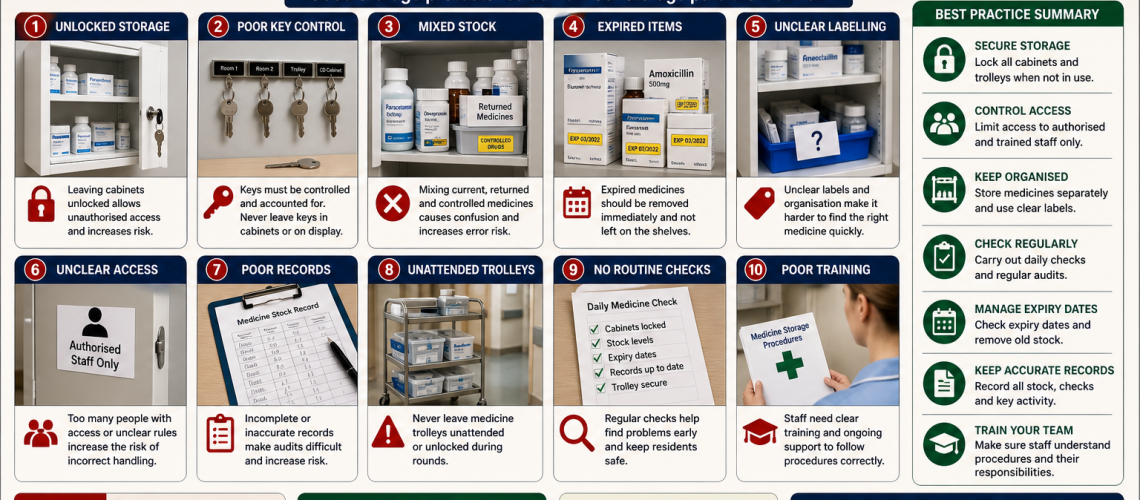
Medicine storage mistakes in care homes can lead to safety risks, compliance issues and poor audit outcomes. The most common problems include unlocked storage, poor record keeping, mixed stock, expired medicines and unclear access control.
This guide explains the most common medicine storage mistakes in UK care homes, why they happen and how to fix them. It is designed to help care providers improve safety, strengthen procedures and prepare for inspections.
Start here: This page forms part of the main Medical Cabinets UK: Medicines Storage, Compliance and Security Guide, which explains how to choose, plan and manage secure medicine storage.
It supports the Care Home Medicine Storage Guide UK and the Medical Storage Compliance UK guide.
Why medicine storage mistakes matter
Medicine storage is part of the wider medicines management process. When storage fails, it affects safety, accountability and daily care routines.
- Increases risk of incorrect medicine use.
- Makes stock checks and audits harder.
- Creates gaps in accountability.
- Can lead to compliance concerns during inspections.
- Reduces confidence in the overall system.
Most common care home medicine storage mistakes
These issues appear repeatedly across care settings. Each one is preventable with the right system and routine.
1. Unlocked medicine storage
Leaving cabinets, trolleys or medicine rooms unlocked is one of the most serious risks. Even short periods of unsecured access can lead to misuse, errors or unauthorised handling.
Fix: Lock all cabinets immediately after use. Ensure staff understand that medicine storage must never be left open or unattended.
2. Poor key control
Keys left in cabinets, shared without control or stored in accessible locations reduce security. Many incidents are caused by weak key management rather than cabinet failure.
Fix: Restrict keys to authorised staff only. Store spare keys securely and introduce a clear process for lost keys.
3. Mixed medicine stock
Mixing current medicines, returned medicines, controlled drugs and unrelated items creates confusion and increases the risk of errors.
Fix: Separate medicines by type. Use clearly defined sections or cabinets for current stock, returns and controlled drugs.
4. Expired medicines left in storage
Expired medicines reduce safety and can lead to incorrect administration if not identified.
Fix: Introduce regular expiry checks and remove expired items from current stock immediately.
5. Unclear labelling and organisation
Poor labelling makes it harder for staff to find the correct medicines quickly. It increases the chance of mistakes during busy periods.
Fix: Use clear labels and consistent organisation. Group medicines logically by resident, type or use.
6. Lack of clear access control
Too many staff having access, or unclear access rules, increases risk. Access should always be controlled and based on responsibility.
Fix: Limit access to authorised staff only. Keep an up-to-date list of who can access medicine storage.
7. Poor record keeping
Incomplete or inconsistent records make it difficult to track stock, identify issues or respond to audits.
Fix: Keep accurate records for stock, checks and controlled drugs. Ensure records match physical stock.
8. Medicine trolleys left unattended
Leaving trolleys unlocked or unattended during rounds creates immediate access risks.
Fix: Keep trolleys locked when not in direct use and return them to secure storage after rounds.
9. No routine checks or audits
Without regular checks, problems go unnoticed until they become serious.
Fix: Introduce daily checks and regular audits covering cabinets, keys, stock and procedures.
How to fix medicine storage problems
Improving medicine storage is not about one change. It requires a clear system that staff can follow consistently.
- Define clear storage zones (current, returns, controlled).
- Limit access to authorised users only.
- Introduce strong key control procedures.
- Set regular check and audit routines.
- Train staff on storage responsibilities.
- Review storage after any incident or near miss.
Simple daily checklist for care home staff
- Are cabinets locked when not in use?
- Are keys controlled and accounted for?
- Are medicines stored in the correct place?
- Are expired items removed?
- Is the medicine trolley secure?
- Are stock levels consistent with records?
- Are any issues reported immediately?
Best practice structure for safe storage
| Area | Best practice | Outcome |
|---|---|---|
| Cabinet security | Lock after every use | Prevents unauthorised access |
| Key control | Restricted and tracked | Improves accountability |
| Stock organisation | Separate and labelled | Reduces errors |
| Expiry management | Regular checks | Keeps stock safe |
| Audits | Routine checks | Finds issues early |
Related guides
- Care Home Medicine Storage Guide UK
- Medical Cabinet Security Guide UK
- Controlled Drugs Cabinet Guide UK
- Medicine Storage Cabinets UK
- Medical cabinets and secure storage
Final advice
Most medicine storage problems are caused by weak routines rather than poor equipment. A clear system, consistent checks and controlled access will prevent the majority of issues.
Start by identifying the biggest risks in your current setup, fix those first and build a simple routine that staff can follow every day.
FAQ: Medicine storage mistakes in care homes
What is the most common medicine storage mistake in care homes?
Leaving cabinets unlocked or poorly controlling access is one of the most common and serious mistakes.
Why is mixing medicine stock a problem?
Mixed stock increases confusion, makes audits harder and raises the risk of incorrect medicine use.
How can care homes prevent expired medicines being used?
By carrying out regular expiry checks and removing expired items from active storage immediately.
Who should have access to medicine storage?
Only authorised and trained staff should have access, based on their role and responsibility.
How often should medicine storage be checked?
Basic checks should be carried out daily, with more detailed audits completed regularly as part of the care home’s procedures.
What is the biggest risk in medicine storage systems?
The biggest risk is poor access control and inconsistent procedures rather than the cabinet itself.
Discover more from Blog Total Locker Service
Subscribe to get the latest posts sent to your email.