How to Label and Organise Locker Keys Properly
April 14, 2026
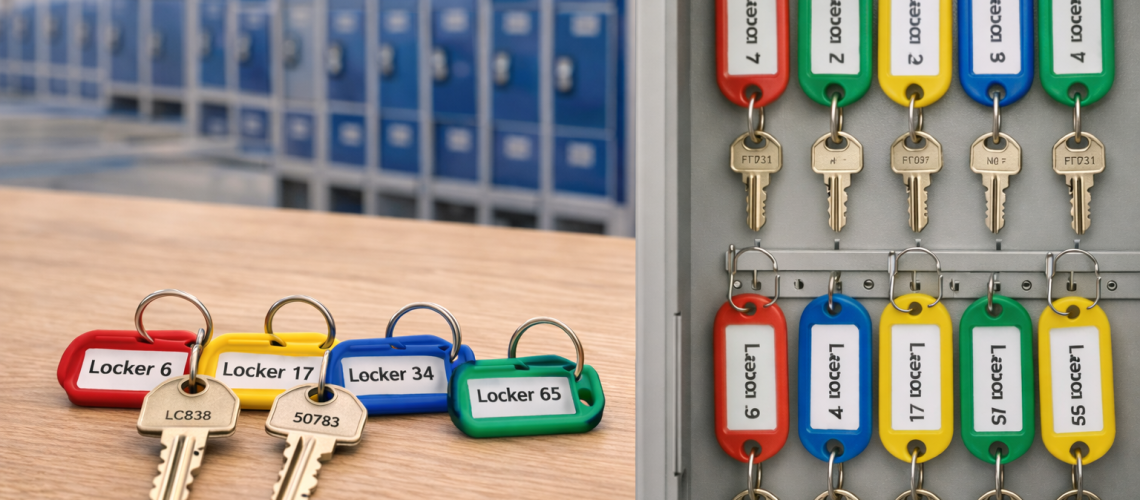
Clear labelling and organisation are essential for any locker key system. Without it, keys become difficult to identify, replacements take longer to arrange and staff spend unnecessary time resolving avoidable issues. In workplaces, schools, gyms and industrial settings, even a simple structure can make a significant difference.
A well-organised locker key system improves access, reduces loss and supports better long-term management. This guide explains how to label and organise locker keys properly so your system remains clear, consistent and easy to maintain. For the full overview, see our Locker Keys UK guide.
Why Locker Key Labelling Matters
Locker keys may look similar, but they are rarely interchangeable. Without clear labelling, it becomes difficult to match keys to lockers, track replacements or maintain control across larger sites.
- reduces confusion between similar keys
- helps staff identify the correct locker quickly
- supports faster replacement when keys are lost
- improves control over spare key systems
- reduces errors when issuing or returning keys
Good labelling turns a collection of keys into a structured, manageable system.
Start with Clear Locker Numbering
Before labelling keys, the locker system itself needs to be clearly numbered. Each locker should have a visible, consistent number that matches its key.
For the wider overview of locker key systems, replacement and ordering, read our Locker Keys UK guide.
- use simple, sequential numbering
- avoid duplicate or unclear numbering
- ensure numbers are easy to read at a distance
- keep numbering consistent across the site
Once the lockers are numbered properly, the keys can be labelled to match.
Match Keys to Locker Numbers
The simplest and most effective approach is to match each key directly to its locker number. This creates a clear, one-to-one relationship that is easy to understand.
- label each key with the locker number
- ensure the number is easy to read
- avoid relying on memory or guesswork
- keep the system consistent across all keys
This approach works across most environments, from workplaces to schools and gyms.
Include Key Codes Where Possible
In addition to locker numbers, recording the key code is one of the most useful steps you can take. The code allows replacement keys to be ordered quickly and accurately.
- record key codes in a central system
- link each code to the correct locker number
- keep records updated when keys or locks change
For more detail, see our guide on locker key numbers explained and how to find your locker key code.
Use Key Tags and Fobs for Visibility
Key tags or fobs make keys easier to handle, identify and organise. They provide a visible label that can be read quickly without inspecting the key itself.
- use durable plastic or metal tags
- choose clear, easy-to-read fonts
- avoid overly small or cluttered labels
- ensure tags are securely attached
In many environments, colour-coded tags can also help group keys by department, area or user type.
If you need help understanding those numbers, see locker key numbers explained and how to find your locker key code.
Use Colour Coding for Larger Systems
On larger sites, colour coding can make key management much easier. It allows staff to identify groups of lockers quickly without reading every label.
- assign colours to departments or areas
- use consistent colour schemes across keys and lockers
- avoid using too many colours, which can create confusion
Colour coding works particularly well in workplaces, schools and leisure environments with high locker usage.
Organise Keys in a Structured Storage System
Labelling is only part of the solution. Keys also need to be stored in a way that keeps them organised and accessible.
- use a dedicated key cabinet or storage board
- group keys by locker number or location
- keep spare keys separate from issued keys
- limit access to authorised staff
A structured storage system helps prevent loss and makes it easier to find the correct key when needed.
Keep a Clear Key Record System
A simple record system supports both labelling and organisation. It allows you to track which keys exist, where they are stored and who is responsible for them.
- record locker numbers and key codes
- log issued and returned keys
- track spare key locations
- update records regularly
This does not need to be complex. A basic spreadsheet or log sheet is often enough to maintain control.
Plan for Lost or Missing Keys
Even with a well-organised system, keys will occasionally be lost. Planning for this helps reduce disruption.
- keep spare keys for critical lockers
- record key codes to allow quick replacement
- review whether lost keys affect security
If a key goes missing, our guide on what to do next explains the process.
Use Cut to Code Replacement for Consistency
When replacements are needed, using a cut to code service helps maintain consistency across the system. Each new key is produced using the correct code rather than copied from an old key.
This ensures the replacement matches the original lock accurately. For more detail, see our guide on cut to code locker keys.
Keep the System Consistent Over Time
A key system is only effective if it remains consistent. As lockers are added, replaced or reallocated, the labelling and organisation system should be maintained.
- apply the same labelling rules to new lockers
- update records when changes are made
- replace worn tags or labels
- review the system periodically
Consistency is what keeps the system easy to use over time.
How Locker Key Organisation Supports the Wider System
Keys are only one part of the locker setup. Labelling and organisation work best when combined with a clear locker layout, suitable locks and good site management practices.
When a labelled key still needs replacing, use our locker key replacement service.
If you are reviewing your setup, explore our locker ranges, available locker locks and supporting locker accessories.
Order Replacement Locker Keys Easily
When keys are labelled and recorded properly, ordering replacements becomes much simpler. The correct code can be identified quickly, reducing delays and avoiding errors.
Use our locker key replacement service to order accurate replacements. For the full overview, return to our Locker Keys UK guide.
Frequently Asked Questions
What is the best way to label locker keys?
Use clear, durable tags that match the locker number and are easy to read at a glance.
Should locker keys include the key code?
Yes, where possible. This makes replacement faster and more accurate.
How should spare locker keys be stored?
In a secure, organised key cabinet with clear labelling and controlled access.
How often should locker key systems be reviewed?
Regularly, especially when lockers are reallocated or new keys are issued.
Discover more from Blog Total Locker Service
Subscribe to get the latest posts sent to your email.