Lost Locker Key? What to Do Next UK: Replacement Key or Lock Guide
April 14, 2026
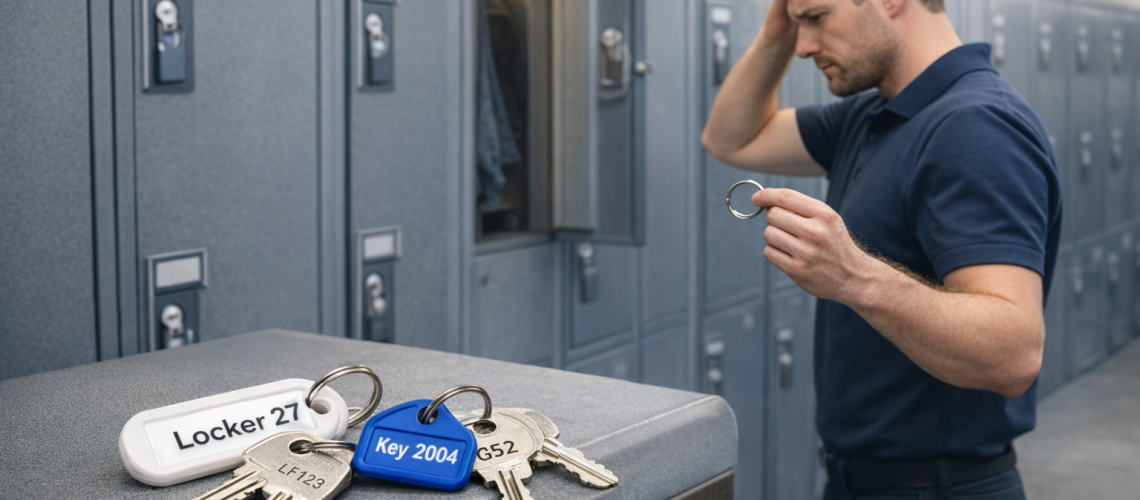
Losing a locker key is common in schools, workplaces, factories, warehouses, gyms, leisure centres and other shared facilities. The correct response depends on whether the locker is open or locked, whether a spare or master key exists, whether the key code can be identified and whether the missing key creates a genuine security risk.
In many cases, a lost locker key does not mean the complete locker lock needs replacing. If the lock still works and the correct key number or lock code can be identified, a replacement key can often restore access quickly and with minimal disruption.
This guide explains what to do immediately after losing a locker key, how to find the correct key number, how master keys can help, when a replacement key is appropriate, when the lock should be changed and how schools, workplaces and leisure facilities can reduce repeated key-loss problems.
If you already know the correct code, use our replacement locker key service. If you still need to identify the number, see our How to Find Your Locker Key Code UK guide.
Quick Answer: What Should You Do If You Lose a Locker Key?
- Check whether the key is actually lost or simply misplaced.
- Determine whether the locker is currently locked or open.
- Check whether an authorised spare key exists.
- Check whether the locker is part of a master-key system.
- Find the key number or lock code.
- Identify the lock manufacturer where possible.
- Decide whether a replacement key is sufficient.
- Consider changing the lock if security has been compromised.
- Avoid forcing the locker unless authorised emergency procedures require it.
- Update the site’s key records after the problem is resolved.
A lost locker key does not automatically mean a new lock. Identify the code and assess the security risk first.
Step 1: Check Whether the Key Is Really Lost
Before ordering anything, confirm that the key has genuinely been lost.
- Check pockets, bags and clothing.
- Check changing-room benches and nearby surfaces.
- Ask reception or facilities staff.
- Check whether the key was handed in.
- Check labelled key cabinets or secure spare-key storage.
- Confirm whether another authorised user is holding the key temporarily.
In busy schools, factories, gyms and workplaces, keys are often reported missing before these simple checks have been completed.
Step 2: Is the Locker Open or Locked?
If the locker is open
Keep the locker open until the replacement-key situation is resolved. Avoid closing and relocking the locker if nobody has a working key.
If the locker is locked
Check for an authorised spare key, master key or management-access route before considering any physical intervention.
If urgent access is required, follow the organisation’s normal authorisation procedure before the locker is opened.
Step 3: Check for a Spare Locker Key
Many organisations hold controlled spare keys for lockers.
- facilities office;
- site manager;
- school administration office;
- reception;
- secure key cabinet;
- maintenance department;
- or a documented spare-key register.
If a spare exists, access can normally be restored immediately while a permanent replacement is ordered.
Step 4: Check for a Master Key
Many locker systems use master-keyed locks. Individual users have their own keys while authorised staff hold a master key that operates a defined group of compatible lockers.
Before using a master key:
- confirm the correct locker;
- confirm that access is authorised;
- check the key belongs to the correct master group;
- record access where your site procedures require it;
- and return the master key to secure storage afterwards.
For more detail, see our Master Key Locker Systems UK guide.
Step 5: Find the Locker Key Number or Lock Code
If no spare is available, the next priority is identifying the correct key code.
Check:
- the original key if another copy exists;
- the front face of the lock;
- the lock barrel;
- another spare key;
- site key records;
- previous replacement-key orders;
- maintenance schedules;
- and locker allocation records.
The number displayed on the locker door is not automatically the key code. Only use a locker number for ordering if your records specifically link it to the correct lock number.
Use our locker key code guide if the number is not obvious.
Locker Number vs Key Number
| Number | What it identifies |
|---|---|
| Locker number | The physical compartment |
| Key number or lock code | The key pattern used by the lock |
| Asset number | The organisation’s internal equipment reference |
| Master-key reference | A management-access group |
For example, locker 125 may use key code 92201. Ordering key 125 merely because that number is on the locker door could therefore result in the wrong replacement.
Step 6: Identify the Locker Lock Manufacturer
Locker keys are manufacturer and lock-series specific. Identifying the lock brand can help confirm which key range a code belongs to.
Common UK locker lock brands and locker systems include:
- Lowe & Fletcher;
- Ojmar;
- ASSA;
- Ronis;
- Probe;
- Pure;
- Helmsman;
- Link;
- Garran;
- QMP;
- and other specialist locker-lock ranges.
If the brand is known, use our locker keys by brand page.
Replacement Key or Replacement Lock?
| Situation | Likely response |
|---|---|
| Key lost, correct code known and lock works normally | Order replacement key |
| Spare key required | Order additional key |
| Original key damaged but code readable | Order cut-to-code replacement |
| Code unclear but lock identifiable | Confirm manufacturer and key series |
| Lock seized or mechanically damaged | Replace or repair lock |
| Lock has been forced | Inspect and replace damaged components |
| No reliable code or lock identification | Consider replacing the lock |
| Lost key creates a significant security concern | Consider changing the lock |
If the lock still works properly and the key code is known, replacing the key is normally the least disruptive solution.
If the complete lock needs replacing, use our Locker Lock Replacement Guide UK.
When a Lost Locker Key Creates a Security Risk
Being able to order another key does not always mean that replacement is the correct security decision.
Consider changing the lock when:
- the key may have been stolen rather than misplaced;
- the missing key can easily be associated with the locker;
- the locker contains valuable or controlled equipment;
- the previous holder should no longer have access;
- there is evidence of attempted unauthorised access;
- the lock has been damaged;
- or a master or management key has been compromised.
What If Access Is Needed Urgently?
Some lockers contain workwear, PPE, tools, uniforms or personal belongings that are needed immediately.
Before forcing entry:
- check for spare keys;
- check for authorised master access;
- confirm the user and locker;
- obtain the required management authorisation;
- check whether a replacement key can be identified;
- and assess the consequence of damaging the locker or lock.
Forced entry can turn a simple lost-key problem into a replacement-lock, damaged-door or damaged-cam repair. It should normally be a last resort.
What Does Cut to Code Mean?
Cut-to-code replacement means producing a new key from the correct manufacturer code rather than copying an existing physical key.
This is useful when the original key has disappeared but the lock code remains available.
For the full process, see Replacement Locker Keys by Code UK.
Lost Locker Keys in Schools
Schools can experience frequent key loss because large numbers of pupils use lockers every day.
- Record pupil-to-locker allocation.
- Record the actual key number separately.
- Keep authorised spare keys.
- Store master keys securely.
- Record replacement keys.
- Recover keys when lockers are reassigned.
- Review missing-key problems at the end of each term.
- Change damaged or compromised locks rather than repeatedly replacing keys.
Lost Locker Keys in Workplaces
Workplace lockers may contain clothing, uniforms, PPE, personal belongings or work equipment. The appropriate response depends on the contents and the organisation’s access procedures.
- Confirm the employee and locker allocation.
- Check whether a spare or master key exists.
- Identify the lock code.
- Assess whether the lost key creates a security concern.
- Recover keys during staff offboarding.
- Update records after replacements or lock changes.
Lost Locker Keys in Factories and Warehouses
Industrial sites may have large banks of staff lockers serving permanent workers, shift staff, agency workers and contractors.
- Keep locker and key codes recorded.
- Hold suitable spare keys where justified.
- Control master keys.
- Separate simple lost-key cases from damaged locks.
- Recover keys when contractors or employees leave.
- Consider keyless alternatives if repeated key loss becomes an operational problem.
Lost Locker Keys in Gyms and Leisure Centres
Leisure facilities can use keyed locks, coin locks, padlocks, mechanical combinations, electronic PIN systems and RFID wristbands.
A conventional replacement key is relevant only where the locker actually uses a keyed lock.
- Identify the lock type first.
- Check service or master-key access.
- Confirm whether the lock is keyed, coin-operated or electronic.
- Check wet-area suitability before replacing hardware.
- Consider whether repeated lost-key problems justify a different access system.
Lost Master Key vs Lost User Key
| Lost key | Potential impact | Typical first action |
|---|---|---|
| Individual user key | Usually one locker | Identify code and replace or change one lock |
| Spare user key | Usually one locker | Review who had access and update records |
| Sub-master key | Several lockers | Identify the affected group and assess risk |
| Master key | Potentially a wider locker group | Escalate, record and review affected locks |
| Electronic override key | Depends on lock or system | Identify the exact product and revoke or replace where possible |
A missing master key deserves more attention than a missing individual locker key because its access scope may be wider.
How Much Does a Lost Locker Key Problem Cost?
The cost depends on how the issue is resolved.
| Response | Typical relative cost | Disruption |
|---|---|---|
| Use existing spare | Very low | Minimal |
| Replacement key by code | Low | Low |
| Master-key access | Low hardware cost | Low |
| Replace complete lock | Higher | Moderate |
| Forced entry with damage | Potentially highest | High |
This is why accurate locker key records can reduce both cost and disruption.
How to Reduce Future Locker Key Loss
- Issue keys against an allocation record.
- Use clear locker numbering.
- Record the actual key code separately.
- Use engraved or labelled key fobs where useful.
- Keep controlled spare keys.
- Store master keys securely.
- Recover keys during offboarding.
- Review recurring lost-key patterns.
- Replace damaged locks promptly.
- Consider combination or electronic locks where key loss is consistently high.
For the wider administrative process, see our Locker Key Management Systems UK guide.
When to Consider Keyless Locker Locks
If lost keys create repeated cost and administration, another locking method may be more suitable.
- mechanical combination locks;
- electronic PIN locks;
- RFID cards or fobs;
- RFID wristbands;
- shared-use electronic locks;
- and suitable smart locker systems.
Changing access technology introduces different maintenance and management requirements, so the decision should be based on the complete operating model rather than key loss alone.
See our How to Stop Lost Locker Keys guide or our Locker Lock Upgrade Guide UK.
Create a Simple Locker Key Register
| Record | Purpose |
|---|---|
| Locker number | Identifies the physical compartment |
| Location | Identifies the room or locker bank |
| Lock manufacturer | Helps identify replacement-key series |
| Key number | Provides the replacement-key reference |
| Allocated user | Supports issue and return |
| Spare-key location | Allows rapid recovery |
| Master-key group | Supports controlled management access |
| Replacement issued | Maintains current records |
| Lock changed | Prevents obsolete key numbers remaining on file |
Common Lost Locker Key Mistakes
- Forcing the locker before checking for a spare key.
- Ordering from the locker number rather than the key code.
- Guessing an unclear code.
- Ignoring the lock manufacturer.
- Replacing a working lock unnecessarily.
- Ordering another key for a seized lock.
- Ignoring the security implications of a stolen key.
- Using a master key without proper authorisation.
- Failing to record replacement keys.
- Failing to update records after changing a lock.
- Allowing former staff to retain locker keys.
- Treating a lost master key as if it were an ordinary lost user key.
Lost Locker Key Checklist
- Is the key definitely lost?
- Is the locker open or locked?
- Is urgent access required?
- Is a spare key available?
- Is there an authorised master key?
- Can the key code be identified?
- Is the locker number being confused with the key number?
- Is the lock manufacturer known?
- Does the lock still operate correctly?
- Has the key possibly been stolen?
- Would the previous key still present a security risk?
- Does the complete lock need changing?
- Have key records been updated?
- Is repeated key loss becoming an operational problem?
Related Locker Key Guides
- Replacement Locker Keys – order replacement keys for many common locker ranges.
- How to Find Your Locker Key Code UK – identify the number needed for replacement.
- Replacement Locker Keys by Code UK – cut-to-code replacement process.
- Locker Lock Identification Guide UK – identify an unknown locker lock.
- Master Key Locker Systems UK – master, sub-master and override keys.
- Locker Key Management Systems UK – key issue, tracking, return and governance.
- How to Stop Lost Locker Keys – alternatives to traditional keyed locks.
- Locker Lock Replacement Guide UK – replacing the complete lock.
- Locker Locks – replacement and upgrade locking products.
Lost Locker Key FAQs
What should I do if I lose a locker key?
Check whether the key is genuinely lost, look for a controlled spare or authorised master key, identify the key code and decide whether a replacement key or complete lock replacement is appropriate.
Can I replace a locker key without the original?
Often, yes. If the correct manufacturer and key code can be identified from the lock face, site records or another spare key, a replacement can often be supplied without the original key.
Is the number on the locker door the key number?
Not necessarily. The locker number usually identifies the compartment, while the key number identifies the key pattern. Only use the locker number for ordering where site records confirm that it matches the actual key code.
Should I replace the locker lock if the key is lost?
Not automatically. If the lock works correctly and the code is known, a replacement key is normally sufficient. Consider changing the lock if the hardware is damaged or if the missing key creates a security risk.
Can a master key open a locker if the user key is lost?
Yes, where the locker belongs to the correct master-key group and authorised personnel follow the site’s access procedures.
What should I do if a master locker key is lost?
Identify the lockers the missing master key can operate, record the loss, assess the security risk and review whether affected locks need to be changed or reconfigured.
Should I force open a locker if the key is lost?
Normally no. Check spare keys, master access and replacement-key options first. Forced opening can damage the lock, cam, locker door or frame and should generally be a last resort under an authorised procedure.
Can schools order replacement locker keys by code?
Yes. Where the correct lock manufacturer and key number are known, replacement locker keys can often be supplied without changing the complete lock.
Lost Key Does Not Automatically Mean New Lock
Most lost locker key incidents can be dealt with more efficiently when the site knows the locker number, key code, lock manufacturer and authorised spare or master-key arrangements.
Start with the least disruptive option. Check for a spare, identify the key code and confirm the condition of the existing lock. Replace the complete lock only where the hardware is damaged, the key cannot be identified reliably or the missing key presents an unacceptable access risk.
Total Locker Service supplies replacement locker keys and locker locks for many common UK locker systems and can help identify unfamiliar keys and locks from photographs and measurements.
Visit our replacement locker keys page or use our locker lock and part identification service.
Call 01284 749211 or email sales@totallocker.co.uk.
Discover more from Blog Total Locker Service
Subscribe to get the latest posts sent to your email.