Gym Locker Keys and Wrist Strap Systems Explained
April 14, 2026
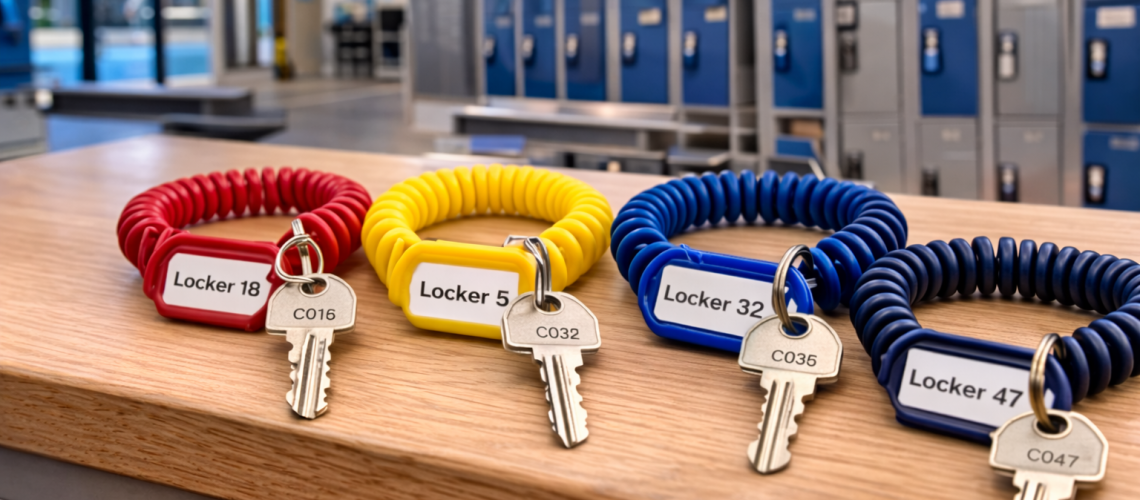
Gym locker keys need to work hard. In leisure centres, health clubs, swimming pools and changing rooms, lockers are used repeatedly throughout the day. Keys may be carried during workouts, taken into wet areas or handled by large numbers of users in quick succession. That creates different demands from a typical workplace or school locker system.
For that reason, many gyms and leisure sites use wrist strap locker keys rather than loose individual keys. A wrist strap system makes the key easier to carry, harder to misplace and more practical in wet or active environments. This guide explains how gym locker keys work, when wrist strap systems are the right choice and how they fit into wider locker management. For the broader overview, see our Locker Keys UK guide.
Why Gym Locker Keys Are Different
Locker use in gyms is different from many other environments. Users often move between changing rooms, showers, lockers, fitness areas and poolside spaces. A loose key can easily be dropped, mixed up or left behind. In wet areas, that risk increases further.
For the wider overview of locker key replacement and management, see our Locker Keys UK guide.
Gym locker keys therefore need to be easy to carry, quick to identify and suitable for repeated daily use. The system also needs to be manageable for staff, especially where large numbers of lockers are used by members, guests or casual visitors.
- keys are often used in wet conditions
- users may need to carry them during exercise
- large numbers of lockers may be used each day
- speed and convenience matter more in high-turnover spaces
What Is a Wrist Strap Locker Key?
A wrist strap locker key is a locker key attached to a flexible band that can be worn around the wrist. In many leisure settings, the band is designed to be lightweight, water-resistant and comfortable enough to wear while swimming, showering or exercising.
The strap keeps the key physically attached to the user, which reduces the chance of it being lost between the locker and the activity area. It also makes the key easier to spot and return.
Why Wrist Strap Systems Are Popular in Gyms and Leisure Centres
Wrist strap systems are popular because they solve a simple operational problem. Loose keys are inconvenient in active environments. A strap-based system is more practical and usually easier for both users and staff.
- easier for users to carry during workouts
- better suited to wet areas and poolside use
- less likely to be dropped or misplaced
- quicker for staff to identify and reissue
- often more comfortable than carrying a loose key in a pocket
These benefits are especially useful in sites where lockers are shared by many users over the course of a day.
For a closer look at how numbering and codes work, read locker key numbers explained.
Loose Keys vs Wrist Strap Keys
Both systems can work, but they suit different environments. A standard loose key may be acceptable in dry changing areas or lower-use sites. In busier gym and leisure settings, a wrist strap system is often the more practical option.
Loose keys can be simpler and cheaper to issue individually. Wrist strap keys, however, are usually better where mobility, water exposure and user turnover are higher.
- Loose key systems suit simple, lower-intensity environments
- Wrist strap systems suit active, wet and high-turnover settings
- Wrist strap systems often improve day-to-day usability
Common Gym Locker Key Setups
Gym locker keys can be used in several different ways depending on the site layout, membership model and lock type.
- standard key on a numbered wrist strap
- coin return locker key system
- member-issued locker key with permanent number
- temporary day-use key issued from reception
- wet area key system designed for pools and changing rooms
Some sites use permanent member lockers. Others use a shared system where keys are issued and returned daily. The right choice depends on how the facility operates.
How Gym Locker Key Numbers Help with Management
Numbering is one of the most important parts of a gym locker key system. A clear numbered setup helps staff know which key belongs to which locker and makes it far easier to deal with lost, damaged or missing keys.
For a closer look at how numbering and codes work, read locker key numbers explained.
Where wrist strap systems are used, the band itself is often numbered as well. That gives staff and users a quick visual reference without needing to inspect the cut code on the key.
For a full explanation of coded key systems, read our guide on locker key numbers explained.
What Happens When a Gym Locker Key Is Lost?
Lost keys are a routine issue in leisure environments, particularly where many lockers are used by the public. When a gym locker key goes missing, the best response depends on whether the key code is known and whether a spare is already available.
If a gym locker key has already gone missing, see what to do next when a locker key is lost.
- check whether a spare key exists
- confirm the locker number and key code
- review whether the strap or tag has also gone missing
- replace the key or the full unit as needed
If you are dealing with that situation now, read our guide on what to do next when a locker key is lost.
Cut to Code Replacement for Gym Locker Keys
Many gym locker keys can be replaced using a cut to code service. That means a new key is made using the correct code rather than copied from an old key. This is particularly useful when the original key has gone missing but the code can still be identified.
That process helps leisure sites restore access quickly and maintain continuity without replacing the entire lock unnecessarily. You can read more in our guide on cut to code locker keys.
What Makes a Good Wrist Strap System?
A good wrist strap system needs to be practical, durable and easy to manage. In wet and active spaces, materials matter. The strap should be comfortable enough for everyday use but robust enough to cope with repeated handling, water exposure and frequent cleaning.
If you need replacements, use our locker key replacement service.
- comfortable fit for different users
- clear numbering or identification
- water-resistant construction
- secure attachment to the key
- easy for staff to issue, track and reissue
It also helps when the system matches the wider locker setup so keys, straps and locker numbers all work together clearly.
How to Manage Gym Locker Keys More Effectively
Good locker key management reduces delays at reception, lowers replacement costs and improves the user experience. Even a simple process can make a noticeable difference.
- keep spare keys recorded and stored securely
- match strap numbers clearly to locker numbers
- check returned keys regularly for wear or damage
- replace damaged straps before they fail
- review whether high-loss areas need a different issue process
Accessories can support this too. You can review practical options through our locker accessories range.
How Gym Locker Keys Fit into the Wider Locker Setup
Locker keys are only one part of the wider system. The choice of lock, the type of locker, the numbering setup and the site’s management process all influence how well the system performs day to day. A practical key system is easier to maintain when the rest of the installation has been planned properly too.
If you are reviewing the wider setup, compare our locker ranges, available locker locks and full lockers guide.
Choosing the Right Gym Locker Key System
The right solution depends on the type of facility, how lockers are allocated and how much movement happens between dry and wet areas. Sites with swimming pools and changing rooms will often benefit more from wrist strap systems. Dry gyms or staff fitness suites may be able to use simpler key arrangements.
Where convenience, visibility and wet-area usability matter, wrist strap locker keys are usually the stronger choice.
Order Replacement Gym Locker Keys
If you already know the key code or need help replacing gym locker keys, you can use our locker key replacement service. For the full overview of codes, types and ordering guidance, return to our Locker Keys UK guide.
Frequently Asked Questions About Gym Locker Keys
Why do gyms use wrist strap locker keys?
They are easier to carry during exercise, better suited to wet areas and less likely to be misplaced than loose keys.
Can gym locker keys be replaced by code?
In many cases, yes. If the correct key code is known, a replacement can often be cut to match the original lock.
Are wrist strap systems only for swimming pools?
No. They are common in wet leisure environments, but they can also work well in gyms, health clubs and other active changing areas.
How can staff manage gym locker keys more effectively?
Use clear numbering, store spares securely, inspect returned keys regularly and replace damaged straps before they fail.
For the full picture on replacement, codes and ordering, return to our complete guide to locker keys.
Discover more from Blog Total Locker Service
Subscribe to get the latest posts sent to your email.