Locker Lock Maintenance Guide UK: Inspection, Cleaning, Repairs and Battery Checks
May 8, 2026
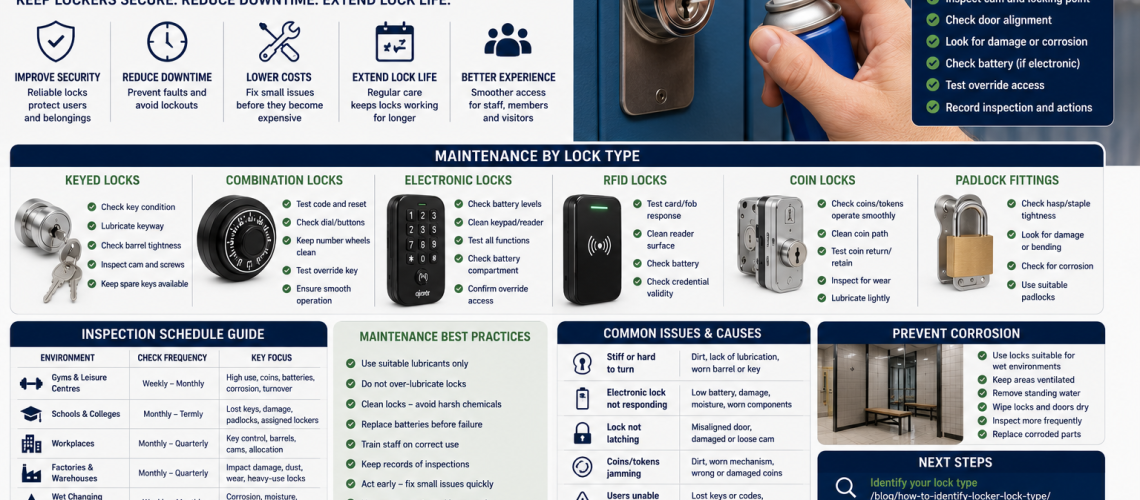
Locker lock maintenance keeps lockers secure, reduces failures and extends the life of your storage system. Regular checks, cleaning, lubrication and planned part replacement can prevent lost access, broken locks and costly downtime across workplaces, schools, gyms and facilities.
This guide explains how to maintain locker locks in the UK, including routine checks, cleaning methods, battery management, fault diagnosis and when to repair, replace or upgrade your locks.
Quick answer: Inspect locker locks regularly, keep them clean, replace worn parts early and maintain batteries in electronic locks. Planned maintenance prevents failures and reduces long-term costs.
For lock types and upgrades, see our locker locks UK guide and mechanical vs electronic locker locks comparison.
Why locker lock maintenance matters
Locker locks are used daily. Over time, dirt, wear, misuse and environmental conditions can affect performance. Without maintenance, small issues become failures.
- Keys break or stop turning smoothly
- Cam arms loosen or misalign
- Locks become stiff or jammed
- Electronic locks fail due to battery issues
- Users lose access to lockers
Routine maintenance reduces disruption, protects assets and keeps lockers usable.
Locker lock maintenance checklist
Use this checklist to maintain locker locks across your site:
- Visual inspection: check locks for damage, looseness or misalignment
- Test operation: ensure locks open and close smoothly
- Check keys or codes: confirm correct operation
- Tighten fixings: secure loose lock bodies and cams
- Clean surfaces: remove dirt, dust and debris
- Lubricate moving parts: use suitable lock lubricant (not oil-based products)
- Check door alignment: ensure latch engages properly
- Replace worn parts: cams, barrels or keys
- Check batteries (electronic locks): replace before failure
Mechanical locker lock maintenance
Mechanical locks require simple but regular care to remain reliable.
- Keep keyways clean and free from dust
- Use graphite or dry lubricant if locks become stiff
- Check cam arms for wear or bending
- Tighten fixing nuts behind the door
- Replace worn or damaged keys early
Mechanical locks are durable, but neglect can lead to key breakage or seized cylinders.
For parts, see our locker lock parts and spares guide.
Electronic locker lock maintenance
Electronic locks require additional maintenance compared to mechanical locks.
- Battery management: replace batteries on a schedule
- Check keypad or RFID response: ensure inputs register correctly
- Test override access: confirm emergency access works
- Inspect housings: check for damage or tampering
- Keep contacts clean: avoid moisture or corrosion
Battery failure is the most common issue. A planned replacement cycle avoids lockouts.
For system upgrades, see our electronic locker locks UK guide and smart locker systems UK guide.
Cleaning locker locks
Cleaning helps prevent buildup that affects performance.
- Use a dry cloth to remove dust and debris
- Avoid excessive water or harsh chemicals
- Clean keypads with suitable non-abrasive cleaners
- Ensure locks are dry after cleaning, especially in wet areas
Common locker lock problems and fixes
| Problem | Likely cause | Solution |
|---|---|---|
| Key will not turn | Dirt or worn key | Clean and lubricate or replace key |
| Lock feels loose | Loose fixing nut | Tighten fixing behind door |
| Door not closing | Cam misalignment | Adjust or replace cam |
| Electronic lock not responding | Battery failure | Replace batteries |
| Repeated key loss | User issue | Upgrade to keyless lock |
Maintenance frequency guide
| Environment | Recommended maintenance |
|---|---|
| Office lockers | Every 6–12 months |
| Schools | Every term or 3–6 months |
| Gyms and leisure | Every 1–3 months |
| Industrial sites | Every 3–6 months |
| High-traffic public areas | Monthly checks |
Adjust frequency based on usage and environment.
When to repair, replace or upgrade
- Repair: minor faults, worn parts or isolated issues
- Replace: damaged or failed locks
- Upgrade: repeated problems, high admin or changing use
If maintenance becomes frequent or costly, upgrading to electronic or keyless systems may reduce long-term workload.
Explore upgrades in our keyless locker locks guide and locker lock cost guide.
Maintenance planning for large sites
Facilities with large locker installations should treat maintenance as a system.
- Record lock types and key codes
- Hold spare parts and replacement locks
- Schedule routine inspections
- Train staff on basic checks and battery replacement
- Monitor recurring issues across locations
This reduces downtime and improves reliability.
Final recommendation
Locker lock maintenance is not just about fixing faults. It is about preventing them. Regular inspection, cleaning and planned replacement keep lockers secure and usable.
Start with a simple checklist and build a routine that matches your environment.
For replacement locks and parts, view our locker locks range or contact Total Locker Service.
FAQ: Locker lock maintenance UK
How often should locker locks be maintained?
Most lockers should be checked every 3–12 months depending on usage. High-traffic areas may require monthly checks.
What is the most common locker lock problem?
Stiff or jammed locks caused by dirt or wear are the most common issue, followed by lost keys and battery failure in electronic locks.
Can locker locks be lubricated?
Yes. Use a dry or graphite-based lubricant. Avoid oil-based products which can attract dirt and cause buildup.
What happens if electronic locker lock batteries fail?
Most locks have override access, but failure can cause disruption. Planned battery replacement prevents this.
Should I replace or repair a locker lock?
Repair minor issues. Replace locks that are damaged or worn. Upgrade when problems are repeated or user needs change.
How do I prevent locker lock failure?
Regular inspection, cleaning, lubrication and part replacement will prevent most failures.
Do electronic locks need more maintenance?
They require battery management and periodic checks, but can reduce key-related issues.
Discover more from Blog Total Locker Service
Subscribe to get the latest posts sent to your email.