Locker Lock Replacement Guide UK: How to Replace, Match and Upgrade Locker Locks
May 8, 2026
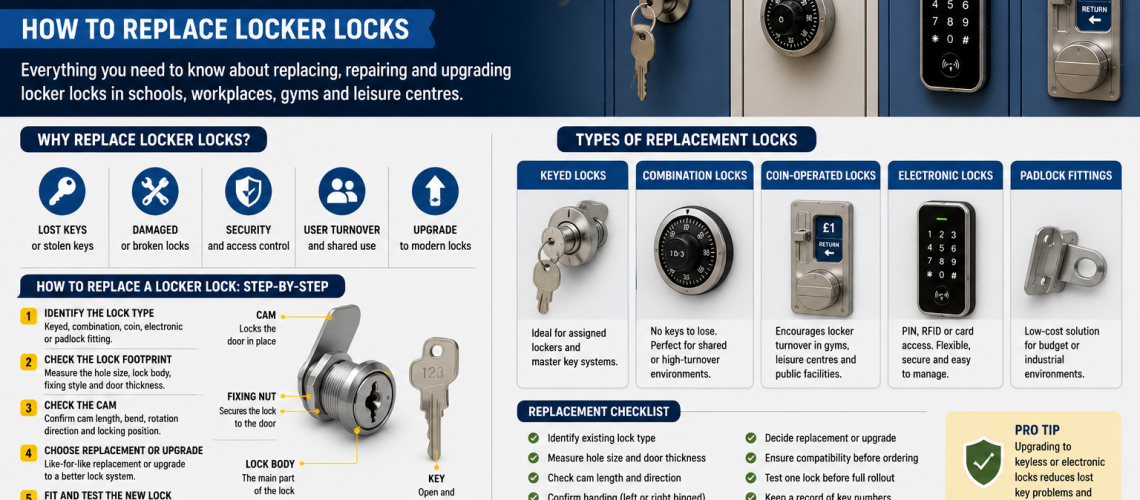
Locker lock replacement restores security, fixes faults and improves how lockers are used. Whether you are replacing a damaged lock, solving lost key issues or upgrading to keyless access, choosing the right replacement ensures correct fit, smooth operation and long-term reliability.
This guide explains how to replace locker locks in the UK, including identifying your existing lock, checking compatibility, choosing the correct replacement and deciding when to upgrade instead of like-for-like replacement.
Quick answer: Replace locker locks by matching diameter, cam type, door thickness and fixing method. Upgrade to electronic locks if lockers are shared or keys are frequently lost.
For technical fit, use our locker lock compatibility guide UK. For system decisions, see mechanical vs electronic locker locks.
When should you replace locker locks?
- Lost or missing keys: especially across multiple lockers
- Locks not working: stiff, jammed or unreliable
- Damage or vandalism: forced or broken locks
- Obsolete locks: no longer supported or inconsistent
- Changing usage: moving to shared or flexible lockers
- Security upgrade: improving access control
If problems are isolated, replace individual locks. If issues are repeated across the site, consider a full replacement or upgrade strategy.
Step-by-step: how to replace a locker lock
- 1. Identify the lock type: cam lock, coin lock, combination or electronic
- 2. Measure the lock: diameter, door thickness and cam length
- 3. Check fixing type: threaded nut, clip or screw fixing
- 4. Remove the old lock: undo fixing and remove cam
- 5. Insert the new lock: fit from the front of the door
- 6. Fit the correct cam: match length and orientation
- 7. Secure and test: tighten and check smooth operation
Always test locking, alignment and door closure before returning the locker to use.
Types of replacement locker locks
- Keyed cam locks: standard replacement for most lockers
- Padlock fittings: simple and flexible
- Coin-operated locks: shared leisure environments
- Mechanical combination locks: keyless manual option
- Electronic keypad locks: PIN-based access
- RFID locker locks: card or fob entry
- Smart locker locks: software-controlled systems
See full comparison in our locker locks UK guide.
Compatibility: what must match?
- Lock diameter (commonly 16mm–22mm)
- Door thickness
- Cam length and bend
- Fixing type and thread
- Lock body depth
- Left or right orientation
Incorrect compatibility is the most common reason replacement locks fail to fit or operate correctly.
Use our compatibility guide before ordering.
Like-for-like replacement vs upgrade
| Situation | Best option |
|---|---|
| Single lock failure | Like-for-like replacement |
| Multiple failures | Batch replacement |
| Frequent lost keys | Upgrade to keyless |
| Shared lockers | Electronic locks |
| Low budget | Mechanical locks |
| Long-term efficiency | Electronic or smart systems |
Replacement is an opportunity to improve usability, not just fix faults.
Replacing locks on existing lockers
- Check locker door condition
- Ensure lock hole is not worn or damaged
- Confirm internal clearance
- Check cam alignment with frame
Electronic upgrades may require more space and careful fitting.
See retrofit locker locks UK guide for upgrade paths.
Cost considerations
- Mechanical locks: lower upfront cost
- Electronic locks: higher initial cost
- Labour: fitting across multiple lockers
- Admin savings: reduced key management
See locker lock cost UK guide for full breakdown.
Common replacement mistakes
- Not measuring lock diameter
- Ignoring cam compatibility
- Choosing incorrect fixing method
- Not checking door thickness
- Replacing without reviewing usage needs
- Upgrading without checking clearance
Final recommendation
Locker lock replacement is simple when compatibility is correct. Start by identifying your lock, measure accurately and decide whether to replace like-for-like or upgrade.
If lockers are structurally sound, replacing locks is often the fastest and most cost-effective improvement.
View our locker locks range or contact Total Locker Service for advice.
FAQ: Locker lock replacement UK
Can I replace a locker lock myself?
Yes. Most locker locks can be replaced using basic tools if the correct size and type are selected.
Are locker locks standard sizes?
No. Sizes vary, so diameter, cam length and door thickness must be checked before ordering.
How long does replacement take?
Most locker locks can be replaced in a few minutes once the correct lock is available.
Should I replace all locks at once?
If failures are widespread or keys are lost across multiple lockers, replacing in batches or upgrading may be more efficient.
Can I upgrade to electronic locker locks?
Yes, but compatibility and internal clearance must be checked before upgrading.
What is the most common replacement lock?
Keyed cam locks are the most common replacement for standard lockers.
What if I do not know my lock type?
Measure the lock and compare with a compatibility guide or contact a supplier with photos and dimensions.
Discover more from Blog Total Locker Service
Subscribe to get the latest posts sent to your email.