Key Control Systems UK: Manual vs Digital Key Management Explained for Businesses (2026 Guide)
April 27, 2026
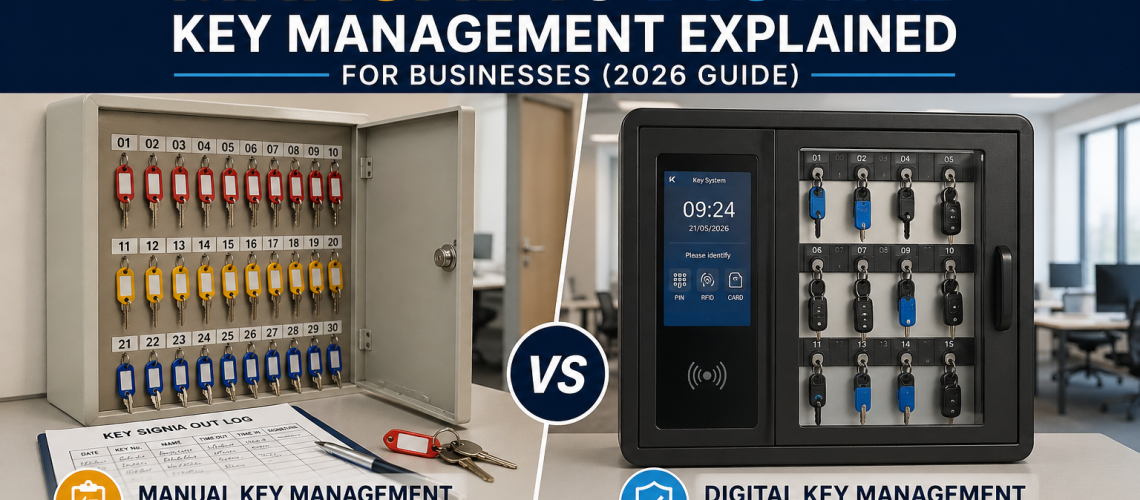
Key control systems help businesses manage who can access keys, where those keys are stored and how key use is recorded. The right system reduces lost keys, improves accountability and supports safer day-to-day site management.
Some sites only need a simple manual key cabinet with clear labelling and a sign-out process. Larger sites, higher-risk keys or multi-user environments may need digital key management with access records, user control and stronger audit trails.
This guide explains the difference between manual and digital key control systems, where each option works best and what to consider before choosing a system for your workplace.
What is a key control system?
A key control system is a structured way to store, issue, track and recover keys. It can be as simple as a lockable key cabinet with numbered hooks, or as advanced as an electronic cabinet that records which user removed each key and when it was returned.
The purpose is not just storage. A good system creates control. It helps staff find the right key quickly, prevents casual access and makes responsibility clearer when keys are shared across a team.
Manual key management explained
Manual key management usually uses a lockable key cabinet, numbered hooks, key tags and a written sign-out sheet. Staff open the cabinet, take the key they need and record the issue manually.
This approach is simple, low cost and easy to understand. It suits offices, small workshops, schools, retail premises and sites where only a limited number of trusted staff need access.
- Lower initial cost
- Simple to install and use
- No software or power requirement
- Suitable for small key volumes
- Easy to manage with clear staff procedures
Manual systems depend heavily on discipline. If staff forget to sign keys out, return them to the wrong hook or share cabinet access too widely, accountability becomes weaker.
Digital key management explained
Digital key management uses electronic control to manage key access. Depending on the system, users may access keys with a PIN, fob, card, RFID credential or software-controlled permission.
Many digital systems can record user activity, restrict access to specific keys and provide an audit trail. This makes them useful for larger teams, vehicle fleets, facilities management, healthcare, education estates and higher-risk commercial sites.
- Controlled user access
- Clearer audit history
- Better accountability for shared keys
- Useful for larger key volumes
- Suitable for higher-risk or multi-user environments
Digital systems cost more than basic cabinets, but the extra control can be valuable when lost keys, unauthorised use or poor records would create serious operational risk.
Manual vs digital key control systems
| Feature | Manual key management | Digital key management |
|---|---|---|
| Best for | Small teams and lower-risk sites | Larger teams, shared keys and higher-risk areas |
| Access control | Controlled by cabinet key, code or staff process | Controlled by user credentials or permissions |
| Audit trail | Usually paper-based | Often electronic and user-specific |
| Cost | Lower upfront cost | Higher initial investment |
| Management effort | Relies on staff recording use correctly | Automates more of the tracking process |
| Scalability | Best for modest key numbers | Better for larger or growing key estates |
Takeaway: choose manual key control when the risk is low and the process is easy to supervise. Choose digital key management when access history, accountability and permission control matter.
When to choose a manual key control system
A manual system is often enough when the number of keys is manageable and only a small group of trusted staff need access. It works well where the main requirement is tidy, lockable and organised key storage.
Good examples include small offices, staff rooms, maintenance cupboards, school administration areas and local retail premises.
For best results, use numbered hooks, matching key tags and a clear sign-out process. Spare hook capacity is also useful, as most businesses add more keys over time.
When to choose digital key management
Digital key management is more suitable when many people need controlled access to different keys. It is also stronger when the keys protect vehicles, restricted areas, plant rooms, medicines, equipment stores or valuable assets.
An electronic system can help managers see who removed a key, when it was taken and whether it was returned. That visibility can reduce disputes and improve operational control.
Digital systems are especially useful where lost keys could cause downtime, security concerns, replacement lock costs or compliance issues.
Key control for vehicles and fleet sites
Vehicle keys often need stronger control than ordinary office keys. Fleet vehicles, vans, pool cars, forklifts and maintenance vehicles may be used by different staff across different shifts.
Manual storage may work for small fleets with limited access. However, larger vehicle operations usually benefit from digital control because managers can track key movement more accurately.
Where vehicle use must be evidenced, digital key management can support better accountability and reduce the risk of keys being misplaced between users.
Key control for schools, workplaces and public buildings
Schools, workplaces and public buildings often have many internal keys across departments, offices, cupboards, plant rooms and restricted areas. Without structure, keys can quickly become difficult to manage.
A manual cabinet may suit reception, administration or a small facilities team. Larger estates teams may need a more advanced key control system, especially where contractors, cleaners, caretakers and managers need different levels of access.
The key question is whether the site only needs storage, or whether it also needs evidence of use.
Common key management problems
Poor key control usually develops gradually. A site starts with a few keys, then more doors, cabinets, vehicles and restricted areas are added. Over time, the original system no longer matches the risk.
- Keys stored in drawers or open offices
- Unlabelled keys that staff cannot identify
- Missing keys with no clear record of who used them
- Too many people sharing one cabinet key or code
- No separation between low-risk and high-risk keys
- Paper logs that are incomplete or ignored
These issues can usually be reduced by matching the system to the site risk, not just the number of keys.
How to choose the right key control system
Start by listing the keys you need to manage. Then separate them by risk, user group and frequency of use. A key for a stationery cupboard does not need the same level of control as a master key, vehicle key or restricted-area key.
- How many keys need to be stored?
- Who needs access?
- Are some keys higher risk than others?
- Do you need a record of who used each key?
- Will the system need to grow?
- Is access limited to staff, or do contractors also need keys?
Specification consequence: choose the system around access risk, not cabinet size alone. Capacity matters, but control level matters more when keys are shared or sensitive.
Manual and digital systems can work together
Many organisations use more than one type of key control. A basic cabinet may be suitable for low-risk office keys, while a digital system manages master keys, vehicle keys or restricted-area keys.
This mixed approach can be practical and cost-effective. It avoids over-specifying every key, while still giving stronger control where the risk justifies it.
FAQs about key control systems
What is the difference between key storage and key control?
Key storage is mainly about keeping keys in one secure place. Key control goes further by managing who can access those keys, how they are issued and how use is recorded.
Is a manual key cabinet enough for a business?
A manual key cabinet can be enough for small businesses with limited key numbers and trusted users. Larger teams, shared access or higher-risk keys may need stronger control.
When is digital key management worth it?
Digital key management is worth considering when you need an audit trail, user-specific access, better accountability or control over valuable, sensitive or frequently shared keys.
Can key control systems help reduce lost keys?
Yes. A structured system makes it easier to see where keys belong, who last used them and whether they have been returned. Digital systems usually provide stronger evidence than paper logs.
What size key control system do I need?
Choose a system with more capacity than your current key count. Spare hooks or extra slots allow for future doors, cabinets, vehicles and site changes.
Summary: manual vs digital key management
Manual key control systems are simple, affordable and effective for smaller sites with lower risk. Digital key management systems provide stronger access control, better audit trails and improved accountability for larger or higher-risk environments.
The best choice depends on key value, user numbers, access risk and the need for evidence. For many organisations, the strongest approach is a structured mix of manual storage for low-risk keys and digital control for sensitive or frequently shared keys.
Discover more from Blog Total Locker Service
Subscribe to get the latest posts sent to your email.