Fire Safe vs Fire-Resistant Filing Cabinet: UK Business Guide
October 2, 2025
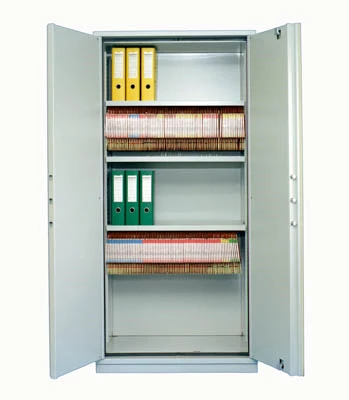
A fire safe and a fire-resistant filing cabinet can both protect important paper records, but they suit different ways of working. A fire safe is usually the better fit for smaller quantities of critical documents that need controlled access, while a fire-resistant filing cabinet is usually more practical for larger volumes of active paper files that staff need to organise and retrieve regularly.
This guide focuses only on the two-way comparison: fire safe vs fire-resistant filing cabinet. It compares document volume, access frequency, shelf storage, drawer filing and situations where a business may need both.
For wider comparisons that also include data safes, use our Fire Safe vs Data Safe vs Filing Cabinet guide. For detailed fire-rating questions, use the Fire Safe Ratings UK guide.
Quick Answer: Fire Safe or Fire-Resistant Filing Cabinet?
Choose a fire safe when you have a relatively small or moderate quantity of critical documents and access can remain controlled. Choose a fire-resistant filing cabinet when you have a larger active paper filing system that staff need to use regularly.
| Requirement | Fire safe | Fire-resistant filing cabinet |
|---|---|---|
| Small quantity of critical documents | Usually the stronger fit | Often more capacity than needed |
| Large active filing system | Can become awkward | Usually the stronger fit |
| Occasional controlled access | Well suited | Suitable, but drawer capacity may be unnecessary |
| Frequent staff access | Can be less convenient | Drawer format is designed for regular use |
| Shelf or compartment storage | Typical format | Not the main use |
| Suspension-file storage | Depends on internal fittings | Strong use case |
When Is a Fire Safe More Practical?
A fire safe is generally more practical when the protected documents are important but do not form part of a large working filing system. Typical examples include original certificates, contracts, deeds, policies, licences and selected business records that need to be retained securely but are not handled throughout the day.
- Small or moderate quantities of critical paper records
- Original documents that are difficult to replace
- Records requiring controlled rather than open departmental access
- Folders, binders or document packs that work well on shelves or internal compartments
- Situations where a full drawer-based filing system is unnecessary
The main practical advantage is compact protected storage. The main limitation is that shelf-based storage can become inefficient if staff are constantly moving large numbers of files in and out.
When Is a Fire-Resistant Filing Cabinet More Practical?
A fire-resistant filing cabinet is generally more practical when the records are active, numerous and need to remain organised for regular staff access. The drawer format is the key difference.
Instead of stacking folders inside a safe, staff can keep records in a familiar filing system and retrieve individual files without disturbing the rest of the contents.
- Large volumes of paper records
- Daily or weekly document access
- Suspension-file organisation
- HR, accounts, legal, administrative and client records
- Departments where files must stay arranged in a consistent working order
Total Locker Service supplies a 4-drawer fire-resistant filing cabinet for protected paper-file storage. Check the current dimensions, capacity, weight and product specification before ordering.
Document Volume: Small Critical Sets vs Large Filing Systems
Document volume is one of the clearest dividing lines between the two products. A safe can work very well for a compact collection of important records, but it becomes less practical when the business is trying to recreate a full filing system inside shelves or compartments.
| Paper-record volume | Likely better fit | Why |
|---|---|---|
| Small set of originals or critical documents | Fire safe | Compact protected storage is usually sufficient |
| Several folders or binders accessed occasionally | Fire safe | Shelf storage can remain practical |
| Large departmental filing system | Fire-resistant filing cabinet | Drawers make better use of the records as an active filing system |
| Hundreds of active personnel, client or account files | Fire-resistant filing cabinet | Drawer organisation is generally easier to manage |
The decision is therefore not simply about which product has the larger stated capacity. It is about whether the available space can be used efficiently for the type of records you hold.
Access Frequency: Occasional Retrieval vs Active Filing
Access frequency is the second major separator. A safe is usually well suited to records that are accessed occasionally or by a limited number of authorised users. A filing cabinet is generally easier to work with when staff need records repeatedly throughout the working week.
| Access pattern | Likely better fit |
|---|---|
| Occasional access to original documents | Fire safe |
| Controlled access by management or finance staff | Fire safe |
| Daily retrieval of HR, legal or client files | Fire-resistant filing cabinet |
| Regular departmental filing and re-filing | Fire-resistant filing cabinet |
Good protection should not make normal record handling unnecessarily difficult. If staff find the storage awkward, files are more likely to be left outside it during the working day.
Shelf Storage vs Drawer Filing
The physical storage format is where the practical difference becomes most obvious.
Fire safe shelves and compartments
Fire safes commonly use shelves, trays or internal compartments. This works well for binders, document wallets, certificates, contracts and other compact sets of important records.
Fire-resistant filing cabinet drawers
Fire-resistant filing cabinets are built around drawers and organised paper filing. This format is normally better when individual files need to remain in sequence and be retrieved frequently.
If your staff already work from suspension files or drawer-based records, a fire-resistant filing cabinet usually preserves that workflow more naturally than a conventional safe.
When a Fire Safe Is More Practical
- The protected records are limited in number.
- The documents are high importance but low frequency of use.
- Access should remain controlled to a small number of users.
- Documents fit naturally on shelves or in binders.
- A full filing-cabinet footprint would be unnecessary.
When a Fire-Resistant Filing Cabinet Is More Practical
- The business stores a large number of active paper files.
- Staff need records regularly throughout the working week.
- Suspension files or organised drawers are already part of the workflow.
- Files need to remain arranged by client, employee, account, date or department.
- Trying to store the same records on safe shelves would make access slower or less organised.
When It Makes Sense to Use Both
Some organisations have two distinct paper-record needs. In that case, using both products can be more practical than trying to force every record into one storage format.
- Fire-resistant filing cabinet: active HR, legal, accounts or client files that staff use regularly.
- Fire safe: original contracts, certificates, deeds, policies or other critical documents that need tighter access control.
This approach keeps active records easy to use while separating the smaller set of especially important originals or controlled documents.
Typical Business Examples
Small office
A small office with a limited number of contracts, certificates and insurance documents may find a fire safe more practical than a full filing cabinet.
HR department
An HR department with many active personnel files will usually benefit more from drawer-based fire-resistant filing because staff need to retrieve and return individual records regularly.
Legal or professional practice
A legal or professional practice may use fire-resistant filing cabinets for active case files and a fire safe for original agreements, certificates or other critical documents.
Accounts department
An accounts department with high-volume paper records may prefer filing cabinets for working files while keeping selected original documents in a separate safe.
Fire Safe vs Filing Cabinet Decision Checklist
- How many paper files do you need to protect?
- How often are those records accessed?
- Do staff already use suspension files or drawer-based filing?
- Are the contents mainly active working records or a smaller set of critical originals?
- Would shelf storage keep the documents organised?
- Would drawer access make daily filing easier?
- Do you actually need both storage formats for different categories of records?
Once the storage format is clear, move to the relevant specialist guide for fire ratings, safe size or wider product specification rather than trying to solve every decision on this comparison page.
Commercial Fire Safes and Fire-Resistant Filing Cabinets
Total Locker Service supplies fire-protected storage for commercial paper records, including document safes and fire-resistant filing cabinets.
- Fireproof Safes and Cabinets – browse the wider range of fire-protected storage.
- 4-Drawer Fire-Resistant Filing Cabinet – drawer-based protected storage for active paper files.
Frequently Asked Questions
What is the main difference between a fire safe and a fire-resistant filing cabinet?
The main practical difference is storage format. A fire safe usually uses shelves, trays or compartments for compact important documents, while a fire-resistant filing cabinet uses drawers designed for organised paper filing and regular access.
When is a fire safe more practical?
A fire safe is usually more practical when the business has a smaller quantity of critical documents that are accessed occasionally or by a limited number of authorised users.
When is a fire-resistant filing cabinet more practical?
A fire-resistant filing cabinet is usually more practical when there are large volumes of active paper files that staff need to organise, retrieve and return regularly.
Is a filing cabinet better for HR and personnel files?
It can be. Where an HR team manages many active personnel files, drawer-based filing is usually easier to work with than storing the same records on shelves inside a conventional safe.
Can a business use both a fire safe and a fire-resistant filing cabinet?
Yes. A business may use a fire-resistant filing cabinet for active working files and a fire safe for a smaller number of critical original documents that need tighter access control.
Conclusion: Choose the Storage Format That Matches the Records
The practical difference between a fire safe and a fire-resistant filing cabinet comes down to how the paper records are used. A safe is usually better for smaller quantities of critical documents and controlled access. A filing cabinet is usually better for larger active filing systems that need organised drawer access.
Where both needs exist, use both: keep active working files in fire-resistant drawers and the smaller set of critical originals in a suitable fire safe.
Related Guides
Discover more from Blog Total Locker Service
Subscribe to get the latest posts sent to your email.