Secure Storage How to Choose
May 23, 2025

How to choose secure storage for a UK business
Choose secure storage for your business by identifying the contents, the risks and who needs access. A locker, key cabinet, burglary-resistant safe, document fire safe and data safe serve different purposes. A lockable steel cabinet does not automatically provide tested burglary, fire or water protection.
This guide helps you compare storage types, capacity, locking, installation and ongoing management. For a broader topic index, use our locker, safe and storage guides.
Start with your contents and security risks
List the items, maximum values, storage volume and consequences of loss. Separate theft prevention from protection against fire, water exposure and unauthorised access. Where more than one risk matters, check evidence for each protection claimed for the exact model.
| Contents | Starting point | Main checks |
|---|---|---|
| Cash, takings and valuables | Cash safe buying guide | Check certified burglary resistance, insurer approval and maximum holdings. |
| Important paper documents | Business fire safe buying guide | Check the paper fire class, duration, usable capacity and filing format. |
| Backup tapes, drives and removable media | Data safes vs fire safes | Confirm that the exact protection class covers your media formats. |
| Staff clothing and personal belongings | Commercial lockers | Choose compartment sizes, materials and locks for the users and environment. |
| Building, vehicle and equipment keys | Key cabinets | Plan capacity, access permissions, key issue and return procedures. |
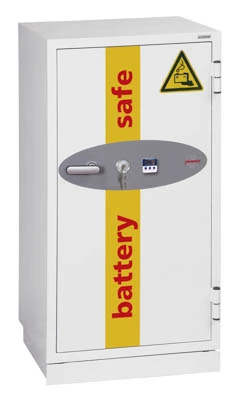
Medicines, hazardous substances and other specialist contents need an assessment specific to their use. A general-purpose safe or locker is not automatically suitable. Buying a cabinet alone does not establish compliance with workplace or sector requirements.
Measure usable capacity and access space
Measure the actual cash bags, binders, key bunches or equipment. Compare usable internal dimensions, shelf positions and door openings, allowing for hinges, lock housings and future growth. External dimensions and a nominal litre capacity do not establish whether an item will fit.
Also measure the installation space and the full delivery route, including doors, stairs, corners and lifts. Allow room to open the door and use drawers. For money storage, see our cash safe size guide.
Weight, anchoring and installation
Weight alone is not evidence of burglary resistance and does not replace required anchoring. Follow the exact model’s installation instructions and any certification or insurer conditions. Confirm approved fixing positions, anchors and a suitable structural substrate before ordering.
Check the combined weight of the unit and contents against the supporting structure. Where capacity is uncertain, obtain a suitable structural assessment. Plan specialist delivery or installation where needed; do not assume that every model can be fixed to either a wall or floor. Read our cash safe installation and fixing guide.
Choose locks around authorised access
Choose access arrangements according to the number of users, how often they change and who may deposit or retrieve contents. The lock must suit the storage product’s required security specification; a more elaborate opening method does not automatically mean stronger burglary resistance.
Key locks
Key locks avoid batteries for normal operation, but need controlled issue, secure spare-key storage and a lost-key procedure. Do not leave a safe key in an accessible desk drawer. Key shape alone does not establish the lock’s resistance or the safe’s certification.
Electronic locks
Electronic locks can support code changes and, on some models, individual users, time delay, dual control or event logs. Verify each feature rather than assuming it is included. Check batteries, power-loss behaviour and the manufacturer’s authorised recovery procedure.
Mechanical combination locks
Mechanical combination locks use a code without electronic power. Designs range from locker locks to safe locks with different security specifications. Set procedures for code changes and staff departures; do not assume a shared code identifies who opened the unit.
Biometric locks
Fingerprint access may be useful for some users, but enrolment, recognition, recovery access and power requirements still need management. Biometrics do not eliminate every access problem or prove a higher security grade. Check the exact model’s approved configuration.
For cash storage, compare key vs electronic safe locks. If staff need to place takings into storage without retrieving them, a deposit safe may suit the workflow better than issuing everyone opening access.
Check fire protection for the intended contents
Burglary resistance and fire resistance are separate specifications. For fire-protected storage, check the test standard, contents class, protection duration and the manufacturer’s stated use. Test minutes describe performance under defined conditions, not unlimited protection in every fire.
Paper protection does not automatically cover digital media. Confirm which tapes, drives or other formats the model protects, and maintain suitable independent backup copies. A fire classification also does not by itself establish water protection. Read our fire safe ratings guide or compare fire safes and fire-resistant filing cabinets.
Additional features worth checking
Specify features because they solve an identified need. Ask for the exact model’s documentation rather than relying on broad descriptions such as “fireproof”, “waterproof” or “high security”.
Water resistance
Check whether water resistance is supported by a stated test, including exposure depth, duration, orientation and any fixing conditions. Seals alone do not prove flood or sprinkler protection. Consider location and the consequences of water entering the building.
Internal organisation
Choose shelves, drawers, trays or key hooks to suit the contents and retrieval frequency. Avoid overloading shelves or obstructing the door and locking mechanism. For active paper files, drawer-based fire-resistant filing may be more practical than stacking folders inside a safe.
Audit trails and access logs
Access logging is model-dependent. Check which events are recorded, how users are identified, how records are retrieved and who can manage them. A log supports review but does not itself prevent unauthorised opening or prove who physically handled the contents.
Integration with other security systems
Where integration is needed, confirm the supported interfaces, installer requirements, power supply and operating behaviour before purchase. Do not assume a standalone keypad safe connects to a building alarm or access-control system.
Insurance requirements and certification
For insured cash or valuables, obtain your insurer’s agreement on the exact safe, maximum contents values, installation and premises security. Certification describes tested resistance; it does not guarantee full cover or payment of a claim.
Check the model’s independent certification label and documentation. EN 14450 classifies secure safe cabinets as S1 or S2; EN 1143-1 provides burglary resistance grades for safes. Read insurance-rated safes: EN 14450 vs EN 1143-1 for the distinction between certification and indicative cash ratings.
Environment, durability and appearance
Match materials and finishes to humidity, cleaning products and the intended indoor or outdoor environment. A product suitable for a dry office may be unsuitable near a pool or outdoors. Check supporting evidence for recycled content or environmental claims rather than inferring them from a steel construction.
Consider repairable locks, replaceable parts and continued suitability as well as appearance. Confirm whether any proposed repair or alteration could affect a certified product’s protection.
Budget for the whole installation
Compare the product price alongside delivery, specialist handling, installation, access work, batteries, replacement keys and future servicing. A low purchase price is poor value if the product cannot be installed correctly or does not provide the required protection.
Do not assume purchasing a safe reduces insurance premiums. Ask your insurer whether a particular model changes the terms or cost of your cover. Compare products against the agreed specification before comparing prices.
Check supplier support before ordering
Ask for model-specific dimensions, weights, certification details, delivery terms and installation requirements. Confirm which installation, servicing and recovery services are available for the product and location rather than assuming every purchase includes them.
Maintenance and aftercare
Follow the manufacturer’s maintenance instructions. Periodically inspect operation, fixings, hinges and any seals, and change batteries as directed. Use only approved lubricants or treatments where specified; avoid unauthorised drilling, lock changes or repairs.
If the unit has suffered attack, fire, water exposure or damaged seals, obtain advice before relying on its protection. Keep access permissions, codes and key records current when staff roles change.
Common secure-storage buying mistakes
Avoid these errors when comparing products:
- Selecting a locker or general cabinet when certified burglary resistance is required.
- Treating paper fire protection as protection for all digital media.
- Assuming seals establish tested water resistance.
- Choosing by weight, external dimensions or lock type alone.
- Treating a recommended cash rating as guaranteed insurance cover.
- Overlooking delivery access, floor capacity or required anchoring.
- Assuming audit logs, biometrics or alarm integration are standard features.
- Failing to plan spare-key control, code changes and authorised recovery.
Illustrative example: retail cash and paperwork
This is a planning example, not a documented customer case study. A retailer receiving regular cash payments could assess a deposit safe for staff cash drops, with retrieval restricted to managers. The maximum overnight holding and insurer’s requirements would determine the necessary security specification.
Paper records may need separate document fire protection, or a product with evidence of both required protections. A keypad alone does not establish event logging, and neither a cash rating nor a fire classification guarantees an insurance claim outcome.
Illustrative example: office document storage
This is a planning example, not a documented customer case study. An office holding active confidential paper files could compare lockable filing storage with a tested fire-resistant filing cabinet. The decision would depend on file volume, access frequency, confidentiality and the consequences of loss.
Digital backup media would need a separate assessment of media protection and independent copies. Key, code or biometric access would be selected according to authorised users and the features verified for the exact model.
Secure-storage selection checklist
Before requesting a quotation or placing an order:
- List the contents, peak values and storage volume.
- Identify theft, access, fire and water risks separately.
- Choose the appropriate storage type and evidence of protection.
- Confirm insurer requirements where cover is involved.
- Measure usable internal space, door clearance and delivery access.
- Check lock functions, user management and recovery procedures.
- Confirm supporting structure, approved anchoring and installation arrangements.
- Compare total delivered and installed cost.
- Keep documentation and plan ongoing inspections and access reviews.
Compare Total Locker Service storage ranges
Total Locker Service supplies commercial lockers, key cabinets and safes for business and home use. Use the individual product specifications to compare capacity, locking and protection.
When enquiring, provide your contents, required certification, insurer’s specification where applicable, usable dimensions and installation location. Confirm delivery and any installation or aftercare requirements with the team for your chosen product.
Choose protection that matches the contents
Start with the risk and operational requirement, then select a storage product with evidence for the protection you need. Capacity, locks, location and installation all matter, but none substitutes for a relevant certified rating where one is required.
- Cash safes UK: security, ratings and business cash storage
- What fire safe does my business need?
- Data safes vs fire safes: protection for digital media
Secure storage FAQs
Is a lockable cabinet the same as a security safe?
No. A lockable cabinet provides controlled access, but its lock and steel construction do not establish certified burglary resistance. Check the exact product’s documented protection.
Does a fire safe also protect cash against theft?
Only where the exact model also provides the required burglary resistance and is accepted by your insurer. A fire rating alone does not establish a cash rating.
Can a paper-rated fire safe protect backup drives?
Do not assume so. Check that the exact model’s contents class and manufacturer guidance cover the media formats you intend to store.
Does a heavy safe still need anchoring?
Follow the exact model’s installation instructions and any certification or insurer conditions. Weight does not replace required anchoring.
Does buying certified storage guarantee insurance cover?
No. The insurer decides accepted values and policy conditions. Confirm the exact model, contents, installation and premises security before purchase.
Discover more from Blog Total Locker Service
Subscribe to get the latest posts sent to your email.