Lockers UK | Workplace, School and Commercial Lockers
April 20, 2026
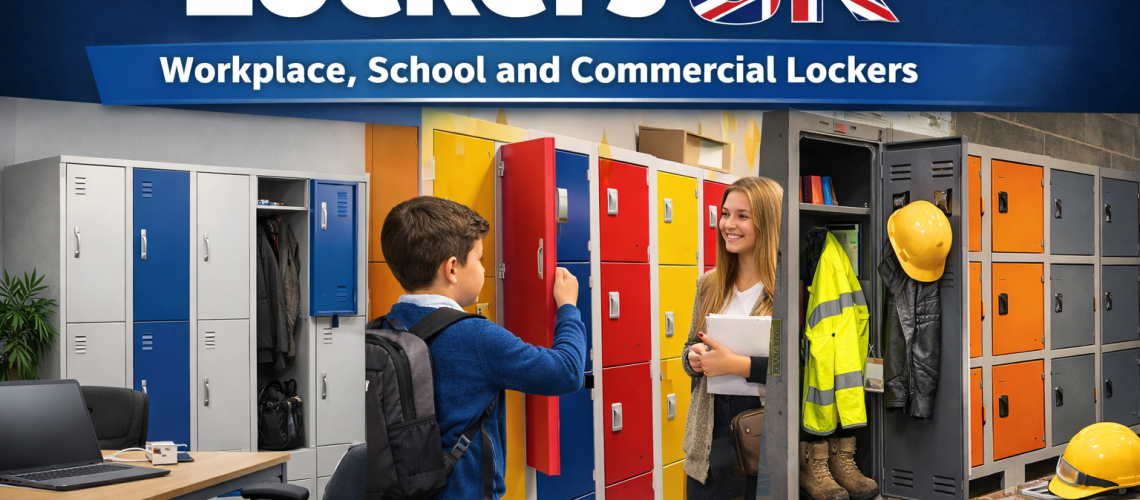
Lockers are secure storage units used in UK workplaces, schools and commercial environments to store personal belongings, equipment, uniforms and devices safely between uses. They improve organisation, reduce clutter and provide controlled access to stored items.
This guide explains the main types of lockers available in the UK, where they are used and how to choose the right option. It also links to detailed guides covering charging lockers, locker room design, security options and replacement parts.
Types of Lockers
Lockers are available in several formats, each suited to different environments and storage needs.
- Workplace lockers – staff storage for offices, warehouses and industrial sites where personal belongings and PPE must be kept secure during shifts
- School lockers – durable storage for students and shared environments
- Charging lockers – secure storage with built-in power for devices
- Wet area lockers – water-resistant lockers for gyms, pools and leisure centres
- Outdoor lockers – weather-resistant storage for external use
- Specialist lockers – PPE, laptop, tablet and uniform storage
If you need powered storage for devices, see our charging lockers guide
Locker Materials Explained
The material affects durability, maintenance and suitability for different environments.
- Steel lockers – strong, secure and widely used in workplaces and schools
- Laminate lockers – premium finish with improved aesthetics
- Plastic lockers – corrosion-resistant and ideal for wet or humid areas
In most environments, steel lockers are used for general security, plastic lockers are preferred in wet or hygienic areas and laminate lockers are chosen where appearance and finish are important.
Locker Sizes and Configurations
Lockers are available in multiple configurations, typically ranging from single-door units to multi-compartment designs. The number of tiers affects both capacity and usability. Higher-tier lockers increase capacity but reduce space per user, while lower-tier lockers provide more room for clothing and equipment.
- Single tier – full height storage for clothing and equipment
- Two tier – balanced storage and capacity
- Four to six tier – compact storage for personal items
- Z lockers – space-efficient storage for uniforms and bags
For detailed planning, see our locker room design guide.
Locker Locks and Security Options
Lock choice affects both security and usability. The right option depends on whether lockers are shared or assigned. Key locks are commonly used for assigned lockers, while combination and digital locks are better suited to shared environments where multiple users need access without key management.
- Cam locks with keys
- Combination locks
- Digital keypad locks
- RFID and contactless systems
If you need replacement keys or lock support, visit our locker keys page.
Where Lockers Are Used
Lockers are used across a wide range of environments, each with different requirements.
Workplaces – staff storage, PPE and personal belongings, often requiring durable lockers with secure locking for daily use
- Workplaces – staff storage, PPE and personal belongings
- Schools – student storage and shared equipment
- Gyms and leisure centres – wet area and short-term use
- Industrial sites – robust storage for tools and uniforms
Lockers vs Other Storage Options
Lockers differ from cupboards and open storage by providing individual, secure compartments with controlled access. This makes them suitable for shared environments where security, organisation and accountability are important.
How to Choose the Right Locker
Choosing the right locker depends on how the storage will be used. If lockers are shared, combination or digital locks are usually the best option. If lockers are assigned, key locks are often sufficient. Wet or humid environments require plastic or corrosion-resistant materials, while dry environments can use standard steel lockers. Higher security requirements may require upgraded lock systems or reinforced locker construction.
- What items need to be stored?
- How often will lockers be accessed?
- Are lockers assigned or shared?
- Is the environment dry, wet or external?
- What level of security is required?
The answers to these questions determine the correct locker type, material and lock system.
Locker Accessories and Parts
Accessories and replacement parts help maintain locker systems over time. Maintaining locker systems with the correct parts helps extend their lifespan, reduces replacement costs and ensures continued usability in high-traffic environments.
- Replacement locker keys
- Number plates and identification tags
- Locker locks and upgrade kits
Explore Locker Guides
Find the Right Lockers
We supply a wide range of lockers for workplaces, schools and commercial environments. Whether you need standard storage, specialist lockers or charging solutions, our range covers multiple sizes, materials and security options.
Lockers vs Other Storage Options
Lockers differ from cupboards and open storage by providing individual, secure compartments with controlled access. This makes them suitable for shared environments where security, organisation and accountability are important.
Discover more from Blog Total Locker Service
Subscribe to get the latest posts sent to your email.