How to Keep Locker Areas Clean, Tidy and Easy to Maintain
April 11, 2026
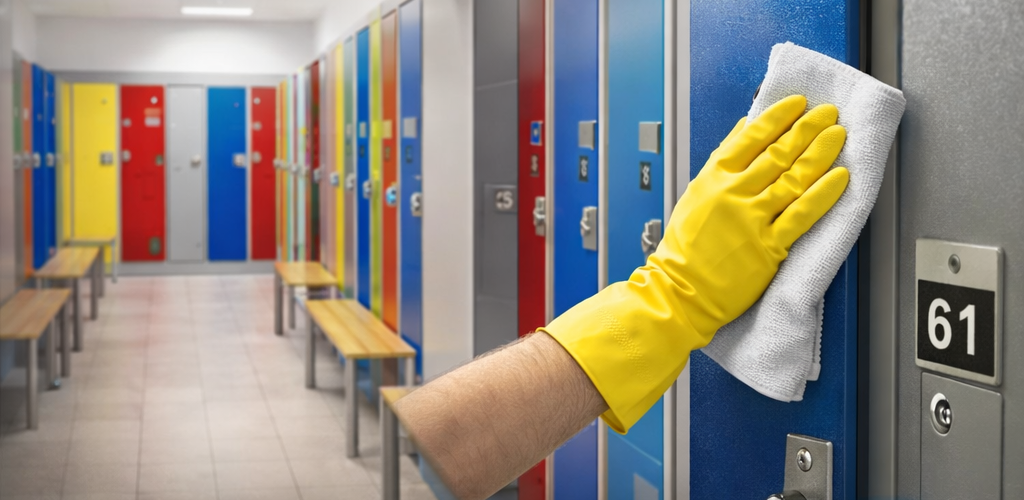
Choosing the right lockers is only part of creating a good storage area. Once the lockers are in place, the surrounding space still needs to work well day after day. Cleanliness, tidiness and basic maintenance all affect how the locker area feels, how well it performs and how long the installation lasts.
A locker bank can be well specified and still become frustrating if the area around it is poorly managed. Dust builds up. Lost items gather underneath benches. Doors get marked. Wet floors create an untidy impression. Labels peel away. Locks become harder to use because faults are not picked up early enough. None of these issues usually begin as major failures. Most start as small signs of neglect.
This guide explains how to keep locker areas clean, organised and easy to maintain in schools, workplaces, changing rooms and industrial settings. It looks at the practical factors that help a locker space stay functional over time and why cleaning and maintenance should be part of the original planning rather than an afterthought. For a broader overview of lockers, including sizes, layouts and lock options, see our main pillar page.
Why locker area maintenance matters
People often judge the quality of a locker area very quickly. If the space looks dirty, cramped or neglected, the lockers themselves can seem lower quality than they really are. A clean and well-managed area feels more secure, more professional and easier to trust.
Good maintenance helps with:
- better appearance
- easier day-to-day use
- longer locker lifespan
- clearer fault reporting
- improved hygiene
- fewer avoidable repairs
- a more organised environment
The benefit is not only visual. Routine upkeep also makes it easier to spot developing problems before they become expensive. A loose hinge, damaged number plate or sticking lock is far easier to deal with early than after it has been ignored for months.
Start with the layout, not the cleaning products
A locker area is easier to maintain when it has been planned properly from the start. Poor layout creates maintenance problems. Tight gaps, awkward corners, overcrowded benches and blocked access points all make cleaning harder than it needs to be.
A good layout should leave enough room for:
- users to open doors comfortably
- staff to clean the floor properly
- access around benches and seating
- routine inspection of locker banks
- simple movement through the area
Limited access behind or beneath lockers makes it difficult to clean properly, allowing dirt to build up over time. Benches positioned too close to locker doors can lead to increased scuffs and wear as users move around the space. Narrow aisles reduce usable space and make it harder to keep the area tidy, as people are forced to brush past one another regularly.
This is one reason why layout planning and maintenance planning should be linked. A cleaner locker room usually begins with a more practical layout.
Daily tidiness affects long-term condition
Tidiness and maintenance are closely connected. A messy locker area is harder to clean and more likely to develop wear. Bags left on the floor, abandoned clothing, loose paper, bottles and forgotten items all make the space feel less controlled. They also make inspection harder.
In most environments, the best results come from simple daily expectations. Users should know what belongs inside the locker, what should not be left outside it and how the area is meant to be used. Where this is clear, the space usually stays more manageable.
This is especially important in:
- schools
- staff changing rooms
- gyms
- welfare areas
- shared workplace storage zones
The tidier the area stays in normal use, the easier it is to clean properly and the less likely it is to suffer unnecessary wear.
Cleaning locker exteriors properly
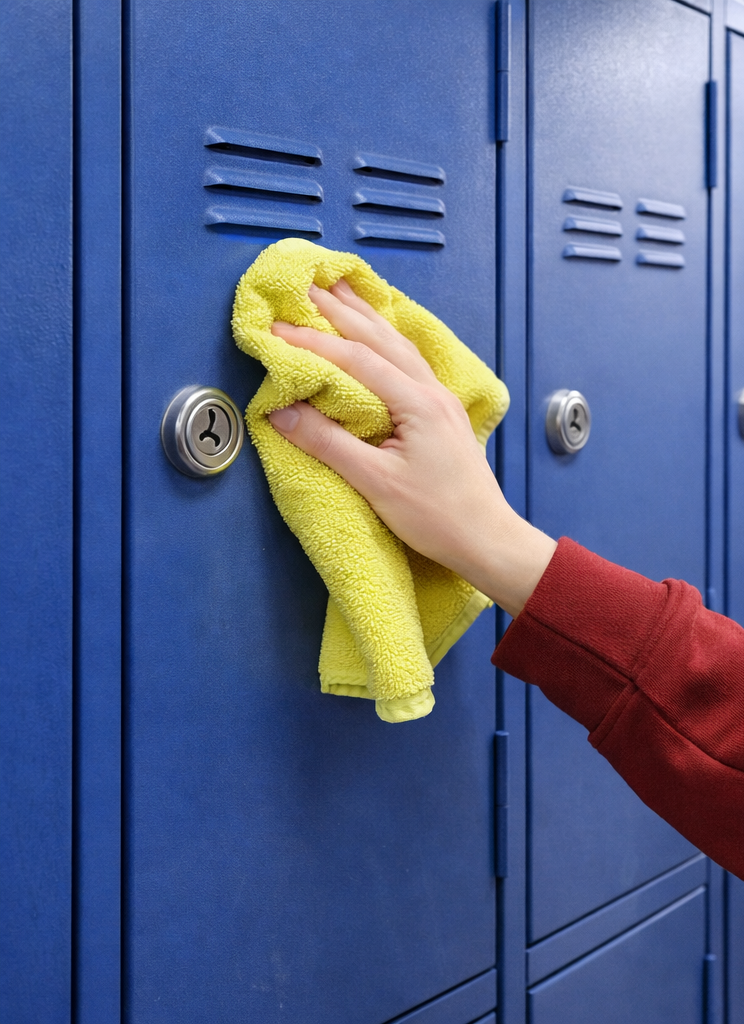
Locker doors and end panels take daily knocks, hand contact and general wear. They may collect fingerprints, dust, scuffs and water marks depending on the environment. Regular surface cleaning helps maintain appearance and stops minor grime becoming embedded.
The right cleaning method depends on the locker material and finish. In general, the aim is to remove dirt without damaging coatings, labels or lock components.
A good routine usually includes:
- wiping doors and exposed surfaces regularly
- removing marks before they become stubborn
- cleaning around handles and locks carefully
- checking labels and numbers during cleaning
- avoiding overly aggressive products where they could damage finishes
In school and workplace settings, visual cleanliness often matters most. In leisure and changing areas, hygiene becomes even more important because moisture and heavy contact are more common.
Do not ignore the floor area
Much of the visual quality of a locker area comes from the floor around it. Even clean lockers can look poor if the floor is dusty, wet or cluttered. Dirt tends to collect in the same places repeatedly:
- under benches
- beside end panels
- near corners
- around plinths or locker feet
- beneath overhanging door edges
- along wall junctions
These are the areas that often get missed when the space is hard to access. Over time, that creates a visible contrast between the main walkway and the less accessible parts of the room.
A practical cleaning routine should account for these spots deliberately. If the layout makes them difficult to reach, that is usually a sign that the locker arrangement itself may need review in future projects.
Moisture control in changing rooms and wet areas
Wet environments create a different kind of maintenance challenge. In changing rooms, pools and leisure settings, the issue is not only visible mess but repeated exposure to water, humidity and cleaning products. If this is not managed properly, the area can deteriorate faster.
Moisture affects:
- locker finishes
- locks
- floor condition
- hygiene
- odour control
- user perception of cleanliness
This means wet-area locker spaces often need more frequent cleaning and more careful material choice from the start. Standing water should not be allowed to gather around locker bases, and ventilation matters just as much as wiping down surfaces.
Where the environment is consistently damp, the product choice itself becomes part of the maintenance strategy. Compare swimming pool lockers and leisure lockers if the site needs storage suited to wetter conditions.
Benches, seating and support furniture matter too
In many locker areas, the lockers are only part of what users see. Benches, seating and nearby fittings all contribute to whether the space feels clean and well managed. A smart locker bank can still feel neglected if the bench surfaces are worn, dusty or surrounded by clutter.
Support furniture should be included in the same maintenance routine as the lockers. That means checking:
- bench surfaces
- bench legs and supports
- the floor beneath benches
- wall contact points
- any nearby hooks or fittings
The more integrated the area feels, the better the impression it creates. Users do not separate the bench from the lockers in their minds. They experience the whole zone as one environment.
Keep locker numbering and labels readable
A locker area becomes harder to manage when numbers and labels start to fade, peel or go missing. Clear identification helps users find the right locker, helps staff respond to faults and supports general organisation. When the numbering system begins to fail, confusion increases quickly.
During routine cleaning and inspection, it helps to check whether:
- numbers are still easy to read
- labels are still firmly attached
- zone markers are visible
- name inserts remain accurate
- engraved plates are still legible
If the numbering is part of daily operation, it should be treated as part of maintenance, not as decoration. Our blog on locker numbering and labelling goes into this in more detail once you want to link it in the series.
Lock checks should be part of routine upkeep
One of the easiest ways to prevent bigger maintenance issues is to catch lock problems early. Users often notice when a lock feels stiff, awkward or unreliable, but those issues may not be reported until the lock fails completely. A simple routine check can reduce that risk.
Things worth watching for include:
- sticky operation
- loose handles or lock housings
- missing keys or damaged padlock fittings
- combination locks that no longer reset properly
- coin locks that are slow or inconsistent
- signs of tampering or misuse
The exact checks depend on the lock type, but the principle is the same. Frequent small checks prevent more disruptive failures later.
For related reading, see Locker Repairs, Replacement Parts and Maintenance and Best Lock Options for Workplace Lockers.
Tidy locker policies reduce mess
The condition of a locker area is affected not only by cleaning staff but by the rules users follow. If there is no clear expectation about what can be left outside the locker, how often lockers are cleared or how issues should be reported, mess tends to build up gradually.
Simple policies can help, such as:
- no bags left on the floor
- no loose clothing left on benches
- lockers to be emptied on specific dates where relevant
- faults to be reported with the locker number
- wet items to be handled in a defined way
- abandoned items to be removed after a clear period
These do not need to be heavy-handed. They just need to be clear enough that the locker area does not drift into disorder through lack of structure.
Schools need visibility and routine
In schools, locker areas can become untidy very quickly if there is no simple routine behind them. Pupils move in groups, arrive at the same time and may treat locker areas as temporary drop zones if supervision and expectations are weak. This is why school locker spaces benefit from visibility, straightforward numbering and regular checks.
A practical school routine might include:
- periodic checks for abandoned items
- clear reporting of damaged doors or locks
- easy-to-read numbering
- cleaning around peak traffic areas
- scheduled clearing at the end of term where needed
The aim is not to over-manage the space but to keep it from slipping into a pattern of clutter and low-level damage. Once that begins, it tends to accelerate.
For more on education-focused locker planning, link this with What Are the Best Lockers for High Schools?.
Workplace locker areas need order and clarity
In workplaces, untidy locker spaces often reflect unclear ownership or unclear usage. Shared lockers can become messy if nobody understands the rules around daily use. Assigned lockers can become neglected if they are never checked and users assume the area is entirely private.
A cleaner workplace locker area usually depends on:
- clear user allocation
- visible locker numbering
- sensible shared-use rules
- quick reporting of damage
- routine cleaning around entrances and aisles
- separation of staff, visitor or contractor zones where needed
Hybrid offices need particular care because locker use may peak sharply at the start and end of the day. If the area is too compressed or the rules around shared use are unclear, clutter builds quickly.
Industrial locker spaces need durability and discipline
Industrial and operational settings often place greater physical demands on locker areas. Workwear, boots, PPE and heavier use patterns all mean the space needs to work harder. Dirt, moisture and repeated contact with tougher items can also accelerate wear.
That makes routine especially important. Locker areas in these environments often benefit from:
- clearer separation of clothing types
- more frequent floor cleaning
- stronger numbering and labelling
- quicker response to damaged locks or hinges
- product choices suited to heavier use
Where clothing storage and welfare routines are central, the locker area should be treated as part of the operational environment rather than as a secondary extra.
Compare garment lockers, wire mesh lockers and heated lockers if the environment calls for more specialist products.
Common maintenance mistakes to avoid
Waiting until the area looks bad
The best maintenance is usually light and regular. Once the locker area already looks neglected, the recovery work is often more time-consuming.
Treating cleaning and maintenance as separate issues
A space that is hard to clean usually becomes harder to maintain. These should be planned together.
Ignoring the small faults
Loose number plates, sticky locks and minor scuffs may seem unimportant, but they are often the early signs of wider neglect.
Letting clutter build up around the lockers
Items left outside lockers make cleaning harder and make the whole area feel less controlled. Clear user expectations help prevent this.
Using products that do not suit the environment
Cleaning methods and product choices need to match the locker material and the space. A wet changing room and a dry office do not place the same demands on the installation.
Questions to ask when planning a maintenance routine
A better upkeep plan usually starts with a better set of questions.
- Is the locker area easy to access for cleaning?
- Are there any hidden dirt traps in the layout?
- Does the environment involve water, humidity or heavy wear?
- Are lockers assigned or shared?
- Is the numbering system still clear and durable?
- Are lock checks part of routine inspection?
- Do users know what they should and should not leave outside lockers?
- Would a different locker type make the area easier to maintain in future?
Final thoughts
Keeping locker areas clean, tidy and easy to maintain is not only about appearance. It supports hygiene, user confidence, smoother day-to-day operation and longer product life. The best results usually come from linking layout, cleaning, numbering, lock checks and user expectations into one practical routine.
Schools benefit from visibility and simple rules. Workplaces need order and clarity around shared or assigned use. Leisure settings need stronger attention to moisture and frequent cleaning. Industrial sites often need tougher routines and more durable support systems.
A better locker area is usually the result of small regular actions rather than occasional big fixes. That is what keeps the space usable, organised and professional over time.
“`
Discover more from Blog Total Locker Service
Subscribe to get the latest posts sent to your email.